Showing posts with label Native Americans in the Revolution. Show all posts

Sunday, January 12, 2025

ARP339 Hopewell Treaties

Over the last few episodes, we covered several treaties that freed up land in western New York, western Pennsylvania, western Virginia, and the territory north of the Ohio River for western expansion.  This provided new lands for settlers from the northern states.  Some of it would be sold to help fund the Continental Congress and pay off war debts.  Other land would be used to provide promised grants to veterans of the Revolutionary War.

Southern states faced a similar challenge and opportunity.  With the war over, settlers wanted to push further west into lands.  These lands were claimed by various tribes, including the Creek, Cherokee, Choctaw, and Chickasaw.

American Commissioners

In 1785, the Continental Congress appointed five commissioners to negotiate terms with the southern tribes.  Two of the commissioners, Daniel Carroll of Maryland and William Perry of Delaware, refused the appointments.  Those who accepted were Andrew Pickens, Benjamin Hawkins, and Joseph Martin.  Later, Congress added a fourth commissioner, Lachlan McIntosh.  All of the commissioners were leading advocates for taking more Indian lands.

Andrew Pickens

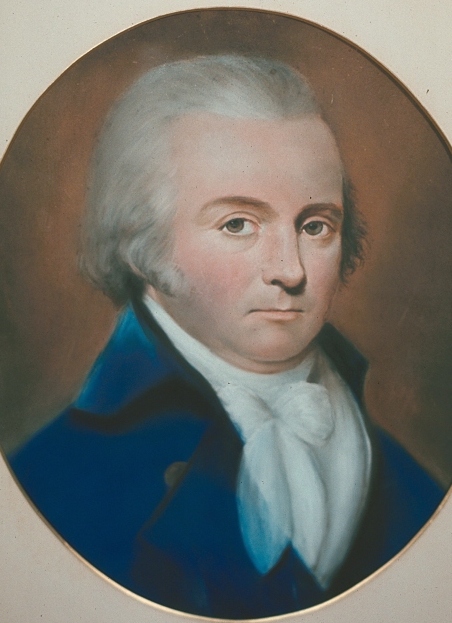
Andrew Pickens was born in Pennsylvania.  His family moved to Virginia and then South Carolina while he was still a child.  In 1764, as a young man, Pickets established a plantation, which he called Hopewell, in western South Carolina, near the border with Georgia.  Pickens was already an experienced Indian fighter, having served in the Anglo-Cherokee War of 1760-61.  

Andrew Pickens
Just across the Keowee River from the Hopewell plantation was the Cherokee town of Insunigu, which the Georgians called Seneca.  The town had been established centuries earlier and was a pretty sizable economic center for the Cherokee.  While the Cherokee were at peace for the moment, Pickens built a blockhouse on his property for future defensive needs.

I’ve mentioned many of Pickens’ exploits during the war in previous episodes.  He rose to the rank of brigadier general during the revolution, fighting in numerous battles against both the British and their Cherokee allies  He was captured at Fort Ninety-Six and wounded at Eutaw Springs.

In 1782, after the British had withdrawn back to Charleston, Pickens remained active fighting loyalists and Cherokee along the western border of the state.  Over that fall, the militia attacked and destroyed a number of Cherokee villages, killing any warriors that they found.  Pickens also traveled to a meeting at Augusta in October, where Georgia officials negotiated a treaty with the Cherokee.  Negotiations took five months, resulting in the Treaty of Long Swamp Creek in 1783, in which the Cherokee gave up claims to what is today northern Georgia, as well as the western part of South Carolina.  This included giving up the town of Seneca, across the river from Pickens’ plantation. The Cherokee had already given up a large amount of land following the Cherokee war of 1777.  This seemed to be simply another land grab. Many Creek and Cherokee factions rejected the terms of the treaty, but Georgia and South Carolina considered it binding.

When the British evacuated Charleston at the end of the year, Pickens was elected to the South Carolina legislature.  He also devoted time to rebuilding his Hopewell Plantation, which had been destroyed during the war.

In the spring of 1784, Cherokee claimed that settlers were moving into some of the lands that had been claimed by both Georgia and South Carolina.  This set off a border dispute between the two states that would last for years.  The other concern was that these illegal settlements could result in another Indian war.  

In 1785, Pickens had completed work on a new larger mansion at Hopewell.  He received word of his appointment from Congress to establish a new treaty with the Indians.

Benjamin Hawkins

Congress also appointed Benjamin Hawkins, a leader from North Carolina.  Raised on the frontier, Hawkins spoke several Indian languages.  He also attended the College of New Jersey at Princeton. The Revolution began while Hawkins was still in college.  He joined the Continental Army before he could graduate, and served as a French interpreter for General Washington.  In 1777, after the arrival of Lafayette, Hawkins found his services were no longer required.  

He returned to North Carolina and was elected to the state House of Representatives.  He then represented his state in the Continental Congress from 1781 through 1783.  Upon reaching Congress’ three year term limit, Hawkins returned to the North Carolina legislature.  He was serving in the legislature when he received Congress’ appointment to serve on the commission to establish a new treaty with the Indians.

Joseph Martin

The third member of the commission, Joseph Martin, came from a Virginia planter family.  Joseph was drawn to frontier life at the age of 16, when he ran away from an apprenticeship to join the fight to capture Fort Pitt during the French and Indian War.  Following the war, he remained on the frontier, where he worked as a surveyor, fur trader, and land speculator.  He received a rather large land grant in southwestern Virginia, near what is today the Kentucky border.  Part of this region was also disputed with North Carolina.

During this pre-war era, there were numerous Indian uprisings and raids, giving Martin considerable experience as an Indian fighter.  On several occasions, Indian attacks forced him off his land, only to see him return a short time later.  He built several defensive forts, known as Martin’s Station.  After the death of his first wife, Martin married a half-Cherokee wife, with whom he had two children.

In 1777, Governor Patrick Henry appointed Martin as Virginia’s Superintendent for Indian Affairs.  He managed to keep the local Cherokee neutral during much of the war. Though at times, they participated in attacks in coordination with the British and loyalists in the region.

By the end of the war, Martin was well established as an Indian agent, as well as a speculator in western lands.  Much of his time following the end of the war, was trying to restrain settlers in the self-proclaimed state of Franklin from retaliatory raids against the Cherokee, which threatened to set off another war.

Lachlan McIntosh

The three committee members met and agreed to hold treaty negotiations at Pickens’ plantation at Hopewell.  Trouble arose, however, from Georgia.  These negotiations under the authority of Congress threatened to call into question Georgia’s Treaty of Long Swamp Creek that had been concluded earlier.  Georgia saw this as an infringement on the state’s sovereign authority.  Georgia appointed Lachlan McIntosh and Elijah Clark to survey and establish Georgia’s borders as Georgia saw it in its treaty, before this Congressional commission could meet and decide anything different.

In an attempt to smooth over any hard feelings, Congress added McIntosh to the commission, along with Pickens, Hawkins, and Martin.

McIntosh is also someone we’ve covered many times before in earlier episodes.  The Scottish native had immigrated to Georgia with his family as a young boy.  His father died only a few years later during a conflict with the Spanish.  McIntosh was raised in a Savannah orphanage. As a teenager, he moved to Charleston where we worked as a clerk for Henry Laurens.  After that, he moved to the Georgia frontier where he worked as a surveyor, and acquired a sizable rice plantation.

When the Revolution began, McIntosh had already proven himself to be a patriot and military leader.  As a colonel in the Georgia Militia, he repelled a British assault on the Savannah River in 1776.  Shortly afterward, he received an appointment as brigadier general in the Continental Army.

McIntosh had been in a political conflict with Button Gwinnett, who had also wanted a commission in the Continental Army.  After McIntosh received the appointment, Gwinnett went to serve in the Continental Congress.  Shortly after that, he returned to Savannah and became involved in state politics.  After becoming the President of Georgia, Gwinnett and McIntosh fought over a great many things, eventually resulting in a duel where McIntosh killed Gwinnett.

Following the duel, General Washington pulled McIntosh north to prevent possible retaliation against him by Gwinnett’s political allies.  McIntosh commanded Fort Pitt, on the western frontier for a time.  During this time, he established Fort McIntosh along the Ohio River.  He ended up returning south for the defense of Charleston in 1780, when he was taken prisoner.

When he returned to his plantation after the war, he found it destroyed by the British.  He was broke and struggled to rebuild his home.  Georgia elected him to the Continental Congress in 1784, but he could not afford to go.  The following year, he received this survey appointment and then the appointment by Congress to serve on the treaty commission.

Creek Negotiations

The largest group of Indians in the region was the Creek.  The commissioners attempted to open negotiations with the Creek, but found it difficult.  At the time, the Creek Confederacy was headed by Alexander McGillivray, also known as Hoboi-Hili-Miko.  His father had been a Scottish trader who had married his mother Sehoy Marchand, a Creek woman who herself had a father who was a French trader.

McGillivray had grown up on one of his father’s large plantations in Augusta.  When he got older, we went to school in Charleston and then served as an apprentice to a trading company.  He seemed headed for a career as a wealthy southern merchant.  

The Revolution, however, changed everything.  McGillivray’s father remained a staunch loyalist and returned to Scotland when the war began.  In 1777 Alexander, who also remained a loyalist, moved west to live with his mother’s family among the Creek.  He received a commission in the British Army during the war, but did not really do much fighting.  He worked more as a diplomat for the Creek.

Given his lack of experience living among the Creek, it’s not entirely clear how he came to lead them.  His hatred of the Americans, combined with his wealth and education, certainly made him stand out.  He could not speak Creek very well, and he continued to live as a colonial planter.  He built two plantations for himself in what is today Alabama.  When Chief Emistigo was killed in an attempt to relieve the British garrison at Savannah in 1782, McGillivray became the principal spokesman for the relatively disorganized Creek. 

When Georgia began compelling the Cherokee to cede lands in 1783, McGillivray reached out to the British at St. Augustine for help.  The British responded that the war was over, and that they were getting ready to turn over St. Augustine to the Spanish.  They provided a little ammunition, but essentially told him that the Creek were on their own.

McGillivray next attempted to reach out to Spanish authorities, looking for a new ally.  In May, 1784, McGillivray and other Creek leaders met with Spanish officials in Pensacola. They agreed to put the Creek Confederacy under the protection of Spain, in exchange for aid and support against the Americans.  At the time, Spain was more concerned over its control of the Mississippi River.  It saw keeping the Creek as a buffer to westward advancing Americans as being in Spain’s interest.  In return, the Creek had the support of a powerful ally who could provide military assistance.

So when the American commissioners came calling, the Creek were in no mood to sign any treaty.  They asserted land claims as far north as modern day Tennessee, and disputed most of the territories that the Americans had claimed in recent years.  With the Creek unwilling to negotiate, the commissioners abandoned the effort and moved on to the Cherokee.

Cherokee Negotiations

The Cherokee arrived at Hopewell plantation in November of 1785.  Groups of families arrived over several days, totaling nearly 1000 people.  Over the next few days, the Cherokee leaders discussed terms with the commissioners.  

The final treaty established specific boundaries for Cherokee land and what lands were open to settlement. Both sides would have the authority to punish or remove trespassers who settled illegally on their territory.  It also required both sides to return any prisoners, including slaves, and any other property that they had taken during the war. The Cherokee also had to recognize that the United States was the sole protector of the region, not Spain, not Britain, only the US. Congress would have the exclusive power to regulate trade with the Cherokee.

Most of the Cherokee leaders rejected the treaty terms.  They noted that there were already 3000 settlers from the State of Franklin that had settled inside Cherokee territory, and that the US had done nothing about that.  Because Congress refused to recognize the State of Franklin, or do anything about the settlers, the Cherokee ended up signing two more treaties. The had negotiated the Treaty of Dumplin Creek, with President John Sevier of Franklin a few months earlier, and would agree to the Treaty of Coyatee in 1786 ceding even more lands in east Tennessee to the State of Franklin.

Quite a few, however, realized that they could not continue in a state of war with the US.  While many leaders refused to sign the treaty, several dozen of them did.  The Commissioners deemed this treaty binding on all of the Cherokee.

It was tradition to provide gifts at such treaty ceremonies.  When nearly 1000 Cherokee demanded gifts, the commissioners had to scramble to accommodate them.  This nearly exhausted their funds.  The commissioners decided to dismiss their security detail in order to save money.

Choctaw Negotiations

As the Cherokee departed in late November, a Choctaw delegation was on its way to Hopewell.  Their travels were delayed when Creek Indians seized most of their horses, forcing them to travel the rest of the way on foot.  A group of 127 men and women arrived at Hopewell in late December.

Two of the commissioners did not think the Choctaw would arrive when they did.  Commissioners Martin and McIntosh had already left.  They were able to get word to Martin, but McIntosh would miss the negotiations entirely.

The Choctaw requested gifts of food and new clothes before they would proceed with negotiations.  Pickens also invited the leaders who had arrived in time to share Christmas dinner with him. After the gifts and some ceremonial events, the two sides began discussions.  

The final treaty would contain many of the same terms in the treaty with the Cherokee.  The Choctaw would have to recognize the United States as the sole protector of the Choctaw.  Both sides would return any prisoners or property from the late war.  Both would be permitted to protect their territories from others who would settle there illegally.  

The borders of Choctaw territory essentially force the tribe to cede nearly 70,000 acres to the United States.  Part of the lands the US affirmed belonged to the Choctaw were actually controlled by the Creek.  The US would be no help with the Choctaw attempting to assert their claims to that land.  That was a matter between the Choctaw and the Creek. In addition, the US claimed three tracts inside Choctaw territory to set up trading camps.

The Choctaw leaders present generally accepted the terms and agreed to them.  They were more focused on establishing trade relationships within South Carolina. The Choctaw had fought the Spanish, alongside their British allies during the war, and had a really poor relationship with Spain.  With Britain now gone, the Choctaw hoped a better trading alliance with the United States would help them against their continued rivalry against the Spanish.

The Commissioners and Choctaw leaders finalized their treaty on January 3, 1786.  After that, the Choctaw returned home.

Chickasaw Negotiations

Just as the Choctaw delegation was leaving, the Chickasaw delegation arrived at Hopewell. This was an even smaller group, only a few dozen people.

Once again, the final terms were very similar to the other treaties, marking out boundaries of land reserved for the Chickasaw, and ceding other lands to the US.  The Chickasaw would recognize the United States as the sole power over their lands.  But would retain the power to deal with any illegal settlers on their land.  They would deliver  up any prisoners or property.  The Continental Congress would regulate all trade with the Chickasaw and would also establish a trading post on their territory.

Like the Choctaw, the Chickasaw had been longtime allies with the British and had fought against the French and Spanish for generations.  With the British gone, the Chickasaw had to rely on the United States to assist with any Spanish aggression.

Chickasaw negotiators questioned the provision for the return of American prisoners or property, since they said they had none.  They allowed the provision to remain, considering it meaningless.  Three Chickasaw leaders signed a final treaty on January 10, after which the delegation returned home.  

Post-Treaty Events

Along the way, several war parties of renegade Cherokees attacked the Chickasaw and stole their property.  The local Cherokee chief, fearing that this would blow back on him, went after the stolen property and returned it to Hopewell. The chief apologized that those responsible for the thefts had managed to escape and could not be turned over for punishment.

It seems, however, that many Indians were trying to play both sides off against each other.  Just over a year earlier, both Choctaw and Chickasaw negotiators had signed treaties with Spanish officials in Pensacola, which acknowledged that Spain had the sole power over their lands and also controlled them from trading with others.

The Congressional delegation also had problems ensuring they could keep to their side of the treaty.  Georgia leaders continued with their contention that the Continental Congress had no authority to negotiate treaties on their behalf, and they would not be held to any such agreements. North Carolina also refused to support these treaties.  Several years later, the state legislature would pass a bill declaring these treaties null and void, and upholding state land grants to lands that had been reserved for the Indians under these treaties.

Despite these challenges, the commissioners delivered the treaties to Congress, which then approved trading posts with these tribes, and considered the matter closed.

Next week, we head to Virginia, which passes the Virginia Statute of Religious Freedom.

- - -

Next Episode 340 Virginia Statute for Religious Freedom 

Previous Episode 338 John Adams Goes to London

 Contact me via email at mtroy.history@gmail.com

 Follow the podcast on Twitter @AmRevPodcast

 Join the Facebook group, American Revolution Podcast 

 Join American Revolution Podcast on Quora 
 
Discuss the AmRev Podcast on Reddit

American Revolution Podcast Merch!

T-shirts, hoodies, mugs, pillows, totes, notebooks, wall art, and more.  Get your favorite American Revolution logo today.  Help support this podcast.  http://tee.pub/lic/AmRevPodcast


American Revolution Podcast is distributed 100% free of charge. If you can chip in to help defray my costs, I'd appreciate whatever you can give.  Make a one time donation through my PayPal account. You may also donate via Venmo (@Michael-Troy-20) or Zelle (send to mtroy1@yahoo.com)


Click here to see my Patreon Page
You can support the American Revolution Podcast as a Patreon subscriber.  This is an option making monthly pledges.  Patreon support will give you access to Podcast extras and help make the podcast a sustainable project.

An alternative to Patreon is SubscribeStar.  For anyone who has problems with Patreon, you can get the same benefits by subscribing at SubscribeStar.

Help Support this podcast on "BuyMeACoffee.com"


Visit the American Revolution Podcast Bookshop.  Support local bookstores and this podcast!


Signup for the AmRev Podcast Mail List

* indicates required

Further Reading

Websites

Treaty of Hopewell: https://mississippiencyclopedia.org/entries/treaty-of-hopewell

Treaty of Hopewell Videos: https://www.chickasaw.tv/events/hopewell-treaty

The Oconee War https://flagpole.com/news/news-features/2004/04/07/the-oconee-war-3

Treaty with the Cherokee, 1785 https://treaties.okstate.edu/treaties/treaty-with-the-cherokee-1785-0008

Treaty with the Chickasaw, 1786 https://treaties.okstate.edu/treaties/treaty-with-the-chickasaw-1786-0014

Treaty with the Choctaw, 1786 https://treaties.okstate.edu/treaties/treaty-with-the-choctaw-1786-0011

Spanish Treaties with West Florida Indians 1784-1802 https://stars.library.ucf.edu/cgi/viewcontent.cgi?article=3143&context=fhq

Kinnaird, Lawrence, et al. “Spanish Treaties with Indian Tribes.” The Western Historical Quarterly, vol. 10, no. 1, 1979, pp. 39–48. JSTOR, https://doi.org/10.2307/967131

Stock, Melissa A. “Sovereign or Suzerain: Alexander McGillivray’s Argument for Creek Independence after the Treaty of Paris of 1783.” The Georgia Historical Quarterly, vol. 92, no. 2, 2008, pp. 149–76. JSTOR, http://www.jstor.org/stable/40585053

Free eBooks
(from archive.org unless noted)

Chappell, Absalom Harris The Oconee War. Alexander McGillivray. Gen. Elijah Clark. Col. Benjamin Hawkins, Columbus, GA: Thos Gilbert, 1874 (Google Books). 

Hawkins, Benjamin Creek Confederacy and a Sketch of the Creek Country, Savannah, 1848. 

Henderson, W. A. Alexander McGillivray, The Last King of the Creeks, Atlanta: Foote & Davies Co. 1903. 

Mooney, James Myths of the Cherokee, Government Printing Office, 1902. 

Books Worth Buying
(links to Amazon.com unless otherwise noted)*

Jackson, Harvey H. Lachlan McIntosh and the Politics of Revolutionary Georgia, Univ. of GA Press, 1979 (borrow on archive.org). 

Pound, Merritt B. Benjamin Hawkins: Indian Agent, Univ. of GA Press, 1951 (borrow on archive.org). 

Waring, Alice Noble The Fighting Elder: Andrew Pickens, 1739-1817, Univ. of S.C. Press, 1962 (borrow on archive.org). 

* As an Amazon Associate I earn from qualifying purchases.

Sunday, July 10, 2022

ARP250 Mohawk Valley Raids


We last looked in on the Indian warfare in upstate New York back in Episode 230.  

The Iroquois under leaders like loyalist John Johnson and Mohawk Chief Joseph Brant (Thayendanegea), had been terrorizing settlers in New York who had sided with the patriots.  These patriots had forced all loyalists to flee to Niagara, or further north into the Quebec territory, or face arrest and property confiscation if they failed to swear allegiance to the new independent state government.  

Postcard depiction of Mohawk Valley Raid, 1780
In addition to the Iroquois, many loyalist New Yorkers of European descent also fled to Canada. Many of these formed loyalist units, including Butler's Rangers, under the command of John Butler and often led by his son Walter Butler.  The Rangers, the Iroquois and loyalists waged a campaign attempting to destroy food and property, as well as capture or kill patriots, in an attempt to get the patriots to cede the region.  These raids had already resulted in numerous massacres, including the Wyoming Valley Massacre and the Cherry Valley Massacre. 

In response, General Washington ordered an equally harsh response by the Continental Army.  He ordered General Sullivan to take an army through the heart of Iroquois territory and visit devastation on all the Iroquois villages, other than the Oneida and a few others who had cast their lot with the patriot sides.  Many of the Iroquois had attempted to remain neutral.  But these neutral villages provided support to fellow Iroquois who were raiding patriot homes and villages.

The Continentals hoped that by burning Indian villages and destroying their food, that they would have no choice but to abandon the region entirely.  The Sullivan Campaign did exactly that.

Hard Winter

As I’ve mentioned in other episodes, the winter of 1779-80 was an exceptionally cold and snowy one.  The Continental Army clung to bare survival at Morristown, New Jersey.  To the north things were at least as bad, if not worse.

Native Winter Encampment
The Sullivan Campaign had wiped out grain stores in New York and sent thousands of Iroquois refugees to the Niagara area, desperate to feed their families and find shelter in the harsh winter.  These joined thousands of other loyalist refugees who had already fled New York and also needed assistance.

More than 5000 Iroquois, more than half of them women and children, had fled to Niagara with little more than the clothes on their backs.  By October of 1779 these refugees were already consuming the food rations that would not have supported even a smaller number of people over the winter.  As fall pushed into winter, food became even scarcer. 

Mary Jemison - a former white captive who lived with the Senecas, wrote down her recollections of that hard winter years later: 

The snow fell about five feet deep, and remained so for a long time, and the weather was extremely cold; so much so indeed, that almost all the game upon which the Indians depended for subsistence, perished, and reduced them almost to a state of starvation through that and three or four succeeding years. When the snow melted in the spring, deer were found dead upon the ground in vast numbers; and other animals, of every description, perished from the cold also, and were found dead, in multitudes. Many of our people barely escaped with their lives, and some actually died of hunger and freezing.

Frederick Haldimand

The British Governor General Frederick Haldimand complained regularly to London over the winter that everyone was starving and that grain was almost impossible to find.  Heavy snowfall and ice made it impossible to get any supplies to the refugees.  In addition to the lack of food, there was nowhere to shelter all of the people.  There were not enough tents, which even if their were would have been inadequate for the brutal Canadian winter where witnesses reported snow drifts of over eight feet.  Many refugees attempted to build crude shelters from wood or stone, or dig holes into the earth in order to avoid the brutal winds.  These shelters were not close to adequate protection.

Many hundreds died over the winter.  Some simply starved or died from diseases related to the lack of food, such as scurvy.  Many others literally froze to death, living outside in the elements without winter clothing.  Dr. James McCauseland of the King’s Eighth Regiment made futile attempts to assist the many dying around him every day, but could do little more than report on the wide array of diseases that were killing the people.  By the time the first signs of spring thaw came around, there were not even enough healthy people to bury all the dead. Soldiers simply poured quicklime on the bodies and buried them in shallow mass graves in order to prevent the rotting corpses from killing even more people.

Plans to Recapture Upstate New York

Loyalist and Iroquois leaders, however, only saw the suffering as an incentive to redouble their efforts to take back Iroquois lands in New York the following spring.  Of course, the leadership did not suffer nearly as much as the warriors or civilians.  Many war chiefs lived as guests in the home of Johnson, Butler, or other prominent men.  

Brant, who owned his own farm near Niagara, even found time to get married that winter.  His new wife, Catherine, had a white father named George Groghan, a Pennsylvanian who lived on the frontier and who had been with Washington when he made his first forays as a young man into the Ohio Valley.  Catherine knew none of that, having been born years later.  The 20 year old woman had been mostly raised by her Mohawk mother and spoke little English.

John Johnson had his own regiment drawn from local Tories, New York loyalist John Butler still commanded Butler’s rangers, composed primarily of New York loyalists.  Walter Butler, his son, had led the Rangers in the Field.  Joseph Brant worked with several other war chiefs to keep the Iroquois prepared for a new offensive into New York.  Also in late 1779 Guy Johnson returned from London.  Britain’s Indian agent for the region, Johnson also had authority to provide gifts to native warriors to encourage an active campaign against the New York patriots.

One of the targets would be Oneida homelands.  The Oneida had solidly backed the patriots.  Their fellow Iroquois felt a particular betrayal by this and wanted to send a message.  Even in late 1779, Brant was planning a raid on the Oneida villages.  As he organized his raiding party, he captured three Oneida warriors near his camp near Niagara.  Under interrogation, the Oneida revealed that they had been made aware of the planned attacks from a Cayuga refugee living near Niagara and that Oneida war chiefs had sent them to spy on the attackers.  Realizing that he had lost the element of surprise, Brant called off the attack for the fall.

Brant’s Spring Raid

While the fierce winter storms limited any military activity over the winter, Tory and Iroquois leaders were determined to do something.  By February, some of the worst snows had subsided.  Brant and several hundred warriors held a war dance at Guy Johnson’s home.  Johnson supplied the warriors with snowshoes, blankets, and other supplies, in hopes that they might conduct a winter campaign.

Guy Johnson
The warriors set off, but the poor weather and difficult conditions led to much of the force falling ill. It also didn’t help that there were no friendly villages along the way to provide supplies.  The work of the Sullivan Campaign the previous year had succeeded in that.  Brant reported several weeks into the winter march that more than half of his war party was too sick to continue but that he was continuing with about 200 warriors.

Marching through the snow was slow going.  One of their targets had been three forts near Schoharie, just south of Oneida lands.  Brant’s warriors took all of March, arriving in Harpersfield, a few miles away, in the beginning of April.  There, the attackers encountered a group of twelve local militia.  They killed three and captured the remainder.

The warriors wanted to kill their prisoners, but Brant prevailed on them to send the captives back to Niagara.  The prisoners told Brant that there was a garrison of 300 Continental soldiers at Schoharie.  This was not true, but it dissuaded Brant from launching an attack.

The warriors then burned Harpersfield and captured several more civilians.  Brant released one of the prisoners with a letter, saying that he had heard that the patriots were mistreating loyalist prisoners, and that he would return similar treatment on his prisoners if this did not change.

The warriors built canoes to travel down the Delaware River, looking for food and looking to help any local Tories who remained in the region.  They passed through Oquaga, which had been obliterated by the Sullivan Campaign, with no people or buildings remaining there.

Brant divided his already small force into raiding parties that could attack or capture isolated homes or villages in the region.  One raiding party returned with only two of its members, saying they had captured prisoners, but that the prisoners escaped at night and killed the rest of the raiding party.  The warriors hearing this then wanted to kill their own prisoners, but once again, they were talked out of it.

On April 24, a war party of 79 Iroquois and two Tories once again attacked the village of Cherry Valley, the scene of the 1778 massacre that had been a key trigger for the Sullivan Campaign. The attackers killed eight settlers outright, and captured another fourteen.  They burned all of the buildings that had survived the earlier attack, or had been rebuilt, and left no one living in the community.

Unable to find sufficient food to survive, the warriors began marching back to Niagara with their prisoners.  One account says that one of the prisoners was unable to keep up.  They killed and scalped the prisoner, leaving his body for the wolves.  One of the killers teasingly dangled the man’s scalp to some of the other prisoners, including his two grandsons.

After a nearly three month campaign, Brant’s warriors returned to Niagara.  Brant had to send word to Haldimand that he was returning with prisoners. Haldimand used a pretext to get most of the Indians out of the area.  Otherwise, he knew they would attack the prisoners.  Sentiments were so hard after the devastating winter that even women and children would attack prisoners being marched into camp.

Johnson Raids Johnstown and Caughnawaga

Brant was not the only active loyalist raider that spring.  While Brant’s campaign was still marching toward its targets, a loyalist scout returned from Johnstown with word that the patriots were planning to force all men of military age to enlist in militia companies to fight for the patriots, or be sent to jail and have their homes confiscated.

Sir John Johnson
Haldimand suggested to Sir John Johnson that he should send a small contingent into the region and lead loyalists still there back to join loyalist regiments, before they could be taken prisoner or forced to fight for the rebels.  Johnson opted to take a much larger force of about 300 Regulars and loyalist militia from Montreal, down Lake Champlain to Crown Point, near the ruins of Fort Ticonderoga.  He also sent scouts ahead of his main force to warn local loyalists to be ready to move when he arrived.  In doing so, he managed to recruit more than 120 men for his battalion.

With a force growing to nearly 500 men, including a fair number of Iroquois warriors, the force marched south, picking up recruits and burning the homes and farms of any patriots they encountered.  

Johnson’s force arrived at a small village just north of his boyhood home of Johnstown on May 21.  There, he divided his force, leading a portion to his boyhood home in Johnstown, with the other force moving east toward Caughnawaga.  

At around midnight on May 23, the two divisions entered Johnstown and Caughnawaga.  The raiders looted and burned the homes of known patriots.  They killed three patriot militiamen.  One of the men killed was a militia captain, according to local lore, killed by an Indian that he knew and to whom he had shown great kindness in earlier times.

Another nearby home, that of militia Colonel Frederick Visscher.  The colonel was in his home with his mother and two brothers.  The men were determined to defend their home to the last.  After a brief but determined struggle, the raiders entered the home.  They killed and scalped the men and tied their mother to a chair.  

Colonel Visscher had survived the initial attack and scalping, but had tried to play dead.  An Indian warrior noticed he was still alive and slit his throat with a knife.  After a brief ransacking, the attackers set the home on fire, leaving Mrs. Visscher tied to the chair inside the burning home. Amazingly, Col. Vissher managed to survive having his throat slit.  After the attacker left, he managed to pull his mother, and his brothers’ bodies, from the burning home.  He also recovered from his wounds, which is the only reason we have this story to tell.  Similar attacks took place in many other homes in the town, often leaving no survivors.

The devastation would have been even worse had not militia Major Van Vrank managed to ride ahead of the raiders and warn many of the locals to flee their homes and escape into the woods.  The raiders burned every building in Caughnawaga except for the church, killing many of the inhabitants, including nine elderly men over the age of 80.  They did take some prisoners.  As they continued their march, they looted and destroyed every building they encountered, taking what they could, and killing any livestock or burning any property that they could not carry. Marching through a four mile arc south of Caughnawaga, the attackers burned an estimated 120 buildings and burned tons of food.

In response to these raids, Governor George Clinton quickly called out the militia, which joined up with a force of Continentals under the command of Colonel Goose Van Schaik.  The 800 man force quickly assembled and set off to capture Johnson’s raiding parties.  Johnson managed to slow the enemy by leaking the fact that Joseph Brant and Butler’s Rangers were about to launch their own raid south of the Mohawk River.  Several prisoners escaped and alerted the patriots.  This was a ruse, Brant and Butler were still back in Niagara. But this gave Johnson’s raiders time to march north and avoid an encounter with a much larger enemy.

The loyalist raiders managed to make it back to Crown Point and embark on ships before Schaik’s army and a second army from New Hampshire which had been assembled to cut off their escape, could arrive.  A combined patriot force of 1700 men might have turned the raid into a British defeat.  But the quick escape ahead of this force up Lake Champlain gave Johnson a great success.

Raid on the Oneida

The loyalists were far from finishing their attacks.  In July, Joseph Brant, in cooperation with British regulars, launched a raid on the Oneida who had remained allied with the patriots.  Brant had convinced a small number of Oneida and Tuscarora to join the refugees at Niagara, threatening them with destruction if they refused.  Some of these natives sought refuge at Fort Stanwix.

Butler's Rangers

In June, a delegation of Mohawk Warriors and Butler’s Rangers arrived at Oneida Castle, an entrenched area with high walls, deep in Oneida territory.  They attempted to get the Onondaga, Tuscarora, and Oneida still their to abandon their alliance and join the rest of the Iroquois at Niagara.  They managed to convince about 300 warriors to leave, by 90% of these were Onondaga and Tuscarora.

One July 11, Brant’s Iroquois warriors and a small number of British regulars marched against those who had refused to join them.  Among the raiders were several dozen warriors who they had just forced to return to Niagara.  These warriors were forced to show penance for their rebel tendencies by joining the punishing force that would lay waste to those who did not surrender.  

Brant’s force came across about 400 Iroquois taking refuge near Fort Stanwix.  Most were able to flee into the fort, although some were captured and forced to return to Niagara.  Brant’s forces laid siege to the fort for a few days, but were not prepared for a longer siege.  The warriors continued on, laying waste to any abandoned Oneida homes and villages they encountered.  They drove off horses and cattle, and burned crops.

In early August, the raiders destroyed the Oneida village of Canowaraghere and also the settlement at Canajoharie.  Alert settlers became aware of the attack and managed to escape to Fort Plank.  Brant’s raiders could not take the fort and were not prepared to besiege it.  They destroyed the homes in the area, but were not able to kill or capture many of the inhabitants.  They poured through the Schoharie Valley, largely unopposed, laying waste to isolated farms and small villages, including the town of Vrooman, where they burned more than twenty homes.

By the end of August, Brant returned to Niagara with another devastating and successful raid complete.

Loyalist and Iroquois raids into New York were far from over.  The raids would become even worse in the fall of 1780, but we will have to leave those for a future episode.  Many of the Oneida who survived the raids became refugees among the patriots, settling on land closer to Schenectady, where they hoped to remain out of range of future raids.  The Mohawk Valley remained an armed encampment, where small forts dotted the region every few miles.  Nervous locals remained on edge, ready to seek the protection of the forts at a moment’s notice.  But they remained determined to defend the region.

Next week: we return to South Carolina for the battle of Waxhaws.

- - -

Next Episode 251 Waxhaw Massacre


 Contact me via email at mtroy.history@gmail.com

 Follow the podcast on Twitter @AmRevPodcast

 Join the Facebook group, American Revolution   Podcast: https://www.facebook.com/groups/132651894048271

 Join American Revolution Podcast on Quora 


American Revolution Podcast Merch!

T-shirts, hoodies, mugs, pillows, totes, notebooks, wall art, and more.  Get your favorite American Revolution logo today.  Help support this podcast.  http://tee.pub/lic/AmRevPodcast


American Revolution Podcast is distributed 100% free of charge. If you can chip in to help defray my costs, I'd appreciate whatever you can give.  Make a one time donation through my PayPal account. You may also donate via Venmo (@Michael-Troy-20), Zelle, or popmoney (send to mtroy1@yahoo.com)


Click here to see my Patreon Page
You can support the American Revolution Podcast as a Patreon subscriber.  This is an option making monthly pledges.  Patreon support will give you access to Podcast extras and help make the podcast a sustainable project.

An alternative to Patreon is SubscribeStar.  For anyone who has problems with Patreon, you can get the same benefits by subscribing at SubscribeStar.

Help Support this podcast on "BuyMeACoffee.com"


Visit the American Revolution Podcast Bookshop.  Support local bookstores and this podcast!


Signup for the AmRev Podcast Mail List

* indicates required

Further Reading

Websites

Refugees of Niagara 1779-1780: The Winter of Hunger: https://www.sullivanclinton.com/texts/articles/archives/refugees-niagara

Aikey, Michael “Ballston Raid of 1780” Journal of the American Revolution, Dec 6, 2017 https://allthingsliberty.com/2017/12/ballston-raid-1780-military-operation-time-settle-old-scores

Horton’s Historical Timeline for 1780: http://threerivershms.com/timeline1780.htm

Raid on Johnstown: https://revolutionarywar.us/year-1780/raid-on-johnstown

Frederick Visscher https://www.wikitree.com/wiki/Visscher-79

History of the Mohawk Valley: Chapter 68: 1780, Raids at Cherry Valley, Johnstown, Fort Plain, Vrooman's Land http://www.schenectadyhistory.org/resources/mvgw/history/068.html

Tiro, Karim M. “A ‘Civil’ War? Rethinking Iroquois Participation in the American Revolution.” Explorations in Early American Culture, vol. 4, 2000, pp. 148–65. JSTOR, http://www.jstor.org/stable/23549298.

Free eBooks
(from archive.org unless noted)

Cruikshank, E. A. The Story of Butler's Rangers and the Settlement of Niagara, Welland, Ont: Tribune Printing, 1893. 

Efner, William B. (ed) Warfare in the Mohawk Valley; Transcribed from the Pennsylvania Gazette 1780, 1781, 1782 and 1783, Schenectady, NY: self-published, 1948. 

Seaver, James E. A Narrative of the Life of Mary Jemison: De-he-wä-mis, The White Woman of the Genesee, New York ; London : G.P. Putnam's Sons, 1910 (originally published 1824).

Stone, William L. Life of Joseph Brant-Thayendanegea, Vol. 2, New York, A. V. Blake, 1838. 

Swiggett, Howard War out of Niagara: Walter Butler and the Tory Rangers, Columbia Univ. Press, 1933. 

Walker, Mabel Gregory “Sir John Johnson”  The Mississippi Valley Historical Review, 1916. 

Books Worth Buying
(links to Amazon.com unless otherwise noted)*

Graymont, Barbara The Iroquois (Indians Of North America), Chelsea Press, 2005 (Borrow on archive.org).

Kelsay, Isabel Thompson, Joseph Brant, 1743-1807, Man of Two Worlds, Syracuse Univ. Press, 1984 (Borrow on archive.org). 

Watt, Gavin K. For Want of His Silver Plate, Sir John Johnson's Raid of May 1780, Dundurn, 1997. 

(Buy at Fort Plain Bookstore)

Watt, Gavin K. The Burning of the Valleys: Daring Raids from Canada Against the New York Frontier in the Fall of 1780, Dundurn, 1997 s_tl

* As an Amazon Associate I earn from qualifying purchases.


Sunday, September 5, 2021

ARP216 Chickamauga Creek


Over the spring of 1779, the southern colonies were struggling to mount a defense against the British operating out of Savannah.  The British had hoped to enlist a Tory army made up of loyalists in the southern colonies.  Their efforts to date had proven disappointing.  While the British had the advantage in the south, leaders knew that even if they took key cities like Savannah and Charleston, they could not maintain control over these colonies unless large numbers of loyalists backed them up.  The British simply could not afford to keep large standing armies of regulars all over North America.  It was simply too expensive.

In their search for allies, the British also focused on Indian tribes.  Native tribes had long-running disputes with colonies that seemed to have an insatiable hunger for more and more western lands.  British agents appealed to those tribes, arguing that the King had proclaimed western lands off limits to new settlements, but that the Americans were ignoring that proclamation.  The only way for tribes to protect their land was to back the King in this rebellion.

Over past episodes I’ve talked about the Mohawk and other tribes in New York and Canada who backed the British.  I’ve also discussed some of the Delaware, Mingo, Shawnee, and other mid-Atlantic tribes doing the same.  Those cases led to mixed results.  Usually, after a few massacres, the patriots sent out larger forces to crush and dispel the loyalist tribes and remove them as a threat to the region.

This week, we are going to look at the Cherokee who, at this time, lived in the areas to the west of Virginia, the Carolinas, and Georgia.  I’ve already talked about two other Cherokee uprisings in the podcast.  One occurred in 1760, near the end of the French and Indian War.  That led to the destruction of a bunch of Cherokee villages and a treaty where the Cherokee were forced to cede much of their lands to North Carolina (see, Episode 15).  

In the summer of 1776, the Cherokee rose up again at the instigation of British agents. The agents assured the Cherokee that, without British support, the colonists would be easier to defeat and they could recapture some of their tribal lands.  The patriot governments, however, were able to lay waste to Cherokee lands.  The Cherokee were forced to sign the Treaties of Long Island of Holston and Dewitt’s Corner, where they ceded millions more acres of territory to Virginia and the Carolinas (see, Episode 102).

Dragging Canoe

Many of the Cherokee warriors who had fought in 1776 were not happy with the treaties signed by other chiefs.  Among them was a Cherokee chief whom I’ve mentioned before, by the name of Dragging Canoe, aka Tsiyu Gansini.  As a young warrior from what is today southeastern Tennessee, Dragging Canoe fought in the Cherokee wars of 1760 and was unhappy with the appeasers who had given up lands to end that war.  

Dragging Canoe
He fought as a leader in the 1776 uprising, but refused to endorse any of the treaties that ended that fighting and which ceded more land, even though his father, Attakullakulla ("Little Carpenter") another Cherokee Chief, agreed to the treaty.  

Dragging Canoe broke away from the larger Cherokee tribe at that time.  He formed what became known as the Chickamauga Cherokee who settled farther west along the Chickamauga Creek. Unlike the larger Cherokee tribe that accepted their losses and tried to maintain a peaceful coexistence with the settlers, the Chickamauga continued to raid frontier settlements and kill settlers in the years following.  Among the settlers that the warriors killed in 1777 were David and Elizabeth Crocket.  At the time, their son John Crocket was away on militia duty.  John would go on to have a son of his own, named after John’s father.  That grandson, Davy Crocket would become rather famous in his own right decades later at the Alamo.

As I said, with the continued low-level fighting, Dragging Canoe had to move west to keep the tribe’s women and children away from North Carolina settlers, moving about eighty miles west to an area known as Chickamauga Creek.  There his people established new villages and tried to rebuild their lives. He still hoped that the Cherokee would recapture their old lands to the east when the opportunity arose.  

When British Lieutenant Governor Henry Hamilton called on tribes along the western frontier to join in an effort to attack the patriots, Dragging Canoe and his Chickamauga Cherokee warriors answered the call.  Hamilton, who I discussed a few weeks ago, was operating out of Detroit, but took responsibility for the entire western frontier, operating as far south as present day Tennessee. Over the winter, Hamilton had travelled down to Fort Vincennes, as part of his overall effort to exert British influence and encourage the native tribes to combine and fight against patriot settlements.

Dragging Canoe’s warriors were further south and did not participate in the fighting over Fort Vincennes.  However, British agents had provided them with arms and supplies, most of which had been moved north from Pensacola in West Florida. By the spring of 1779, he had amassed a force of about 1000 warriors.

Living nearby was John McDonald, a Scotsman who had settled with his family on Chickamauga Creek years earlier.  McDonald had immigrated to South Carolina and almost immediately began trading with the Cherokee.  He married a woman who was half-Cherokee and received a commission as the British Assistant Superintendent for Indian Affairs.  His trading post became a commissary for the local tribes and an outpost for the British government.  

As Dragging Canoe prepared for a campaign against the patriots, McDonald became his chief supplier.  British agents in Pensacola sent guns, ammunition, wagons, cattle, and other supplies for a military campaign.  As the British in Savannah moved into the Carolinas along the coast, Dragging Canoe’s warriors could attack along the Carolina frontier.

Evan Shelby 

Word of the potential Indian threat reached the patriots in early 1779.  Another Scottish trader from the region, Ellis Harlan, heard rumors of Dragging Canoe’s plans and witnessed the warriors who were gathering around Chickamauga Creek.  Harlan made his way to a frontier settlement on Holsten Creek, in what is today upper East Tennessee.  There, he informed Colonel Even Shelby of the plans.

Chickamauga

Shelby was an experienced Indian fighter.  As a boy, he had immigrated to America from Wales with his parents.  They had settled on the Pennsylvania frontier.  As an adult, Shelby established his own farm on the Maryland frontier, where he also served as a militia officer.  He served as a scout for the Braddock Campaign, and later supervised the surveying and building of the Forbes Road, which allowed British forces to reach Fort Duquesne from Pennsylvania, a plan that a young Colonel George Washington had vehemently opposed.

Following the war, Shelby made a living as a fur trader. But the native uprising known as Pontiac’s War forced Shelby to suspend his business since traders could not operate in the area.  He also lost his business records in a fire, thus making it impossible for him to collect on his business debts.  Eventually, the situation forced him to sell his Maryland farm.  Shelby then moved further south, to western lands along the Virginia-North Carolina border.  There, he built a small fort and trading post which supplied colonists who were moving into western lands.

In 1774, Shelby served as a militia captain and helped organize the effort to put down another Indian uprising. He commanded troops at the Battle of Point Pleasant, in what became known as Lord Dunmore’s War.

Warning of Chickamauga
Shelby also took a leadership role in the patriot cause on the frontier.  In January 1775 signed the "Fincastle Resolves," which supported the Continental Congress. He also served on a Committee of Safety to enforce boycotts against British goods. 

When the war began, Shelby considered riding to Boston to join George Washington.  The two men had known each other since their days on the Braddock Campaign.  However, Governor Patrick Henry urged Shelby to remain in Virginia and to help organize Virginia’s frontier. He received a commission to the rank of major in 1776 and led militiamen against the Cherokee in the Tennessee Valley.  That was the fighting that forced the Cherokee to cede even more land and which had set Dragging Canoe on the warpath.  

In 1777 he was appointed a colonel and commanded militia against the Chickamauga tribe.  For the next few years, Shelby remained active in the effort to suppress Indian raids in the region.

American Attack

After being alerted to the growing threat from Dragging Canoe, Shelby alerted Virginia Governor Patrick Henry and North Carolina governor Richard Caswell.  Shelby also received intelligence from Captain James Robertson, who was the Indian agent for North Carolina and from Captain Joseph Martin, agent for Virginia.

At this time, Colonel Shelby served in the Virginia militia.  A later survey would establish that his plantation was actually in North Carolina.  But in 1779, he thought it was in Virginia, and served under that state’s militia.  In fact, the area where he lived was so confused between Virginia and North Carolina that it was sometimes just called the “squabble state.”  Many veterans of the fight in their pension claims state that they did not know whether they were serving in the Virginia or North Carolina militia.  They state only that they knew the names of their local commanding officers. There was no real fight between the states at the time.  There just wasn’t a good survey to confirm in which state they were located.  Everyone just fought alongside their neighbors.

As I said, a later survey would confirm that the bulk of Shelby’s land was in North Carolina and he would later hold a commission in the North Carolina militia. That is why he is often held up as a North Carolina hero of the Revolution.

But in 1779, Virginia Colonel Shelby, alerted the governors of both states were alerted to the danger of a major Indian attack being organized.  However, their focus was more on the impending British offensive into South Carolina  They could not afford to provide any support in terms of men or money to suppress the imminent attack by Dragging Canoe.  

Isaac Shelby
Instead, Colonel Shelby had to raise a force from the local militia and self-finance the campaign. Much of the finding came from Shelby’s son, Captain Isaac Shelby, who served as commissary officer for the campaign and used his personal funds to provide supplies for the militia army, hoping to be paid back after the campaign succeeded..

Colonel Shelby organized local meetings to discuss their options. He and his neighbors recognized the need to attack first, before the organized warriors went on the offensive against their towns and villages.  Many of the local militia were already away in the Carolinas with General Benjamin Lincoln.  But Shelby managed to scrape together a fighting force of about 350 men.

Shelby did manage to get some additional support.  Militia Colonel John Montgomery was from the same area of the Virginia frontier.  Montgomery came from an old Virginia family and had spent years exploring the backcountry. He was an ardent patriot who had signed the Fincastle Resolves, along with Shelby, back in 1775.  The two men had worked together before.

Montgomery had left his home in the area the prior year as a militia captain.  He led a company to fight under George Rogers Clark to capture Fort Vincennes and secure the Illinois territory for Virginia.  Clark had promoted him to lieutenant colonel and gave him a larger command.  After securing Fort Vincennes and capturing the British Governor Henry Hamilton in late February, Clark received Shelby’s call for support in his campaign against Dragging Canoe.  Clark dispatched Montgomery with about 150 men to join Shelby.  

With Montgomery’s men joining with Shelby’s, they had assembled a total force of around 500.  Shelby called on his militia to rally at a point on Big Creek, near modern day Rogersville, Tennessee.  The force gathered there on March 20. There his volunteers spent several weeks building canoes in order to make their way to the Cherokee village.  By April 10, the fleet embarked down the Tennessee River, led by a local guide named John Hudson.

Cherokee Country
The force made good time paddling downriver, making the 180 mile journey in about three days.  The men moved down the Tennessee River to the mouth of Chickamauga Creek.  There, the force captured an Indian who they forced to guide them to the main village.

The force managed to surprise the Indians, who had not expected an attack.  According to at least one account, Dragging Canoe was not even present for the fighting.  He was likely out on a recruiting mission in preparation for the offensive planned for later in the spring. A great many of the 1000 warriors who were expected to gather were not there yet either.  The villages were largely populated by women and children, along with the British supplies that were intended for the spring offensive.

Most of the warriors who were in the area fled into the mountains without a fight.  Shelby’s men discovered a trove of supplies that the British agents had gathered for a spring offensive.  The Virginians were able to capture or destroy them, and also to destroy the villages along the creek.  This included the destruction of McDonald’s trading post.

The militia continued its rampage, looting and burning eleven villages along Chickamauga Creek.  The warriors were not ready for a fight and were in these villages with their women and children. For the most part, they focused on saving their families and did not engage in combat with the raiders.  Shelby and his men went about their business, seizing and destroying tons of supplies.  The raiders helped themselves to whatever they could carry, driving off hundreds of cattle and horses as well.  They also captured large numbers of furs. It was later estimated that the militia returned with about £20,000-£25,000 worth of supplies. Whatever they could not take with them, they burned.

After spending about two weeks looting and destroying anything they could find, Shelby prepared to return home.  Paddling downriver had been quick and easy.  Taking all their captured supplies upriver would be more difficult.  Shelby ordered the boats destroyed.  His men would take the cattle, horses, and wagons overland on their journey home.  The return trip took longer, and there are some reports that the men lacked enough provisions and grew hungry.  Even so, the force made it back to their communities along the Holston without suffering any sort of counter-attack.

The march also allowed the men to get a look at the wilderness area that makes up much of modern day eastern Tennessee.  With the Cherokee dispersed, many of the militiamen took advantage of the opportunity to move their families onto new farms in this area.

Aftermath

The Chickamauga expedition was considered an unqualified success for the Americans.  The Continental Congress passed a resolution thanking Colonel Shelby for his efforts in commanding the successful campaign to end the Indian threat.  Between Clark’s taking of Fort Vincennes a short time earlier, which led to the capture of British Governor Henry Hamilton, and Shelby’s Chickamauga Expedition, the Americans had effectively snuffed out any organized threat along the southern frontier.

While the campaign met its immediate goal, it did not destroy the larger Indian threat.  Dragging Canoe and the other chiefs saw it as a setback.  They did not see it as a reason to give up their fight.  The warriors were not killed nor captured.  Most were prepared to continue the fight. 

McDonald reported personal losses of over 100 cattle and 150 horses, as well as over 20,000 bushels of grain.  His trading post had been destroyed.  Rather than rebuild at the current site, McDonald moved farther south down the Tennessee river to a new location, farther away from the settlers. Dragging Canoe and others, also moved further downriver. These new villages later became known as the five lower towns of the Cherokee.  They remained in use well into the federal era.

Without the supplies needed for the offensive, Dragging Canoe and his warriors did not go on their planned attacks that spring.  But neither did they cede anything or admit to defeat.

The warriors would spend most of the remainder of 1779 fighting off the stream of Virginia settlers who began moving into the Tennessee Valley.  Dragging Canoe set up a blockage on the Tennessee River to prevent settlers from travelling inland by water.  But his blockade had only limited success.

Some historians have argued that the Chickamauga Expedition does not get its just recognition because it was fought by militia, and that there are few written records of the actual events.  The expedition was valuable, but mostly as a way of delaying any large organized attack by the Cherokee.  However, the campaign also did not dissuade the Cherokee under Dragging Canoe from continued smaller attacks on frontier settlements in the region.

Next week, we head back to Europe.  Britain’s situation grows even more desperate as Spain finally enters the war.

- - -

Next  Episode 217 Spain Enters The War 


 Contact me via email at mtroy.history@gmail.com

 Follow the podcast on Twitter @AmRevPodcast

 Join the Facebook group, American Revolution   Podcast: https://www.facebook.com/groups/132651894048271

American Revolution Podcast Merch!

T-shirts, hoodies, mugs, pillows, totes, notebooks, wall art, and more.  Get your favorite American Revolution logo today.  Help support this podcast.  http://tee.pub/lic/AmRevPodcast


American Revolution Podcast is distributed 100% free of charge. If you can chip in to help defray my costs, I'd appreciate whatever you can give.  Make a one time donation through my PayPal account. You may also donate via Venmo (@Michael-Troy-20), Zelle, or popmoney (send to mtroy1@yahoo.com)


Click here to see my Patreon Page
You can support the American Revolution Podcast as a Patreon subscriber.  This is an option making monthly pledges.  Patreon support will give you access to Podcast extras and help make the podcast a sustainable project.

An alternative to Patreon is SubscribeStar.  For anyone who has problems with Patreon, you can get the same benefits by subscribing at SubscribeStar.

Help Support this podcast on "BuyMeACoffee.com"


Visit the American Revolution Podcast Bookshop.  Support local bookstores and this podcast!


Signup for the AmRev Podcast Mail List

* indicates required

Further Reading

Websites

Dragging Canoe and the Chickamauga Cherokees: https://www.tngenweb.org/campbell/hist-bogan/DraggingCanoe.html

John McDonald: https://tennesseeencyclopedia.net/entries/john-mcdonald

The Chickamauga Expedition: http://lewis-genealogy.org/genealogy/History/Chickamauga.htm

Evan Shelby: https://www.ncpedia.org/biography/shelby-evan

Land, Robert H. “The Shelby Family Papers.” Quarterly Journal of Current Acquisitions, vol. 11, no. 3, 1954, pp. 140–153. JSTOR, www.jstor.org/stable/29780743

Shelby’s Fort and Squabble State: https://www.tngenweb.org/tnland/squabble

Goodpasture, Albert V. “Colonel John Montgomery” Tennessee Historical Magazine, vol. 5, no. 3, 1919, pp. 145–150. JSTOR, www.jstor.org/stable/42637425

Inman, Natalie. “‘A Dark and Bloody Ground’ American Indian Responses to Expansion during the American Revolution.” Tennessee Historical Quarterly, vol. 70, no. 4, 2011, pp. 258–275. JSTOR, www.jstor.org/stable/42628217

Knapp, David. “The Chickamaugas.” The Georgia Historical Quarterly, vol. 51, no. 2, 1967, pp. 194–196. JSTOR, www.jstor.org/stable/40578680

Free eBooks
(from archive.org unless noted)

Dockstader, Frederick J. Great North American Indians: Profiles in Life and Leadership, Van Norston Reinhold Co. 1977 (borrow only). 

Henderson, Archibald Isaac Shelby: Revolutionary Patriot and Border Hero, Raleigh: Commercial Printing Co. 1917. 

Ramsey, J. G. M. The Annals of Tennessee, Philadelphia, Lippincott, 1860. 

(links to Amazon.com unless otherwise noted)*

Armstrong, Zella The History of Hamilton County and Chattanooga, Overmountain Press, 1931 (reprint 1992). 

Cox, Brent Heart of the Eagle: Dragging Canoe & the Emergence of the Chickamauga Confederacy,  Chenanee Publishers, 1999. 

Dockstader, Frederick J. Great North American Indians: Profiles in Life and Leadership, Van Norston Reinhold Co. 1977. 

Schmidt, Ethan A. Native Americans in the American Revolution: How the War Divided, Devastated, and Transformed the Early American Indian World, Praeger, 2014. 

Wrobel, Sylvia and George Grider Isaac Shelby: Kentucky's First Governor and Hero of Three Wars, Cumberland Press, 1974. 

* As an Amazon Associate I earn from qualifying purchases.