Sunday, January 8, 2023

ARP263 Hartford Conference


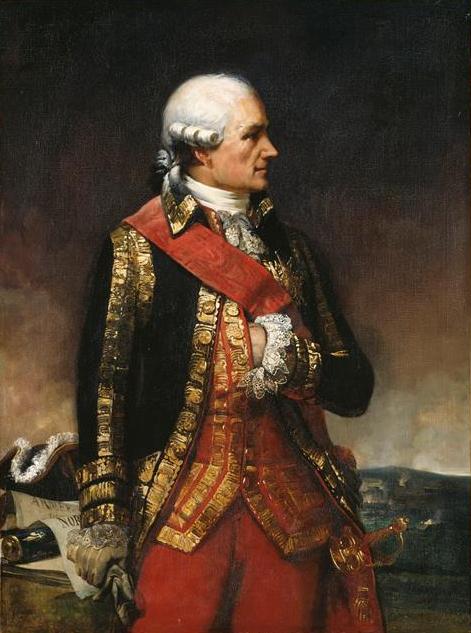
Back in Episode 257, I talked about the arrival of the French Army in America.  General Jean-Baptiste Donatien de Vimeur, comte de Rochambeau, led an army of about 5500 soldiers,   With them were seven ships of the line and five smaller frigates under the command of Admiral Charles-Henri-Louis d'Arsac, chevalier de Ternay.  Upon arrival, much of the army and navy was sick from the journey, and also had to scramble to build a defensible position at Newport Rhode Island.

French Navy in West Indies

The French had come to America with far fewer soldiers than originally planned. There were not enough ships to transport all of the soldiers that Rochambeau expected to bring with him. Rochambeau had to cram his 5500 soldiers onto 36 transports, leaving behind much of his equipment, horses, and another 2500 soldiers.  Those who could not get on the ships remained in Brest, waiting for available transport ships to carry them to America.

Washington & Rochambeau
More importantly, Rochambeau wanted a larger French naval presence to gain superiority of the seas.  As long as the British controlled the water off their coast, the French army was little more than a supplement to the Continentals.

French naval priorities, however, remained elsewhere.  With only seven ships of the line, the French had enough to defend against a British naval attack on Newport, but could not go on the offensive.

Recall that Admiral d’Estaing had commanded a French Fleet in America for two years prior.  Most of it was spent in the West Indies.  Admiral d’Estaing had bailed out of a joint assault on British occupied Newport in 1778 after a storm wrecked most of his fleet.  He then spent months in Boston getting repairs.  After that, his fleet sailed to the West Indies where he failed to prevent the British from capturing St. Lucia.  After receiving more ships under the Comte de Grasse, d’Estaing captured St. Vincent and Grenada.  He then sailed north to Savannah, hoping to assist the Americans in retaking that town from the British.  The attack failed and d’Estaing returned once again to the West Indies.

In March of 1780, d’Estaing returned to France, still recovering from wounds he received at Savannah. Command of the fleet in the West Indies fell to Luc Urbain du Bouëxic, comte de Guichen.  The Admiral was in his late 60s.  I won’t go into his lengthy record, but he was an experienced officer with a long record going back to the War of Austrian Succession and the Seven Years War.  He had been commander of the Channel fleet in 1778 and 1779 before heading to the West Indies with another squadron of ships to reinforce the French presence there.

French and Naval forces near Martinque
In April, shortly after his arrival, Guichen went on the offensive taking a fleet of 23 ships of the line and 3000 soldiers in hopes of capturing British-held Jamaica.  Britain had also recently replaced its commander in the West Indies.  Admiral George Brydges Rodney, who I discussed when he led the relief of Gibraltar back in Episode 243, assumed command.  Admiral Rodney was alerted immediately to the French fleet under Guichen taking to sea, and led his own fleet of 20 ships of the line to intercept them.

On April 17, the two fleets made contact, and spent the first few hours jockeying for position.  Rodney had hoped to take advantage of Guichen’s position which had left the French fleet strung out in a fairly loose formation.  Robert Carkett, the commander of the lead British ship, the Stirling Castle, ignored instructions and simply charged directly at the French fleet.  The British commanders behind him followed.  

Another French officer, the third in command comte de Grasse, managed to get most of the French fleet into a tighter position and fight off the attack.  No ships were lost in the battle, which was considered a draw.  But the French suffered 222 killed and 537 wounded in the fierce fighting that day.  The British suffered 120 killed and 354 wounded.

A month later, the two fleets engaged again over several days between May 15 and May 20th.  The fighting was once-again indecisive.  By July, with hurricane season approaching, Admiral Guichen left the West Indies, taking the bulk of his fleet back to France.  British Admiral Rodney took the bulk of the British fleet up to New York to assist with the effort there.  It’s not clear to me why Guichen did not sail up to Newport to assist Rochambeau, but whatever his motivation, he made no attempt to support the French expeditionary force in New England.  French priorities were in the West Indies.

Settling In

Meanwhile, General Rochambeau had arrived in Newport in July and was desperately short-handed.  His immediate concern had been a British attack just after his arrival.  When the immediate threat of an attack dissipated, the French settled in to await the arrival of their reinforcements and an opportunity to attack.  While the British Navy was unwilling to attack Newport, the British ships of the line remained off the coast, keeping the French Navy bottled up in Newport Harbor.  Rochambeau came to realize that no additional support seemed to be on its way, and had to plan to make due with what he had for the foreseeable future.
French Regulars

The French Army made a good impression on the locals, paying hard money for everything they needed.  A local populace who was used to being looted and robbed by both the enemy and desperate Continentals, was pleasantly surprised by French soldiers who did not steal their chickens or strip their orchards, but rather paid for rations with gold and silver. The French rented buildings, which they repaired at their own expense.  The officers rented rooms in the finest homes in Newport and soon intermingled with local society.

If anything, the French army was even more stratified between nobles and commoners than the British Army.  France required an commissioned officer to have at least four generations of nobility in his family tree.  Even wealthy commoners could not become officers, except through the very rare instance of promotion through the ranks.  The enlisted men came from the poorest of the poor in France.  Even so, the effective military discipline and good provisioning by the quartermaster kept most of Rochambeau’s soldiers from engaging in the looting and theft that plagued most other armies.

Because the British had destroyed many of the homes in Newport, Rochambeau made arrangements to have his soldiers repair and rebuild the homes at French expense.  In compensation, the owners would allow soldiers to live in the homes rent free during the time of the French occupation.  This was a win-win, since it permitted the French soldiers to obtain free housing, while the American owners had their ruined properties restored and would receive them back after the French departed.

The discipline and good behavior of the French army soon won over the locals.  Just to be sure, Rochambeau forbade his army from holding Catholic masses out in public in anti-papist New England, and issued orders that the soldiers should not try to attend Protestant services.

The French also spread out their army, setting soldiers not just in Newport but also in Providence and Popasquash, where they also established hospitals for their sick and wounded.  The illness from the poor food and conditions during the sea voyage continued to take its toll.  About 30 soldiers died of disease during the voyage from France.  Another 18 died in July, in the two weeks after the army landed.  By the end of the year, 265 French soldiers had died from disease, most the result of conditions suffered on the voyage across the Atlantic.

Rochambeau maintained tight discipline.  Not only was the smallest theft punished harshly with floggings, officers were even forbidden from hunting during the harvest period to prevent any potential disruptions.  When officers did go riding,, they were ordered to respect fenced land and remain on public paths.  Soldiers were held in isolated camps and needed a pass to go into town. Even then, they had to be accompanied by a non-commissioned officer who was responsible for their behavior.  Fraternization was so strictly blocked that there are no records of venereal diseases or unexpected pregnancies caused by French soldiers.  

French officers, on the contrary, did mingle with the locals, but still remained on best behavior.  They lived with local families and encouraged social gatherings.  Even so, it appears that Rochambeau’s prohibition on sexual relationships seems to have kept the officers from such attempts.  Even officers who had reputations in Europe both before and after Newport, managed to keep it in their pants while in Rhode Island.  One of Rochambeau’s top officers, the Duc de Biron, had multiple affairs in Europe.  He was billeted with a widow and her three daughters in Newport.  The ladies later noted that they grew quite fond of him, but that he never acted inappropriately, and always  treated them as if they were his own sisters.

There were, of course, some isolated incidents.  A French corporal killed an American in August, and was rather quickly tried and shot by firing squad.

French payment in specie for everything then needed made them even more popular with the locals.  It got to the point where the Continentals had to send aides with French purchasing agents to prevent locals from overcharging them.  The only ones complaining were American purchasing agents who could not compete with the French buyers.

Several dozen French soldiers attempted to desert in 1780 while in Newport.  In hopes of maintaining good relations, the Americans passed laws treating French deserters the same as American deserters, to be returned to their units to face punishment.

As it turned out, it was not the enemy, but boredom that would become the primary concern for Rochambeau’s first year in America.  The Continentals were in no condition to go on the offensive, and the British seemed content to keep the French bottled up in Newport. 

It would be several months before Rochambeau and Washington would even meet.  For most of the spring and summer of 1780, Washington was trying, unsuccessfully, to get Congress to provide him with the men and supplies he needed for an offensive.  Making the five day trip to Newport would have taken Washington out of contact with Congress for several weeks, at a time when negotiations over everything were pretty intense.  Washington also was probably reluctant to meet with Rochambeau and admit that he lacked the men and resources to do much of anything.  

Instead, Washington relied on General Lafayette to serve as a go-between for the two armies. Lafayette used the opportunity to try to get Rochambeau to launch an offensive against New York, with the army that Lafayette had originally hoped to command himself.  In late July, Lafayette wrote to Washington that the French army was eager to go on the offensive, that they “detest even the thought of remaining at Newport, and are burning with the desire of joining you. They curse any one who talks to them of waiting for the second division, and are furious at remaining blockaded here.”

At this same time, Lafayette was pressing Rochambeau to launch an immediate offensive against the British in New York. Rochambeau thought this plan was foolhardy.  He complained to the French Minister Luzerne that Lafayette was trying to dictate an extremely risky strategy, and that although Lafayette was representing General Washington, it was not clear that even Washington approved of Lafayette’s plans.

A frustrated Rochambeau finally wrote a letter to Lafayette essentially saying very nicely that the young and inexperienced officer would not become a successful and experienced officer if he tried to lead an army on a highly risky attack that could result in the destruction of that army.  He indirectly accused Lafayette of trying to satisfy his personal ambition by putting the lives of French soldiers at great risk.  Lafayette could have taken great offense at the letter, but decided to back off and accept General Rochambeau’s experience-backed advice.  

From Rochambeau’s perspective though, he had landed in a strange country, had his small navy bottled up and unable to move, had a third of his army still in France awaiting transport, had not yet even met the American commander after nearly two months in America, and was getting all of strategic advice from Lafayette, an officer with almost no experience and still in his early 20’s.  No experienced officer in his right mind would launch an offensive against a superior enemy in those circumstances.  Certainly, before anything could happen, Rochambeau needed to meet and confer with General Washington in person.

It did not help when word reached both Rochambeau and Washington that the Americans suffered the loss of a Continental Army in the south, this time under General Gates at Camden. This further threatened the American claims of independence in the southern states, and put even greater demands on Washington to send a third army to the south.  Doing so would mean his depleted army in the north would get even smaller.  Also news that the French General de Kalb, who had joined the Continental Army, was killed in the battle at Camden.  That certainly did nothing to inspire the French. 

Hartford Conference

By September, Rochambeau had been in Newport for nearly two months and still had not met with Washington.  He was fed up with communicating through Lafayette, who Rochambeau still thought was trying to set his own agenda.  Washington finally agreed to meet with Rochambeau in Hartford, Connecticut, about half-way between the French and Continental camps.

French & American Troops at Hartford
As I said, Washington had been reluctant to meet because he was focused on building up his own army after its decimation during the previous winter at Morristown.  He only had a few thousand Continentals under arms.  Most of his attention over the summer was writing to Congress and to various state leaders trying to impress upon them  how important it was to send him soldiers and supplies so that he could make use of the newly arrived French Army to launch an offensive.  Until the Continental army reached a respectable size, Washington would not be able to convince the French to join him on any offensive.

Washington’s headquarters at Morristown was a five day ride from Newport.  The American commander had no time to travel that distance, spend time conferring with the French commander, then returning to New Jersey, all during the summer fighting season when the British might launch another attack from New York against his tiny army.

Finally, by September, Washington decided he could no longer put off a meeting with Rochambeau.  The two leaders agreed to meet at a half-way point, in Hartford, Connecticut, about a two and a half day’s ride for each group.

Traveling with Washington to Hartford was General Henry Knox, his chief of artillery, Lt. Colonel Jean Baptist de Gouvion, an French officer who had become Washington’s chief of engineers, and of course General Lafayette.  Also attending were several of Washington’s aides, including Colonel Alexander Hamilton.

General Rochambeau brought Admiral Ternay, several of his other top generals, and his son, the Vicomte de Rochambeau.  The conference had been scheduled for September 20th, but the French delegation was late due to their coach breaking an axle during the trip.  
Jeremiah Wadsworth
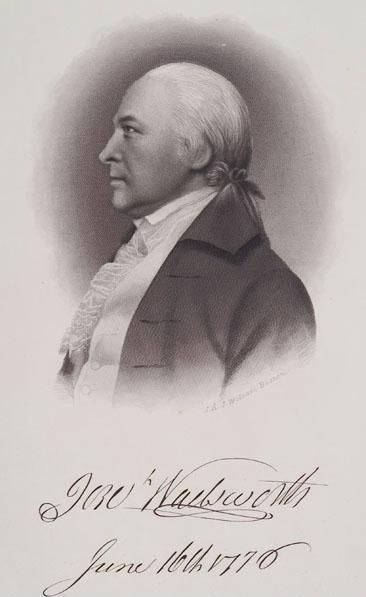
The leaders met at the home of Jeremiah Wadsworth.  He was a Hartford merchant who had been a commissary officer with the Continental Army.  He was a friend of General Nathanael Greene, and was also now serving as a local commissary for the French Army.

The leaders finally sat down together on September 21st to discuss strategy.  Washington was in the embarrassing position of not even knowing exactly how many soldiers he commanded at the moment, as the number was always changing.  He also noted that a large portion of his army would have its enlistments expire at the end of the year.  Even so, he managed to make a positive personal impression on the French officers.

Rochambeau was still awaiting the second half of his expeditionary force to arrive.  Ternay’s naval fleet was still blockaded in Newport Harbor.  They hoped, in vain, that naval reinforcements under Admiral de Grasse might sail up from the West Indies.  Until more French ships and soldiers arrived, the generals agreed they did not have enough resources to launch a successful attack on New York City.  The two leaders agreed that they would need a combined army of 30,000 as well as naval superiority before they could consider such an attack.  

At the time, it was not clear when, if ever, they would have those numbers.  The entire Continental and French expeditionary army in America probably did not total 10,000 soldiers combined.  The only thing that was clear was that there would not be a decisive battle in 1780.  The armies would have to go into winter quarters.  Washington would spend the winter in New Jersey, again.  Rochambeau and his army would spend the winter in Newport.

All Washington could do was ask Rochambeau to pass along more requests for more French soldiers and ships, and also to see if France could spare more money to help the Continentals to keep going.  Hopefully France would fulfill those requests in time for the beginning of the fighting season in the spring of 1781.

After two days of meetings, the leaders agreed that New York City should remain their goal, but at present they could do nothing. Rochambeau would send his son back to Versailles to beg for more money and supplies.  Traveling with Rochambeau’s son would be Colonel John Laurens who had recently been released from parole after his capture at Charleston. Washington would continue to beg Congress to come up with the resources that he needed.

The meeting wrapped up rather quickly after word arrived that the British fleet under Admiral Romney had arrived in New York with thirteen additional ships of the line.  Rochambeau, concerned that this would mean a British attack on Newport was once again imminent, wanted to get back to his army as quickly as possible.

On September 23rd, the two delegations returned to their camps.  Rochambeau would end up spending an entire year in Newport, with pretty much nothing to do.  Washington headed back to New Jersey, stopping in West Point along the way to meet with General Benedict Arnold.  When he arrived, Arnold was nowhere to be found.  But the reason for Arnold’s absence will have to wait for next time.

Next time: General Arnold decides to trade in his blue uniform for a red one.

- - -

Next Episode 264 Arnold Commits treason (Available January 22, 2023)


 Contact me via email at mtroy.history@gmail.com

 Follow the podcast on Twitter @AmRevPodcast

 Join the Facebook group, American Revolution   Podcast: https://www.facebook.com/groups/132651894048271

 Join American Revolution Podcast on Quora 


American Revolution Podcast Merch!

T-shirts, hoodies, mugs, pillows, totes, notebooks, wall art, and more.  Get your favorite American Revolution logo today.  Help support this podcast.  http://tee.pub/lic/AmRevPodcast


American Revolution Podcast is distributed 100% free of charge. If you can chip in to help defray my costs, I'd appreciate whatever you can give.  Make a one time donation through my PayPal account. You may also donate via Venmo (@Michael-Troy-20), Zelle, or popmoney (send to mtroy1@yahoo.com)


Click here to see my Patreon Page
You can support the American Revolution Podcast as a Patreon subscriber.  This is an option making monthly pledges.  Patreon support will give you access to Podcast extras and help make the podcast a sustainable project.

An alternative to Patreon is SubscribeStar.  For anyone who has problems with Patreon, you can get the same benefits by subscribing at SubscribeStar.

Help Support this podcast on "BuyMeACoffee.com"


Visit the American Revolution Podcast Bookshop.  Support local bookstores and this podcast!


Signup for the AmRev Podcast Mail List

* indicates required

Further Reading

Websites

“Conference at Hartford, [22 September 1780],” Founders Online, National Archives, https://founders.archives.gov/documents/Hamilton/01-02-02-0866

“Conference at Hartford: George Washington’s Answers to Queries by the Comte de Rochambeau and the Chevalier de Ternay, [22 September 1780],” Founders Online, National Archives, https://founders.archives.gov/documents/Hamilton/01-02-02-0865

Letter from Rochambeau to Lafayette: https://docs.google.com/document/d/1r3IncAiPsTt5PkUje9PImIQFHlrOCUK_bhoJDpczseA

Free eBooks
(from archive.org unless noted)

Balch, Thomas The French in America During the War of Independence of the United States 1777-1783, Philadelphia: Porter & Coates, 1891. 

Lomask, Milton Rochambeau and Our French Allies, New York, P.J. Kenedy, 1965 (borrow only) 

Rice, Howard C. (ed) The American Campaigns of Rochambeau's Army, 1780, 1781, 1782, 1783, Princeton University Press, 1972 (borrow only) 

Winfield, Charles “The Affair at Block House Point, 1780” The Magazine of American History, Vol 5, pp. 161-186 (Google Books) 

Wright, M. W. E. “What France Did for America: Memoirs of Rochambeau” The North American Review Part 1 May 1, 1917 , Part 2, June 1, 1917   & Part 3,  July 1, 1917 

Books Worth Buying
(links to Amazon.com unless otherwise noted)*

Ferreiro, Larrie D. Brothers At Arms : American independence and the Men of France and Spain Who Saved It, Alfred A. Knopf, 2016  (borrow on Archive.org) 

Kennett, Lee The French Forces in America, 1780-1783, Praeger, 1977. 

Scott, Samuel F. From Yorktown to Valmy: The Transformation of the French Army in an Age of Revolution, Univ. Press of Colo. 1998 (borrow on archive.org). 

Vail, Jini Jones Rochambeau: Washington’s Ideal Lieutenant, Word Association Publishers, 2020.

Weelen, Jean E. Rochambeau, Father and Son, H. Holt and Company, 1936 (reprint 2016) (borrow on Archive.org). 

Whitridge, Arnold Rochambeau: America’s Neglected Founding Father, Macmillan, 1965.  (borrow on Archive.org) 

* As an Amazon Associate I earn from qualifying purchases.


Sunday, December 25, 2022

ARP262 Piqua Raid


In our last episode, the British in Georgia and South Carolina forced what was left of any organized resistance into the western mountains.  Leaders including Elijah Clark, Francis Marion and Thomas Sumter all had to escape from the British and loyalist forces under the overall command of General Charles Cornwallis.

Cornwallis’ main focus in late 1780 was in securing the more heavily-settled eastern parts of the southern colonies and moving north to secure North Carolina and hopefully eventually Virginia.  With a limited number of men, his main focus kept him looking forward.  As I discussed last time, Cornwallis devoted almost none of his resources to securing the lands in Georgia and South Carolina that were already considered retaken. 

Major Patrick Ferguson had the responsibility to raise new provincial regiments from within the conquered colonies, mostly with the support of provincial regiments that had been sent south from New York, New Jersey, and Pennsylvania.  Raising new regiments and pacifying the colonies had proven disappointing.  But as the summer of 1780 wore on, the British position seem to improve, especially following the destruction of the Continental Army at Camden.

The British also hoped to recruit more Native warriors to support the king in his time of need.

Native Views on the Revolution

As I’ve discussed before, a great many native tribes really hoped to remain neutral in what they saw as a fight between two different groups of Europeans.  That is mostly what the Continentals wanted since if the natives did take a side, it would likely be with the British.

Battle of Piqua
The history of native involvement in the Revolution follows a similar sad pattern to native interactions with the Europeans both before and after the war.  For the most part, tribes wanted to stay out of fights between others.  But they frequently had to deal with encroachments into their land. When they saw an opportunity to do something about it, they would fight, often brutally.  But almost always, the enemy would mount an even larger and more brutal campaign against them, usually forcing them to cede more land and move further west with their survivors.

I’ve already covered the Iroquois in western New York, who largely sided with the British operating out of Quebec and who had been forced by the Sullivan Campaign (see Episode 230) in 1779 to move into what is today Canada.

To the south of the Iroquois were the Delaware, Mingo, and Shawnee who controlled the Ohio Valley.  Below them were the Cherokee, who controlled the areas west of settlements in Virginia and North Carolina.  South of the Cherokee were the Creek and Choctaw, which dominated the areas west of Georgia and South Carolina, as well as parts of Florida.  None of these tribes were particularly unified and there were many sub-tribes within these larger populations, which I won’t discuss too much as I could probably write an entire book on that topic alone.

I have discussed in earlier episodes how especially the Cherokee had tried to take advantage of the divisions early in the war to take back territory in the Carolinas, only to be beaten badly and forced to cede more land.

British agents hoped to use this discontent to encourage the native warriors to back British efforts to subdue the rebellious colonies.  They argued convincingly that the government in Britain was the Indians’ best hope of holding back the westward expansion that the colonists wanted.  As such, many local tribes were willing to give some backing to the British, but it never became the united all-out effort that might have made some difference.

Retreat to the Watauga Valley

As I mentioned last week, Colonel Thomas Brown was meeting with Creek leaders in Augusta, Georgia when they were attacked by Elijah Clarke’s militia.  This resulted in the British chasing Clark’s militia into the western part of North Carolina, which was still being disputed by settlers and natives.  Most of those doing the chasing were Creek and Cherokee warriors who had been the main defense available to Brown at Augusta.

Fort Watauga, NC

This loyalist force chased down and hanged many of the men they captured.  They burned the farms that belonged to families of the men who had taken up arms against Britain and were by this time on the run.  As a result, Clarke’s forces in North Carolina left them with about 300 militia and about 400 women and children who were families of his militia.

Although the British still considered the area where Clarke’s men ended up to be Cherokee Territory, the Cherokee had been forced to cede it after their 1775 uprising.  As a result, Clarke’s men and their families received a friendly welcome by the settlers living there.  These settlers were patriots by temperament, probably at least in part because the British government did not recognize the legality of their land claims in this area, but the patriot government did.  

Clarke’s retreat into this region spurred many of the locals, known as the “overmountain men” to activate their militias and move east to confront the loyalist forces under Patrick Ferguson, eventually leading the Battle of King’s Mountain, which I hope to get to soon.  Had the Cherokee still been in control of this region, Clarke might have found himself with nowhere to go. His men would have had to surrender or fight to the death.  Fortunately for them, the patriots still had this haven west of the mountains where they could regroup and attack again.

Patriot-Controlled Kentucky

To the North of Watauga, the Virginians under George Rogers Clark, no relation to Elijah Clarke, had secured most of the land up to the Ohio River in what was known as the Kentucky County of Virginia.  There were really no British settlements in the region.  The few non-Indian settlements in the region were Spanish or French settlers.  As I’ve discussed most recently, in Episode 249, George Rogers Clark had been fighting off encroachments mostly supported by British agents opening out of Detroit.  Most of those who Clark and his Virginians were facing were native warriors.

The most recent offensive against the Virginians had come in the Spring of 1780 when tribes, mostly from Canada, came down armed with British weapons and supplies, to attack the Spanish in Saint Louis and the Clarke’s Virginians in Cahokia.  The closest Continentals were up in Fort Pitt, in what is today western Pennsylvania.  

George Rogers Clark

Although Clarke had fought off the spring offensive, war chiefs among the Shawnee, Delaware, and Mingo thought that they were in grave danger of losing their lands and had formed mutual defense pacts to support one another.  Further, small raiding parties from across the Ohio River continued to incite terror among isolated farms in the region.

In June, British officers supplemented by native warriors conducted several raids into the Kentucky region of Virginia.  Captain Henry Bird (aka Byrd), a British regular officer stationed in Detroit, marched a war party over 600 miles as part of the effort to retake the region.  Byrd’s warriors secured Martin’s Station, where he used field artillery to threaten the stockade.  The people inside surrendered.  As the natives plundered their property, Byrd took charge of the prisoners and eventually marched them back to Detroit over a six week period.  Byrd went on to destroy a number of other outposts before his return to Detroit.

The Virginians under Colonel Clark had built Fort Jefferson near the confluence of the Ohio and Mississippi Rivers.  The fort was named after Virginia’s current Governor, Thomas Jefferson.  While the fort itself was secure, and established Virginia’s presence in the region, it did not protect the many farms and homesteads in the region.

Clark determined that he would need to lead a force across the Ohio River to exact retribution and deter further attacks.  In late July, Clark assembled a force of about 1000 men.  Most of these were locals who turned out with the militia, but it also included his regiment of Virginia regulars.  All of these men were experienced Indian fighters, including Simon Kenton and Daniel Boone.

With Clark was Colonel Benjamin Logan, a veteran of Pontiac’s Rebellion and Lord Dunmore’s war.  He had been raised in Virginia and was one of the early settlers in Kentucky.  Logan would lead one of the three divisions.  

Colonel William Lynn (aka Linn) also took command of a division. Lynn had served as a scout for the Braddock expedition to Fort Duquesne back in 1755.  He also served on the Forbes Campaign of 1758, along with Colonel George Washington, in the second British effort to take Fort Duquesne. He was wounded during his service in Lord Dunmore’s war in 1774.  It is likely during this conflict that he first met George Rogers Clark.  Like the others Lynn had settled in Kentucky and was regularly involved in actions against the natives.

Also joining the expedition from Louisville was a Battalion under the command of James Harrod, a Pennsylvania native who had settled in Kentucky in 1774. Colonel Clark also took with him an artillery company with a brass six-pounder field gun that he had captured at Vincennes the year before.

Even as Clark gathered his army, the native forces were on alert and hostile to any movements.  A small hunting detail from the Louisville militia moved away from the main force as it traveled to meet up with Clark.  They stumbled across an abandoned Indian camp and were shortly thereafter ambushed by a small group of native warriors. The group suffered ten casualties, including two killed and two wounded so badly they had to be returned to Louisville for care.  

The other six wounded were able to make it to the rendezvous at Licking, where they remained to convalesce and protect the supplies left there.  The fort that Clark established there at Licking, as a supply base, later became the site of the town of Cincinnati.

Kentucky Theater - 1780
On August 2, despite insufficient food supplies, the army began its march north.  Clark’s division led the column, with Logan’s division protecting the rear.  To guard against ambush, Clark deployed the men in four lines about 40 yards apart, with flankers to monitor for attackers.  The seventy-mile march was a difficult one, given that the men had to cut a road for wagons and the artillery.

Clark’s targets were two Indian towns that operated as supply bases for the raiders: Chillicothe and Piqua.  The force reached Chillicothe the evening of August 5.  Reconnaissance found the villagers were in the process of abandoning their homes.  Word of their arrival had reached the inhabitants, who fled their homes.  The column rushed ahead to attack whoever might be left, but found Chillicothe empty, although food left cooking over the fires indicated that some had fled just moments before their arrival.

The Shawnee had set on fire a council house and a fort. The Virginians then went about looting what they could in the town and burning what they could not carry.  This included all the buildings and several hundred acres of crops.

Clark received word that the local Shawnee were prepared to stand and fight an Piqua, about twelve miles away.  After two days in Chillicothe, Clark ordered his Virginians on a night march through a downpour.  The weather forced the column to stop, so that they did not reach the fort until the following afternoon, August 8.

Piqua

Piqua was a center of activity for the Shawnee, who had settled in this region about twenty-five years earlier.  It consisted of large log houses in a line that stretched about three miles.  The homes were spread out so that residents could grow beans and corn in large gardens around the homes.  On an elevation the people had built a stockade for defense.  It was also used as a meeting place for political gatherings and for the local council.

Black Hoof
Some records indicate that about 3000 people lived at Piqua before the war.  With the advance of the Virginians, most of the women and children fled the town.  They had received a warning in advance from French settlers in Vincennes, or from a deserter from Clark’s army.  Remaining to defend the town were about 450 warriors.  Most were local Shawnee, but were being supported by Mingo, Wyandot, and Delaware, as well as a handful of loyalists, all facing about one thousand attackers.  A chief named Black Hoof led the Shawnee into battle.

Black Hoof was an experienced warrior.  Twenty-five years earlier he had been a warrior at the Battle of the Monongahela, near modern day Pittsburgh.  He and his fellow warriors decimated the British Army under General Braddock, and gave young Colonel George Washington his first experience in a major battle.

It is believed he also participated in the Battle of Point Pleasant during Lord Dunmore’s War in 1774, and was involved in the siege of Boonesborough in 1778.  He had devoted his entire life to staving off the encroachment of Virginians into his tribe’s land.

The Attack

Clark divided his men into three divisions.  Colonel Logan led one division along the river to prevent any Shawnee from escaping from Piqua to the east.  Colonel Lynn led a second division against the defenders’ left flank.  Colonel Clark brought his regulars and artillery against the center toward the stockade.

Upon seeing the size of the attacking force, many of the Shawnee warriors withdrew from the town.  They were able to escape because Colonel Logan’s forces, who were supposed to be in a position to attack these retreating men, got mired down in a swamp turning their march, and were unable to get into position in time.

Piqua Battle Map
A portion of Shawnee stood and fought in Piqua, among them was the loyalist Simon Girty, who remained on the field, despite the fact that the Americans had a price on his head, dead or alive for his treason and his support of Indian warriors who tortured and killed American prisoners.

The fight lasted for several hours, with each side attempting to outflank the other, and sometimes involving brutal  hand to hand combat.  The Virginians had to ford a river while taking enemy fire Eventually the defender’s of Piqua withdrew and made their escape from the much larger force of attackers.  

After some time, Clark managed to bring up his canon, which fired about fifteen rounds into the stockade.  The native defenders attempted to sally forth and take the cannon.  Clark ordered two white flags raised and called for a cease-fire.  The native warriors continue to move forward, causing the artillery company to abandon the cannon.  At that point, Rogers order the white flags lowered and fired on the enemy.  The advancing warriors quickly dispersed and fled into the cornfields to make their escape.

During the battle, an American prisoner of the Shawnee, Joseph Rogers, attempted to escape and flee to the American lines.  He was shot during the battle but managed to reach his cousin, George Rogers Clark, before dying in the colonel’s arms.

The Virginians spent the rest of the day trying to track down and kill any remaining enemy. That night, they camped around the burned remains of the enemy fort.  The following day, the Virginians found a native man in a field tending to his wounded son.  They executed both of them.  They also executed a female prisoner that they had captured.  They also dug up several graves for the purpose of obtaining loot and scalps.

In response after the army withdrew, the Shawnee brought several militia prisoners who had been captured weeks earlier.  At the site of the destroyed town, the natives tied their prisoners to stakes and burned them alive. They also dug up the graves of several attackers who died in battle and scalped the corpses. 

Total casualties for the battle are unclear.  Clark reported only fourteen of his men killed and thirteen wounded.  However, a review of other witness accounts indicates that American casualties were probably three times that number.  Clark also noted only five enemy dead, and three wounded, but since the Shawnee often carried off their casualties, and we have no good records for them, their losses were almost certainly much higher as well.

Aftermath

With Piqua in the possession of the Americans, Clark and his men set about burning the town and all of the surrounding corn fields.  They also burned a nearby British trading post known as Loramie’s Store. Passing through Chillicothe on their return, they continued to destroy more crops in that area. Once back across the Ohio River on August 14, they separated, and the militia returned to their homes.  Clark would travel east back to Richmond, where he attempted to get Governor Jefferson to back a larger invasion force to take Detroit from the British.

Among the witnesses of the destruction at Piqua was a twelve year old boy named Tecumseh.  The future war chief observed the destruction of his hometown personally and carried the pain of the destruction with him for the rest of his life.  The Shawnee abandoned Piqua and established a new town about twenty miles further north.  The loss of their crops led to a hungry winter, and a desire to seek revenge in the following spring.

- - -

Next Episode 263 Hartford Conference 


 Contact me via email at mtroy.history@gmail.com

 Follow the podcast on Twitter @AmRevPodcast

 Join the Facebook group, American Revolution   Podcast: https://www.facebook.com/groups/132651894048271

 Join American Revolution Podcast on Quora 


American Revolution Podcast Merch!

T-shirts, hoodies, mugs, pillows, totes, notebooks, wall art, and more.  Get your favorite American Revolution logo today.  Help support this podcast.  http://tee.pub/lic/AmRevPodcast


American Revolution Podcast is distributed 100% free of charge. If you can chip in to help defray my costs, I'd appreciate whatever you can give.  Make a one time donation through my PayPal account. You may also donate via Venmo (@Michael-Troy-20), Zelle, or popmoney (send to mtroy1@yahoo.com)


Click here to see my Patreon Page
You can support the American Revolution Podcast as a Patreon subscriber.  This is an option making monthly pledges.  Patreon support will give you access to Podcast extras and help make the podcast a sustainable project.

An alternative to Patreon is SubscribeStar.  For anyone who has problems with Patreon, you can get the same benefits by subscribing at SubscribeStar.

Help Support this podcast on "BuyMeACoffee.com"


Visit the American Revolution Podcast Bookshop.  Support local bookstores and this podcast!


Signup for the AmRev Podcast Mail List

* indicates required

Further Reading

Websites

Martin’s Station: https://explorekyhistory.ky.gov/items/show/443

Destruction of Ruddle’s and Martin’s Fort: https://kynghistory.ky.gov/Our-History/History-of-the-Guard/Documents/DestructionofRuddlesandMartinsFort.pdf

Fraser, Kathryn M. “Fort Jefferson: George Rogers Clark’s Fort At The Mouth Of The Ohio River, 1780-1781.” The Register of the Kentucky Historical Society, vol. 81, no. 1, 1983, pp. 1–24. JSTOR, http://www.jstor.org/stable/23379603

Rauch, Steven J. “Southern (Dis)Comfort: British Phase IV Operations in South Carolina and Georgia, May–September 1780.” Army History, no. 71, 2009, pp. 34–50. JSTOR, http://www.jstor.org/stable/26296758

Conkwright, Bessie Taul. “A Sketch OF THE Life and Times OF GENERAL BENJAMIN LOGAN.” Register of Kentucky State Historical Society, vol. 14, no. 41, 1916, pp. 19–35. JSTOR, http://www.jstor.org/stable/23368558

Colonel William Lynn: https://filsonhistorical.org/wp-content/uploads/publicationpdfs/20-3-4_Pioneer-Linns-of-Kentucky_Beattie-George-William-Helen-Pruitt-Beattie.pdf

J. Martin West, George Rogers Clark and the Shawnee Expedition of 1780 http://npshistory.com/series/symposia/george_rogers_clark/1991-1992/sec1.htm

Battle of Piqua http://touringohio.com/history/battle-of-piqua.html

Free eBooks
(from archive.org unless noted)

Bodley, Temple George Rogers Clark: His Life and Public Services, Boston: Houghton Mifflin Co. 1926. 

Clark, George R. George Rogers Clark Papers 1771-1781, Springfield: Illinois State Historical Library, 1912. 

James, James A. The Life of George Rogers Clark, Chicago: Univ. of Chicago Press, 1928. 

Randall, E. O.  History of Ohio; The Rise and Progress of an American State, vol. 2, New York: Century History Co. 1912.

Books Worth Buying
(links to Amazon.com unless otherwise noted)*

Calloway, Colin G. The American Revolution in Indian Country: Crisis and Diversity in Native American Communities, Cambridge Univ. Press, 1995 (read on archive.org). 

Harrison, Lowell Hayes George Rogers Clark and the War in the West, Univ. Press of Kentucky, 1975 (read on archive.org). 

Nester, William R. George Rogers Clark: “I Glory in War”, Univ. of Oklahoma Press, 2012. 

* As an Amazon Associate I earn from qualifying purchases.


Saturday, December 10, 2022

ARP261 Augusta Raid


In the last couple of episodes I covered the loss of a second southern army at Camden, where General Cornwallis easily crushed a larger force under General Horatio Gates.  Following that loss, British forces focused on the last few patriot militia armies still causing trouble in South Carolina, pushing most of them further west, into or beyond the mountains.

The decisive British victory seemed to secure South Carolina for British rule, making it the second colony, after Georgia, to return to Crown authority by the fall of 1780.  

Control of Augusta

British control, however, always seemed to prove far more fluid than officials would have liked.  Recall that the British had recaptured Georgia in late 1778, when a relatively small force captured the town of Savannah.  The British attempted to secure the entire colony by setting up an outpost in Augusta, but quickly determined that a force that far inland only made itself a tempting target for patriot militia attacks.  British control over Georgia by the spring of 1779 was limited to the greater Savannah area.  

Thomas Brown

Augusta was a frontier village, well inland, and farther up the Savannah River from the town of Savannah.  It was one of the original five towns established in the 1730’s by James Oglethorpe when he first organized the Georgia Colony.  He named the town after the Princess of Wales, Augusta of Saxe-Gotha.  At the time, she was the daughter-in-law of King George II, and would soon become the mother of the future King George III.

Originally, the town of Augusta was well within Creek territory, and was established as a trading community with the local tribes.

During the war, Britain wanted to do whatever it could to reestablish control of the entire colony.  The army returned Governor James Wright to Savannah, to return civilian control to the colony. The British army managed to mount a raid into South Carolina that nearly recaptured Charleston in 1779, then managed to survive a joint attack by Continental and French forces in that fall.

After fending off that attack, the British would not venture out of Savannah.  Large numbers of patriot forces in the west, and just over the river in South Carolina made that too much of a risk.  A patriot state government continued to meet in Augusta and claimed control of Georgia.  In early 1780, the patriots proclaimed Augusta to be the seat of government for the colony. The relatively small British garrison at Savannah could only watch these events unfold from Savannah. The British could not risk spreading their forces too thinly to control more than Savannah, and left Augusta under patriot control.

Then came the British capture of Charleston in May of 1780.  That changed everything.  Suddenly, the threat of Continental attacks from South Carolina disappeared.  British officials in Savannah decided it was time to retake Augusta and establish real control over the entire colony once again.

Thomas “Burnfoot” Brown

The task of subduing Augusta fell to Lieutenant Colonel Thomas “Burnfoot” Brown.  I’ve mentioned Colonel Brown in a number of earlier episodes.

Brown was the son of a wealthy English merchant.  His family could trace its ancestry back to minor nobility, but Brown’s branch of the family had lost that title to an older sibling generations earlier.  As a young man in his twenties, Brown used his father’s money to recruit more than seventy indentured servants.  

British Map of George & South Carolina
In late 1774, he brought this group to Georgia, where he established a new community called Brownsborough, on a large tract of land of more than 5000 acres just north of Augusta. Given the young man’s wealth, Governor Wright made Brown the magistrate for the region.

When the war broke out, in the summer of 1775, shortly after word arrived of the battles of Lexington and Concord, and less than a year after Brown’s arrival in Georgia, the local sons of liberty attempted to coerce him into joining the local patriot cause.  Brown refused, saying he would never take up arms against his own country.  

The mob seized brown and tortured him, trying to get him to pledge his support to the patriot cause.  Various accounts say that his attackers partially scalped him, tarred and feathered him, and burned off the bottoms of his feet.  Eventually, Brown succumbed to the torture and pledged his support. 

As soon as he escaped his captors, Brown recanted his pledge and began organizing loyalists in the backcountry.  He first fled to South Carolina, but after being pursued by patriots there, he moved further west, living among the Creek and Cherokee.  Later, he made his way to St. Augustine where he worked with East Florida’s Governor Patrick Tonyn to establish a regiment of loyalist rangers.

By early 1776, Brown had a commission as a lieutenant colonel.  He spent the next couple of years leading his rangers and Indian allies against the patriots in a series of border skirmishes between Georgia and East Florida.  The border fighting proved relatively inconclusive, but prevented the patriots from capturing the much smaller colony of East Florida.

Brown joined with the larger force that captured Savannah at the end of 1778.  His rangers then attempted to reclaim the area around Augusta, which included Brown’s home.  The fighting included the battle of Briar Creek, which I covered in Episode 213.  As I’ve already said, the fighting between patriots and loyalists in this region was pretty savage and merciless.  Brown was a part of that.  He showed his ability and bravery as a partisan fighter, wounded several times, but always avoiding capture.

In 1779, shortly after the capture of Savannah, Brown received a more formal commission as a lieutenant colonel of his provincial regiment, now called the King’s Rangers.  Brown also received a commission that same year as Superintendent of Indians for the Creek and Cherokee tribes. His rangers fought in the defense of Savannah during the siege that took place in 1779.  

When General Henry Clinton brought his larger army south with the intent of recapturing Charleston, South Carolina, he deployed part of his force, about 1400 soldiers under General James Paterson, to Savannah.  Paterson’s orders were to secure Augusta.  Before Paterson could begin his campaign, he received orders from Clinton to move north and assist with the attack on Charleston.  Clinton was calling in all his available forces to ensure the success of his siege in South Carolina.

Paterson’s departure left only a relatively small garrison at Savannah, including Colonel Brown and his King’s Rangers, which was about the same number that had been unable to take Augusta for over a year.

But when Charleston fell in May of 1780, there was no longer any patriot threat from South Carolina that endangered a British expedition from Savannah against Augusta.  Most of the patriot militia that had been guarding Augusta had been moved into South Carolina to move the fight there. It was estimated that probably less than 50 patriot militia had been left behind to defend Augusta.  

General Clinton approved Colonel Brown’s desired offensive to retake Augusta.  Brown left Savannah with his King’s rangers, and supplemented by other provincial units.  His force totaled about 300 men. Brown moved slowly, reconnoitering carefully to avoid any ambushes..  He reached Augusta in early June, after about a week’s ride.

Brown met no resistance.  The few unrepentant patriots had fled the region.  Many local militia who had backed the patriots now offered their services to Brown’s loyalists, hoping to avoid punishment for their former treason.  Brown did not take on these suspect soldiers, but he did offer the same terms that Clinton had offered the South Carolina militia.  The men could turn in their weapons and return home on parole, on the promise that they never again take up arms against the crown.  The British took possession of Augusta without a shot fired.

Securing the Backcountry

Brown was not content to sit in a small garrison town.  He knew that securing the countryside was the key to a more permanent end of the rebellion.  He deployed a company of King’s rangers to occupy Fort Rutledge, a small outpost that the South Carolina militia had built deeper into Cherokee land.

Brown gave instructions, not to occupy the fort, but to destroy it.  He did not want to leave a defensive position that the enemy might reoccupy. At the same time, he wanted to assure his Cherokee allies that he would respect their land claims.  Brown followed up on the destruction of Fort Rutledge by removing frontier families who had illegally squatted on Cherokee lands.

As the British army secured South Carolina over the summer of 1780, Augusta became the southwestern outpost in a line of outposts designed to cover the interior of both colonies.  Augusta was about 50 miles south of the main outpost at Fort Ninety-Six in South Carolina.

Brown in Augusta worked with Colonel Nisbet Balfour at Fort Ninety-Six to get approval to build a defensible fort at Augusta.  By late June, Clinton had departed for New York and left General Cornwallis as the commander of the southern theater.  Balfour wrote to Cornwallis, asking for approval to build a fort at Augusta.  

Cornwallis wrote back a few days later, denying the request.  He allowed for the construction of field works to house the garrison, but no new permanent redoubts or earthworks at either Augusta or Ninety-Six. Cornwallis did not give any reason for his refusal.  Part of it may have been the costs that would be incurred.  Cornwallis was also trying to spread the perception at this time that the British had restored peace to the region and that the war was over.  Law and order had returned.  Building a fort would run against that narrative. 

Cornwallis wrote to Georgia Governor Wright about this same time saying: 

so long as we are in Possession of the whole Power and Force of South Carolina, the Province of Georgia has the most ample and Satisfactory Protection by maintaining a Post at Savannah and another at Augusta, nor can I think myself justified in incurring any further expence on the Army Accounts for the Protection of Georgia.

In other words, if South Carolina is secure, then Georgia has nothing to worry about.  We arg going to focus our military resources on the front lines, not on some region that is already well behind where we expect the fighting to move.

Complying with orders, Brown did not build any major defenses, only a small stockade near the river, named Fort Grierson, named for a loyalist colonel from the region.  This was really only a storehouse for supplies.  It was not designed to be large enough to house the garrison or provide any real defense of Augusta.

Over the next couple of months, the British plan seemed to be working.  Locals turned out to join up with the loyalist militia.  Even former patriots began to accept British rule and comply with enlistment requests.

Brown proclaimed that he would keep the peace, and promised immediate hanging to any lawless elements who dared to disturb the king’s peace by attacking or raiding any plantations.  Law and order, however, was easy to proclaim, but hard to enforce.  Since Brown had disarmed many of the former patriots, many criminals began to proclaim themselves loyalists and attacked unarmed plantations in the king’s name.  Brown noted that these men were cattle rustlers and horse thieves.  They were criminals who would be prosecuted and hanged if caught, but catching them was not that easy.  Highway robberies along the route between Savannah and Augusta became commonplace.  

Governor Wright requested that Cornwallis send cavalry to run down these criminals, but Cornwallis took the perspective that he was still fighting a real war in South Carolina. Georgia would have to take care of its own law enforcement.  Cornwallis had left only about 800 soldiers in all of Georgia.  The majority of these were in Savannah.  Most of the rest made up the garrison at Augusta.  There were almost no regulars among them.  Most, aside from Brown’s King’s Rangers, were provincials from New York, New Jersey, or Pennsylvania, supplemented by a few Hessian companies.

The military command at Augusta was placed under the larger military command at Fort Ninety-Six in South Carolina, meaning soldiers at Augusta could be recalled to fight in South Carolina as needed.

After a few weeks, Governor Wright grew concerned about the former rebels who were under parole in Georgia.  He feared they might rise up again.  Following the lead of Clinton in South Carolina, Wright tried to crack down on the parolees, issuing an order in July which denied former rebels the right to keep and bear arms, who hold any government office.  They could be brought before a magistrate at any time to swear allegiance to the crown, and could be required to post bond for continued good behavior.  Failure to comply could mean imprisonment or impressment into the British Navy.

Wright, however, saw that when officials in South Carolina tried to impose unacceptable conditions on parolees, it only motivated them to take up arms and begin fighting again. So Wright was hesitant to enforce his proclamation in the western parts of Georgia.  He was still hoping that Cornwallis might send reinforcements to help him enforce these proclamations with muskets and bayonets.

Colonel Brown was not convinced that hesitating  and simply hoping the quiet would continue was the best plan.  He had about 300 men at Augusta, but there were around 500-600 parolees in the surrounding area.  Some of these men had already taken up arms again under Elijah Clark, the Georgia patriot who was engaged in guerilla fighting in South Carolina.  Absent any orders though, there was little Brown could do.  

Instead, Brown focused on holding talks with Creek and Cherokee warriors.  The natives could provide hundreds of warriors if needed.  Brown convinced many of them that the British would respect native land claims, while the patriots clearly had not.

Siege of Augusta

In September, Brown was meeting with several war chiefs in Augusta when he received word that his garrison was under attack.

Colonel Elijah Clark had recruited a force of between five and six hundred partisans to retake the region.  At about 9:00 AM on September 14, Brown launched a three-prong attack against the loyalist garrison at Augusta.

Brown first received word that an Indian camp just outside of town was under attack by the rebels.  These were the families of Creek warriors with whom Brown had been trying to negotiate a military alliance.

Brown moved his Rangers, along with several field artillery pieces to relieve the attack.  He also left a detachment at MacKay’s Trading post, where he feared the rebels might try to raid the supplies and gifts for the Indians.

By the time Brown’s Rangers reached the Indian encampment, the threat there had faded, but he learned that another rebel column had entered Augusta and were now threatening his rear.

Brown turned around his men and made it back to MacKay’s trading post, where the small detachment was fighting off a rebel attack.  A combined relief force of Rangers and Creek warriors drove all the raiders.  Since the trading post offered the best defensible ground, the loyalists and Creek dug in there, while the rebels returned to August to plunder the town.

Brown’s men found themselves under siege for three days.  While the ground itself was defensible, the defenders found themselves without access to any water.  They quickly became dehydrated and desperate.  There are accounts of men drinking their own urine.  The majority of the force consisted of 250 Creek warriors.  Another 50 Cherokee managed to join the defenders during the siege by swimming across the Savannah River and slipping through the enemy lines.

Word reached Fort Ninety-six of the siege at Augusta, but since the fort was fifty miles away, it took nearly two days for the messages to reach them, and two more days for reinforcements to arrive.  On September 18, four days after the attack began, reinforcements from Ninety-Six reached the besieged loyalists.  Clark’s patriots saw the reinforcements on the other side of the Savannah River, and opted to retreat rather than take on the superior force.

During the retreat, Brown’s men attempted to march out and attack the retreating force.  They manage to capture a few prisoners, one of whom they hanged immediately.  But the defenders were so exhausted and dehydrated after three days and nights of fighting, that they could not really mount much of a pursuit.

The relief force managed to capture more of the retreating prisoners.  Thirteen of those captured were found to be men who had broken their parole, and were hanged.  Several prisoners that fell into the hands of the Cherokee were tortured to death.

The relief force was planning to return to Fort Ninety-Six when they learned that Clark’s patriots had stopped their flight only a few miles up river, and were planning another attack on Augusta as soon as the relief force left.  Instead, the loyalists launched another offensive to capture Clark’s partisans.  Rather than engage a superior force, many of whom were native warriors, the patriots continued to move up the Savannah River until they eventually fled into the mountains of western North Carolina, at which point the main loyalist force returned to Ninety-Six.

The reaction to the American raid on Augusta was swift and severe.  Brown and his loyalists burned the plantations of any patriots in the area.  They seized other personal property. The wives and children of patriots were driven from their lands and forced to join their men who were mostly by this time in western North Carolina.  Loyalists burned over 100 farms they also arrested sixty-eight men who were accused of joining Clark.  Most of these men claimed they had been forced to join and were released after taking an oath of allegiance.  The remaining twenty-three were sent to Charleston to join the prisoners or war being held there.

Following the attack, Brown’s rangers, with the aid of slave labor, built proper fortifications to defend against any future attacks.  The British held control of the region, but the return of the king’s peace and of law and order, remained elusive.

Next time, George Rogers Clark takes his Virginia regiments against Native villages in the Ohio Valley.

- - -

Next Episode 262 Piqua Raid 


 Contact me via email at mtroy.history@gmail.com

 Follow the podcast on Twitter @AmRevPodcast

 Join the Facebook group, American Revolution   Podcast: https://www.facebook.com/groups/132651894048271

 Join American Revolution Podcast on Quora 


American Revolution Podcast Merch!

T-shirts, hoodies, mugs, pillows, totes, notebooks, wall art, and more.  Get your favorite American Revolution logo today.  Help support this podcast.  http://tee.pub/lic/AmRevPodcast


American Revolution Podcast is distributed 100% free of charge. If you can chip in to help defray my costs, I'd appreciate whatever you can give.  Make a one time donation through my PayPal account. You may also donate via Venmo (@Michael-Troy-20), Zelle, or popmoney (send to mtroy1@yahoo.com)


Click here to see my Patreon Page
You can support the American Revolution Podcast as a Patreon subscriber.  This is an option making monthly pledges.  Patreon support will give you access to Podcast extras and help make the podcast a sustainable project.

An alternative to Patreon is SubscribeStar.  For anyone who has problems with Patreon, you can get the same benefits by subscribing at SubscribeStar.

Help Support this podcast on "BuyMeACoffee.com"


Visit the American Revolution Podcast Bookshop.  Support local bookstores and this podcast!


Signup for the AmRev Podcast Mail List

* indicates required

Further Reading

Websites

Thomas Brown: https://www.georgiaencyclopedia.org/articles/history-archaeology/thomas-brown-1750-1825

Coleman, Kenneth. “Restored Colonial Georgia, 1779-1782.” The Georgia Historical Quarterly, vol. 40, no. 1, 1956, pp. 1–20. JSTOR, http://www.jstor.org/stable/40577650

Olson, Gary D. “Thomas Brown, Loyalist Partisan, and the Revolutionary War in Georgia, 1777-1782, Part I.” The Georgia Historical Quarterly, vol. 54, no. 1, 1970, pp. 1–19. JSTOR, http://www.jstor.org/stable/40579039

Olson, Gary D. “Thomas Brown, Loyalist Partisan, and the Revolutionary War in Georgia 1777-1782, Part II.” The Georgia Historical Quarterly, vol. 54, no. 2, 1970, pp. 183–208. JSTOR, http://www.jstor.org/stable/40579065

Elijah Clarke: https://www.georgiaencyclopedia.org/articles/history-archaeology/elijah-clarke-1742-1799

Robertson, Thomas Heard. “The Colonial Plan of Augusta.” The Georgia Historical Quarterly, vol. 86, no. 4, 2002, pp. 511–43. JSTOR, http://www.jstor.org/stable/40584598

Robertson, Thomas Heard. “The Second British Occupation of Augusta, 1780-1781.” The Georgia Historical Quarterly, vol. 58, no. 4, 1974, pp. 422–46. JSTOR, http://www.jstor.org/stable/40580051

Siege of Augusta https://revolutionarywar.us/year-1780/siege-of-augusta

Williams, Samuel C. “COLONEL ELIJAH CLARKE IN THE TENNESSEE COUNTRY.” The Georgia Historical Quarterly, vol. 25, no. 2, 1941, pp. 151–58. JSTOR, http://www.jstor.org/stable/40576770

Free eBooks
(from archive.org unless noted)

Johnston, Elizabeth Lichtenstein, Recollections of a Georgia loyalist, Written in 1836, New York: M. F. Mansfield & Co. 1901. 

Smith, George G. The Story of Georgia and the Georgia People, 1732 to 1860, Macon: GG Smith, 1900. 

Books Worth Buying
(links to Amazon.com unless otherwise noted)*

Cashin, Edward The King's Ranger: Thomas Brown and the American Revolution on the Southern Frontier, New York: Fordham University Press, 1999. 

Coleman, Kenneth The American Revolution in Georgia, 1763-1789, Univ of Georgia, 1958. (read on archive.org)

Hall, Leslie, Land and Allegiance in Revolutionary Georgia, Univ. of Ga Press, 2001. 

Killion, Ronald G. Georgia and the Revolution, Cherokee Publishing Co. 1975 (read on archive.org). 


Piecuch, Jim Three Peoples, One King: Loyalists, Indians, and Slaves in the Revolutionary South, 1775-1782, Columbia: Univ. of South Carolina Press, 2008. 

Russell, David Lee. The American Revolution in the Southern Colonies, McFarland & Company, 2000. 

* As an Amazon Associate I earn from qualifying purchases.