Showing posts with label American Revolution in New Jersey. Show all posts

Sunday, September 4, 2022

ARP254 Springfield


Last time, we covered General Wilhelm von Knyphausen’s foray into New Jersey on June 6-8, 1780, where he hoped to attack the Continental Headquarters at Morristown, but did little more than burn the village of Connecticut Farms.

Battle of Springfield
When Knyphausen launched the attack, he had done so at the urging of men like Governor William Franklin, Governor and General James Robertson and former governor and still current Major General William Tryon.  These men, and other leading loyalists had been receiving word that the Continental army was on the brink of collapse after its harsh winter at Morristown, and was not getting the spring reinforcements that they had expected.  The loyalists were all saying that the people of New Jersey were tired of war, and would gladly rally around any British advance into New Jersey if only to end the fighting.  Knyphausen came to believe he had an opportunity to deal a death blow to the Continental Army before the French Army could land in America, and perhaps getting full credit for the victory by attacking before General Clinton returned from South Carolina.

Kyphausen’s failed attack showed that the Continentals were still very much a force to be reckoned with, and that the New Jersey militia was still more than willing to turn out against the British whenever they set foot in New Jersey.

As with any loss, there was plenty of finger pointing.  Knyphausen said he had been duped by loyalist leaders who gave him bad intelligence about the state of the Continentals and the resolve of the state militia.  Loyalist leaders pointed right back at Knyphausen and the Hessians, saying that he and Colonel Wurmb had moved far too slowly, sitting around for hours in what was supposed to be a lighting strike that would catch the enemy off guard.

Clinton Returns

On June 8, the same day that Knyphausen was bringing his defeated force back to New York, General Henry Clinton boarded a ship in Charleston.  Having defeated the southern army under Benjamin Lincoln, Clinton hoped to make it back to New York in time to confront the French Army that was expected to land any day.  
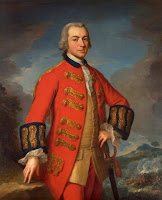
Gen. Henry Clinton

Clinton was unaware of Knyphausen’s raid that had led to the battle at Connecticut Farms.  He had sent word via junior officers, including by some accounts Major John André, that Knyphausen was to be prepared for an attack after the main army returned from South Carolina.  According to one account, an officer had arrived to inform Knyphausen of this on the afternoon of June 6, just as he was launching his raid.  Knyphausen later said the officer only told him that Clinton would return soon, not that the general was planning his own attack after his arrival.

General Clinton made it back to New York in a relatively speedy 10 days, arriving on June 18.  In his later reports, Clinton said that he had planned a two pronged attack with Knyphausen launching an attack similar to what Knyphausen did at Elizabethtown, while Clinton launched another raid to the south at Amboy, knowing that Washington would be unable to defend against both attacks at the same time.

Kyphausen’s raid before he had returned, however, had put the Americans on alert and had greatly reduced the chances of success for a second raid.  At the same time, Clinton also received intelligence from General Benedict Arnold, commander at West Point, who had already agreed to switch sides at an appropriate time.  Arnold reported to Clinton that the French Army was due to land at Newport, Rhode Island.

Washington Scrambles

Knyphausen’s raid that ended at Connecticut Farms certainly put Washington and the Continentals on alert.  After some thought, Washington concluded that Knyphausen’s raid must not have simply been a failed attack.  Rather, it was a feint to encourage Washington to move more of his army further south and closer to New York City in anticipation of the next raid.  If that was what the British wanted him to do Washington believed the next real attack would be for the British to sail up the Hudson River and attack West Point.   It was only late June, with the whole summer and fall fighting season ahead of them, and with Clinton’s main army on its way back to New York, Washington surmised that the British would attempt a much larger offensive, and the most likely target was West Point.

Washington grew even more concerned after learning that the British were concentrating larger forces at Elizabethtown and had even built a pontoon bridge between Staten Island and the New Jersey coast to transport men and equipment much faster.

Even before Connecticut Farms, Washington had been frustrated by the failure of Congress and the states to supply him with enough soldiers to conduct a credible campaign in 1780.  Not only that, Congress had ordered him to send some of his forces south to contest General Cornwallis in the Carolinas after the loss of the southern army under Benjamin Lincoln.  

Samuel Huntington

The President of Congress, Samuel Huntington had specifically written to Washington to let him know that Congress wanted the Continental cavalry under Light Horse Harry Lee to proceed immediately to the Carolinas.  Huntington’s letter included a contingency that said Washington could hold off if the transfer would upset some of his immediate plans.  The normally compliant Washington relied on that to ignore Congress’ request and keep his much-needed cavalry available to monitor the enemy following the attack on Connecticut Farms.  Washington sent an urgent note to the Board of War in Philadelphia requesting the immediate return of Lee’s brigade.  Lee’s infantry had already moved further south, but his cavalry returned to Morristown to assist Washington.

Washington also put General Von Steuben in command of the advance guard, tasking the former commander Lord Stirling with riding through New Jersey and trying to rouse more militia.  Almost 3000 militia had answered the call when the British marched on Connecticut farms, but Washington had to allow about half of them to return home.  Had he tried to force them to stay in the field, they would be less likely to turn out the next time he needed them.  Washington also put General Greene in overall command of the forces in New Jersey, while Washington himself focused on securing West Point, where Benedict Arnold commanded.  Units in upstate New York who were deployed to oppose the attacks by the loyalists and Iroquois from Niagara had to move to West Point to prepare for a defense of that important fort.

General Maxwell 

Still in command at the front lines was General William Maxwell.  In my last episode, I mentioned Maxwell’s key role in preventing the British advance, but I’ve never really given much detail on Maxwell. 

Wm Von Knyphausen

General Maxwell was of Scottish descent, but was born in Northern Ireland.  When he was a young boy, his family moved to Warren County, New Jersey, northwest of Trenton.  At age 21, Maxwell enlisted in the provincial militia and was one of many future generals who had one of his early military experiences on the Braddock Campaign near what is today Pittsburgh.  As a lieutenant in the New Jersey Blues, Maxwell fought in the French and Indian War, participating in the British assault on Carillon where British General Howe’s older brother was killed.

After the French and Indian War, Maxwell continued to serve in the British army as a commissary officer on the frontier.  He spent time at Fort Michilimackinac in what is today Michigan.

Despite his long standing role with the British Army, Maxwell remained a committed patriot.  In 1774, he resigned his commission and returned to New Jersey.  The following year he took a commission as colonel of the Second New Jersey Regiment.  After his regiment joined the Continental Army, Colonel Maxwell led his regiment on the Quebec Campaign under General John Sullivan.

As the war moved to New York in the second half of 1776, Congress appointed ten new brigadier generals in August and September. Colonel Maxwell was not among them.  Finally, in October, after the British had taken New York and were on the verge of invading New Jersey, Congress finally promoted Maxwell to brigadier.

He fought under Washington during the retreat from New York and in the Philadelphia Campaign.  Maxwell has also played a leading role in the Sullivan Campaign of upstate New York.  

Despite his active role, Maxwell did not seem to stand out.  He was known as Scotch Willie to the men and had a rather rough hewn, hard-drinking persona that probably kept him from the favor of gentlemen like General Washington.  In 1777 Washington had authorized him to form the New Jersey Brigade, which was supposed to be an effective light infantry force.  Maxwell did credibly well at Cooch’s Bridge and Brandywine, but did not seem to impress the leadership.

Despite four years of combat as a brigadier by 1780, Maxwell had failed to see promotion.  One reason was probably that New Jersey already had a major general and that two from that state would have been seen as excessive. Another reason was Maxwell’s reputation for drinking, something that would not necessarily prevent his promotion, but certainly did not help.  Washington found Maxwell most useful in his home state of New Jersey, mostly organizing local militia for defense against British raids.

As he had under General Stirling at Connecticut Farms, Maxwell would command a mix of Continentals and militia at the front of the American lines, where the British were expected to attack.

Plan of Attack

Back in New York City, General Clinton blamed the whole state of alert in New Jersey among the Americans in New Jersey on General Knyphausen’s ill-advised assault of June 7.  The two officers were barely on speaking terms after that.  With reports from Arnold that the French were going to land very soon in Rhode Island, Clinton decided that an assault on West Point was out of the question.  Even if British forces captured West Point, the combined Continental and French Army could take it back, and possibly capture a sizable chunk of the British army in the process.

Battle of Sprinfield
Instead, Clinton planned an attack that he hoped would force Washington’s Continentals into combat in open field in New Jersey.  He ordered Mathew and Knyphausen to take 6000 men back across to Elizabethtown and march toward Springfield.  Notably, Clinton put Major General Mathew in charge of the operation, only supported by Lieutenant General Knyphausen.  Clinton would then deploy a second force of 4000 men under the command of Major General Alexander Leslie to Haverstraw Bay, up the Hudson River and about 15 miles south of West Point.  This would put Washington’s Continentals in between two armies, and keep them close enough to New York that his armies could still defend that city against any surprise attack.  The British could then capture or destroy the Continentals before they could escape into the mountains.

The British still held a beachhead at Elizabeth town, which was regularly taking hit and run attacks from the Americans, often Lee’s cavalry who were trying to determine their numbers.  On the night of June 22, a group of Queen’s Rangers, led by Colonel John Graves Simcoe, and Hessian Jaegers sent out a raiding party from Elizabethtown to capture a few American pickets.  They managed to capture a few prisoners, but also lost two men killed, several wounded, and a couple of their own captured by the Americans, who remained on full alert.

That night, in the pre-dawn hours of June 23, the British launched their offensive.  General Mathew was already in Elizabethtown with a division that included the Queen’s Rangers, and a number of other Hessian, loyalist, and regular units.  Knyphausen commanded a second division that would cross the pontoon bridge and support Mathew.  A third division under General Robertson would remain in Elizabethtown to keep open a line of supplies and communication with New York, and also a possible line of retreat.

The Mathew and Knyphausen division would march to Connecticut Farms as they had weeks earlier.  There, they would divide so that Knyphausen would march directly toward Springfield, while Matthew would march back to the east, away from the enemy, and make an unobserved advance toward Springfield from a different direction.

Battle of Springfield

Mathew’s division, led by Colonel Simcoe and the Queen’s Rangers, led the advance beginning around 4:00 AM.  They came into contact with Maxwell's Continentals and New Jersey Militia at Connecticut farms, or what was left of it.  The Americans had set up their defenses amidst the ruins of the house burned their weeks earlier.  In a planned retreat, the Americans pulled back across the Rahway River.  Behind them was the village of Springfield.

General Greene anticipated that the British would probably mount a direct assault as a distraction, while they hit their target with a flanking maneuver.  It was a plan of attack the British had used successfully in many prior battles against the Americans.  So instead of keeping his main force at Springfield, Greene positioned most of his soldiers at Short Hills, a few miles to the north.

A relatively small number of Continentals and militia fought a slow retreat against the advancing British, ultimately sacrificing possession of Springfield with the intent of staying between the British and Hobart Gap, a more defensible area that would be necessary for the British to capture if they wanted to march on Morristown.

As Greene anticipated, Knyphausen pushed directly against Springfield, while Mathew’s division crossed further upriver with the intent of flanking the Americans at Springfield from the side.  Knyphausen used a few small field artillery to amuse the Americans at Springfield while Mathew crossed at the Vauxhall Bridge virtually unopposed.

Knyphausen’s soldiers entered Springfield by late morning.  Apparently against orders, the invading force burned all of the homes in the village.  According to an after-action report, Knyphausen ordered one house to be burned because his troops were taking fire from enemy soldiers in the house.  Other soldiers, seeing that house set on fire, took that action to mean open season on the entire village of thirty homes being burned to the ground.

James Caldwell
The Americans continued to pull back in good order, inflicting casualties and staying between the enemy and Hobart Gap.  There is one story, unclear if it is true, of the Reverend Caldwell fighting with the defenders.  Recall Caldwell’s wife had been killed a few weeks earlier at Connecticut Farms.  When the Americans began to run out of wadding for their guns, Caldwell gave them some hymnals by Isaac Watts to use for Wadding, crying “Give ‘em Watts Boys."

Some of the Americans received orders to launch a counter-attack on Springfield.  These orders were quickly countermanded by General Greene to pull back and take a better defensive position.  Greene did not want to fight the enemy except on the ground of his choosing.  Springfield was not a strategic target.  Keeping the British from reaching Hobart Gap was the goal.  Knyphausen’s forces eventually moved forward to the main American defenses, behind a second branch of the Rahway River. Once again, the Americans withdrew in good order, still inflicting casualties as they pulled back.

Unable to confront the Americans on favorable ground, the frustrated British divisions under both Mathew and Knyphausen ceased their advance by early afternoon.  The two divisions once again concentrated their forces in Springfield, but found the Americans in good defensive positions that could not be dislodged without great loss.

The British then opted to pull back to Elizabethtown.  Greene sent a harassing force of about 120 soldiers to pursue the British, but kept his main army in their defenses.  Lee’s cavalry also exchanged fire with the British rearguard and captured a few stragglers.

By evening the main British forces were back in Elizabethtown and using the pontoon bridge to cross back onto Staten Island.  By dawn the following day, the entire British army was back in New York and had dismantled the pontoon bridge, completely abandoning their toehold at Elizabethtown.

American losses were rather light, only 15 killed, 49 wounded and 11 missing.  British losses, as reported by Knyphausen, were also relatively light, 14 killed, 89 wounded and 11 missing. But several other unofficial reports indicate that British casualties were at least double that amount.  Both sides had acted with caution.  Neither side risked large casualties by engaging with the enemy where the enemy wanted.

Greene, in his first independent command in years, had proven that he knew how to give up ground tactically for a larger strategic victory, something that would serve him well over the next year or two.  The British had bet that the Americans would make the same mistakes they had made in previous battles.  The American generals, however, were becoming more experienced in strategy and were not likely to make those same rookie blunders again.  

The British had also received intelligence that the Continental army was on the verge of collapse and that New Jersey was on the ready to return to crown rule in order to put an end to the chaos under patriot rule. These attacks, both Springfield and Connecticut Farms, made clear that the Continentals could still very much hold their own against a large operation, and that the New Jersey militia was still a force to be reckoned with.

If anything, the attacks made the situation worse for the British.  The burning of Springfield Village handed the Americans another public relations victory.  They could portray the British and Hessians as ruthless savages who had no regard for civilians, which of course, encouraged New Jersey civilians to continue support for the patriots.  All the fighting over resources between the army and civilians over the winter seemed to wash away in the face of a British attack on the New Jersey countryside.

Next Week: British inroads into North Carolina result in the Battle of Ramsour's Mill

- - -

Next Episode 255 Ramsour's Mill 

Previous Episode 253 Connecticut Farms


 Contact me via email at mtroy.history@gmail.com

 Follow the podcast on Twitter @AmRevPodcast

 Join the Facebook group, American Revolution   Podcast: https://www.facebook.com/groups/132651894048271

 Join American Revolution Podcast on Quora 


American Revolution Podcast Merch!

T-shirts, hoodies, mugs, pillows, totes, notebooks, wall art, and more.  Get your favorite American Revolution logo today.  Help support this podcast.  http://tee.pub/lic/AmRevPodcast


American Revolution Podcast is distributed 100% free of charge. If you can chip in to help defray my costs, I'd appreciate whatever you can give.  Make a one time donation through my PayPal account. You may also donate via Venmo (@Michael-Troy-20), Zelle, or popmoney (send to mtroy1@yahoo.com)


Click here to see my Patreon Page
You can support the American Revolution Podcast as a Patreon subscriber.  This is an option making monthly pledges.  Patreon support will give you access to Podcast extras and help make the podcast a sustainable project.

An alternative to Patreon is SubscribeStar.  For anyone who has problems with Patreon, you can get the same benefits by subscribing at SubscribeStar.

Help Support this podcast on "BuyMeACoffee.com"


Visit the American Revolution Podcast Bookshop.  Support local bookstores and this podcast!


Signup for the AmRev Podcast Mail List

* indicates required

Further Reading

Websites

Sobol, Thomas T. “William Maxwell, New Jersey’s Hard Fighting General” Journal of the American Revolution, August 15, 2016. https://allthingsliberty.com/2016/08/william-maxwell-new-jerseys-hard-fighting-general

Battle of Springfield: https://revolutionarywar.us/year-1780/battle-of-springfield

Battle of Springfield: https://www.durandhedden.org/archives/articles/the_battle_of_springfield

Springfield: https://www.revolutionarywarnewjersey.com/new_jersey_revolutionary_war_sites/towns/springfield_nj_revolutionary_war_sites.htm

Battle of Springfield: https://www.myrevolutionarywar.com/battles/800623-springfield

“To George Washington from Samuel Huntington, 6 June 1780,” Founders Online, National Archives, https://founders.archives.gov/documents/Washington/03-26-02-0227

“From George Washington to the Board of War, 8 June 1780,” Founders Online, National Archives, https://founders.archives.gov/documents/Washington/03-26-02-0237

“From George Washington to Brigadier General Nathaniel Heard, 9 June 1780,” Founders Online, National Archives, https://founders.archives.gov/documents/Washington/03-26-02-0244

“From George Washington to Pierre Van Cortlandt, 10 June 1780,” Founders Online, National Archives, https://founders.archives.gov/documents/Washington/03-26-02-0258

Free eBooks
(from archive.org unless noted)

Duer, William  A. The life of William Alexander, Earl of Stirling, Major-General in the Army of the United States during the Revolution: with selections from his correspondence, New York: Wiley & Putnam, 1847. 

Klein, Milton M. (ed) & Howard, Ronald W. (ed) The Twilight of British Rule in Revolutionary America: The New York Letter Book of General James Robertson, 1780-1783, Cooperstown, NY: New York State Historical Association, 1983. 

Nelson, William (ed) Documents relating to the revolutionary history of the state of New Jersey : extracts from American newspapers, Vol. 4,Trenton: State Gazette Pub. Co. 1914. 

Books Worth Buying
(links to Amazon.com unless otherwise noted)*

Fleming, Thomas, The Forgotten Victory: The Battle for New Jersey - 1780, Reader’s Digest Press, 1973. (borrow on Archive.org

Lengel, Edward The Battles of Connecticut Farms and Springfield, 1780, Westholme Publishing, 2020. 

* As an Amazon Associate I earn from qualifying purchases.


Sunday, August 21, 2022

ARP253 Connecticut Farms


We last left the main armies around New York City in Episode 246, in the spring of 1780. For nearly four years, Washington had kept his main army just outside of New York City, waiting for an opportunity to recapture what he had lost.  Britain had taken the city and the surrounding islands  in 1776, but since then had seen almost no success in being able to expand outside of the immediate area and permanently occupy the region around it.  The British had used New York as a base to capture other areas such as Philadelphia, or Newport, Rhode Island, but had to withdraw from those possessions after a short time anyway. 

Connecticut Farms
British General Clinton had hoped to end that stalemate by capturing Charleston and beginning a new offensive in the south.  In doing so, he took the bulk of his army, leaving New York in its weakest state since the British had captured it in 1776.  Hessian General Wilhelm von Knyphausen held the region with only a few thousand soldiers, mostly Hessians and loyalist militia.  

But if British defenses at New York were weak, the Continentals were even weaker. Washington’s army was starving and on the verge of mutiny.  The Continentals were in no condition to launch a major spring offensive against New York.  The British navy still controlled the waters around New York, meaning that even if the Americans did somehow retake the city, they would be vulnerable to being surrounded and captured.  Consequently, General Washington waited for the promised arrival of a French army and a French fleet to help him deliver the final blow to the British in New York. June of 1780 was mostly sitting around waiting for the arrival of the French.

Trumbull v. Watt

With much of the British forces to the south, the Continental Navy managed to get one of its frigates out of Connecticut and into the Atlantic Ocean.  Congress had approved the  28-gun Trumbull to be built in 1775, but shortages and delays meant that this was her maiden voyage, leaving in May, 1780.  

The Trumbull
Captain James Nicholson commanded a crew of about 200 men.  Nicholson was the most senior captain in the Continental Navy, ahead of more notable men such as John Paul Jones or John Barry.  Most accounts I’ve read say that he received such a position of prominence mostly because he came from a wealthy and well-connected family in Maryland at a time when Congress was trying to get southern states more involved in the war.  Nicholson was an experienced officer though.  He was with the British when they invaded Havana at the end of the Seven Years War.

In the Revolution, his career had been rather undistinguished.  Captain Nicholson lost his first ship, the Virginia, when he ran it aground in the Chesapeake Bay trying to escape from a British ship.  The captain fled, leaving his ship and crew to be captured.  He returned the next day under a flag of truce, but only to collect his personal property from the captured ship.  Despite this, Congress gave him command of the Iris, but he lost that after his crew refused to fight.

Nicolson’s command of the Trumbull in 1780 seemed like a final opportunity to prove himself worthy of his command.  When the Trumbull spotted a sail in the Atlantic about 250 miles north of Bermuda, Captain Nicholson closed in for an attack.  The other ship turned out to be the Watt, a British privateer out of Liverpool.  The 32-gun Watt and the 28-gun Trumbull were pretty evenly matched as they approached one another.  The two ships sailed within firing range in the early afternoon of June 1, and opened fire. The battle ensued for about two and a half hours, with the ships circling each other at nearly point blank range and firing as fast as they could.  Both ships took serious damage and were in danger of sinking.  Eventually, the Watt sailed away to New York.  The Trumbull was too damaged to pursue and instead headed to Boston for repairs.  The American crew took about 40 casualties to the Watt’s 90.  But since neither ship managed to capture or sink the other, the battle is generally considered a draw.

British Division

Back on land though, the armies in New York and New Jersey with limited manpower mostly struggled to survive the freezing winter and await reinforcements.  In late May, word of the British capture of Charleston reached New York.  Hessian General Knyphausen knew that General Clinton would soon return to New York, but exactly when was uncertain.  It had taken the British fleet more than a month to sail from New York to Charleston in bad weather.  Clinton had sent word to Knyphausen that he was on his way and that Knyphausen should be prepared to launch an offensive against the Continentals, once he returned.  But those messages never reached New York, so Knyphausen was left in the dark.

Wm Von Knyphausen

Even without orders, Knyphausen knew that Clinton would return.  Knyphausen had received intelligence that the Continental Army under Washington at Morristown had fallen to about 3500 men.  He also knew the enemy was starving and on the verge of mutiny. Knyphausen saw an opportunity to sweep into northern New Jersey, hit Morristown, and possibly destroy what remained of Washington’s army.

Supporting Knyphausen’s plan to invade New Jersey were New Jersey’s royal governor, William Franklin, and New York Governor James Robertson.  Franklin, the royal Governor of New Jersey had been forced from his position in 1776 and taken prisoner by the rebels.  The son of Benjamin Franklin remained in a Connecticut jail for two years, before finally being exchanged in a prisoner swap.  He was sent to British-occupied New York where he consistently advocated for aggressive actions to recapture New Jersey.  He also helped organized loyalist militia, often used for guerilla raids into New Jersey.

James Robertson and only arrived in New York a few weeks earlier.  While Clinton was away taking Charleston, London replaced New York Governor William Tryon with Robertson.  Tryon and Clinton had clashed regularly. Tryon advocated using the army to attack civilian targets, which Clinton opposed. Tryon wanted to destroy morale among the patriots by imposing destruction and misery, and Clinton had a very different policy.  

Tryon was an army general as such had to take orders from General Clinton.  But since he was also governor, he had authority to act on his own in his civilian capacity.  This often led to conflicts. Clinton’s complaining about this eventually led to Robertson replacing Tryon as governor.  Tryon remained in New York as a major general, but was frustrated that Clinton would not give him a command after his raids against Connecticut towns in 1779.  As a result, while Tryon was around for the summer, he would return to London in September, 1780.

James Robertson

Robertson was also a major general in the regular army.  His background is a bit unusual.  The son of a Scottish freeholder, Robertson did not come from poverty, but his family did not have a title or political connections.  It certainly did not have enough money to buy a commission for him.  Robertson got his start in military life by enlisting in the marines.  He was one of the few men of his time who started as a private, but then was able to receive a position as an officer through merit.  He showed conspicuous bravery in leadership in several actions including some under Admiral Vernon in the West Indies, where he served along with Lawrence Washington, a young colonist whose half-brother George would later rise to prominence.

James Robertson
In 1746, Robertson was able to raise enough money to purchase a captaincy in the regular army.  Robertson had cultivated the patronage of several powerful men, including the Earl of Loudon.  That, along with a marriage to an English woman who brought a substantial dowry, permitted him to advance in rank.  He served in America during the French and Indian War, primarily as a staff officer, in charge of quartermaster or other administrative duties. Even so, his abilities and his political connections allowed him to rise in rank. The British commander Jeffrey Amherst helped Robertson receive his lieutenant colonelcy.  He then served under General Thomas Gage, as Barack-master for North America, responsible for the quartering of regulars, something that became a point of contention in the early 1770s.

As open rebellion in the colonies drew closer, Robertson received a commission as brigadier general in America, which would only apply as long as he remained there, and did not come with a bump in pay. Robertson was in Boston during Lexington and Bunker Hill.  His duties remained administrative.  Although he regularly volunteered to lead men in combat, he remained sidelined, eventually evacuating Boston in early 1776 with the rest of the army.

Robertson led a battalion at the battle of Long Island, but only in the second wave, meaning he did not see much combat.  His administrative skills and ability to work with locals helped him to win an appointment as the military commandant of occupied New York.  His reputation in that role was a man of compassion, who tried not to create unnecessary suffering, even for rebels, but at the same time focused on restoring the king’s authority.

In February, 1777, Robertson returned to London, carrying General Howe’s dispatches about the rebel attacks at Trenton and Princeton.  Robertson spent considerable time with Lord Germain, mostly supporting General Howe’s leadership.  Two years later, in 1779, Robertson testified extensively before Parliament, where he was highly critical of General Howe’s actions that had allowed the Continental Army to escape New York and then strike back.  He also advocated for a policy that stressed diplomacy with the colonists, and less reliance on brute military force.  Robertson believed the colonists were mostly disposed to being loyalists, if treated properly.  

It was during this time when Robertson was supporting Germain against Howe in the Parliamentary hearings, that Germain decided to appoint Robertson as the new governor of New York, although it would be another year before Robertson actually took the position.  His commission was signed in May 1779, but Robertson did not arrive in New York City until March 1780.  At the time General Clinton was down in South Carolina and General Knyphausen was considering his plans to attack the Continentals in New Jersey.

Connecticut Farms

Even though Knyphausen had received no word from General Clinton, the support of Governor Robertson and New Jersey Governor Franklin gave him enough backing to proceed with an invasion into New Jersey.  The governors were convinced that the Continentals were on the verge of collapse, and that the long-suffering local New Jersey population would welcome a return to peace, stability, and prosperity under the king’s rule.  They only needed the British to show up and give them a push.

The British assembled a force of about 6000 regulars, Hessians, and loyalists, split into two divisions. The first came under the Command of Brigadier General Thomas Stirling.  The second commander was Major General Edward Mathew.  A smaller third division which Knyphausen commanded himself, along with General Tryon, would also cross into New Jersey and be available as needed. 

The plan was to cross the harbor into New Jersey at night, landing in Elizabethtown at about midnight on the morning of June 7.  From there, Stirling’s division would march north to capture Springfield and Hobarts Gap, while the ships that had carried them would return to New York and continue ferrying Mathew’s division to Elizabethtown.  Stirling’s capture of Hobarts Gap  would give the British a relatively straight shot at Morristown where they would attack what remained of Washington’s main army.

Lord Stirling
General Washington, of course, was well aware of the dangers of a British offensive.  The British had made several forays into New Jersey over the winter.  The Continental officer with overall responsibility for American defenses was Major General William Alexander, Lord Stirling, no relation to the British division commander Thomas Stirling.  More directly responsible for the area was Brigadier General William Maxwell, also a Continental general from New Jersey.

As the British began their landing at Elizabethtown in the early night hours of June 7, Maxwell’s New Jersey militia opened fire.  There were only a few dozen defenders to hold off a landing of thousands of enemy soldiers, so there was no expectation that this would be anything other than harassing fire.  The militia, however, managed to hit General Stirling. He would survive, but command of his division fell to Hessian Colonel Ludwig von Wurmb

The ensuing confusion slowed the move out of Elizabethtown.  Meanwhile the militia commander at Elizabethtown, Colonel Elias Dayton, sent word to General Maxwell and General Washington that a landing of several thousand of the enemy was taking place at Elizabethtown.  Within hours, Washington was personally leading his Continentals toward the battle, while also sending out alerts for the local militia to turn out.

Around dawn, Colonel Wurmb began the 1st division’s march out of Elizabethtown toward an alerted countryside full of Continentals and militia.  Colonel Dayton had pulled back his militia to the small village of Connecticut Farms (known today as the town of Union) about four miles inland.  His militia tore up several bridges along the way to slow the British advance.  At Connecticut Farms, they were joined by more local militia and backed up by General Maxwell, who had deployed the 1st and 2nd New Jersey regiments to prevent a British flanking maneuver against the militia.

When the British division under Wurmb arrived after daylight, the commander sent out probes to test the enemy’s size and position.  A short time later, General Knyphausen himself arrived on the scene with his third division.  

The Americans managed to fight an effective rearguard action, giving up each house and piece of land at a cost for the attackers.  The British force, which was mostly Hessian and loyalist, had been aggravated by a night of constant harassing fire, let loose on the village, looting and burning homes.

One of the homes was that of Reverend James Caldwell, an infamous rebel according to the loyalists.  Caldwell was known as the fighting parson, having regularly used his sermons to support the patriot cause and the fight against the king’s rule.  Loyalists had burned his church in Elizabethtown a year earlier, at which point he had moved his family to the relative safety of Connecticut Farms.

Reverend Caldwell had also served as a chaplain with Maxwell’s regiments.  At the time of the attack, he was in Morristown with the main Continental Army.  Although most civilians had abandoned their homes, Caldwell’s wife and children remained behind.

Later accounts state that a Hessian soldier deliberately shot Caldwell's wife, Hannah Caldwell, as she and her children cowered in the kitchen of their home.  Whether it was deliberate murder or an accident, Hannah Caldwell was killed instantly by an enemy bullet.  The soldiers then burned the home as the children and the maid fled for their lives.  The murder would soon become another rallying cry for the Americans.

By about 9:30, the British had taken Connecticut farm and then paused again to await the arrival for more reinforcements as well as baggage and artillery.

The Americans under General Maxwell, continued to grow as more militia arrived from the surrounding area.  By 11:00 AM, Maxwell ordered an assault on the British lines, having acquired enough men for a frontal assault, as well as attacks on both the right and left enemy flanks.  Under some heated hand to hand combat, the British held their positions and drove back the Americans, who retreated back to a bridge over the Rahway River.  

Knyphausen had no interest in pursuing the Americans until his reinforcements arrived.  Instead, he dug in and began building entrenchments.  A bit later, General Robertson arrived. Although he had no command in this action, the Governor came over to New Jersey on his own, and brought with him the regiment that Knyphausen had been left to hold Elizabethtown.  Knyphausen was annoyed that Robertson had removed the guard holding the town that he needed for a withdrawal should the Americans get the better of them.  He did not press the matter, since starting a quarrel with the new governor could only cause problems for him later.

As the British dug in at Connecticut Farms, Washington moved the bulk of his main army to Short Hills, a few miles to the north.  With him were his top generals, including Von Steuben, Lafayette, and Greene.  The main army did not join in the fight.  Instead, they took defensive positions in case the British pushed through the thin American lines and continued to move north toward Morristown.

As night fell, the British under Knyphausen remained at Connecticut Farms, getting a poor night’s sleep as they had to remain alert for an attack.

Mass grave marker for British
and Hessian Troops killed
Washington held a council of war and discussed the idea of making a pre-dawn attack on the British camp.  However, a strong rain began to fall around midnight, scuttling any such plans.  The New Jersey militia kept up a harassing fire for most of the night, at least until the rain began, forcing the British and Hessians to burn through much of their ammunition in return fire, and get little rest.

The following morning, Knyphausen took the advice of General Tryon to burn all of the buildings at Connecticut Farms as punishment for the American resistance.  Knyphausen’s goal of taking Morristown was dead by this time.  The Americans had taken up good defensive positions in the hills and more militia seemed to be turning out by the hour.  That evening, Knyphausen ordered the British to return to Elizabethtown and retreat back across the water to New York.  Another evening thunderstorm prevented the Americans from pursuing the retreating army.

When he learned about it the following morning, Washington remained cautious that the retreat could be a ruse to get the Americans out of their defensive positions and fight them on an open field.  He kept the bulk of his army in its defenses, and sent a division of only about 800 men under General Edward Hand to harass the enemy’s retreat.  

Knyphausen left a couple of regiments of regulars and Hessians to hold a rearguard action as he moved the last of his army back across the water to Staten Island.

By the morning of June 9, the British were back on Staten Island or Manhattan, and the battle was at an end.  

The Americans had taken a few dozen casualties while the British had taken nearly 200.  The bulk of these were wounded Hessians who were in the fight with Maxwell’s attack on the morning of the first day of fighting.  The Americans also reported capturing several dozen stragglers who did not retreat quickly enough with the rest of the army.

While the British had failed to take their objective, they were not done yet either.   And we will take up a continuation of the story next week, when we cover the Battle of Springfield.

- - -

Next Episode 254 Springfield 


 Contact me via email at mtroy.history@gmail.com

 Follow the podcast on Twitter @AmRevPodcast

 Join the Facebook group, American Revolution   Podcast: https://www.facebook.com/groups/132651894048271

 Join American Revolution Podcast on Quora 


American Revolution Podcast Merch!

T-shirts, hoodies, mugs, pillows, totes, notebooks, wall art, and more.  Get your favorite American Revolution logo today.  Help support this podcast.  http://tee.pub/lic/AmRevPodcast


American Revolution Podcast is distributed 100% free of charge. If you can chip in to help defray my costs, I'd appreciate whatever you can give.  Make a one time donation through my PayPal account. You may also donate via Venmo (@Michael-Troy-20), Zelle, or popmoney (send to mtroy1@yahoo.com)


Click here to see my Patreon Page
You can support the American Revolution Podcast as a Patreon subscriber.  This is an option making monthly pledges.  Patreon support will give you access to Podcast extras and help make the podcast a sustainable project.

An alternative to Patreon is SubscribeStar.  For anyone who has problems with Patreon, you can get the same benefits by subscribing at SubscribeStar.

Help Support this podcast on "BuyMeACoffee.com"


Visit the American Revolution Podcast Bookshop.  Support local bookstores and this podcast!


Signup for the AmRev Podcast Mail List

* indicates required

Further Reading

Websites

Battle of Connecticut Farms: https://revolutionarywar.us/year-1780/battle-connecticut-farms

Battle of Connecticut Farms: https://www.revolutionarywarnewjersey.com/new_jersey_revolutionary_war_sites/towns/union_nj_revolutionary_war_sites.htm

Battles of Connecticut Farms and Springfield: https://revolutionarynj.org/storylines/battle-of-springfield/

Battle of Connecticut Farms: https://military-history.fandom.com/wiki/Battle_of_Connecticut_Farms

II. General Orders (morning orders), 7 June 1780,” Founders Online, National Archives, https://founders.archives.gov/documents/Washington/03-26-02-0233-0003

“III. From George Washington to Major General Stirling, 7 June 1780,” Founders Online, National Archives, https://founders.archives.gov/documents/Washington/03-26-02-0233-0004

“V. General Orders (second general orders), 7 June 1780,” Founders Online, National Archives, https://founders.archives.gov/documents/Washington/03-26-02-0233-0006

“George Washington to Major General William Alexander, Lord Stirling, 8 June [1780],” Founders Online, National Archives, https://founders.archives.gov/documents/Hamilton/01-26-02-0002-0037

.“VI. General Orders (morning orders), 8 June 1780,” Founders Online, National Archives, https://founders.archives.gov/documents/Washington/03-26-02-0233-0007

“From George Washington to Samuel Huntington, 10 June 1780,” Founders Online, National Archives, https://founders.archives.gov/documents/Washington/03-26-02-0253

Sobol, Thomas T. “William Maxwell, New Jersey’s Hard Fighting General” Journal of the American Revolution, August 15, 2016. https://allthingsliberty.com/2016/08/william-maxwell-new-jerseys-hard-fighting-general

Free eBooks
(from archive.org unless noted)

Corbin, William H. Connecticut Farms, Elizabeth, N.J. Journal press, 1905. 

Duer, William  A. The life of William Alexander, Earl of Stirling, Major-General in the Army of the United States during the Revolution: with selections from his correspondence, New York: Wiley & Putnam, 1847. 

Klein, Milton M. (ed) & Howard, Ronald W. (ed) The Twilight of British Rule in Revolutionary America: The New York Letter Book of General James Robertson, 1780-1783, Cooperstown, NY: New York State Historical Association, 1983. 

Nelson, William (ed) Documents relating to the revolutionary history of the state of New Jersey : extracts from American newspapers, Vol. 4 Trenton: State Gazette Pub. Co. 1914. 

Books Worth Buying
(links to Amazon.com unless otherwise noted)*

Fleming, Thomas, The Forgotten Victory: The Battle for New Jersey - 1780, Reader’s Digest Press, 1973 (borrow on Archive.org). 

Lengel, Edward The Battles of Connecticut Farms and Springfield, 1780, Westholme Publishing, 2020. 

* As an Amazon Associate I earn from qualifying purchases.


Sunday, March 20, 2022

ARP242 Raids around New York


A few weeks ago, I talked about the Continental Army settling into winter quarters at Morristown, New Jersey over the winter of 1779-1780.  It was a brutally cold and snowy winter, made so much worse by the fact that the army had no food or clothing, and felt abandoned by the civilians for whom they were supposedly fighting.

Despite the weather and deprivations, Congress did attempt a few raids and had to defend against a few British raids over the winter.

Raid on Staten Island

One of the reasons that the British felt protected in New York City was that they were almost completely surrounded by water, and the Americans would not really challenge the British Navy’s control of those waters.

Gen. William Heath

The harsh winter changed that dynamic.  Frigid weather froze over New York Harbor, requiring ships to move out to salt water that did not freeze over.  The ice also provided a way for armies simply to march across the water.

In January, the Continentals did just that.  Staten Island is separated from New Jersey by a narrow waterway known as Arthur Kill (actually a bastardization of “Achter Kill” - Dutch for backchannel).  Because Staten Island was so close to American occupied New Jersey, and separated by even more water from the main British forces on Manhattan, the island provided a tempting target for the Americans.  General Sullivan had launched a massive raid on the island in 1777 but ran into trouble evacuating his men from the island after the British counterattacked. (see Episode 153).

In early 1780, the concerns about crossing the waterway disappeared when the Arthur Kill turned into a solid sheet of ice that could support horses and cannons.   In mid January, General Nathanael Greene proposed a raid across that ice onto Staten Island.  An army of 2500 soldiers broken up into smaller raiding parties and pulling small field cannons could create some havoc on the British and Hessian encampments there.

Greene was one of Washington’s most senior major generals, but Washington had made Greene the army’s quartermaster general nearly two years earlier at Valley Forge.  Since the army was still desperately short of everything, Washington did not tap Greene to conduct the raid.  Instead he turned to General William Alexander, Lord Sterling.  General Lord Sterling was a New Jersey native and had fought the forage wars in northern New Jersey with a fair amount of success.  

Gen. Lord Stirling
Washington approved a plan for Sterling to take about 2500 Continentals over the ice onto Staten Island in a night raid.  They would take the local garrisons by surprise, take some prisoners, capture some supplies and return to New Jersey before the main British army in Manhattan could react.

Sterling launched his plan on the evening of January 14.  Things did not go so well.  The enemy saw the raiders coming and were able to man their fortifications before the Continentals could attack.  The Americans had broken into smaller units in order to maximize speed and stealth.  These smaller unsupervised groups ended up focusing more on raiding local farms and helping themselves to much needed food, clothing, and other necessities.  

In New York City, General Henry Clinton had left, along with General Cornwallis for the siege of Charleston, South Carolina.  Hessian General Wilhelm von Knyphausen held command, with British General James Pattison, the senior British officer. Having received word of the raid on Staten Island, they attempted to send reinforcements.  Attempts to move soldiers across New York Harbor by boat failed due to the presence of too much ice.  Lieutenant Colonel John Graves Simcoe was on Staten Island during the raid.  He reported that he wanted to lead a counterattack against the raiders but could not convince the local Tory militia to hold the fortifications that his Queen’s Rangers would have to leave for such an attack.

Even though the British could not get their reinforcements to the island, the Americans saw the British boats that were attempting to cross New York Harbor and determined they needed to evacuate the island before the British could arrive.  As a result, the Americans retreated in relatively good order and pulled back to New Jersey by the morning of January 16.

Both sides took a few battle casualties from the fighting, and the Americans managed to burn one British redoubt.  They also captured 17 prisoners and had looted a fair amount of property.  The British managed to capture about 40 American stragglers or deserters.  The Americans also ended up with about 500 men suffering frostbite, from several days of marching in what has been described as wait-deep snow.

On their return to New Jersey, officers attempted to search the men for items looted from civilians on the island.  They said they found very little, although the locals complained greatly about the looting.  It could simply be that the soldiers were too good at hiding their loot, or the officers were not terribly motivated to find it.

Overall, the raid is generally considered a failure, since the Americans took more casualties than the enemy did.  However, it did put both sides on notice that even a brutal winter was not going to end the fighting season.

Kingsbridge

A few days after the Staten Island raid, a contingent of Connecticut militia raided a home in Kingsbridge, near the northern tip of Manhattan Island.  Kingsbridge was the edge of British controlled territory. 

The target of the Connecticut militia was a house occupied by several loyalist officers, commanded by Lieutenant Colonel Isaac Hatfield, an notorious loyalist militia leader who was a native of the area.  The raid, led by Captain Samuel Lockwood of Connecticut, hoped to capture Hatfield and some of his fellow officers in a night raid.  The raiders attacked the home, shooting three guards and killing Hatfield’s horse.  About fifteen loyalist officers and men, alerted to the attack, threw up a defensive barricade inside an upper story of the house and held off the attackers for about fifteen minutes. When the attackers threatened to burn the house with the men inside, the defenders agreed to surrender.

The raiders led the prisoners north back to the American lines. One of the prisoners, Major Thomas Huggeford, managed to escape.  He returned to the main loyalist regiment and was able to send a company of dragoons and infantry on horseback after the retreating militia.  The Connecticut raiders managed to get their prisoners back to their lines, but left the bulk of their soldiers as a rearguard to confront the loyalists pursuing them.  The resulting battle, which quickly descended into hand to hand combat, led to the patriot militia being overrun.  Loyalist newspapers reported 23 rebels killed and another 40 captured, many of the prisoners wounded.  If those numbers are correct, that would be more than three-quarters of the original raiding party.  Another report said there were only nine killed and 16 captured.  Whichever number is correct, it was a pretty bloody casualty rate for such a small skirmish.  The loyalists withdrew back to their lines and ended the encounter.

Elizabeth  

These two January raids put the British garrison in New York on notice that they were subject to more attacks.  The traditional protection provided by the rivers and harbor, and the inability of the navy to sail through icy water made New York much more vulnerable to attack.  Given that General Clinton had left for Charleston with most of his best soldiers, the 14,000 or so soldiers were largely made up of loyalist militia, Hessians, and regulars not fit for active duty.  

British General Patterson began forcing any men of fighting age into active loyalist militia forces.  He also organized any sailors, either from the navy or the commercial fleets into fighting units.  This raised another five or six thousand men, but men with little training, experience, or enthusiasm for fighting.  If the Americans were able to assemble a large invasion, the British might be in trouble.

Considering that the best defense is a good offense, and itching for some payback for the two American raids just launched against them, the British planned to conduct some raids of their own on New Jersey.  Since crossing the frozen ice worked both ways, the British moved a large force to Staten Island, with the plan of attacking Elizabethtown, New Jersey (known as Elizabeth today).  

Leading the attack was the Provincial Lieutenant Colonel Abraham Buskirk.  You may recall I mentioned Buskirk during the 1777 raid on Staten Island (Episode 153).  Buskirk also led the attack on Light Horse Harry Lee’s soldiers while they were attempting to withdraw from their raid on Paulus Hook (Episode 231).  Buskirk was a New Jersey native, a doctor from Bergen County.  He had to abandon his home when he refused to support the patriot cause and volunteered to raise a loyalist regiment after the British captured New York City, and had been stationed on Staten Island for several years.

Wm Von Knyphausen

About a week after the Connecticut militia raid on Kingsbridge, Colonel Buskirk assembled his regiment. The exact size of the raiding party is unclear. Once source says that the regiment executed the raid along with a company of British dragoons and some local New York militia, totalling about 400 soldiers.  Another source says that Buskirk acted on his own with only about 130 soldiers from his loyalist regiment.  

The target of the Elizabethtown raid was the town courthouse along with the Presbetyrian church. The loyalist targeted the church because its pastor was the Reverend James Caldwell, known for his fiery speeches in favor of the patriot cause, and efforts to recruit soldiers for the Continental army.  Caldwell himself had served as a chaplain in the Continental army for a time.

The loyalists raiding party crossed the icy Arthur Kill in a night ride on January 25th.  They completely surprised the small garrison stationed at Elizabethtown, capturing 52 officers and men, primarily from the Maryland line.  That same night the raiders returned to Staten Island considering their raid a success.

Newark

That same night as the raid on Elizabeth town the British launched a second coordinated night raid.  The second attack targeted Newark.

Maj. Charles Lumm of the 44th Regiment of Foot commanded the garrison at Paulus Hook, reoccupied after the American raid earlier that summer.  Lumm led a three hundred man brigade at night across the ice to attack the small American garrison at Newark.  Lumm caught the Continentals by surprise, capturing 32 of the 33 soldiers on guard duty, as well as four other soldiers swept up during the raid.  The officer in command of the outpost, Captain John Noble Cumming of the 2nd New Jersey and his second in command were staying in separate quarters and managed to escape.

One of the targets of the Newark raid was a man named Robert Neal.  He was working with the Continental army’s quartermaster corps and had been responsible for the seizure of food and firewood owned by local loyalists.  Neal was taken into custody and imprisoned in New York.  Also captured that night was Judge Joseph Hedden.  Judge Hedden had not been a target of the raid, but apparently one of the loyalists on the raid had a grudge against Hedden and convinced his comrades to capture him.  The British dragged Hedden out of bed, wearing only a shirt and stockings.  He requested to be allowed to put on some clothes but was refused.  When his wife tried to intervene, loyalist soldiers bayoneted her.  Hedden was also taken to New York, and suffered severe frostbite for having to march for miles in the snow without clothes. The British returned to their base at Paulus Hook

Because the raid came off as a surprise, there was little fighting.  The British did not report any battle losses.  Lumm, however, did report that five of his men were missing.  The men had marched at night across ice and snow totaling about twenty miles.  Several of the men fell behind in the march and were lost.  Lumm later reported he found two of their bodies, frozen to death.

Young’s House NY 

A week later, on the night of February 2, a British force left its northern outpost at Kingsbridge to launch an attack on the American outpost to the north.  Lieutenant Colonel Chappel Norton led a group consisting of two companies of light infantry, two companies of grenadiers, several companies of Hessian infantry, several companies of mounted loyalists led by James DeLancey, and mounted Hessian jaegers.  In total between five and six hundred men embarked on a night march against the Americans.

James DeLancey
The weather was terrible, with a snowstorm raging, and between one and two feet of snow already on the ground.  The men attempted to use sleighs for transport, as well as two small field pieces, but quickly gave up on trying to move them through the snow, and sent them back to Kingsbridge.  The force continued on foot or on horseback.  Because of the weather, the attackers did not reach the American lines until well after dawn on the morning of February 3.

The front line American garrison fell under the command of Lieutenant Colonel Joseph Thompson, who commanded about 250 men from various Massachusetts regiments.  His command was based at the home of Joseph Young.

Colonel Thompson received intelligence that an enemy force was approaching, but did not realize how large it was.  He called in his guard posts and prepared to meet the attack.  The attackers on horseback quickly overran the American pickets and began a firefight with the defenders inside the Young House.  They did not attempt to storm the house until the infantry arrived.

Once the main British force arrived at the house, the men surrounded the Americans and pushed forward to take the house.  Some Continentals fled, but were run down by the cavalry.  The British force, with its superior force, eventually stormed the house, capturing those inside.  Including a wounded Colonel Thompson.  The entire fight took less than an hour.

About half of the Americans managed to escape, but the British killed fourteen, wounded 37 and marched 76 prisoners back to Kingsbridge.  Among them was the wounded Colonel Thompson who would, along with the other officers, receive parole to Long Island.  The enlisted prisoners were condemned to imprisonment in New York’s infamous Sugarhouse, where many of them died slow lingering deaths from disease and starvation.  The British reported five killed and fourteen wounded in the battle.

The British force burned the Young House, leaving five wounded enemy soldiers inside the burning home.  They also left some of the wounded who were too injured to make the journey back to Kingsbridge and would likely die where they lay.  

An American relief force arrived on the scene too late to do anything but report the attack back to the American Commander, General William Heath, who relayed the “disagreeable circumstances” of the attack back to General Washington.

Kidnapping George Washington

Aside from the raids on outposts, the British also concocted a more daring attack.  British intelligence learned that General Washington had established his winter quarters at a home in Morristown, about three miles away from the main army.  

General Knyphausen, still in command at New York with Generals Clinton and Cornwallis away in Charleston, approved a raid to capture General Washington, similar to the raid that had captured General Charles Lee back in 1776.  A relatively small group of cavalry would ride into the enemy lines at night, capture the general, and return to British lines before the Americans could react.  With the solid ice still allowing passage by horses from Staten Island to the mainland, they believed the raid could be carried out rather quickly.

Initially, the plan was to conduct a series of raids on American outposts that same night, in order to provide distraction a distraction.  But poor weather caused a delay, and the Americans withdrew from some of their more vulnerable outposts following some of the earlier British raids.

Instead, the British raid would be bulked up to include 300 cavalry, a combination of the 17th light dragoons under the command of Lieutenant Colonel Samuel Birch, and loyalists in the Queen’s Rangers, under the command of Lieutenant Colonel John Graves Simcoe.  The cavalry would be backed up by another 200 infantry who would provide cover for a retreat as they returned with the prisoner Washington in custody.

At around 1:00 Am on the morning of February 11, the British force crossed over the Arthur Kill and began its night raid toward Morristown.  Along the way, several diversionary forces hit Elizabeth and several other coastal towns, hoping to cause some distraction.  

The Americans, however, were not caught completely unprepared. Washington’s Life Guard had drilled for just such an attack, setting up escape plans for George and Martha Washington.  General Arthur St. Clair also organized nighttime horse patrols that were designed to intercept any such raiding parties.

The Americans also caught a piece of luck.  Days before the planned raid, the British cut off all travel between New York and New Jersey in order to prevent any word of the raid from reaching the Americans.  One of the merchants cut off during this travel ban was a man from northern New Jersey who was attempting to sell food to the British.  The British officers asked if he would agree to serve as a local guide on the raid, and he agreed.

Unbeknownst to the British, the merchant was, in fact, an American spy, who had been in New York to gain intelligence.  Taking advantage of the opportunity to lead the attackers astray, he did so.

The British could not avoid main roads because of the deep snow.  They managed to avoid several Continental check points, but could not avoid the roaming horse patrols.  The cavalry managed to make its way about six miles inland, but was still at least twenty miles from Morristown, when they realized that the poor weather and roaming patrols would make it impossible to reach Washington’s residence while it was still dark and with the element of surprise.  Colonel Birch ordered the firing of several rockets to indicate he was calling off the raid and that all raiders should return to Hackensack.

So, the kidnapping raid never really got close to success.  It did, however, put the Continentals on greater alert so that they would be ready for the next such raid.

Next week, we return to Europe where Britain conducts a naval battle off the coast of Spain that resupplies its besieged garrison at Gibraltar.

- - -

Next Episode 243 Relieving Gibraltar 


 Contact me via email at mtroy.history@gmail.com

 Follow the podcast on Twitter @AmRevPodcast

 Join the Facebook group, American Revolution   Podcast: https://www.facebook.com/groups/132651894048271

 Join American Revolution Podcast on Quora 


American Revolution Podcast Merch!

T-shirts, hoodies, mugs, pillows, totes, notebooks, wall art, and more.  Get your favorite American Revolution logo today.  Help support this podcast.  http://tee.pub/lic/AmRevPodcast


American Revolution Podcast is distributed 100% free of charge. If you can chip in to help defray my costs, I'd appreciate whatever you can give.  Make a one time donation through my PayPal account. You may also donate via Venmo (@Michael-Troy-20), Zelle, or popmoney (send to mtroy1@yahoo.com)


Click here to see my Patreon Page
You can support the American Revolution Podcast as a Patreon subscriber.  This is an option making monthly pledges.  Patreon support will give you access to Podcast extras and help make the podcast a sustainable project.

An alternative to Patreon is SubscribeStar.  For anyone who has problems with Patreon, you can get the same benefits by subscribing at SubscribeStar.

Help Support this podcast on "BuyMeACoffee.com"


Visit the American Revolution Podcast Bookshop.  Support local bookstores and this podcast!


Signup for the AmRev Podcast Mail List

* indicates required

Further Reading

Websites

William Alexander’s (Lord Stirling) Raid of Staten Island, January 14-15, 1780: https://revolutionarywarstatenisland.com/2019/09/09/william-alexanders-lord-stirling-raid-of-staten-island-january-14-15-1780

Staten Island Expedition of Alexander: https://www.encyclopedia.com/history/encyclopedias-almanacs-transcripts-and-maps/staten-island-expedition-alexander

Battle in a Blizzard - January 15, 1780: https://www.olddutchchurchnyc.org/battle-of-january-15-1780

“Enclosure: Recommendations for Attack on Staten Island, c.12 January 1780,” Founders Online, National Archives, https://founders.archives.gov/documents/Washington/03-24-02-0078-0002

Capt. Samuel Lockwood at War https://boston1775.blogspot.com/2020/01/capt-samuel-lockwood-at-war.html

Raid on Isaac Hatfield's House https://boston1775.blogspot.com/2020/01/raid-on-isaac-hatfields-house.html

The Fighting Ground Between the Enemy https://boston1775.blogspot.com/2020/01/the-fighting-ground-between-enemy.html

Presbyterian Church burned at Elizabethtown, New Jersey https://www.revolutionary-war-and-beyond.com/presbyterian-church-burned-elizabethtown-new-jersey.html

British Account of Elizabethtown and Newark https://www.historycarper.com/1780/02/16/british-account-of-elizabethtown-and-newark

Braisted, Todd W. “A RELATION OF DISAGREEABLE CIRCUMSTANCES: THE ATTACK ON YOUNG’S HOUSE FEBRUARY 3, 1780” Journal of the American Revolution, March 27, 2018 https://allthingsliberty.com/2018/03/a-relation-of-disagreeable-circumstances-the-attack-on-youngs-house-february-3-1780

Battle of Young’s House: https://revolutionarywar.us/year-1780/battle-youngs-house

Benjamin Huggins “RAID ACROSS THE ICE: THE BRITISH OPERATION TO CAPTURE WASHINGTON” Journal of the American Revolution, December 17, 2013 https://allthingsliberty.com/2013/12/raid-across-ice-british-operation-capture-washington

Mann, Frank Paul The British Occupation of Southern New York during the American Revolution and the Failure to Restore Civilian Civilian Government, Syracuse University Dissertation, 2013: https://surface.syr.edu/hst_etd/100

Free eBooks
(from archive.org unless noted)

Abbott, William (ed) Memoirs of Major General William Heath, New York: Wm Abbot, 1901. 

Atkinson Joseph History of Newark, William B. Guild, 1878. 

Read, D. B. Life and Times of Gen. John Graves Simcoe, Toronto:G. Virtue, 1890.  

Wilhelm, Baron Innhausen and KnyphausenThe Pennsylvania Magazine of History and Biography, 1892: 

Books Worth Buying
(links to Amazon.com unless otherwise noted)*

Chadwick, Bruce The General and Mrs. Washington: The Untold Story of a Marriage and a Revolution, Sourcebooks, 2006. 

Cunningham, John T. The Uncertain Revolution: Washington and the Continental Army at Morristown, Down the Shore Publishing, 2007. 

Daughan, George C. Revolution on the Hudson: New York City and the Hudson River Valley in the American War of Independence, 2016 (or read on archive.org)

Greenman, Jeremiah Diary of a common soldier in the American Revolution, 1775-1783 : an annotated edition of the military journal of Jeremiah Greenman, Northern Illinois University Press, 1978 (or read on archive.org). 

Hazelgrove, William Morristown: The Darkest Winter of the Revolutionary War and the Plot to Kidnap George Washington, Lyons Press 2021. 

Laurerman, Rosalie Jockey Hollow: Where a Forgotten Army Persevered to Win America's Freedom, (self-published) 2015. 

Simcoe, John Graves A Journal of the Operations of the Queen's Rangers, Anro Press 1968.

* As an Amazon Associate I earn from qualifying purchases.