Sunday, January 5, 2020

Episode 130 Fort Mcintosh, Georgia


As continental troops pushed the British out of most of New Jersey, other parts of the country were inspired to get more active as well.  Patriots had taken over Georgia, forcing most of the Tories in that colony to flee to East Florida, mostly to St. Augustine.

Florida In the Revolution

I guess the first question to address is why Florida did not join the rest of the colonies in the protests and later rebellion and independence.  The short answer is that there really wasn’t much to Florida at the time.  Britain had only acquired Florida at the end of  the Seven Years War in exchange for returning Cuba to Spain.  When Spain withdrew from Florida, all but eight Spanish subjects left as well.  Britain had attempted to attract new settlers with little luck

Many of the British land owners in Florida by the 1770’s were absentee land speculators who still were not quite sure if Florida was going to go back to Spain at some point in the future. The oppressive heat and mosquitoes did not make the area particularly attractive for settlement.

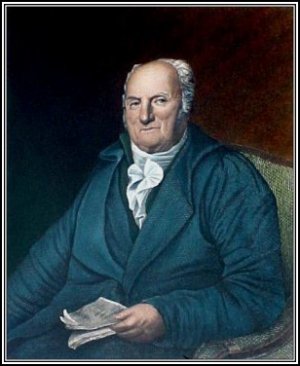
Gov. Patrick Tonyn
Florida itself was divided into East and West Florida.  East Florida covered most of what is today the State of Florida and had its capital in St. Augustine.  West Florida covered the gulf coast, what we today call the western part of the Florida panhandle, and had its capital in Pensacola.  Today I’m just going to talk about East Florida.

What little population that lived in East Florida beyond Indian tribes lived in and around St. Augustine.  The estimated population was around 3000, half of which were slaves of African descent.  Another thousand or so were Roman Catholic indentured servants, mostly from the Mediterranean island of Minorca (modern spelling Menorca), which was a British possession at this time.  So only about 500 were free people, and a good number of those were women, who had no say in politics.  This meant that there were only a few hundred free Englishmen living in Florida.  For the most part, the weather was unbearable, and many died from tropical illnesses.  Few people wanted to live there, and those who did often did not last long.

Florida’s Governor, Patrick Tonyn had been a career officer with 30 years experience in the Regular army, rising to colonel.  In 1774 he came to St. Augustine to collect on the 20,000 acre land grant the Crown had given him, and also to serve as the colony’s new governor.

Almost right away, his little colony started to grow as Tories from Georgia and the Carolinas began to flee Patriot harassment in their home colonies.  Tonyn used the opportunity to grow his colony by providing land grants to the new refugees, eventually getting permission from London to take ownership of some private lands that absentee landlords had never come to claim.

In the spring of 1776, Patriots from South Carolina and Georgia conducted several raids into Florida, mostly to burn or plunder Tory plantations.  Around the same time, Lord Dunmore in Virginia ordered Governor Tonyn to send reinforcements to Virginia.  Florida had to send away most of the single regiment stationed at St. Augustine.  Tonyn complained that he barely had enough soldiers to garrison the fort, let alone fight off any potential attack.

Florida’s government had a small patriot faction that Tonyn thought posed a potential risk. The Governor identified at least four prominent men who he thought supported seditious activities.  William Drayton, the Chief Justice of the colony was a cousin of patriot William Henry Drayton of South Carolina.  Two wealthy merchants, James Penman and Spencer Mann, also seemed to favor the patriots.  Tonyn also suspected Andrew Turnbull, who was Provincial Secretary and clerk of the East Florida Council as leaning toward the patriot cause as well.  Each of these men eventually ended up back in South Carolina, though many of their issues seemed to be related toward an animus with Governor Tonyn.  Mostly they did not like Tonyn, as opposed to having some ideological support for the patriots.

British Florida (from Swanbourne)
Tonyn also had concerns about his Lieutenant Governor John Moultrie, the brother of South Carolina patriot leader William Moultrie.  William had fought General Clinton at the Battle of Sullivan’s Island in Charleston Harbor that I discussed back in Episode 96.  By late 1776, he held a general’s commission in the Continental Army.  Despite William Moultrie becoming leading patriot, John Moultrie stayed a committed Tory, supporting the loyalist cause.  He eventually went into exile in England after the war.  In 1776, John Moultrie attempted to raise a loyalist militia regiment that he would lead to defend the colony in case of invasion, possibly by his own brother.

Despite Moultrie’s efforts, the attempts to raise six white companies and four black companies, presumably made up of slaves, did not seem to come of much. It does not appear that the regiment ever recruited the men it hoped to muster. There simply were not enough men in Florida to form a regiment and still keep the plantations going.  They mostly raised a few small companies of Rangers who could conduct hit and run raids.

Governor Tonyn next turned to the largest source of men and military power in the region, the Creek and Seminole Tribes.  The Creeks largely wanted to remain neutral and stay out of this fight.  But the Seminole were more inclined to support the British.  The Seminole were a relatively new political organization, having broken away from the Creek nation about a generation earlier.  They came primarily from natives who had been treated particularly badly by the Spanish when Spain controlled Florida.  The Seminoles had allied themselves with the British in Georgia in order to fight the Spanish in Florida.  When Britain took control of Florida after the French and Indian War, the Seminole enjoyed a period of relative peace and prosperity.  They had good relationships with British Indian agents, and had every reason to want to remain loyal allies.  They were especially concerned about Indian agents’ warnings that the colonists wanted to move further inland and take over their lands.  So, backing royal authorities seemed to be in their direct interest.

The Seminole Chief Ahaya, known as Cowkeeper because, well he had become a prosperous cattle rancher in northern Florida, supported Tonyn and agreed to provide warriors to fight the Georgians who were threatening Florida.  Although the Creeks overall remained neutral, some local Creeks also joined with the Seminole, with particular interest in raiding the Georgia frontier.

Button Gwinnett

Button Gwinnett
(from Wikimedia)
While Governor Tonyn was scrambling to find any force he could to counter the Georgia patriots, the Georgia patriots were not terribly united.  Much of the internal dissension in Georgia surrounded a man named Button Gwinnett.  A relatively recent immigrant from Britain, Gwinnett had spent about a decade in Georgia trying to build a life for himself.  He was not terribly good at it.  He found himself deeply in debt and seeking bankruptcy protection in 1773.

He then tried his luck at politics, organizing settlers in western Georgia to reduce voting requirements and let more of them vote.  When the patriots took over the colony in January 1776, Button became commander of the Georgia militia.  However, most officers balked at his appointment.  Gwinnett had no military experience, and many even doubted if he was really a committed patriot.  A month later, the new government sent Gwinnett to Philadelphia as a delegate to the Continental Congress, and turned over military leadership to Lachlan McIntosh.

While in Philadelphia, Gwinnett tried to get himself a commission as a general in the Continental Army.  However, the others in the Georgia delegation supported McIntosh, who got the appointment in September.  About that same time, Gwinnett returned to Georgia to become Speaker of Georgia’s Provincial Congress.

Lachlan McIntosh

Lachlan McIntosh was also an immigrant, from Scotland.  He then lived in South Carolina for years, before moving to Georgia with his brothers.  He was a merchant who also had little combat experience, but was a respected patriot and longtime militia officer.  He had seen some combat a year earlier in some of the early skirmishes in 1775.

Colonel McIntosh replaced Gwinnett as commander of the Georgia Battalion in early 1776.  He then received a general’s commission in the Continental Army in September, which Gwinnett also wanted.  Henry Laurens, who was at the time Vice President of South Carolina, knew McIntosh before the war and was a business associate.  He supported McIntosh’s commission in the Continental Army.  Gwinnett, despite his success in becoming Speaker of Georgia’s Assembly, seemed to hold a grudge against McIntosh that would cause problems for both men.

Georgia Constitution

I mentioned back in Episode 92, that the Georgia Provincial Congress was at this time in the middle of creating its first State Constitution.  Leaders had begun drafting the document in April 1776.  Before the Declaration of Independence, many contemplated this to be a temporary document until they settled the dispute with London.  After independence, it took on more significance.  Leaders debated the Constitution for months, eventually approving it to take effect on February 5, 1777.

The new Constitution put most of the power in the legislature, and created a separation of powers.  However, on February 22, about two weeks after it took effect, the Council of Safety declared a state emergency based on rumors of a British invasion from Florida.  It gave State President Archibald Bulloch virtually dictatorial powers over the state.  Bulloch had been President since June and was a big supporter of Lachlan McIntosh.  He had even served under then Colonel McIntosh a year earlier before becoming President.

Two days after receiving dictatorial powers, Bulloch died.  Rumors circulated that he was poisoned, although no one ever proved anything.  On his death, Speaker Button Gwinnett assumed the presidency.  A big part of his agenda seemed to be settling scores with his political enemies.  The top of that enemies list was Lachlan McIntosh.

Gwinnett-McIntosh Feud

Gwinnett, while still in the legislature, had launched an investigation of Lachlan’s brother, William McIntosh who was at the time a lieutenant colonel leading Georgia patriots in the western part of the state.  Gwinnett accused Colonel McIntosh with negligence for failing to defend several plantations against a raid by British soldiers and Indians from East Florida.  Exhausted from fighting and frustrated by Gwinnett’s inquiry, Colonel McIntosh took a leave of absence and gave up his command.  Incidentally, William McIntosh had a Creek wife.  His son, William McIntosh Jr. would grow up to be an important Creek Chief who sold out the Creeks in the State of Georgia decades later, leading to their removal from the state.  But that is getting into a whole different story.

Lachlan McIntosh
(from Wikimedia)
After William McIntosh resigned, Gwinnett went after Lachlan’s other brother, George McIntosh, who was serving the Assembly, a member of the Committee of Safety, and like his brothers, a political opponent of Gwinnett.  Apparently John Hancock had sent a letter to the President Bulloch accusing George McIntosh of treason for allegedly assisting a merchant who was buying rice for British soldiers in Florida.  The primary evidence against McIntosh was a captured letter from Florida Governor Tonyn saying that he thought McIntosh was a loyalist.  Bulloch had ignored the letter, knowing that McIntosh was an ardent patriot.

When Bulloch died in February 1777, Gwinnett found the Hancock’s letter and ordered McIntosh arrested.  Since the Assembly was out of session at the time, Gwinnett sent a sheriff to bring back McIntosh in chains to Savannah.  Once he arrived, Gwinnett denied him bail and threw him in jail to await trial.  McIntosh remained in jail until Gwinnett missed a meeting of the Committee of Safety, at which time the Committee voted to release McIntosh on bail.

Undeterred, Gwinnett wrote to the Major General Robert Howe, the commander of the Continental army’s southern department, asking the General McIntosh be removed from command because his brother’s arrest for treason might create a resentment that would result in his failure to perform his military duties.  General Howe, continued to have faith in McIntosh and refused to act on the letter.

First Raid on Fort Mcintosh

As the patriots fought among themselves, Florida Governor Tonyn had cobbled together a force of local militia and Seminole warriors to challenge the Georgia border.  General McIntosh had ordered a series of small forts built along the Georgia-Florida border.  The word “forts” might be a little generous.  The largest of these posts were log stockades with minimal defensive measures.  The militia sent to occupy them had been left there for months without pay or supplies.  They were not designed to defend against any serious siege.  They served as bases for militia who tried to stop roving bands of mounted loyalists who raided southern Georgia, mostly in search of cattle and slaves to steal.

Fort McIntosh, which was known as Beard’s Bluff at the time, was a small wooden stockade that housed a company of 27 militiamen who were in no mood to be there.  On December 28, 1776 the garrison rode out on a standard patrol only to run into an ambush about 400 yards from the fort.  The patrol commander, Lieutenant Bugg, took an arrow, as did his horse.  Three other soldiers were also wounded.  The other eight soldiers on the patrol turned and fled back to the fort without firing a shot, abandoning their comrades.  Bugg, who could still walk, eventually made it back to the fort, but the Seminole killed and mutilated the bodies of the other three soldiers left behind.

Back at the fort, Bugg called on the men to prepare to defend the fort until reinforcements could arrive about two days later.  The men though, were in no mood to fight.  They had been left for months in the middle of nowhere. They had no interest in being massacred.  The soldiers decided to flee the fort and run away.  Left alone, Bugg had to ride to Savannah and report what had happened.  The army did not prosecute the militia for desertion, but Lieutenant Bugg resigned his commission a few weeks later.  It’s not clear whether it was from his own disgust, or because he felt pressure to do so after being unable to control his men.

Siege of Fort McIntosh

General McIntosh decided to reoccupy the fort, this time using a small company of Continental soldiers, supplemented by South Carolina militia who had fought at the battle of Fort Sullivan.  They had come to Georgia to prevent any British invasion from the south.  Militia Captain Richard Winn of South Carolina commanded the new outpost, now given the name Fort McIntosh.  The combined force of about 80 men rode on patrol, trying to capture any enemy raiding parties that had crossed the border and threatened local farms.  Over the next few weeks, they captured a few Indians, but did not have any major confrontations.

On February 17, 1777 a group of about 70 Florida Rangers and 80 Indians attacked Fort McIntosh.  Colonel Thomas “Burntfoot”  Brown commanded the attacking force.  Brown had been a Georgia loyalist.  He got his nickname after patriots burned the bottom of his feet in an attempt to get him to renounce his loyalty to the King.  They also tarred and feathered him, fractured his skull, and scalped him.  Brown escaped with his life and fled to Florida.  He helped to organize the Florida Rangers from other loyal colonists.  Given his background, he was not terribly interested in showing much mercy to the patriots.

Along with Brown was another officer named Daniel McGirth who had been fighting with the patriots in South Carolina.  According to one story, a superior officer ordered McGirth to give up his horse.  When McGirth refused, the patriot militia court martialed him, ordering him whipped and imprisoned.  McGirth then escaped to Florida where he took a commission in the loyalist militia.  So McGirth also had a personal motivation for revenge.

Nothing remains of Fort McIntosh today, except this maker
(from Wikimedia)
The Fort McIntosh firefight lasted for about five hours, after which Brown demanded unconditional surrender of the fort.  Otherwise, he would order the entire garrison to be slaughtered.  Captain Winn was not quite ready to surrender, but sent back a reply saying that he expected his men to be treated as prisoners of war if captured.

Fighting continued for the rest of the day, with the defenders suffering one killed and three wounded.  After dark, Winn sent a messenger to nearby Fort Howe (aka Fort Barrington) calling for reinforcements.  But since Fort Howe only had a garrison of about 40 men, even if the entire garrison rode to their rescue, the enemy would still outnumber them.

The following morning, about 200 British regulars arrived along with more Creek warriors.  Winn estimated he was facing a force of about 400 to 500 men.  Fighting resumed as Winn held out hope of reinforcements who never came.

With the arrival of the regulars, the command of the attacking force fell to an officer identified in Winn’s reports as “Colonel Frasier.”  This was actually Lieutenant Colonel Lewis Fuser, an officer of the 60th Royal American Regiment then operating out of St. Augustine.  The fighting continued for most of the day.  In the afternoon, Winn and Fuser ceased fire and met in the middle of the field outside the fort for a parlay.  Unlike Brown’s demand of unconditional surrender a day earlier, Fuser was willing to allow the garrison to leave the fort and retreat north, taking only two officers as hostages.

Winn however, remained concerned that after his men gave up their arms, and left the fort, the Rangers and Indians would attack and massacre them.  He requested a company of Regulars escort the garrison north to protect them from attack.  Colonel Fuser agreed to the terms.  By evening of the 18th, the British occupied the fort.

The garrison marched north protected by a company of British Regulars.  After marching about two miles, the Regulars abandoned the men and returned back to Fort McIntosh.  Fearing a setup, the men kept off the road, marching through swamps.  Fortunately, no attack came and the garrison reached Fort Howe without further incident.

General McIntosh did not hear about the siege until the morning of the 18th. He tried to arrange a relief force of men and supplies.  Before he could get organized though, an express rider rode in with the message that the British and Indians had taken the fort.

Brown and the Florida Rangers did not attempt to attack the retreating garrison.  They satisfied themselves by rounding up about 2000 head of cattle and taking them back to Florida.  The Regulars did not remain at the fort long.  They left a contingent of Rangers to garrison the fort.  A few weeks later Colonel John Baker led a contingent of Georgia militia to retake the fort.  But the presence of an armed British ship on the river nearby forced them to call off the attack.

For the next few months loyalist Rangers and their Indian allies conducted multiple raids across southern Georgia, with the patriots unable to mount an effective defense.

Next Week: The Continental Congress meets in Baltimore.

- - -

Next Episode 131 Continental Congress - Baltimore Edition

Previous Episode 129 Prisoners of War

Click here to donate
American Revolution Podcast is distributed 100% free of charge. If you can chip in to help defray my costs, I'd appreciate whatever you can give.  Make a one time donation through my PayPal account.
Thanks,
Mike Troy


Click here to see my Patreon Page
You can support the American Revolution Podcast as a Patreon subscriber.  This is an option for people who want to make monthly pledges.  Patreon support will give you access to Podcast extras and help make the podcast a sustainable project.  Thanks again!


Further Reading

Websites

Porter, Kenneth W. “The Founder of the ‘Seminole Nation’ Secoffee or Cowkeeper” The Florida Historical Quarterly, 1949: http://www.jstor.org/stable/30138772 (free to read with registration).

Hawkins, Philip C. Creek Schism: Seminole Genesis Revisited, University of South Florida: unpublished masters thesis, 2009: http://scholarcommons.usf.edu/cgi/viewcontent.cgi?article=3003&context=etd

Smyrnea: Dr. Andrew Turnbull and the Mediterranean Settlement at New Smyrna and Edgewater, Florida, 1766-1777: https://www.unf.edu/floridahistoryonline/Turnbull/index.htm

Beeson, Kenneth H. “Janas in British East Florida” The Florida Historical Quarterly, 1965: http://www.jstor.org/stable/30147732 (free to read with registration).

San Marco, Florida history
https://www.unf.edu/floridahistoryonline/Plantations/plantations/San_Marco-The_Hermitage.htm

The Tonyn Family: http://www.swanbournehistory.co.uk/charles-william-tonyn-vicar-of-swanbourne-1760-1767

Piecuch, Jim, “Patrick Tonyn: Britain’s Most Effective Revolutionary-Era Royal Governor” Journal of the American Revolution, 2018 https://allthingsliberty.com/2018/03/patrick-tonyn-britains-most-effective-revolutionary-era-royal-governor

Smith, Roger C. The Fourteenth Colony: Florida and the American Revolution in the South, University of Florida: unpublished doctoral dissertation, 2011: http://ufdcimages.uflib.ufl.edu/UF/E0/04/27/45/00001/smith_r.pdf

Button Gwinnett: https://www.nps.gov/parkhistory/online_books/declaration/bio13.htm

Lachlan McIntosh: https://www.georgiaencyclopedia.org/articles/history-archaeology/lachlan-mcintosh-1727-1806

Gen. Lachlan McIntosh: http://www.ushistory.org/valleyforge/served/mcintosh.html

Lawrence, Alexander A. “General Lachlan McIntosh and His Suspension from Continental Command During the Revolution.” The Georgia Historical Quarterly, vol. 38, no. 2, 1954, pp. 101–141: http://www.jstor.org/stable/40577507

Pennington, Edgar Legare. “East Florida in the American Revolution, 1775-1778.” The Florida Historical Society Quarterly, vol. 9, no. 1, 1930, pp. 24–46: http://www.jstor.org/stable/30149717

Continental Congress committee report clearing George McIntosh of accusations of being a Tory Oct. 9, 1777: https://founders.archives.gov/documents/Adams/06-05-02-0182

Richard Winn: http://www.carolana.com/SC/Revolution/patriot_leaders_sc_richard_winn.html

Thomas Brown: https://www.georgiaencyclopedia.org/articles/history-archaeology/thomas-brown-1750-1825

Lynch, Wayne “Richard Winn at Fort McIntosh” Journal of the American Revolution, 2013:
https://allthingsliberty.com/2013/12/richard-winn-fort-mcintosh

Lynch, Wayne “Daniel McGirth, Banditti on the Southern Frontier” Journal of the American Revolution, 2016: https://allthingsliberty.com/2016/08/daniel-mcgirth-banditti-southern-frontier

Just for fun: Stephen Colbert and Lin-Manuel Miranda sing about Button Gwinnett: https://www.youtube.com/watch?v=uhFeQSBZUSk

Free eBooks
(from archive.org unless noted)

Clemens, William M. Button Gwinnett, Man of Mystery, Pompton Lakes, NJ: Self-published, 1921.

Corse, Carita Dr. Andrew Turnbull and the New Smyrna colony of Florida, Florida: Drew Press, 1919.

Hawes, Lilla M. (ed) Collections of the Georgia Historical Society, Vol. 12: the Papers of Lachlan McIntosh, Savannah: Georgia Historical Society, 1957.

Jones, Charles C. Biographical Sketches of the Delegates from Georgia to the Continental Congress, Boston: Houghton, Mifflin & Co., 1891.

Jones, Charles C. The History of Georgia Vol. 2, Boston: Houghton & Mifflin Co. 1883.

McCall, Hugh The History of Georgia, containing brief sketches of the most remarkable events up to the present day, (1784), Atlanta: A.H. Caldwell, 1909 reprint.

Books Worth Buying
(links to Amazon.com unless otherwise noted)*

Cashin, Edward The King's Ranger: Thomas Brown and the American Revolution on the Southern Frontier, New York: Fordham University Press, 1999.

Coleman, Kenneth The American Revolution in Georgia, 1763–1789, Univ of Georgia Press, 1958.

Drewien, D.J. Button Gwinnett: A Historiography of the Georgia Signer of the Declaration of Independence, Pittsburgh: Rosedog Books, 2007

Jackson, Harvey H. Lachlan McIntosh and the Politics of Revolutionary Georgia, University of Georgia Press, 1979.

Johnson, Daniel M. This Cursed War: Lachlan McIntosh in the American Revolution, Self-published,  2018.

O'Donnell James H. Southern Indians in the American Revolution, Univ. of Tennessee Press, 1973.

Piecuch, Jim Three Peoples, One King: Loyalists, Indians, and Slaves in the Revolutionary South, 1775-1782, Columbia: Univ. of South Carolina Press, 2008.

Searcy, Martha C. The Georgia-Florida Contest in the American Revolution, 1776-1778, Tuscaloosa: University of Alabama Press, 1985.

Wright, James L. Florida in the American Revolution, Univ. Presses of Florida, 1975.

* As an Amazon Associate I earn from qualifying purchases.

Sunday, December 29, 2019

Episode 129 Prisoners of War


Following the New York campaign the British found themselves with thousands of American prisoners of war.

The Geneva Convention guaranteeing certain rights to prisoners of war was still more than a century in the future.  In the 18th Century, European armies typically took good care of enemy officers.  Sometimes enemy soldiers fared well, but sometimes not.  It was up to the captors how they wanted to treat their prisoners.  It was not unheard of simply to execute enemy prisoners under their care.

In the case of the Revolution, the British often did not consider captives even to be enemy prisoners.  They were British rebels.  Rebels or traitors, deserved execution, and not even quick executions.  Traditionally, the government used drawing and quartering, or other brutal deaths.  Of course, Gen. Howe was not going to start drawing and quartering people, but their lives and well being also were not a terribly high concern for the British leadership.

Condition on Prison Ship Jersey (from 13th Floor)
The British had thousands of prisoners from the capture of Fort Washington and from other battles fought in and around New York.  The navy also captured many more on American privateers, most of whom ended up in New York City.  Men were dumped into prison ships in New York harbor or in warehouses along the docks where they lived, sometimes for years in filth and cramped conditions, causing disease to kill many of them some estimates put the death rate as high as 70%.

Joshua Loring was responsible for the care of the prisoners.  General Howe was sleeping with his wife  Part of the tacit agreement the two men seemed to have was that Loring would ignore the affair and Howe would ignore what Loring did with the prisoners.  Loring received money to feed the prisoners, but pocketed most of it.  The prisoners often received spoiled food which only made them sick.  In some cases, they received no food at all, causing them to die from starvation.

Records are far from complete, but over the course of the war, even the most conservative estimates show that far more than 10,000 prisoners died while in captivity in New York, more than all battlefield deaths combined.  Some estimate the number of deaths at two or three times that amount.  The British dumped most of the dead unceremoniously into New York harbor, where their bones washed ashore for decades to come.  Others were buried in mass graves, often along with garbage.

Officers

Most patriot officers were treated little better than enlisted men.  Armies tended to treat officers better because they were gentlemen.  Captors could rely on their word that they would not try to escape, and could grant them relative freedom of movement and better conditions.  The British, however, did not hold in regard many American officers, who they did not consider gentlemen.  They were often farmers, shopkeepers and other workers from the same background as the enlisted men.  Initially, many captured officers received the same treatment as soldiers, held in the same prisons.

Van Cortlandt's Sugar House
Prison (from Wikimedia)
Over time, as the British settled into New York, they began separating officers into better quarters.  Even so, American officers were often crowded into rooms well beyond capacity.  The British crammed captured officers into small private homes around the city, which already suffered from housing shortages.

Captain Jabez Fitch, captured at the battle of Long Island, reported being kept in a house with two small downstairs rooms and one upstairs room that housed two dozen officers. Worse than the crowded living conditions were food rations.  The British army called for prisoners to receive two-thirds of a standard soldier rations.  Some modern calculations have determined this would give the average prisoner less than 1700 calories per day, not enough to sustain body weight for most men.  That, of course, was if they got what they were supposed to get.  The result of food shortages and corrupt officials resulted in prisoners receiving even less food most of the time.  Prisoners began to weaken and became more prone to disease.  After a short time, many began to die.

Officers could sometimes get permission to leave the home where they were held to purchase extra food at a market.  But that, of course, necessitated having money to do so.  Many had to rely on the sympathetic charity of local New Yorkers, most of whom were loyalists who barely had enough to feed themselves.

By fall 1776, General Howe permitted captured officers to walk around town during daylight hours without special permission.  Most, however, reported abuse by civilian Tories, as well as British and Hessian soldiers.  Enemy officers regularly suffered beatings and robberies if seen on the streets.  By early 1777, some officers were permitted to take parole on Long Island, if they could afford to pay room and board.  By that time, many had already died from harsh conditions in the city and many more remained terribly ill for months.

American General Samuel Parsons tried to get approval in the spring of 1777 to launch an invasion of Long Island, in part to liberate American prisoners living there.  General Washington expressed reservations, fearing that it would mean future prisoners would not be granted the liberty to stay on Long Island and that they would be put back in more cramped quarters in New York City.  He put the plan on hold.

Later that summer, after much of the British force left for Philadelphia, Parsons once again sought approval for an attack on Long Island, not only to liberate prisoners but also to capture Tories and destroy supplies needed to feed the British in New York.  I will cover the details of this raid in a future episode, but for now I’ll just say the result was as Washington feared, The British moved captured officers living on Long Island back to a prison ship in New York Harbor.  After a few weeks, however, they once again considered Long Island secure and returned the prisoners to the farms and villages where they had been living.

Enlisted Men

If things were bad for the officers, they were so much worse for enlisted men.  In addition to the prison ships, the British crammed hundreds, sometimes more than a thousand prisoners into buildings along the wharf.  One of the most notorious was the Sugar-house prison.  There were actually at least three sugar-houses in New York that the British converted into prisons.  These were large stone buildings once used to make rum from imported sugar.

Sugar House and Dutch Church, both used as prisons
(from Wikimedia)
Many others were housed in various churches around town.  All churches except Anglican churches became prisons for captured rebels.

Prisoners had already been beaten, stripped of clothes, blankets, and anything else of value before reaching the prison.  Most had to sleep on the floor, avoiding puddles of feces and urine left by the prisoners.  What little food they received was usually rotten or infested with vermin.  Some soldiers reported trying to boil out the vermin if possible before choking down the food.  Prisoners quickly formed into gangs where the strong preyed on the weak for scraps of food and anything else.

On top of that, the guards showed little mercy.  They did not recognize those in the prisons as prisoners of war.  To the guards, they were rebels and traitors, worse than common criminals. The commonly held view was that these men should simply be hanged and stop wasting resources. There are stories of guards kicking bowls of soup that civilians had left for the prisoners.  One prisoner asked a guard whether he might get some paper and writing materials to get word to his family.  In response, the guard ran him through with his sword, killing him.  Guards gratuitously beat prisoners, sometimes to death.

Abuse, cold, hunger, and disease quickly took their toll.  Prisoners died in large numbers.  Many prisons reported more than a dozen deaths each morning.  Corpses were left in the street to be hauled away for burial in mass graves or simply tossed into the harbor with the garbage.  An estimated two thirds of the prisoners captured at Fort Washington met their end in this way.  Many more thousands would die in the coming years as conditions did not improve much.  Some got moved to prison ships in the harbor.

Prison Ship Jersey (from Wikimedia)
Many ships that had transported troops to New York were no longer seaworthy, but could still hold men in their cold dark windowless hulls.  Some prisoners survived in these conditions for years.  That same year, Parliament had approved use of decommissioned ships to hold convicted criminals in London.  Many Whigs complained about the inhuman conditions of being held aboard ships with no light or fresh air.  The use of prison ships, in both London and New York became common and remained in place for years.

Prisoners did have one option to get out of these nightmarish conditions.  They could swear an oath of allegiance to the King and join the royal navy.  Very few took advantage of this option.  The notion of betraying their cause was one reason.  But the fact that the life of a British sailor was only slightly better than prisoner may have had an impact on their decision as well.  Given the horrific conditions of prison though, many British officers were surprised at how few soldiers agreed to switch sides.  They were not used to enlisted men who fought for principle.

The two sides did not engage in large scale prisoner exchanges until after the capture of Burgoyne’s army in late 1777.  So, for the time being, most prisoners were stuck without hope of release.

Prisoner Negotiations

Over the winter, General Washington began to receive reports of the horrific treatment that the British inflicted on captured prisoners being held in New York.  For a time, Washington could not respond.  Remember that he spent most of December 1776 trying to keep his retreating army together as its dwindling numbers fled to Philadelphia.  Then he spent several weeks in active combat fighting the first and second battles of Trenton and the battle of Princeton.

John Witherspoon
(from Wikimedia)
By mid-January 1777, General Washington found the time to write a scathing letter to General Howe complaining of the treatment and including affidavits from former prisoners.  Washington indicated that continued cruel treatment might result in acts of retaliation on loyalist civilians or British and Hessian prisoners under American control.  Having taken nearly 1000 mostly Hessian prisoners over the previous few weeks, General Washington now had some bargaining chips.  Even so, Washington did not propose a prisoner exchange.  When Howe proposed one in May, Washington declined. He knew that captured British soldiers were much more difficult to replace than captured Americans.  He also knew that exchanges would simply incentivize the British to capture more patriot militia and civilians for use in trade.

Most of the captured Hessians, after spending some time in Philadelphia ended up being shipped further west, where they stayed with German speaking communities in western Pennsylvania, Maryland, Virginia.  This was far enough inland that they had little hope of escaping back to the front lines.  Many of them found jobs and helped to counter the labor shortage.  Many communities had sent their men off to war and needed help with farming and manufacturing.  In some cases, prisoners spent their nights in custody and then went out during the day to work at jobs.  In other cases, a prisoner might live with a family on a farm responsible for his custody and would work and live on that farm.


Over the course of the war, as many as 3000 captured Hessians and other German speaking soldiers declined to return home when offered the chance.  They found life in America was better than the places they had left and opted to become Americans.

In response to Washington’s letters, Howe simply denied any ill treatment.  He claimed the number of deaths were exaggerated, that foul conditions were the result of prisoners’ own “indolence” in keeping their cells clean, and that no prisoner had complained to him or his officers about mistreatment.

In January, Congress appointed a committee to investigate prisoner abuse by the British.  Samuel Chase of Maryland chaired the committee. John Witherspoon, a New Jersey delegate did most of the work of taking testimony from former prisoners and preparing the final report which Congress published in May.  Newspapers published portions of the report all over the continent, with the expected result of increased animosity toward Britain’s barbaric treatment of prisoners.

Elias Boudinot
(from Wikimedia)
Congress also appointed a Commissary General.  They could not find an officer interested in the job.  After all, a bureaucratic position like that offered little opportunity to heroics and advancement.  Washington finally convinced a civilian Elias Boudinot to take the job, although he didn’t really want the job either.  Boudinot, a prosperous New Jersey lawyer, may have been recommended by one of Washington’s junior aides, Alexander Hamilton.  Hamilton had boarded with Boudinot before the war when he was a college student.  Boudinot would be responsible for taking care of prisoners captured by the Continentals, as well as getting food, clothing, money, and other necessities to American prisoners in British hands.

Boudinot was also already acquainted with John Pintard, a New York merchant who agreed to serve as a resident agent to the prisoners in New York.  Both Boudinot and Pintard had married sisters of Richard Stockton, a New Jersey delegate to the Continental Congress.  Stockton, of course, was a prisoner himself at this time, as I discussed back in Episode 118.  Pintard had fled to New Jersey when the British invaded New York.  General Howe would not allow him to return in any official capacity since that would recognize the Continental Congress as a legitimate body.  However, Howe did give him permission to return to New York City in late April.  Pintard was able to work in an unofficial capacity to provide prisoners with supplies.

The next problem, of course, was that the Continental Congress had no supplies for the prisoners.  They gave Pintard some paper money they had printed, but no one in New York would accept what they regarded as worthless paper.  Most of the money he did raise went straight to Joshua Loring, to pay off debts for the food Loring had already provided to the prisoners.

Boudinet ended up spending a great deal of his personal money, as well as money borrowed from friends on his personal promise.  This allowed him to buy and distribute some items, but not nearly enough to be adequate.  I’ll leave discussion of other prisoner issues later in the war to future episodes.  But suffice it to say, American prisoners in British custody never had an easy time of it.

Prisoner Charles Lee

One prisoner who escaped such ill treatment was General Charles Lee.  As I mentioned back in Episode 118, The British capture of Lee was seen as the greatest British victory of the war up to that point. Lee’s first month or so was pretty harsh, held in chains and closely monitored as the leadership determined whether or not to treat him as a deserter.

After a few weeks of harsh treatment, General Howe changed the handling of this valuable prisoner.  He moved Lee from North Jersey into New York City.  There, he gave Lee comfortable quarters, and a generous food allowance.  Although he would not give Lee parole, he allowed him to have dinner guests of other British officers.

Charles Lee
(from Wikimedia)
As a former British officer, many officers treated him as a colleague when he arrived in mid-January 1777.  In London, Lord Germain instructed that Lee be returned to London for trial as a deserter.  Howe, though, refused to ship him across the Atlantic, after determining that Lee had resigned his commission before joining the Continental Army.

Lee’s treatment was not just Howe being nice.  Howe initially planned to ship Lee back to London in compliance with instructions.  He cancelled the plans after receiving notice from Washington, warning Howe that he was holding five Hessian officers and one British officer that he would treat in the same way Lee was treated.  If Lee went back to London for trial and execution, Washington would execute his prisoners.  This was the same thing Washington had done to protect Colonel Ethan Allen, who had been shipped back to London for trial and presumably execution as a traitor, but who was on his way back to America to join other prisoners in New York later that year.

The British kept Lee under constant guard.  He was too valuable a prisoner.  But he lived in relative comfort with a warm room and plenty of food.  He dined everyday with other British officers discussing the war, politics, and other matters.  The British even allowed the Americans to send over one of his dogs, as well as his personal servant.

Both General Howe and Admiral Howe dined with Lee on multiple occasions.  They were still looking for a peaceful settlement of the war, and hoped to use Lee to find a way to make that happen.  They allowed Lee to correspond with Congress and see if he could open up lines of discussion for negotiation.  Congress, however, did not bite, and refused to respond positively to any of Lee’s overtures.

Lee seemed happy to boast of his abilities and to criticize Washington’s leadership to British officers.  He even went so far as to draft a document recommending to General Howe a plan of attack against the Continental Army.  That plan, which bears some similarity to Howe’s actual plan of attack later that year, suggested Howe move his army by ship down to Maryland and cut off the southern states from the Continental Army.

It is unclear exactly what motivated Lee to provide the enemy with war plans.  Some have argued that it was an attempt to trick Howe into making this stupid move, which eventually resulted in him being removed from command.  I don’t think that is the case though.  I think this had more to do with Lee’s own ego.  He thought he was a brilliant strategist who could develop a plan of victory for either side.  This plan was simply proof of his brilliance.

In any event, Lee’s apparent cooperation with the enemy did not seem to land him in any trouble when he was exchanged more than a year later.  He would rejoin the Continental Army as one of its top generals in 1778.  Meanwhile thousands of other officers and men would linger in deplorable conditions for many years.  Many more soldiers and sailors would die in New York prisons than on all the battlefields of the war combined.

Next week: We head south again as Florida loyalists attack Georgia patriot forces at Fort McIntosh.

- - -

Next Episode 130 Fort McIntosh

Previous Episode 128 Fort Independence

Click here to donate
American Revolution Podcast is distributed 100% free of charge. If you can chip in to help defray my costs, I'd appreciate whatever you can give.  Make a one time donation through my PayPal account.
Thanks,
Mike Troy


Click here to see my Patreon Page
You can support the American Revolution Podcast as a Patreon subscriber.  This is an option for people who want to make monthly pledges.  Patreon support will give you access to Podcast extras and help make the podcast a sustainable project.  Thanks again!


Further Reading

Websites

Compeau, Timothy J. Prisoners of War: https://www.mountvernon.org/library/digitalhistory/digital-encyclopedia/article/prisoners-of-war

The HMS Jersey https://www.history.com/topics/american-revolution/the-hms-jersey

Getty, Katie Turner “Misadventures in the Countryside: Escape from a British Prison” Journal of the American Revolution, May 7, 2019 https://allthingsliberty.com/2019/05/misadventures-in-the-countryside-escape-from-a-british-prison-ship

Getty, Katie Turner “Walking Skeletons: Starvation On Board The Jersey Prison Ship” Journal of the American Revolution, March 11, 2019:  https://allthingsliberty.com/2019/03/walking-skeletons-starvation-on-board-the-jersey-prison-ship

Getty, Katie Turner “Death Had Almost Lost Its Sting: Disease On The Prison Ship Jersey” Journal of the American Revolution, January 10, 2019: https://allthingsliberty.com/2019/01/death-had-almost-lost-its-sting-disease-on-the-prison-ship-jersey

O'Malley, Brian P. “1776-The Horror Show” Journal of the American Revolution, Jan. 29, 2019: https://allthingsliberty.com/2019/01/1776-the-horror-show

Wroblewski, Joseph E. “Elias Boudinot IV: America’s First Commissary General Of Prisoners”  Journal of the American Revolution, April 23, 2018 https://allthingsliberty.com/2018/04/elias-boudinot-iv-americas-first-commissary-general-of-prisoners

Dacus, Jeff “Charles Lee: The Gift of Controversy” Journal of the Am. Rev. Dec. 2013: https://allthingsliberty.com/2013/12/charles-lee-gift-controversy

Knight, Betsy “Prisoner Exchange and Parole in the American Revolution” The William and Mary Quarterly, Vol. 48, No. 2 (Apr., 1991), pp. 201-222: https://www.jstor.org/stable/2938068 (free to read with registration).

PODCAST Katie Turner Getty discusses life aboard New York Prison ships: https://jardispatches.podbean.com/e/e05-katie-turner-getty

Free eBooks
(from archive.org unless noted)

The Detail and Conduct of the American War, under Generals Gage, Howe, Burgoyne, and Vice Admiral Lord Howe, (original reports and letters) The Royal Exchange, 1780.

The claim of Trinity church to having furnished burial places for some of the American prisoners, who died in the old Sugar house prison, New York, Privately Published, 1863.

Dandridge, Danske American Prisoners of the Revolution, The Michie Company, 1911.

Dring, Thomas Recollections of the Jersey Prison-ship, New York: P.M. Davis, 1831.

Johnston, Henry The Campaign of 1776 Around New York and Brooklyn, 1878.

Langworthy, Edward (ed) The Life and Memoirs of the Late Major General Lee, New York: Richard Scott, 1813.

Onderdonk, Henry Revolutionary incidents of Suffolk and Kings Counties; with an account of the Battle of Long Island and the British prisons and prison-ships at New York, New York: Leavitt & Co. 1849.

Moore, George H. The Treason of Charles Lee, New York: Charles Scribner, 1860.

Stiles, Henry Reed, Letters from the prisons and prison-ships of the revolution. New York: Privately Published, 1865.

Taylor, George Martyrs to the revolution in the British prison-ships in the Wallabout Bay, New York W.H. Arthur & Co. 1855.

Books Worth Buying
(links to Amazon.com unless otherwise noted)*

Burrows, Edwin G. Forgotten Patriots: The Untold Story of American Prisoners During the Revolutionary War, New York: Basic Books, 2008 (Book recommendation of the week).

Jones, T. Cole Captives of Liberty: Prisoners of War and the Politics of Vengeance in the American Revolution, Univ. of Pennsylvania Press, 2019.

Lowenthal, Larry Hell on the East River: British Prison Ships in the American Revolution Perfect, Purple Mountain Press, 2009.

Mazzagetti, Dominick Charles Lee: Self Before Country, Rutgers Univ. Press, 2013.

Papas, Phillip Renegade Revolutionary: The Life of General Charles Lee, New York NYU Press, 2014.

Watson, Robert P. The Ghost Ship of Brooklyn: An Untold Story of the American Revolution, New York, De Capo Press, 2017.

* As an Amazon Associate I earn from qualifying purchases.

Sunday, December 22, 2019

Episode 128 Fort Independence


Last week I talked about the many skirmishes and small battles known as the Forage War in New Jersey in the months following the Battle of Princeton.  As the same time those battles were raging, George Washington also attempted to pressure the British forces in New York.  He wanted to open a second front against New York City attacking from the north. Doing so might force General Howe to withdraw all of his soldiers from New Jersey to ensure he could protect New York from a land attack.  It was an interesting strategy.  Unfortunately, Washington definitely chose his "B" team to lead the effort.

William Heath

To command the operation Washington chose General William Heath.  You may remember General Heath from back in Episode 55, when, as a general in the Massachusetts militia, he allegedly gave orders not to deliver the final blow to the retreating British as they returned from Concord.  The Continental Congress selected Heath as one of the first group of brigadier generals commissioned for the new Continental Army.

Heath played an important command role in the occupation of Dorchester Heights near Boston, thus forcing the British evacuation in March, 1776.  Pleased with his work, Congress promoted him to major general in August 1776, along with Joseph Spencer, John Sullivan, and Nathaniel Greene, just the British began their invasion of New York.

William Heath
(from Wikimedia)
Heath led several commands during the American losses in New York, and apparently did not particularly distinguish himself.  As the Continental Army retreated across New Jersey, Washington deployed Heath to a garrison farther up the Hudson River at Peekskill.  There, Heath fought with more senior generals, Charles Lee and Horatio Gates before receiving orders from Washington to move most of his army down into New Jersey.

General Lee had attempted to force Heath to give him some of the best regiments under his command.  To his credit, Heath resisted, saying he had orders from Washington to keep his troops in New York.  Lee tried to countermand those orders, saying Washington was not on the scene and did not foresee Lee’s need for the troops when he had issued the earlier orders. Eventually Lee backed down and let Heath keep his soldiers.

A few days later, Washington ordered Heath to bring his army into North Jersey.  Lee again requested that Heath join up with his army, but then begged off and said he did not need them.  Rather, Lee again tried to countermand Washington’s orders and told Heath to move his army back north to defend New England.  A few days later, the British captured Lee.  Heath spent the next few weeks raiding British supply transports and generally harassing the enemy in northern New Jersey.

After Washington’s raids on Trenton and Princeton, Washington moved the main Continental army back up to North Jersey, allowing Heath to move back into New York’s Hudson Valley.  As the Americans went on their New Jersey Forage War offensive in January, Washington directed Heath to launch an independent attack against New York, specifically Fort Independence, which the Americans had built just north of Fort Washington, in what is today the Bronx.  After expelling the Americans from New York, the British occupied Fort Independence as part of their defenses beyond the northern perimeter of New York City.

Benjamin Lincoln

Supporting Heath in this attack were several other officers who would also prove less than impressive.  General Benjamin Lincoln was a major general in the Massachusetts militia.  He did not, at this time, hold a commission in the Continental Army.  Lincoln was more politician than soldier.  He had served in the militia since the French and Indian War, though he saw no combat then.  His father was a wealthy colonist who had sat on the Governor’s Council.  Lincoln had won local office for many years and as a loyal patriot had served in the Massachusetts Provincial Congress.  He had done a reasonable job drilling militia and organizing supplies for the army, but had not really proven himself in battle.

Benjamin Lincoln
(from Wikimedia)
After the British evacuated Boston in the spring of 1775 and the Continental Army moved to New York, Lincoln had remained in Boston with General Artemas Ward.  There, he received credit for driving the remainder of the British Navy out of Boston Harbor, though the navy did not really put up much of a fight by that time, several months after the army had evacuated.

As things heated up in New York in late summer 1776, Massachusetts ordered Lincoln to take several thousand Massachusetts militiamen down to New York City.  They never made it though.  First, there was a plan to invade British occupied Long Island from Connecticut.  But by the time they were ready to go, the British had already taken New York City.  Next, the plan was to join Washington’s forces north of New York where they would soon fight the battles of Harlem Heights and White Plains.  But by the time they were ready to move, the three month enlistments of the Massachusetts militia had expired and they demanded to return to Massachusetts.  General Lincoln returned home with them.

He formed a new army and returned with them to Connecticut.  But by then it was late December and Washington was all the way down near Philadelphia.  Lincoln sat in Connecticut for a few weeks until Washington, emboldened by his success in New Jersey, ordered Lincoln to work with General Heath on the attack at Fort Independence.

Generals Wooster and Parsons

Joining Generals Heath and Lincoln was General David Wooster who we last saw in Episode 106.  There he had botched his command in Canada, and frustrated all the other officers around him.  Wooster was ticked off that he had only received a commission as a brigadier general in the Continental Army, even though he was a major general in the Connecticut militia.  He had returned to his home in Connecticut where he had suspended his active participation in the Continental Army in order to command the Connecticut militia.  In January 1777, he decided to join the campaign against Fort Independence.

Samuel Parsons
General Samuel Parsons, also in Connecticut at the time, got involved in the attack.  You may recall Parsons from back in Episode 59.  He was the colonel who met Benedict Arnold on the road just after the battles of Lexington and Concord, where they discussed attacking Fort Ticonderoga.  Parsons then set up the expedition led by Ethan Allen, who butted heads with Arnold before the two men took the fort together.

I haven’t mentioned Parsons much since then, but he played an active, if less than central role in many of the events of the early war.  He took a commission as a colonel in the Connecticut militia and participated in the siege of Boston and the fighting around New York.  He received a promotion as a Continental brigadier general in August 1776 in time to see action around New York.  By January 1777 he was back in Connecticut trying to recruit new regiments for the Continental Army.  When he heard that Heath would attempt to take back Fort Independence, he gathered up the men he had recruited thus far, and joined the mission.

Attacking Fort Independence

Fort Independence was not a particularly advanced structure.  It had four earthen walls with a few small stone buildings inside.  The Americans had built it in June 1776 as part of their defensive plan for New York.  They had abandoned it without a fight when the British and Hessians moved into the area in October.  The fort served as a Hessian outpost with a garrison of about 2000 soldiers holding the fort.  Some accounts say part of the garrison included a few hundred members of Roger’s Rangers, a regiment of loyalist militia.

Some of the details about the attack on the fort are a little sketchy.  Most sources indicate that General Heath had about 5000 - 6000 men at his disposal, and that he used about 3500 for the assault on the fort.

Heath divided his attack force into three divisions.  General Lincoln led a column from Tarrytown, along the Hudson River to attack the fort from the Northwest.  At the same time, General Wooster and General Parsons, moved from New Rochelle toward the fort, attacking it from the east.  A third column moved south from the center, between the two other columns.  General Heath moved with this column along with New York militia General John Morin Scott.

John Morin Scott
(from Wikimedia)
The plan was for each of the three columns to arrive at Fort Independence from a different direction at the same time.  They left on the night of January 17th, planning to attack the fort the following morning.  The initial assault carried out the plans with reasonable accuracy and surprised the defenders. The attackers engaged in a firefight with some of the outposts, warning the main fort of the coming attack.  The Americans overran multiple outposts at Valentine's Hill, Van Courtland's Fort, Williams' Fort, and the Negro Fort.

They American attackers captured a few dozen prisoners, and inflicted some casualties.  Most of the enemy fled back to the protection of the main fort.  In a rather short time, the Americans had secured the area, except for the main fort itself.  Rumors from the initial success got back to General Washington, saying that Heath had taken the fort.  Washington reported this to Congress before it could be confirmed.  When it turned out to be wrong, Washington was upset not just by the failure, but the fact that his incorrect report to Congress made him look like an idiot.

Even so, by afternoon, the Americans were closing in on Fort Independence itself, effectively surrounding it.  General Heath sent a message to the fort commander that he had twenty minutes to surrender or be attacked.  The Hessian commander had no inclination to give up without a fight and opened up on the attackers with the fort’s artillery.  According to some accounts, Heath did not know the defending garrison even had artillery.  Attackers near the fort had to scatter and pull back.

Now as I said, records for this battle are extremely sketchy, especially on the British side.  The British wanted to play down an American offensive against New York, and also tended to downplay any actions primarily involving Hessian troops rather than regulars.  I have yet even to find a definitive record of the name of the Fort’s commander.  Circumstantial evidence points to Major Ludwig Von Wurmb, who would shortly after this take command of the famous Jager Corps and play a more significant role in the Philadelphia campaign later in the year.  He would eventually rise to the rank of lieutenant general.  The fact that Von Wurmb was stationed in the area and would receive a promotion to lieutenant colonel just after the battle indicates that he may have been the commander.  But I’m just not certain on this point whether he commanded Fort Independence at the time of the battle.  The British records I have found, treat this battle as a minor skirmish, barely worth mentioning.  The American records only refer to “the German Commander” without naming him.  Whoever the German commander was, he was determined to put up a stiff resistance.

The Americans had only two small field cannon with them, with which they returned fire.  An artillery dual lasted the rest of the day.  But Heath simply did not have enough fire power to threaten the destruction of the fort’s defenses.

Heath made several attempts to maneuver the Continental troops into a better position to take the fort.  But this time the weather began to work against the Americans.

The day after the initial attack, January 19th, Heath attempted to move more artillery across a frozen creek to cut off the enemy and get into a better position to fire on the fort.  The temperature warmed overnight.  When the troops began to move that morning, the ice was too thin to support the cannon.  Heath had to call off the move and leave his forces where they were.

Fort Independence (from FortWiki)
When he could not position his cannon well against the fort, Heath used them instead to fire on a Hessian force across the Harlem River where the Hessians had placed their own supporting artillery.  The artillery dual lasted for a couple of days, with neither side willing to come down from their hill and cross the river in the face of enemy fire.

On January 23rd, Heath once again focused on the fort, building some fascines to put a line of soldiers close enough to keep up an accurate fire on the fort.  The move resulted in a few casualties but did not threaten the fort itself.

The following day, weather intervened again as a torrential cold January rain soaked everyone in the area.  It was especially miserable for the Americans, most of whom did not even have tents for shelter.  The bulk of Lincoln’s forces pulled out of the immediate battlefield to find shelter in area houses.

After many of the Americans had pulled back, the Hessians went on the offense.  On January 25th they deployed several detachments to take back the outposts where the Americans were now stationed.  The surprised militia quickly fell back under continued skirmishing but eventually counter attacked and forced most of the Hessians back into the fort.

Heath requested a large 24 pounder cannon and a howitzer to attack the fort.  After three shots, the cannon’s carriage broke, and the men who brought the howitzer neglected to bring any ammunition for it.

By January 29th a severe snow storm threatened to make conditions even worse.  General Heath held a council of war with his officers. They decided the fort was not worth the potential losses since there were no plans to use it as part of a larger offensive to take New York City back. With a major snowstorm was on the way, and without shelter, the army would suffer greatly if it remained in the field.  They voted to retreat and pulled their forces to the north, out of the area.  The various divisions pulled back to White Plains, New Rochelle, and Tarrytown where the soldiers could take shelter against the weather.

On February 6, Heath deployed a smaller brigade under Colonel Enos to retake the outposts.  But the Hessians were ready for them this time. Finally a suspected smallpox outbreak in the area made Heath decide that continued attempts to take Fort Independence were not worth it.  He returned to Peekskill.  General Lincoln removed his forces to New Jersey to join up with Washington near Morristown.

Aftermath

The attack on Fort Independence did force General Howe to redeploy some British Regulars from North Jersey to New York.  If the Americans were going to attempt an assault on New York, they would almost certainly do so from the north, where they would not be forced to cross the Hudson River in the face of the enemy.  The failure to take the fort though, ended any contemplation of further attacks.

Washington was disappointed by the poor attempt and wrote Heath an uncharacteristically critical letter after the action.  He called Heath’s behavior “farcical” and that they would “not fail in turning the laugh exceedingly on us.”  Heath’s mostly militia army reinforced the common view by regular soldiers that militia could not fight professional soldiers, even with greater numbers. Militia in New Jersey were proving that wrong, but the New England militia under Heath’s leadership did not challenge that dim view.

Although Heath would remain a major general in the Continental Army for the rest of the war, Washington never again gave him a command that might involve going into battle.  Shortly after this, Heath returned to Boston.  Following General Artemas Ward’s retirement, Heath took command in Boston, which by this time, the war had long left behind.

 Amazingly, General Lincoln, who seemed just as unimpressive as everyone else involved in the attack, received a commission in February directly to major general in the Continental army, the same rank he held in the Massachusetts militia.  An embittered General Wooster returned to Connecticut, and General Parsons began focusing on raids against Long Island, to deny the British any forage from there.

Occupied New York

The British remained secure in their occupation of New York City.  General Howe used the winter to relax, attending many banquets and balls hosted by various officers.  He also spent a good deal of his time sitting at gaming tables gambling with his fellow officers.  His mistress, Betsy Loring openly stayed by his side at many of these public events.

Aside from the top officers though, New York City had become a miserable place to live.  The fire in September that I discussed back in Episode 109 had left many residents without homes.  British officers had taken over homes of patriots who had fled the city.  But many loyalists from New Jersey and other places began to flood into the city looking for protection.  Housing rentals more than quadrupled and many citizens spent the winter sleeping outdoors in improvised shelters.

With martial law in place, the army quartered many of its soldiers in private homes, forcing people to provide rooms for them.  The army did little to clean up the city following the fighting season.  Trenches filled up with water.  People dumped their garbage in the streets.  Typhus, cholera, and other diseases took their toll on soldiers and civilians alike.

Military discipline also remained lax.  Soldiers roamed the streets without supervision, raping and murdering civilians, usually without consequence.  Soldiers also regularly robbed civilians, breaking into homes or mugging people in the streets.  One Hessian officer noted that he never went out unless he had at least two armed bodyguards with him for protection.  Whatever money the soldiers plundered, usually went for drink.  Drunken armed soldiers with no respect for civilians became a common sight for New Yorkers.

General Washington still wanted to retake New York, but by this time he recognized that there had to be other priorities.  The Americans would focus on annoying the British whenever they tried to deploy from the city, but did not seriously contemplate a direct attack.

- - -

Next Episode 129 Prisoners of War

Previous Episode 127 The Forage War

Click here to donate
American Revolution Podcast is distributed 100% free of charge. If you can chip in to help defray my costs, I'd appreciate whatever you can give.  Make a one time donation through my PayPal account.
Thanks,
Mike Troy


Click here to see my Patreon Page
You can support the American Revolution Podcast as a Patreon subscriber.  This is an option for people who want to make monthly pledges.  Patreon support will give you access to Podcast extras and help make the podcast a sustainable project.  Thanks again!


Further Reading

Websites

The Battle of Fort Independence: http://www.revolutionarywar101.com/battles/770118-fort-independence

Battle of Fort Independence: https://revolutionarywar.us/year-1777/battle-fort-independence

Letter from Washington to Heath Feb. 4, 1777: https://founders.archives.gov/documents/Washington/03-08-02-0256


Free eBooks
(from archive.org unless noted)

The Detail and Conduct of the American War, under Generals Gage, Howe, Burgoyne, and Vice Admiral Lord Howe, (original reports and letters) The Royal Exchange, 1780.

Carrington, Henry Battles of the American Revolution, 1775-1781, A.S. Barnes & Co. 1876.

Edsall, Thomas History of the Town of Kings Bridge, New York: Private, 1887.

Hall, Charles S. Life and letters of Samuel Holden Parsons Major General in the Continental Army and Chief Judge of the Northwestern Territory, 1737-1789, Osteningo Publishing Co. 1905.

Heath, William. Memoirs of Major-General William Heath, New York: William Abbatt, 1904.

Kemble, Stephen The Papers of Stephen Kemble, Vol. 1, New York: New York Historical Society, 1884.

Books Worth Buying
(links to Amazon.com unless otherwise noted)*

Ketchum, Richard The Winter Soldiers, Garden City: Anchor Books, 1973.

Mattern, David B. Benjamin Lincoln and the American Revolution. Univ. of South Carolina Press, 1998 (book recommendation of the week).

Schecter, Barnet The Battle for New York, New York: Walker Publishing, 2002.

* As an Amazon Associate I earn from qualifying purchases.