Showing posts with label American revolution in New York. Show all posts

Sunday, August 18, 2024

ARP324 Newburgh Conspiracy


Last week, we covered the effective end to the war in the south, when the British evacuated Charleston, South Carolina in December 1782.  After that, the only significant British presence in the United States was the main army in and around New York City.  

General Washington’s greatest foe in 1782 was the fight against the idea that the war was over.  Over the course of that year, all Americans waited for word from Europe about the peace negotiations.  Officers and men wanted to go home and Congress and the states were sick of paying for an army.

Despite this, Washington faced a very real British army in New York that consisted of thousands of Regulars, Hessians and loyalists.  He needed to have an army that was ready to confront this enemy.  Washington continued to conduct regular drills, rejected most requests for furloughs, and continually hounded Congress for more uniforms, shoes, food, and supplies.

With the British still reeling from the surrender at Yorktown, Washington, and many others, believed that one final blow would end the war more quickly.  In early 1782, Washington was pushing for another joint campaign with the French army under Rochambeau against New York City, or even  possibly Charleston.  

Rochambeau’s Army

In July, Washington received word that the French army that had been encamped near Yorktown since the battle the previous fall, was marching up to New York.  He also received word that a French naval squadron was sailing to North America from the West Indies. 

Washington met with Rochambeau in Philadelphia to discuss a possible fall campaign.  He was disappointed to learn that Rochambeau had no plans for another campaign.  Instead, he simply planned to move the French Army into New York and await word on the peace negotiations.  Still hopeful, The Continental Army moved to Verplanck’s Point, on the east bank of the Hudson River, about a day’s march from the British lines at the northern tip of Manhattan.

Word of the Evacuation of Charleston and the expected evacuation of New York meant that Rochambeau had no interest in sending his army into a fight to take ground that would be given away in a few months.  After a few weeks, the French army marched to Boston. There, the army awaited transports to take them to the West Indies, where they would either invade Jamaica, or perhaps cooperate with Spain on another target.  The French army would depart from Boston on Christmas Day, 1782, headed for the West Indies.

Winter Quarters

Without any military campaign that year, keeping the soldiers busy was critical for other reasons.  Men left with little to do typically turned to drinking and fighting with each other.  A fair percentage of soldiers simply deserted. 

By late 1782, it was not only the enlisted soldiers, but also the officers, who voiced greater discontent.  Unlike enlisted men, officers could resign their commissions and go home.  The ability to keep an army in the field depended on a reliable officer corps.

Earlier in the war, when things were desperate and Congress had no way to pay anyone, Congress passed resolutions offering pensions, eventually offering all officers a pension of half-pay for life if they served until the end of the war.  Many officers were still holding out for that promise.

The growing concern, though, was that Congress would simply refuse to honor that promise, much like it had refused to honor the promises of pay and adequate support while the army was in the field.

The Continental Army went into winter quarters in October of 1782.  The bulk of the army moved north from Verplanck’s Point to an area around the towns of Newbergh and New Windsor, two relatively small communities on the western bank of the Hudson, a few miles north of West Point.  

Enlisted men had to build their own quarters.  Timothy Pickering, the Quartermaster General, procured the use of 1600 acres west of New Windsor to build the winter encampment.  The men would build log huts with 1100 square feet of living space divided among two rooms.  Each cabin would house 16 men ,with one fireplace for heat.  

Those rooms must have been pretty miserable, especially when you consider you were bunking with 15 other men who probably had not had a bath in months.  The men also had a bad habit of urinating inside the house much of the time.  Even if they did not appreciate the health aspects, you would think the stench alone would be enough to discourage that behavior.  Yet it appears to have been a common practice.

Gates Returns

While many soldiers wanted to return home, one officer was returning to duty.  Major General Horatio Gates had left service after his embarrassing performance at the Battle of Camden, South Carolina, in 1780.  After his army’s defeat and Gates fleeing his own army, Congress had suspended his service pending an inquiry.

That inquiry or court martial never materialized, so Gates sat at home in Virginia awaiting a new assignment.  Many in Congress hoped the general would simply resign.  But Gates had no intention of that.  In February 1782, Gates wrote to Washington to congratulate him on Yorktown and to ask about what role he might play in the next campaign.  Washington brushed off Gates with a letter saying that the Secretary of War Benjamin Lincoln, would be responsible for any new assignments.  

That was actually good for Gates because Lincoln and Gates got along well.  Lincoln had served under Gates at Saratoga, and after surrendering an army at Charleston in 1780, Lincoln appreciated a general’s need for rehabilitation.  Lincoln recommended that Gates be returned to active duty.  Gates traveled to Philadelphia to lobby for his new assignment.  A congressional committee made up of Richard Henry Lee, John Rutledge, and Ezekiel Cornell, held hearings with General Gates over several days in August.  Gates managed to round up several officers who supported his return to duty.  

On the committee’s recommendation, Congress repealed its resolution that Gates face a court enquiry and that he return to duty with the main army.  Based on his seniority, Gates was second in command of the Continental Army, behind only George Washington.  After Congress cleared his name, Gates returned home to Virginia for a few weeks.  He then traveled to New York where Washington gave him command of the right wing of the army, in charge of the New York, New Jersey, and Connecticut lines.

Almost as soon as he arrived, Gates started complaining about housing.  Officers typically took over local homes, often forcing the residents to cram themselves into one or two bedrooms.  Gates wanted a house owned by John Ellison.  General Henry Knox had lived there for a while, but it was currently  being used by the Director of the military hospital, Dr. John Cochran.  The doctor refused to vacate, even threatening to challenge Pickering to a duel over the matter.  Pickering, as Quartermaster General, was responsible for procuring Gates’ quarters.  Gates wrote to several delegates in Philadelphia about the matter, before Pickering was finally able to evict Cochran and move Gates into the house.

Petitions and Grievances

While Gates was pleased with his return to duty, other officers remained deeply concerned about the coming end of the war.  Officers were owed back pay.  Many of them had fronted their own money to pay for the needs of those under their command and expected Congress to provide reimbursement.  Many of them had also given up years of service, meaning they were personally bankrupt and had no jobs to return to when the war ended.

Many were relying on the promises of a pension that they had received years earlier. But they already saw that some officers who already retired due to illness or injury, were not receiving their promised pensions.  Many saw that their years of service and sacrifice might be rewarded simply by being discarded, and possibly even facing debtors’ prison.

The officers of the Massachusetts line began working on a strategy to demand their pensions.  They initially planned to send a delegation to Congress, but learned that Congress had already tabled any discussion of pensions until at least January, 1783.  

Instead, they opted to petition the Massachusetts state legislature.  They were pretty confident that Massachusetts would deny their petition.  But that at least meant that when they could petition Congress, that Congress could not give the expected response of "go speak with their state government first."

The officers sent a delegation to Boston in September.  They got the runaround for several months.  Eventually they learned that Samuel Osgood, a Massachusetts delegate to the Continental Congress, had written state officials to inform them that if they offered any pensions, they would not get any credit toward the state’s share of war expenses.  The Massachusetts legislature then tabled their own discussion of pensions in order to wait and see what Congress would do.

After returning to camp, the Massachusetts officers recruited General Henry Knox to voice their concerns.  They also reached out to officers from Connecticut, New York, New Jersey, and New Hampshire .  The officers of the Rhode Island line, who were stationed in Albany, would join the group later.

The Knox Committee asked officers to submit their complaints.  Most of the complaints centered around the obvious: lack of pay, poor living standards, and the lack of confidence that they would receive their promised pensions.  Most officers noted that they planned to resign soon if these matters were not addressed to their satisfaction.

The Committee met at Hortons Tavern in New Windsor during late November and early December, in an attempt to summarize the complaints into a single petition.  The committee documents essentially said that in joining the Army, they had made a contract. The government was not keeping up its obligations.  As they continued to work on drafts, the focused more on the frustration and misery that the men were feeling.

In December, the committee finalized its Memorial to Congress. The point of the document the level of desperation that the army was reaching.  One famously quoted paragraph reads: 

We have borne all that men can bear; our property is expended, our private resources are at an end, and our friends are wearied out and disgusted with our incessant applications. We therefore most seriously and earnestly beg that a supply of money may be forwarded to the army as soon as possible. The uneasiness of the soldiers, for want of pay, is great and dangerous; any further experiments on their patience may have fatal effects.

Fourteen officers, including Henry Knox and three other generals, signed the document on December 7th.  The committee appointed three officers, Major General Alexander McDougall from New York, Colonel John Brooks from Massachusetts, and Mattias Ogden of New Jersey to carry the Memorial to Philadelphia.  Before leaving, committee members had to take up a collection to try to help the three officers cover their travel expenses.

The group arrived in Philadelphia on December 29.  By that time, Congress had already ended its session until January.  The officers still met with Robert Morris, superintendent of finance, and with other key delegates who were still in town.

When Congress reconvened on January 6, it received the officers and their Memorial, and appointed a grand committee, with one delegate from each of the 13 states, to consider the problem.  Three days later, McDougal wrote to Knox that Congress had received the memorial positively, but the fact remained that it simply did not have the money to keep its promises.

The following day, the officers met with the grand committee.  The basic gist was that Congress didn’t have the money they owed to the army and asked the officers what they thought would happen if the demands were not met.  The officers essentially said that the army was on the verge of mutiny, that officers had already put down several, and that with officers’ morale so bad, it was not clear that they could stop another one.  Colonel Brooks warned “a disappointment might throw them blindly into extremities.”  There was some discussion about eliminating the pension and giving a lump sum payment for a few years instead. But since Congress had no money for a lump sum, it didn’t seem like a useful solution.

The grand committee formed a subcommittee to work with Morris to come up with some response.  Morris could not make any promises on just about anything  Instead he focused on just trying to pay the army their pay for one month, January.  Morris offered payment to the soldier of 50 cents per week.  Since a private was supposed to make $6.67 per month. Offering to actually pay that out that one month's pay over four months seems rather pathetic.  Yet it was more than the men were used to receiving.  For the officers, Morris offered a choice. Either they could accept pay in the form of his paper Morris Notes, or they could wait until after the enlisted men got paid, and then receive specie  for one month, some time after that. Essentially, Morris was only offering to pay their January salaries some time in April, with no promise of back pay, front pay, or anything else.

As Congress considered the matter, those in winter camp continued to suffer.  A local sheriff arrested the Quartermaster General, Timothy Pickering for unpaid debts.  Pickering’s signature was on just about every promissory note issued by the army.  Since New York did not provide any immunity for officers engaged in official duties, one creditor attempted to use this local collection practice to collect what the army owed him.  This was another sign of disrespect to the army.  To the officers, they were giving everything, and the public simply did care.

Temple of Virtue

To keep the army busy, Washington ordered the construction of a new building.  This new building could be used for larger meetings or other events.  It was 110 feet long by 30 feet wide.  Washington simply called it  the “New Building”.  Others began to call it the “Temple of Virtue.” A reference to some Masonic literature from the time.  The Temple opened on February 6, 1783 occasioned by a parade, after which officers listened to a sermon preached by Reverend Israel Evans.  Washington used the celebration as an opportunity to pardon several prisoners and ordered the issuance of an extra half-cup of rum to each soldier.

Around this same time rumors of peace began to arrive.  The King’s November address to Parliament, where he recognized that they colonies in North America were now "free and independent states” was falling on delighted ears.  While this was a cause for celebration, it also made clear that a need for a resolution to the problem of paying the army was closer than ever.

On March 8, Colonel Walter Stewart returned from Philadelphia after several months of sick leave.  Stewart was the inspector general for the northern department, and also a former aide to General Horatio Gates.  The night after his return to camp, Stewart met with about a dozen officers at Gates' headquarters to give them the latest news from Philadelphia.  He brought word that Congress was still dithering on how to respond to the memorial and that Congress was not even paying the interest on its debts anymore.  

The officers decided to call a larger meeting at the Temple of Virtue two days later, to consider what next steps the army should take to get what it was owed.  Gates’ aide de camp, Major John Armstrong, wrote a notice for the meeting - although it was circulated anonymously.

The notice simply said that a fellow soldier wanted to address the officers.  But the tone of the notice made clear this was going to focus on the frustration that had been building over Congressional inaction.  Here is a short snippet from the notice:

After a pursuit of seven long years, the object for which we set out, is at length brought within our reach.—Yes, my friends, that suffering courage of yours, was active once; it has con­ducted the United States of America, through a doubtful and a bloody war—it has placed her in the chair of independency, and peace returns again to bless—Whom? A country willing to redress your wrongs, cherish your worth, and reward your services?—A country courting your return to private life, with tears of gratitude and smiles of admiration?—Longing to divide with you that independency which your gallantry has given, and those riches which your wounds have preserved?—Is this the case? Or is it rather a country that tramples upon your rights, disdains your cries, and insults your distresses?

The following morning, this anonymous pamphlet began spreading all over camp.  The mutinous language of the notice was of concern enough. But of similar concern to General Washington was the fact that he was not even notified of this army-wide meeting of officers.  It seemed clear that this was an effort to bypass Washington’s efforts to keep the army under control. 

Hours before the meeting was supposed to begin, Washington issued his general orders for March 11, condemning the meeting as disorderly, and instead notified the army that there would be a meeting four days later on March 15 for the Committee that had met with Congress to provide a report on progress to the officers.

Washington then dashed off letters, including one to the President of Congress, Elias Boudinot, urging Congress to come up with a solution to the pay and pension issues right away.. He also wrote to Alexander Hamilton, where he was more direct about his concerns of an uprising, and his suspicion that Colonel Stewart had consulted with others in Philadelphia about stirring up the army in order to get Congress to act.

Everyone seemed well aware that the army was at a precipice. Frustrated officers seemed sick of Congress’ failure to live up to its promises.  With a peace treaty expected any day, the army might be disbanded without getting any of the things it was promised.  Many wanted to refuse any orders to disband and to use the military’s power to take what they were owed.

In the days leading up to the meeting, officers argued with one another about whether to remain patient and respect the civil authority, or whether it was time to act.  Washington met with many officers over these days.  Although meetings were private and we don’t have a record of what was discussed, we can be confident Washington was trying to both calm the situation and probably also determine which senior officer were still with him.

Washington’s orders from the 11th only said that a senior officer would address the officers on Saturday.  When the meeting began, General Horatio Gates called the meeting to order, with over 100 officers present.

Everyone was shocked when Washington personally entered the Temple of Virtue shortly after the meeting began.  Washington never spoke to large groups, and rarely even ever spoke at length.  His presence underscored the importance of this moment.

As he spoke to the men, Washington essentially condemned the attempt to reject military discipline.  The anonymous letter calling a meeting without going through the commander, the threats to refuse lawful orders to disband, the distrust of Congress as the lawful government, seemed to go against everything they had fought for and sacrificed.

To back up his views, Washington tried to read from several documents, including a recent letter he had received from a member of congress.  After stumbling over the first few lines, he paused and put on his glasses.  Most of the men were shocked because they had never seen him wear glasses before. He commended in doing so “Gentlemen, you will permit me to put on my Spectacles, for I have not only grown gray but almost blind in the service of my country.”

With that line, the audience burst into tears.  Washington had underscored his own sacrifice to the cause of liberty and was begging his men to not let all of that be thrown away.

After Washington completed his address, the officers resolved unanimously thank the commander for his address, to express continued confidence in the justice of Congress, that they would rely on Washington to continue discussions with Congress, and would reject with disdain the propositions of the anonymous pamphlet. With that, the Continental Army's flirtation with mutiny was set aside, at least for now.

Next week, we’ll take a look at why Congress was having so much trouble addressing the concerns of the army.

- - -

Next Episode 325 Threat of Peace

Previous Episode 323 Evacuation of Charleston

 Contact me via email at mtroy.history@gmail.com

 Follow the podcast on Twitter @AmRevPodcast

 Join the Facebook group, American Revolution Podcast 

 Join American Revolution Podcast on Quora 
 
Discuss the AmRev Podcast on Reddit

American Revolution Podcast Merch!

T-shirts, hoodies, mugs, pillows, totes, notebooks, wall art, and more.  Get your favorite American Revolution logo today.  Help support this podcast.  http://tee.pub/lic/AmRevPodcast


American Revolution Podcast is distributed 100% free of charge. If you can chip in to help defray my costs, I'd appreciate whatever you can give.  Make a one time donation through my PayPal account. You may also donate via Venmo (@Michael-Troy-20) or Zelle (send to mtroy1@yahoo.com)


Click here to see my Patreon Page
You can support the American Revolution Podcast as a Patreon subscriber.  This is an option making monthly pledges.  Patreon support will give you access to Podcast extras and help make the podcast a sustainable project.

An alternative to Patreon is SubscribeStar.  For anyone who has problems with Patreon, you can get the same benefits by subscribing at SubscribeStar.

Help Support this podcast on "BuyMeACoffee.com"


Visit the American Revolution Podcast Bookshop.  Support local bookstores and this podcast!


Signup for the AmRev Podcast Mail List

* indicates required

Further Reading

Websites

“General Orders, 29 August 1782,” Founders Online, National Archives, https://founders.archives.gov/documents/Washington/99-01-02-09301

Head, David “The Officers’ Spirited Memorial: A Prelude to the Newburgh Conspiracy” Journal of the American Revolution, Nov. 14 ,2019. https://allthingsliberty.com/2019/11/the-officers-spirited-memorial-a-prelude-to-the-newburgh-conspiracy

“General Orders, 11 March 1783,” Founders Online, National Archives, https://founders.archives.gov/documents/Washington/99-01-02-10811

Wensyel, James W. “The Newburgh Conspiracy” American Heritage Magazine, April/May 1981. https://www.americanheritage.com/newburgh-conspiracy

The Newburgh Incident: https://research.colonialwilliamsburg.org/foundation/journal/Autumn14/civilian.cfm

Newburgh Conspiracy: https://www.mountvernon.org/library/digitalhistory/digital-encyclopedia/article/newburgh-conspiracy

Washington Newburgh Address: https://www.gilderlehrman.org/sites/default/files/inline-pdfs/t-2437.09443.pdf

Kohn, Richard H. “The Inside History of the Newburgh Conspiracy: America and the Coup d’Etat.” The William and Mary Quarterly, vol. 27, no. 2, 1970, pp. 188–220. JSTOR, https://doi.org/10.2307/1918650

Nelson, Paul David. “Horatio Gates at Newburgh, 1783: A Misunderstood Role.” The William and Mary Quarterly, vol. 29, no. 1, 1972, pp. 143–58. JSTOR, https://doi.org/10.2307/1921331

Skeen, C. Edward, and Richard H. Kohn. “The Newburgh Conspiracy Reconsidered.” The William and Mary Quarterly, vol. 31, no. 2, 1974, pp. 273–98. JSTOR, https://doi.org/10.2307/1920913

Haggard, Robert F. “The Nicola Affair: Lewis Nicola, George Washington, and American Military Discontent during the Revolutionary War.” Proceedings of the American Philosophical Society, vol. 146, no. 2, 2002, pp. 139–69. JSTOR, http://www.jstor.org/stable/1558199

Washington, George THE LAST OFFICIAL ADDRESS, OF HIS EXCELLENCY General WASHINGTON, TO THE Legislatures of the United States. TO WHICH IS ANNEXED, A COLLECTION OF PAPERS RELATIVE TO HALF - PAY, AND COMMUTATION OF HALF - PAY, Granted by CONGRESS to the OFFICERS of the ARMY. HARTFORD: PRINTED BY HUDSON AND GOODWIN. M.DCC.LXXXIII (1783) (from Oxford Text Archive). https://ota.bodleian.ox.ac.uk/repository/xmlui/bitstream/handle/20.500.12024/N14414/N14414.html

Free eBooks
(from archive.org unless noted)

Cutler, William Parker Life, Journals and Correspondence of Rev. Manasseh Cutler, LL. D, Cincinnati, R. Clarke & Co. 1888. 

A Collection of papers, relative to half-pay and commutation of half-pay, granted by Congress to the officers of the army. Compiled, by permission of His Excellency General Washington, from the original papers in his possession.  Fishkill, NY: Samuel Loudon, 1783. 

Books Worth Buying
(links to Amazon.com unless otherwise noted)*

Head, David A Crisis of Peace: George Washington, the Newburgh Conspiracy, and the Fate of the American Revolution, Pegasus Books, 2019.

Martin, James Kirby & Sean Hannah Leading with Character: George Washington and the Newburgh Conspiracy, George Washington Leadership Inst. 2017. 

Richards, Dave, Swords in Their Hands: George Washington and the Newburgh Conspiracy, Pisgah Press, 2015. 

* As an Amazon Associate I earn from qualifying purchases.


Sunday, April 2, 2023

ARP269 Ballston Raid

Over the course of 1780, most of the large-scale fighting took place in the Carolinas where the British still contended to govern, and where the hope of loyalists rising to supplement their ranks still gave leadership the incentive to commit resources there.

Yet, despite the loss of Burgoyne’s army and the devastating attacks on native settlements during the Sullivan Campaign many loyalists from upstate New York still contended for control of that region.  We last left this fight back in Episode 250 when raids under Mohawk leader Joseph Brandt and loyalists under John Johnson wrought havoc in the area through the spring and summer of 1780.  Despite the inability to capture any territory, these raids continued into the fall and winter.

A year earlier, in 1779, the Americans had hit Iroquois settlements, successfully forcing them to retreat into Canada.  The Americans had burned their homes and food for the winter.  In the fall of 1780, the British planned to do the same to the Americans living there.  They launched a series of raids designed to burn the homes and destroy the crops of rebels in the region, just before harvest time.

Haldimand’s Strategy

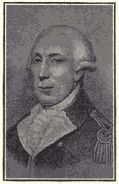
The Governor of Canada in 1780 was General Frederick Haldimand.  I’ve given background on Haldimand before, way back in Episode 62, when he was leaving Boston in 1775, and also in Episode 197 when he returned to Quebec as its new governor.  

Frederick Haldimand

Despite his qualifications, Haldimand got the job almost by default.  Secretary of State Lord Germain hated his predecessor, Governor Guy Carleton, and wanted him out.  As a military leader, Carleton’s obvious successor would have been General John Burgoyne, that is until Burgoyne surrendered an army at Saratoga. Lieutenant Governor Henry Hamilton, who was also a military officer, might also have been a good choice, but Hamilton had spent the last couple of years as a POW in Virginia, and showed no signs of being able to return to Canada anytime soon.

By comparison Haldimand was an ideal candidate for the job.  He had served as acting Governor of Quebec before the war.  He had combat experience over this same region from his time in the French and Indian War and was a senior lieutenant general.  He spoke English, French, and German, all of which were important.  Canada had a large English and French speaking population at this time, and half of the army stationed in Canada were German-speaking Brunswickers.

Despite all this, the major obstacle to Haldimand’s appointment was his birth.  Haldimand had been born and raised in Switzerland, from a Prussian family who had lived there for several generations.  He had gotten his start in the Prussian Army, and served in the Dutch Army for a while.  The British recruited him just before the start of the French and Indian War as part of an effort to get experienced officers who could raise regiments among the German-speaking population in Pennsylvania.

In addition to being of foreign birth, Haldimand had no friends or family with political influence in London.  That was the fastest way for officers to rise through the ranks.  Despite this lack of connection, Haldimand had risen to major general by 1772.  That, however, created a new problem in 1775.  As London was getting ready to recall General Thomas Gage, his second in command in Boston, General Haldimand, was the next in line of seniority, ahead of Generals Howe, Clinton, and Burgoyne.  

London did not want a foreigner in command of North American Forces, and giving that job to a less senior general would be an insult to Haldimand.  So the same ship that carried Howe, Clinton, and Burgoyne to Boston, also carried a message recalling Haldimand to London.  So for the next several years, London officials kept one of their most senior British generals with the most experience in North America, hanging around London with little to do.

While the war was raging in New York in 1776, Haldimand took a few months on vacation to visit his home town in Switzerland.  By 1777, with Secretary Germain finally getting General Carleton to resign as governor and military commander of Quebec, he offered the job to Haldimand.  Thanks to weather and other problems, Haldimand did not arrive in Quebec until late 1778.

The problem for Haldimand was now that he wasn’t sure what to do in Quebec.  Germain even apologized to Haldimand for not being able to give him any specific expectations of his new job.  After Burgoyne’s fiasco at Saratoga, strategists had given up on the idea of creating a link between Quebec and New York that would cut off New England.  They were now thinking more defensively - holding Quebec against any new invasions from the south.  Remember that the Continental Congress, about this time, was making plans to have General Lafayette lead an invasion that would motivate the French inhabitants to rise up and overthrow British rule.  Even though the Americans did not have the resources to put together their planned invasion, they were very interested in the idea, and the British very much feared it.

As military governor, Haldimand took a firm hand, arresting several newspaper editors and others who propagated what Haldimand called “a licentious spirit.” But the local inhabitants proved to be a minor concern.  Haldimand was more concerned with preventing an invasion from the south.  Remember that at this time the Quebec territory extended all the way down to what is today Kentucky.  The Americans had occupied a good portion of that disputed territory thanks to George Rogers Clark.

Haldimand could not worry about that.  He focused more on the region around Lake Champlain, which might serve as an invasion point from New York.  Soon after his arrival in 1778, Haldimand approved several raids into New York, mostly designed to liberate loyalists who were under house arrest so they could join forces in Quebec.  Haldimand had many loyalists, as well as Iroquois, who wanted to bring the war back to New York and retake their homes.  He was still dealing with the refugees from the Sullivan Campaign in late 1779.  

Haldimand had never gotten the reinforcements that Germain had promised him.  He had nowhere near the manpower needed to take and hold parts of New York.  But the British were quite capable of continuing their raids into New York.

Launching another offensive raid into New York accomplished several things.  It would keep the Americans from having a safe platform from which to launch a new invasion into Quebec.  It would deny food being grown there that would help feel the Continental and French armies.  It would give the loyalist and Iroquois refugees an opportunity for some payback, perhaps even a chance of eventually regaining some of their land.  This is what the loyalists constantly requested of Haldimand.

The British had already launched raids into New York over the spring and summer of 1780.  They now prepared for a fall offensive..  

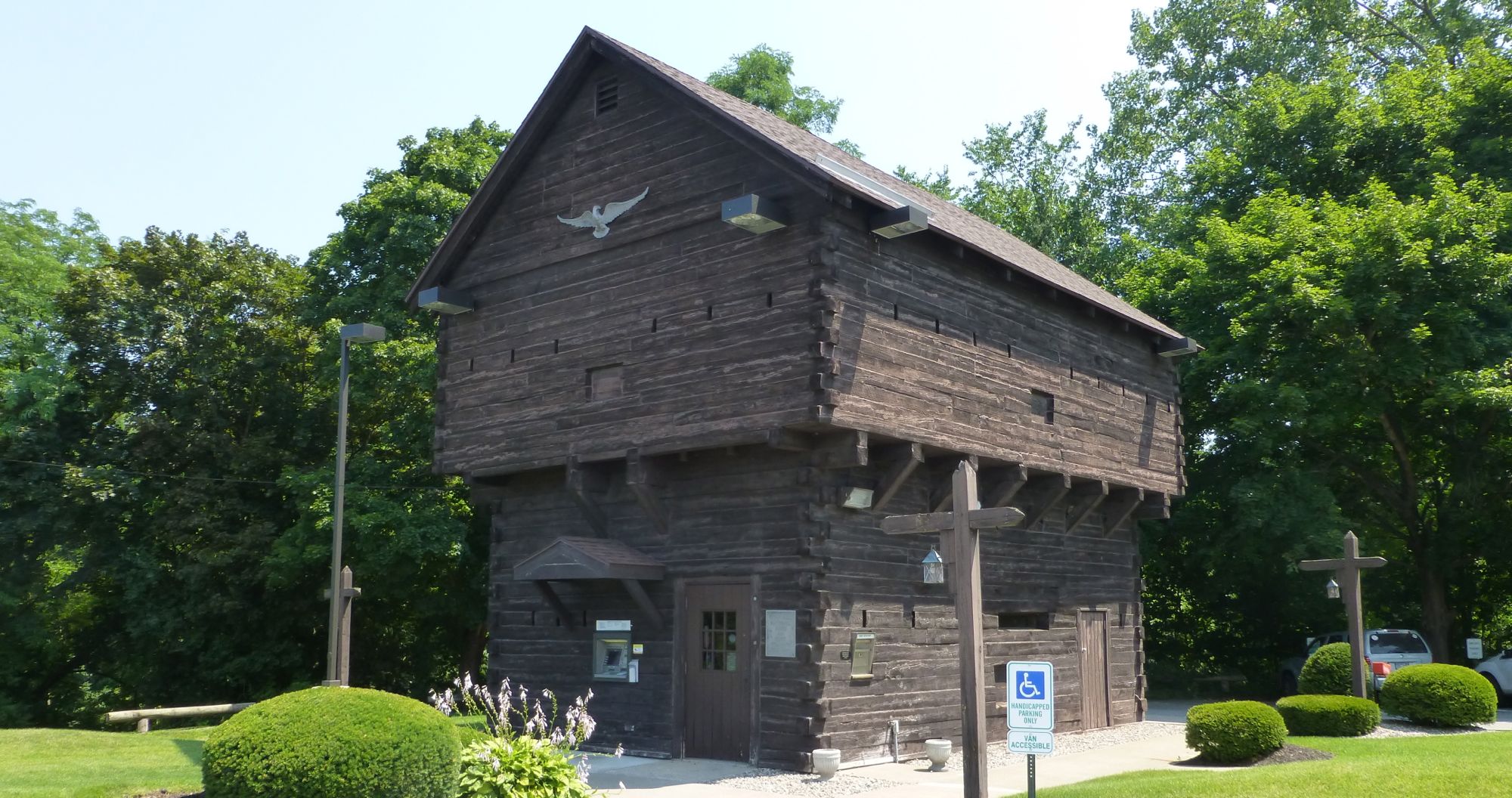
Fort Ann 

Major Christopher Carleton, the nephew of General Guy Carleton, had remained in Canada after his uncle’s departure.  I last mentioned him back in Episode 202 when Carleton led several relatively uneventful raids through northern New York.  Major Carleton led a force of British Regulars, down from St. John’s in Canada, leaving on September 28, 1780.  

Fort Ann (Replica)
The assembled force included about 650 British regulars and another 200 or so loyalists.  The invasion force filled eight ships and 26 smaller bateaux, reaching Valcour Island on October 2.   As they moved down lake Champlain, several parties of Indians joined them, expanding the force to almost 1000 men.

By October 6, the fleet reached Crown Point where the unoccupied ruins of a fort remained.  There, the loyalists under Captain John Munro separated from the main force, and will get to Munro’s expedition shortly.  The rest of the force under Carleton continued to move south, passing the ruins of Fort Ticonderoga, also now unoccupied by either side.  His fleet sailed down South Bay.  When the ships could go no further, the group disembarked and continued overland.

By October 9th, his force of about 650 men reached the rebel-occupied Fort Ann.  The massive force of regulars, along with field cannon came as a surprise to the small garrison at Fort Ann.

The American commander, Captain Adiel Sherwood, was in charge of the 74 militia officers and men at the fort.  The garrison had almost no rations or ammunition to face any sort of siege.  Sherwood later reported that they only had rations for three or four days, and only four rounds of ammunition per man.  Given the overwhelming force against them, there was no prospect of a defense.

Major Carleton sent forward a flag of truce, and offered little in the way of surrender terms. They would be taken as prisoners of war back to Quebec and that any women and children at the fort would be released unmolested to go to their homes,  Sherwood surrendered the fort without a shot fired.  The British moved through the region, burning or pillaging whatever they could find.

Fort George

The British column continued to move south toward Fort Edward.  At Kingsbury, they ran into a couple of locals on horseback.  The men escaped capture and rode to Fort Edward to warn the garrison.  Instead of continuing south, the column turned Northwest and headed overland to Fort George, at the southern tip of Lake George.  Like Fort Ann, the garrison at Fort George was rather small, and lacked sufficient food or ammunition for any sort of siege. 

Fort George Ruins
The garrison consisted of Continentals from Colonel Seth Warner’s Regiment, many former Green Mountain Boys.  Colonel Warner was away recovering from a wound he had received a month earlier.  The second in command Lieutenant Colonel Samuel Safford was also away, trying to chase down the regiment’s paymaster, after he had escaped arrest for embezzlement: selling the regiment’s new uniforms.  Third in command should have been Major Gideon Brownson, but he was already a prisoner of war in Canada. So command of Fort George fell to Captain John Chipman.

Captain Chipman had been focusing on several British ships on Lake George, north of the fort. He was preparing for an attack, but regardless of any preparation, he lacked the men, ammunition and rations to resist an attack of any size.

Chipman sent a rider to nearby Fort Edward to request additional food.  The rider did not make it to Fort Edward, as he spotted a group of about 30 or 40 hostile Indians, who chased him back to Fort George.  Desperate for food, Chipman ordered a detail under the command of Captain Thomas Sill to go out and clear the road between Fort George and Fort Edward of any hostile war parties.  

Sill’s detail, which left the fort on October 11 came into contact with the advance of Major Carleton’s British regulars and also had to make a quick escape.  Sill then organized his small detail and launched an attack on the pursuing enemy.  Sill’s force of 47 officers and men soon realized they were facing not only a small Indian War party, but a fairly large force of British regulars, probably close to 200 men.  The Continentals soon found themselves surrounded.  Unwilling to surrender, Sill ordered a bayonet charge, with the hope of pushing through the enemy line and returning to Fort George.

The fight was a desperate one.  Captain Sill and eighteen other men were killed in the fighting.  Another 14 were wounded or captured.  Another 14 managed to get through the lines and escape.

The British force then approached Fort George and began to form a line of battle.  The American fired from their one canon, but did not manage to hit the enemy.  Carleton sent a flag of truce, calling for the fort’s surrender.  Half of the garrison had been lost under Captain Sill.  As a result, Chipman only had about 40 soldiers in the fort. Lacking enough food or ammunition to hold out even for a day or two, Captain Chipman surrendered the fort.

Carleton offered terms similar to those he gave at Fort Ann.  The garrison would be taken as prisoners of war, and not massacred or otherwise attacked.  Prisoners could keep a knapsack full of personal items. Women and children would be permitted to return home with their baggage.  Officers could keep their servants.  Indians would not enter the fort until after the British took possession.  For some reason, Carleton added to the terms that one junior officer, Ensign Bonnet was permitted parole and allowed to return home with his family.  My guess is that this was a young man not really of prime fighting age.

After the British had secured the fort, their Indian allies were given leave to plunder the fort on anything of value.  After that, the British burned the fort before departing.  The prisoners were marched up to Ticonderoga, where they were placed aboard ships and taken back to Quebec. Between Fort Ann and Fort George, the British collected 130 prisoners of war.  A few weeks later, Carleton would send a proposal for a prisoner swap, hoping to get back loyalists being held in New York.  However, the Americans would not agree.  Most of the prisoners, at least those who survived, remained in custody until the end of the war.

Ballston Raid

While Major Carleton and his regulars did not plan to go any further, another detachment that had moved out of Canada with Carleton, planned to use the fighting to push further south.  General Haldimand had given authority to Captain John Munro, to raid deeper into New York.  

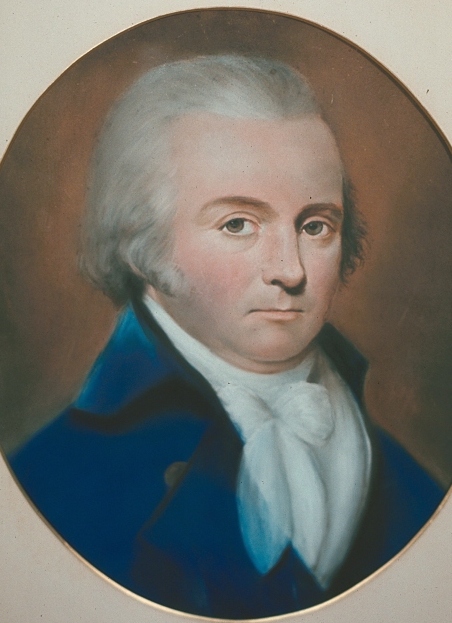
Captain Munro was a Scotsman who first came to New York as a sergeant in the regular army during the French and Indian War.  He settled in Albany County and became a Justice of the Peace, where he spent much of his pre-Revolution years fighting with Ethan Allen and the Green Mountain Boys.

John Munro
In 1775, Munro had accepted a commission in a loyalist militia, something he denied to patriot authorities in order to avoid. By mid-1776 though, the patriots had put out a warrant for his arrest anyway.  After the Battle of Bennington in 1777, they seized all of his land and property.  By this time Munro had left for Canada where he was serving in the King’s Royal Regiment under Sir John Johnson.

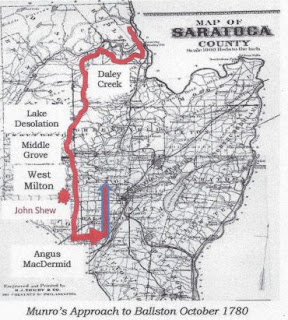
Captain Munro, in this attack, was tasked with continuing the raid further south toward Ballston, taking about 200 loyalists and Mohawk warriors to destroy all patriot properties and crops that they came across.

On October 11, the same day that Forge George fell to Carleton, Munro’s detachment was northeast of Saratoga.  The subsequent withdrawal of the regulars and the news that the locals were aware of his presence, gave Munro pause.  He did not want to walk into an ambush.

His force spent several days making its way down old Indian trails to avoid detection on the main roads.  Munro knew there was another force of loyalists to the south under the command of loyalist Colonel John Johnson.  But he had received no word on Johnson’s whereabouts, and Johnson had not yet launched any attack.

Further, Carleton’s raids on Fort Ann and Fort George had riled up local patriots, and Munro began to receive word of larger patriot militia groups gathering to his north, and possibly cutting off any escape route.  He heard rumors that 500 militia had gathered at Saratoga to confront his raiding party.

Another concern was that Munro's men had run out of food, and were exhausting themselves marching through wilderness to avoid main roads.  Munro decided to raid Ballston, an area a few miles to the west of Saratoga.  It was the closest settlement that would probably have food for his men, and would give him an opportunity to score a success before withdrawing back to Canada.

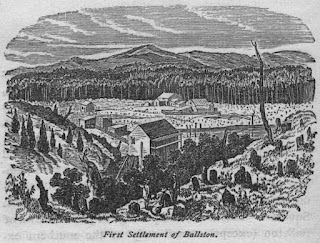
On the night of October 16, Munro’s raiders attacked the homes of several well known patriot militia officers, capturing several of them, including militia Colonel James Gordon. The colonel was a prominent military and political leader, who also served in the State Assembly.  He was specifically targeted for capture.  His next-door neighbor, militia Captain Tyrannus Collins, was also taken prisoner.  Collins received a tomahawk wound while blocking the door so that his son could escape out a window.  But the wound was not mortal, and Collins became a prisoner.

The loyalists focused on destroying homes and crops, avoiding a confrontation with the nearby militia fort where defenders had gathered.  He reported taking thirty prisoners and looting or destroying at least seventeen farms.

Not wanting to push his luck, Munro withdrew by morning, moving into the mountains.  There, his men rested and slaughtered some of their captured animals for food.  It took more than a week for the force to reach Bulwagga Bay, about half way up Lake George, where they were safely back within British lines.

The Munro raid created great alarm, destroying homes only a day’s march from Albany.  Retired General Phillip Schuyler wrote to Governor George Clinton days after the Ballston Raid.  Schuyler commented “the panic that has seized the people is incredible; with all my efforts I cannot prevent numbers from deserting their Habitations.

Upon his return, Munro was concerned that his inability to connect with Johnson’s force made his actions a disappointment to the British leadership.  Although they said they were satisfied with his efforts, they never gave him another independent command.

General Haldimand’s strategy, however, was not for the raids by Carleton and Munro to have much impact by themselves.  They were designed to distract the enemy from the much larger and more destructive raid on the Schoharie Valley of New York that was supposed to be taking place at the same time.  

We’ll have to get to those raids next time, when we cover the battle of Stone Arabia.

- - -

Next Episode 270 Stone Arabia 


 Contact me via email at mtroy.history@gmail.com

 Follow the podcast on Twitter @AmRevPodcast

 Join the Facebook group, American Revolution Podcast 

 Join American Revolution Podcast on Quora 
 
Discuss the AmRev Podcast on Reddit

American Revolution Podcast Merch!

T-shirts, hoodies, mugs, pillows, totes, notebooks, wall art, and more.  Get your favorite American Revolution logo today.  Help support this podcast.  http://tee.pub/lic/AmRevPodcast


American Revolution Podcast is distributed 100% free of charge. If you can chip in to help defray my costs, I'd appreciate whatever you can give.  Make a one time donation through my PayPal account. You may also donate via Venmo (@Michael-Troy-20), Zelle, or popmoney (send to mtroy1@yahoo.com)


Click here to see my Patreon Page
You can support the American Revolution Podcast as a Patreon subscriber.  This is an option making monthly pledges.  Patreon support will give you access to Podcast extras and help make the podcast a sustainable project.

An alternative to Patreon is SubscribeStar.  For anyone who has problems with Patreon, you can get the same benefits by subscribing at SubscribeStar.

Help Support this podcast on "BuyMeACoffee.com"


Visit the American Revolution Podcast Bookshop.  Support local bookstores and this podcast!


Signup for the AmRev Podcast Mail List

* indicates required

Further Reading

Websites


Battle of Lake George 11 October 1780: https://lakegeorgebattlefield.org/wp-content

Aikey, Michael "Ballston Raid of 1780: Military Operation or a Time to Settle Old Scores" Journal of the American Revolution, Dec. 6, 2017: https://allthingsliberty.com/2017/12/ballston-raid-1780-military-operation-time-settle-old-scores

Richmond, James E. "War on the Middleline: The October 1780 British Raid on Ballston" Journal of the American Revolution, July 25, 2016: https://allthingsliberty.com/2016/07/war-on-the-middleline-the-october-1780-british-raid-on-ballston


Gordon, James, and Josephine Mayer. “Documents: The Reminiscences of James Gordon” New York History, vol. 17, no. 3, 1936, pp. 316–33. JSTOR, http://www.jstor.org/stable/23135054

“To George Washington from Philip John Schuyler, 31 October 1780,” Founders Online, National Archives, https://founders.archives.gov/documents/Washington/99-01-02-03767


Three Rivers: Hudson-Mohawk-Schoharie: http://www.threerivershms.com/schoharie.htm

Free eBooks
(from archive.org unless noted)

McIlwraith, Jean N. Sir Frederick Haldimand, Toronto: Morang & Co. 1910. 

Books Worth Buying
(links to Amazon.com unless otherwise noted)*

Berry, A. J. A Time of Terror, Trafford Publishing, 2005 (borrow on archive.org). 

Berry, A.J. Fort Plain & Fort Plank: The Two Fort Plain Forts, Fort Plain Museum, 2013.


* As an Amazon Associate I earn from qualifying purchases.
Sunday, July 10, 2022

ARP250 Mohawk Valley Raids


We last looked in on the Indian warfare in upstate New York back in Episode 230.  

The Iroquois under leaders like loyalist John Johnson and Mohawk Chief Joseph Brant (Thayendanegea), had been terrorizing settlers in New York who had sided with the patriots.  These patriots had forced all loyalists to flee to Niagara, or further north into the Quebec territory, or face arrest and property confiscation if they failed to swear allegiance to the new independent state government.  

Postcard depiction of Mohawk Valley Raid, 1780
In addition to the Iroquois, many loyalist New Yorkers of European descent also fled to Canada. Many of these formed loyalist units, including Butler's Rangers, under the command of John Butler and often led by his son Walter Butler.  The Rangers, the Iroquois and loyalists waged a campaign attempting to destroy food and property, as well as capture or kill patriots, in an attempt to get the patriots to cede the region.  These raids had already resulted in numerous massacres, including the Wyoming Valley Massacre and the Cherry Valley Massacre. 

In response, General Washington ordered an equally harsh response by the Continental Army.  He ordered General Sullivan to take an army through the heart of Iroquois territory and visit devastation on all the Iroquois villages, other than the Oneida and a few others who had cast their lot with the patriot sides.  Many of the Iroquois had attempted to remain neutral.  But these neutral villages provided support to fellow Iroquois who were raiding patriot homes and villages.

The Continentals hoped that by burning Indian villages and destroying their food, that they would have no choice but to abandon the region entirely.  The Sullivan Campaign did exactly that.

Hard Winter

As I’ve mentioned in other episodes, the winter of 1779-80 was an exceptionally cold and snowy one.  The Continental Army clung to bare survival at Morristown, New Jersey.  To the north things were at least as bad, if not worse.

Native Winter Encampment
The Sullivan Campaign had wiped out grain stores in New York and sent thousands of Iroquois refugees to the Niagara area, desperate to feed their families and find shelter in the harsh winter.  These joined thousands of other loyalist refugees who had already fled New York and also needed assistance.

More than 5000 Iroquois, more than half of them women and children, had fled to Niagara with little more than the clothes on their backs.  By October of 1779 these refugees were already consuming the food rations that would not have supported even a smaller number of people over the winter.  As fall pushed into winter, food became even scarcer. 

Mary Jemison - a former white captive who lived with the Senecas, wrote down her recollections of that hard winter years later: 

The snow fell about five feet deep, and remained so for a long time, and the weather was extremely cold; so much so indeed, that almost all the game upon which the Indians depended for subsistence, perished, and reduced them almost to a state of starvation through that and three or four succeeding years. When the snow melted in the spring, deer were found dead upon the ground in vast numbers; and other animals, of every description, perished from the cold also, and were found dead, in multitudes. Many of our people barely escaped with their lives, and some actually died of hunger and freezing.

Frederick Haldimand

The British Governor General Frederick Haldimand complained regularly to London over the winter that everyone was starving and that grain was almost impossible to find.  Heavy snowfall and ice made it impossible to get any supplies to the refugees.  In addition to the lack of food, there was nowhere to shelter all of the people.  There were not enough tents, which even if their were would have been inadequate for the brutal Canadian winter where witnesses reported snow drifts of over eight feet.  Many refugees attempted to build crude shelters from wood or stone, or dig holes into the earth in order to avoid the brutal winds.  These shelters were not close to adequate protection.

Many hundreds died over the winter.  Some simply starved or died from diseases related to the lack of food, such as scurvy.  Many others literally froze to death, living outside in the elements without winter clothing.  Dr. James McCauseland of the King’s Eighth Regiment made futile attempts to assist the many dying around him every day, but could do little more than report on the wide array of diseases that were killing the people.  By the time the first signs of spring thaw came around, there were not even enough healthy people to bury all the dead. Soldiers simply poured quicklime on the bodies and buried them in shallow mass graves in order to prevent the rotting corpses from killing even more people.

Plans to Recapture Upstate New York

Loyalist and Iroquois leaders, however, only saw the suffering as an incentive to redouble their efforts to take back Iroquois lands in New York the following spring.  Of course, the leadership did not suffer nearly as much as the warriors or civilians.  Many war chiefs lived as guests in the home of Johnson, Butler, or other prominent men.  

Brant, who owned his own farm near Niagara, even found time to get married that winter.  His new wife, Catherine, had a white father named George Groghan, a Pennsylvanian who lived on the frontier and who had been with Washington when he made his first forays as a young man into the Ohio Valley.  Catherine knew none of that, having been born years later.  The 20 year old woman had been mostly raised by her Mohawk mother and spoke little English.

John Johnson had his own regiment drawn from local Tories, New York loyalist John Butler still commanded Butler’s rangers, composed primarily of New York loyalists.  Walter Butler, his son, had led the Rangers in the Field.  Joseph Brant worked with several other war chiefs to keep the Iroquois prepared for a new offensive into New York.  Also in late 1779 Guy Johnson returned from London.  Britain’s Indian agent for the region, Johnson also had authority to provide gifts to native warriors to encourage an active campaign against the New York patriots.

One of the targets would be Oneida homelands.  The Oneida had solidly backed the patriots.  Their fellow Iroquois felt a particular betrayal by this and wanted to send a message.  Even in late 1779, Brant was planning a raid on the Oneida villages.  As he organized his raiding party, he captured three Oneida warriors near his camp near Niagara.  Under interrogation, the Oneida revealed that they had been made aware of the planned attacks from a Cayuga refugee living near Niagara and that Oneida war chiefs had sent them to spy on the attackers.  Realizing that he had lost the element of surprise, Brant called off the attack for the fall.

Brant’s Spring Raid

While the fierce winter storms limited any military activity over the winter, Tory and Iroquois leaders were determined to do something.  By February, some of the worst snows had subsided.  Brant and several hundred warriors held a war dance at Guy Johnson’s home.  Johnson supplied the warriors with snowshoes, blankets, and other supplies, in hopes that they might conduct a winter campaign.

Guy Johnson
The warriors set off, but the poor weather and difficult conditions led to much of the force falling ill. It also didn’t help that there were no friendly villages along the way to provide supplies.  The work of the Sullivan Campaign the previous year had succeeded in that.  Brant reported several weeks into the winter march that more than half of his war party was too sick to continue but that he was continuing with about 200 warriors.

Marching through the snow was slow going.  One of their targets had been three forts near Schoharie, just south of Oneida lands.  Brant’s warriors took all of March, arriving in Harpersfield, a few miles away, in the beginning of April.  There, the attackers encountered a group of twelve local militia.  They killed three and captured the remainder.

The warriors wanted to kill their prisoners, but Brant prevailed on them to send the captives back to Niagara.  The prisoners told Brant that there was a garrison of 300 Continental soldiers at Schoharie.  This was not true, but it dissuaded Brant from launching an attack.

The warriors then burned Harpersfield and captured several more civilians.  Brant released one of the prisoners with a letter, saying that he had heard that the patriots were mistreating loyalist prisoners, and that he would return similar treatment on his prisoners if this did not change.

The warriors built canoes to travel down the Delaware River, looking for food and looking to help any local Tories who remained in the region.  They passed through Oquaga, which had been obliterated by the Sullivan Campaign, with no people or buildings remaining there.

Brant divided his already small force into raiding parties that could attack or capture isolated homes or villages in the region.  One raiding party returned with only two of its members, saying they had captured prisoners, but that the prisoners escaped at night and killed the rest of the raiding party.  The warriors hearing this then wanted to kill their own prisoners, but once again, they were talked out of it.

On April 24, a war party of 79 Iroquois and two Tories once again attacked the village of Cherry Valley, the scene of the 1778 massacre that had been a key trigger for the Sullivan Campaign. The attackers killed eight settlers outright, and captured another fourteen.  They burned all of the buildings that had survived the earlier attack, or had been rebuilt, and left no one living in the community.

Unable to find sufficient food to survive, the warriors began marching back to Niagara with their prisoners.  One account says that one of the prisoners was unable to keep up.  They killed and scalped the prisoner, leaving his body for the wolves.  One of the killers teasingly dangled the man’s scalp to some of the other prisoners, including his two grandsons.

After a nearly three month campaign, Brant’s warriors returned to Niagara.  Brant had to send word to Haldimand that he was returning with prisoners. Haldimand used a pretext to get most of the Indians out of the area.  Otherwise, he knew they would attack the prisoners.  Sentiments were so hard after the devastating winter that even women and children would attack prisoners being marched into camp.

Johnson Raids Johnstown and Caughnawaga

Brant was not the only active loyalist raider that spring.  While Brant’s campaign was still marching toward its targets, a loyalist scout returned from Johnstown with word that the patriots were planning to force all men of military age to enlist in militia companies to fight for the patriots, or be sent to jail and have their homes confiscated.

Sir John Johnson
Haldimand suggested to Sir John Johnson that he should send a small contingent into the region and lead loyalists still there back to join loyalist regiments, before they could be taken prisoner or forced to fight for the rebels.  Johnson opted to take a much larger force of about 300 Regulars and loyalist militia from Montreal, down Lake Champlain to Crown Point, near the ruins of Fort Ticonderoga.  He also sent scouts ahead of his main force to warn local loyalists to be ready to move when he arrived.  In doing so, he managed to recruit more than 120 men for his battalion.

With a force growing to nearly 500 men, including a fair number of Iroquois warriors, the force marched south, picking up recruits and burning the homes and farms of any patriots they encountered.  

Johnson’s force arrived at a small village just north of his boyhood home of Johnstown on May 21.  There, he divided his force, leading a portion to his boyhood home in Johnstown, with the other force moving east toward Caughnawaga.  

At around midnight on May 23, the two divisions entered Johnstown and Caughnawaga.  The raiders looted and burned the homes of known patriots.  They killed three patriot militiamen.  One of the men killed was a militia captain, according to local lore, killed by an Indian that he knew and to whom he had shown great kindness in earlier times.

Another nearby home, that of militia Colonel Frederick Visscher.  The colonel was in his home with his mother and two brothers.  The men were determined to defend their home to the last.  After a brief but determined struggle, the raiders entered the home.  They killed and scalped the men and tied their mother to a chair.  

Colonel Visscher had survived the initial attack and scalping, but had tried to play dead.  An Indian warrior noticed he was still alive and slit his throat with a knife.  After a brief ransacking, the attackers set the home on fire, leaving Mrs. Visscher tied to the chair inside the burning home. Amazingly, Col. Vissher managed to survive having his throat slit.  After the attacker left, he managed to pull his mother, and his brothers’ bodies, from the burning home.  He also recovered from his wounds, which is the only reason we have this story to tell.  Similar attacks took place in many other homes in the town, often leaving no survivors.

The devastation would have been even worse had not militia Major Van Vrank managed to ride ahead of the raiders and warn many of the locals to flee their homes and escape into the woods.  The raiders burned every building in Caughnawaga except for the church, killing many of the inhabitants, including nine elderly men over the age of 80.  They did take some prisoners.  As they continued their march, they looted and destroyed every building they encountered, taking what they could, and killing any livestock or burning any property that they could not carry. Marching through a four mile arc south of Caughnawaga, the attackers burned an estimated 120 buildings and burned tons of food.

In response to these raids, Governor George Clinton quickly called out the militia, which joined up with a force of Continentals under the command of Colonel Goose Van Schaik.  The 800 man force quickly assembled and set off to capture Johnson’s raiding parties.  Johnson managed to slow the enemy by leaking the fact that Joseph Brant and Butler’s Rangers were about to launch their own raid south of the Mohawk River.  Several prisoners escaped and alerted the patriots.  This was a ruse, Brant and Butler were still back in Niagara. But this gave Johnson’s raiders time to march north and avoid an encounter with a much larger enemy.

The loyalist raiders managed to make it back to Crown Point and embark on ships before Schaik’s army and a second army from New Hampshire which had been assembled to cut off their escape, could arrive.  A combined patriot force of 1700 men might have turned the raid into a British defeat.  But the quick escape ahead of this force up Lake Champlain gave Johnson a great success.

Raid on the Oneida

The loyalists were far from finishing their attacks.  In July, Joseph Brant, in cooperation with British regulars, launched a raid on the Oneida who had remained allied with the patriots.  Brant had convinced a small number of Oneida and Tuscarora to join the refugees at Niagara, threatening them with destruction if they refused.  Some of these natives sought refuge at Fort Stanwix.

Butler's Rangers

In June, a delegation of Mohawk Warriors and Butler’s Rangers arrived at Oneida Castle, an entrenched area with high walls, deep in Oneida territory.  They attempted to get the Onondaga, Tuscarora, and Oneida still their to abandon their alliance and join the rest of the Iroquois at Niagara.  They managed to convince about 300 warriors to leave, by 90% of these were Onondaga and Tuscarora.

One July 11, Brant’s Iroquois warriors and a small number of British regulars marched against those who had refused to join them.  Among the raiders were several dozen warriors who they had just forced to return to Niagara.  These warriors were forced to show penance for their rebel tendencies by joining the punishing force that would lay waste to those who did not surrender.  

Brant’s force came across about 400 Iroquois taking refuge near Fort Stanwix.  Most were able to flee into the fort, although some were captured and forced to return to Niagara.  Brant’s forces laid siege to the fort for a few days, but were not prepared for a longer siege.  The warriors continued on, laying waste to any abandoned Oneida homes and villages they encountered.  They drove off horses and cattle, and burned crops.

In early August, the raiders destroyed the Oneida village of Canowaraghere and also the settlement at Canajoharie.  Alert settlers became aware of the attack and managed to escape to Fort Plank.  Brant’s raiders could not take the fort and were not prepared to besiege it.  They destroyed the homes in the area, but were not able to kill or capture many of the inhabitants.  They poured through the Schoharie Valley, largely unopposed, laying waste to isolated farms and small villages, including the town of Vrooman, where they burned more than twenty homes.

By the end of August, Brant returned to Niagara with another devastating and successful raid complete.

Loyalist and Iroquois raids into New York were far from over.  The raids would become even worse in the fall of 1780, but we will have to leave those for a future episode.  Many of the Oneida who survived the raids became refugees among the patriots, settling on land closer to Schenectady, where they hoped to remain out of range of future raids.  The Mohawk Valley remained an armed encampment, where small forts dotted the region every few miles.  Nervous locals remained on edge, ready to seek the protection of the forts at a moment’s notice.  But they remained determined to defend the region.

Next week: we return to South Carolina for the battle of Waxhaws.

- - -

Next Episode 251 Waxhaw Massacre


 Contact me via email at mtroy.history@gmail.com

 Follow the podcast on Twitter @AmRevPodcast

 Join the Facebook group, American Revolution   Podcast: https://www.facebook.com/groups/132651894048271

 Join American Revolution Podcast on Quora 


American Revolution Podcast Merch!

T-shirts, hoodies, mugs, pillows, totes, notebooks, wall art, and more.  Get your favorite American Revolution logo today.  Help support this podcast.  http://tee.pub/lic/AmRevPodcast


American Revolution Podcast is distributed 100% free of charge. If you can chip in to help defray my costs, I'd appreciate whatever you can give.  Make a one time donation through my PayPal account. You may also donate via Venmo (@Michael-Troy-20), Zelle, or popmoney (send to mtroy1@yahoo.com)


Click here to see my Patreon Page
You can support the American Revolution Podcast as a Patreon subscriber.  This is an option making monthly pledges.  Patreon support will give you access to Podcast extras and help make the podcast a sustainable project.

An alternative to Patreon is SubscribeStar.  For anyone who has problems with Patreon, you can get the same benefits by subscribing at SubscribeStar.

Help Support this podcast on "BuyMeACoffee.com"


Visit the American Revolution Podcast Bookshop.  Support local bookstores and this podcast!


Signup for the AmRev Podcast Mail List

* indicates required

Further Reading

Websites

Refugees of Niagara 1779-1780: The Winter of Hunger: https://www.sullivanclinton.com/texts/articles/archives/refugees-niagara

Aikey, Michael “Ballston Raid of 1780” Journal of the American Revolution, Dec 6, 2017 https://allthingsliberty.com/2017/12/ballston-raid-1780-military-operation-time-settle-old-scores

Horton’s Historical Timeline for 1780: http://threerivershms.com/timeline1780.htm

Raid on Johnstown: https://revolutionarywar.us/year-1780/raid-on-johnstown

Frederick Visscher https://www.wikitree.com/wiki/Visscher-79

History of the Mohawk Valley: Chapter 68: 1780, Raids at Cherry Valley, Johnstown, Fort Plain, Vrooman's Land http://www.schenectadyhistory.org/resources/mvgw/history/068.html

Tiro, Karim M. “A ‘Civil’ War? Rethinking Iroquois Participation in the American Revolution.” Explorations in Early American Culture, vol. 4, 2000, pp. 148–65. JSTOR, http://www.jstor.org/stable/23549298.

Free eBooks
(from archive.org unless noted)

Cruikshank, E. A. The Story of Butler's Rangers and the Settlement of Niagara, Welland, Ont: Tribune Printing, 1893. 

Efner, William B. (ed) Warfare in the Mohawk Valley; Transcribed from the Pennsylvania Gazette 1780, 1781, 1782 and 1783, Schenectady, NY: self-published, 1948. 

Seaver, James E. A Narrative of the Life of Mary Jemison: De-he-wä-mis, The White Woman of the Genesee, New York ; London : G.P. Putnam's Sons, 1910 (originally published 1824).

Stone, William L. Life of Joseph Brant-Thayendanegea, Vol. 2, New York, A. V. Blake, 1838. 

Swiggett, Howard War out of Niagara: Walter Butler and the Tory Rangers, Columbia Univ. Press, 1933. 

Walker, Mabel Gregory “Sir John Johnson”  The Mississippi Valley Historical Review, 1916. 

Books Worth Buying
(links to Amazon.com unless otherwise noted)*

Graymont, Barbara The Iroquois (Indians Of North America), Chelsea Press, 2005 (Borrow on archive.org).

Kelsay, Isabel Thompson, Joseph Brant, 1743-1807, Man of Two Worlds, Syracuse Univ. Press, 1984 (Borrow on archive.org). 

Watt, Gavin K. For Want of His Silver Plate, Sir John Johnson's Raid of May 1780, Dundurn, 1997. 

(Buy at Fort Plain Bookstore)

Watt, Gavin K. The Burning of the Valleys: Daring Raids from Canada Against the New York Frontier in the Fall of 1780, Dundurn, 1997 s_tl

* As an Amazon Associate I earn from qualifying purchases.