Showing posts with label Interview. Show all posts

Sunday, October 26, 2025

AR-SP41 The American Revolution, with Ken Burns

The new Ken Burns documentary on the American Revolution is due to be released on November 16th, 2025. The 12-hour production will be broken up into six 2-hour episodes taking viewers through through the Revolutionary War. Ken Burns is, of course, well known for his earlier works covering things like the Civil War, the Vietnam War, and other topics such as Prohibition, baseball, and jazz. Sarah Botstein has worked on at least seven previous Ken Burns documentaries, including the ones on Vietnam, Prohibition, and Jazz. The two, along with co-producer David Schmidt, teamed up to produce this upcoming documentary covering the American Revolution. I had the opportunity to sit down with Ken Burns and Sarah Botstein earlier this month to discuss the American Revolution with them. What follows is a transcript of our discussion on Zoom. 

MT: Sarah, Ken, welcome to the American Revolution Podcast.

KB: Thank you.

SB: Thank you.

MT: So, both of you have produced a great many historical documentaries which we're all have enjoyed over the years. What drew you to the American Revolution as a subject?

KB: Well, it's our founding story. It's our founding creation myth, as Rick Atkinson says in the opening moments of the film. And we've always been drawn to it, have had subjects that have circled around it, from the history of the Shakers to biographies of of Benjamin Franklin and Thomas Jefferson, to other things. but it it sort of held itself away for the obvious reasons that there's no photographs in news real. So, it makes unlike our our series on the Civil War or World War II or the Vietnam War, kind of more provable. It made this a much more daunting challenge. And so it was in 2015 as we were finishing our Vietnam series that I realized looking at maps and and thinking about what we'd learned over the decades of trying to tell complicated stories that we could actually overcome the absence the deficit of of photographs and news reels and tell a comparing compelling narrative that would bring you into the story. And what could be more important than particularly in challenging times than going back and and re-establishing a visceral connection bottom up as well as top down with our founding with the ideals that that created us.

MT: Yeah. In addition to the birth of our country, I think the American Revolution changed the world in a lot of ways. And in fact, you say in your documentary, you know, turns the world upside down. What did you mean when you said that or when it was said in your documentary?

SB: Ken usually has a great way to answer this question. I think before the American Revolution governments and societies were structured quite differently and so subjects became citizens and the world did actually turn upside down. It's a great line both in the play and in the world and I think really apt here. There are parts of our democracy and parts of the way that the history over the 250 years has unfolded that are wonderful unintended consequences of parts of the revolution. But the revolution did remake, in a local and then global context, how governments could be run and function and how people at the margins because we did a conversation last week with the wonderful scholar and thinker Yuval Levin and he said you know the America the Declaration of Independence uses the word all. So once you have the word all regardless of what's happening in that moment you're saying all And then Maggie Blackhawk, who I think is, you know, Ken and I talk about this a lot, is sort of at the heart of the show at the end of the second episode in the Declaration of Independence, says the Declaration was deeply significant to people at the margins who could see and feel that document and push the levers of power. And so over the 250 years, it might have taken us a long time for me to be able to go and vote, for example, but we got there. And that's an inspiring story of what is possible and I think really worth celebrating and it did in fact turn the world upside down.

MT: Yeah, I think that's right. I think a lot of people take for granted today that governments are democratic and even authoritarian governments at least pretend to be democratic. They at least have show elections and things like that. That wasn't even a thing before the American Revolution. Everything everybody had monarchies and that was that was about it. So the American Revolution kind of got the ball rolling on that and of course our country improved over time and other countries around the world were inspired by what we were doing. So, yeah.  You touched on the issue of it being very hard to portray the American Revolution because there are no photographs. there's no obviously no video footage. Were there ways you felt maybe constrained in being able to show the brutality of this war and and some of the difficulties? I know paintings are a big part of of of what you do in the documentary, but of course that doesn't really capture the brutality of war. Was that a real struggle for you guys?

KB: I think it's always a struggle whether you've got tons of stuff that proves it. You know, there is such a thing as kind of "war pornography" where people glory in the gore and and it misses the point of what you want to do as you're narrating a complex story. I think the important thing is to first understand that our American Revolution is some not some bloodless gallant mythological story of people on Mount Olympus, i.e. Philadelphia, thinking great thoughts. but in fact a bloody civil war in some ways more bloody for civilians than our Civil War was which was more of a sectional war. We have the proof in the photographs of that. And so our our challenge was to not just animate the paintings but to animate maps and to animate documents to treat the main star of the film which is the extraordinary beauty and majesty and and size of the continent or at least the eastern seaboard of the continent, where the most of the battles take place - to give it a a kind of primacy as a character to take the opacity off the familiar bold-faced top-down names that we all know but don't know, the George Washingtons and the Thomas Jeffersons et al and then to introduce you to dozens and dozens of so-called ordinary people that didn't have their their portraits painted. So, there's there's a lot to do there. And then we've spent years and years and years filming reenactors is not to have them reenact a battle for us, but to give us the stuff, the the critical mass of imagery, mostly impressionistic. You don't see faces, shadows, dawn, dusk, washing blood, women washing blood off a clothes in a stream in a in a river, guns firing, just giving a sense of what it was like so you could remove the onus of not having those pictures. And we we spent nearly a decade trying to do that and and feel really excited. We spent most of the last year out on the road sharing this with audiences of all stripes in every part of the country and the response has been phenomenal. So I think that in some ways we were able to escape the limitations of the absence of of photographs and news reels and make this a real complicated visceral struggle that engages human lives that everybody can identify with. And so part of the scores of individuals we introduce you to are teenagers and and young girls and French and German civilians as well as soldiers and English civilians and soldiers and kings and ministers and the whole variety including loyalists and native people and freed and enslaved black people that are central to the story of this and and just it's impossible if you're going to tell a good story to sort of think that you can leave out any you know one port of of the complexity of it.

MT: You were kind enough to share a preview of the documentary with me and I did get a definitely a sense of that. I especially like the idea of using people who don't we don't aren't remembered by history as you said, people like Joseph Plum Martin or Betsy Ambler, or John Greenwood. They offer a very different perspective obviously than the the so-called great men of the war. Bringing in the loyalists as well I think was very interesting to get their perspective. One of the things I think Britain really counted on when the war got started was that they believed that a great many of the Americans were going to be loyalists and rally around the king and that did happen but not in the numbers that they ever counted on. How do you think that really impacted the course of the war? The fact that they never got the loyalists to join on and what was there a reason why they were unable to encourage loyalists to...

KB: I think there were they got lots of loyalists: thousands, tens of thousands of loyalists to help them. If you take two gigantic battles, the battle of Long Island, the battle of Brandywine, both of which suffer from the patriot point of view from really bad generaling on the part of Washington. He makes tactical errors in both places. In the first case, leaving his left flank and in Brandywine, his right flank exposed. But the British take advantage of that because loyalists take them through there. There are battles in which there's only Americans fighting with the except of a British officer leading the loyalist. The one of the loyalists that we follow in the film is sort of driven because of his loyalist sympathies from his his home and town in what is now Vermont and ends up in Canada and forms a loyalist regiment of which there's legions of them all around and plays a significant role in the battle of Bennington which is a  loss for the British. There's lots of, I think, what the main impediment for the British is is I would say the size of the continent, the unpredictability of the weather, the distance from the home office, and the power of the ideas and the sense that you're here imposing your will on us. And those are really, really powerful things. All of those, you know, make it I mean, we have a British soldier. So, in some ways, it's funny. He says, you know, that you The word America takes up no more space on a map than Yorkshire, right? America is much bigger than that. 

SB: You also have a soldier saying, "Have you forgot us? Where are you? Here we are." Right? I'm going to steal from Rick Atkinson. And you know, he says, "War never follows the script that you think it might follow." And that's true for both us and for them. And so, nobody knows how it's going to turn out. And they did not understand, as Ken was just saying, the landscape, the weather, and the cause. And those three things with them very far away. You know, it's an unlikely underdog story.

MT: Absolutely. And the geography thing is certainly a major factor, as you say, taking months to get messages or men across the ocean and then back again and the great distances. But the British - both of you have said us and them. I don't think the British saw it as us and them. these were British subjects over here. and we're all us. And they I don't think understood the change of mind, the the the understanding that people had here that they were feeling to themselves to be more Americans. Yes, they were British subjects under the titular authority of the king, but they didn't think of themselves really as British. They were they were beginning to think of themselves as something different even before the war began.

KB: Yeah. Very much so. You know that when the colonists in Boston dumped tea in the harbor, there crudely as Native Americans. This is not to deflect the blame. It's to say we're, as the scholar Phil Deloria says in her film, we're Aboriginal. We're no longer separated. And I think this is a two-way street. The Americans are forever thinking they can't possibly be doing this to us, our parents, our brothers. The British are saying the same thing. They're also very, very brutal, and the way they want to handle this is with extraordinary brutality, and so are the patriots. I think we have to take off the sentimental nostalgic blinders that the revolution always has. And when Benjamin Franklin's son, William, who was the deposed Royal Governor of New Jersey, is imprisoned and then released, expected to go back to England, he starts a terrorist organization killing patriots, just as there were many patriot organizations killing loyalists. And so, you have to get down to that nitty-gritty. It's really bad in New Jersey and South Carolina and the the raids and the um ambush is and the deaths of British and Hessian soldiers coming from brutal American tactics often in in response to the brutality of an occupying army. So it's not that the British are sort of reluctantly prosecuting this war against their own. There's a few instances when how kind of holds up. It could have just wrapped them up at Long Island and doesn't could have done the same thing at White Plains and doesn't. And and you do have a sense that it is your own countrymen. But let's Also remember what the British did to Scotland, what the British did to Ireland. These are a people not afraid to just be butchers of their own people in the most ghastly way. And history tells us this. It's such a complicated story. And what we wanted to communicate is that it doesn't fit nicely even into our more complex ideas about reluctance to fight and and whatever. There are fire eating patriots early on and there are lots of loyalists going, "Whoa, whoa, whoa, whoa, whoa, whoa, whoa." You know, don't do this. And in Britain, there are people saying, "Let's not be so hard on them. They we understand where they're coming from." And others who are, you know, almost the parody of the Hamilton thing of of King George III, you know, we're going to send you know, kill your friends and family to remind you of our love. That's and that's basically what they said. And so, it's a very, very bloody civil war. And it's important then that we character it not just by giving dimension to the familiar people but as you say John Greenwood the name that you mentioned is 14 years old when he joins the patriot clause. Joseph Martin is 15. Betsy Ambler is 10. She comes from well to-do family but she'll be a refugee for most of the revolution she's from Yorktown and it's close to the to the Chesapeake and it means that they're subject to British raids and so she finds herself and her family for most of what is a very long revolution on the road trying to escape the British or trying to get to some place that feels safe that their mother has had a nervous breakdown, is having children. They're trying to figure out how to grow up in the middle of a revolution. And that's an incredibly important perspective to understand.

MT: Yeah, I think that's true. A lot of people were just really hoping to avoid the violence that was going on. And as you say, there were going a lot of more civilian deaths in the American Revolution than in other wars. Poor Betsy and reminds me a bit of um Wilmer McClean of the Civil War. They tried to escape the war by moving to Yorktown. Like Wilmer McClean moved to Appomattox Courthouse.

KB: They No, they were from Yorktown and they had to leave Yorktown.

MT: Oh, I thought they were living up north.

KB: Came back to it briefly and then the exigencies of the war and not not the sort of final great set piece, but earlier raids that Benedict Arnold with a loyalist group called the American Legion, you can't make this up. Um is is waging war on the Virginia countryside. And so because of her own father's involvement in the government, he they're they're in Williamsburg. They've moved farther into the west. They've come back, but then the capital moves away from there because the British are threatening. So they're they're on the move and they're nowhere near Yorktown when the climactic battle happens. So it's not a it doesn't have a Wilmer McClain stuff, but it does ...  I mean we put her in because she's from the place where this whole thing is going to get at least in a military sense resolved. And let's remember it's 6 and 1/2 years after Lexington. And at Lexington, the chances of success are zero. And I think we forget about that. We just presume that George Washington knows he's George Washington. He has no idea that he's George Washington, that there's going to be a the District of Columbia is going to be named after him. There's going to be a tall obelisk in his honor, that he's going to be on the dollar bill in the quarter that there's going to be a state named after him that every practically every other state has a county called that or a town called that that is a consequence of the revolution these were guys that had just said that we pledge our lives our fortunes and our sacred honor and though that can tell us and they didn't know how it was going to turn out even when the French come in and Burgoyne and his loyalist and native and German allies fail at Saratoga and the French say yep we'll come in help you. And then Spain and the Netherlands, making this the fourth global war over the prize of North America. Nobody still knew how it would turn out. And when the British recaptured Savannah and Charleston, it looks really, really, really bleak. And no amount of French help seems to be helping. In the first couple instances, it doesn't help. And then something happens and it's a really, really good story. And you have to do good history is sort of paying attention because if you're telling a story right, meaning you're in the moment, it might not turn out the way you know it did and that keeps people we hope at the edge of their seats.

I see Shelby Foote on your on your on your bookcase.  He told me God called me up and he said God is the greatest dramatist you know I mean here's a man who who works you know 20 hours a day for years to keep the war the president and he hears about the surrender and finally feels a few days later he's got enough time to go to the theater can't make that up 

* * *

MT: There are aspects even of the American Revolution which if you were reading a book of fiction would think was just silly like the fact that the British at after the Battle of Brooklyn were held back by a strange fog and wind that kept them from trapping the Americans and

KB: and Howe's reluctance to drive the knife in right for whatever reason. You know, Israel Putnam says he's you know a friend or no general at all. I meaning is he traitorous and and it's not - it's just a couple months later or less at what planes he does the same thing. He's got him totally wrapped up and doesn't pursue it.

MT: Yeah, I think the Americans were very lucky to have General Howe in command for the first year or two of the war. In addition to the the traditional civil war aspect of the war, we see a lot of African-Americans, both free and enslaved, and Native Americans taking up positions on either side, mostly with the British, but on both sides. I guess the Native Americans were were certainly interested in who was going to be less threatening to taking their land. The enslaved people I've always had trouble with because neither side really guaranteed them freedom. I'm not sure what - why they understood they were fighting for would improve their lives in any appreciable way.

SB: Well, I think it's hard to really answer why individual people make individual decisions. But I think what we tried to do in the film was show how both the British and the patriots were trying to get those communities on their side and promising all kinds of different versions of a better life. You can, I think, understand why they would side with whichever cause in that moment was promising them some better version of the lives that they had. And that is really really important part of the story that I think few people know for both the enslaved and free black populations and the Native American populations. It's a really important part of the American Revolution. So I hope that in telling those stories both how a community like the Haudenosaunee was split into and itself in a civil war to the incredible Stockbridge Indians who fought with us to the unbelievably complicated and devastating story what happens to the Cherokees, but what Lord Dunmore does, what happens in South Carolina. I mean, Ken, I'm going to toss the ball to you to just talk about James Forten for a second because it's there are different ways to get at how the governments or our beginning governments are trying to entice those populations onto their sides. And then you have heroes like James Forten.

KB: So, this is a story about big ideas, as we've been saying. And the biggest idea is liberty and freedom. And that is going to strike enslaved people more than it's going to probably inspire anybody else. And you're trying to make decisions about what's best for you and your family. So in Virginia, where Lord Dunmore cynically, an owner of of enslaved people, suggests that the British army will free those enslaved people who belong to rebels, not those enslaved people who belong to loyalists, and that many do flock to him. Complete disaster. Disease overtakes them. they're defeated in in various places. But it does suggest that the British might in the short run, even though their entire world economy depends on slavery. And there are 13 colonies which we think are the only colonies they have, ever. There are 13 colonies in the Caribbean that are completely dependent on slave labor. It's where they make their profits and that's what they're very anxious not to lose. Only Virginia and South Carolina are profitable in terms of relative speaking for the obvious reason is they have huge enslaved populations.

If you're going to in say Virginia as Dunmore does offshore deposed in a ship suggests that people going to flock flock to him whether they're you're their masters or rebels are loyalists and as one commentator in film says "how are you going to know?" you know if the if these people are coming to you and then you have people like James Forten who is born free who is 9 years old who he who is present in Philadelphia when the first public reading of the declaration happens and he not for a second he thinks all those self-evident truths are true for him as well and he spends an entire life fighting for the revolution not accepting a pension becoming well to-do funding the abolitionist movement. His granddaughter ends up during the Civil War going down to the sea islands to help the not emancipated yet but freed Africans sort of begin to make a a thing so so Forten, James Forten and his his granddaughter Charlotte are significant in American history.

And then I think the real thing is the native populations. The British had earned the respect of many native people by defeating the French. The native people are not living in some idyllic thing. Each nation is separate and distinct the way France is different from Belgium. They've got their own foreign policy. They've been on the world stage as traders and diplomats for, you know, 150 years. They know these people and they're trying to make good decisions. And what they're most fearful of are what they call in some instances the hated Bostononians. The people who the British have been keeping in check their colonists from flowing over the Appalachians in great numbers and just taking over Indian land. Not just on an individual basis but amidst the speculators like George Washington and Benjamin Franklin. This is a very complex dynamics about real estate from people who have a land but don't have titles and sense of property in the same way English-speaking people do or Europeans do.

And so Native Americans are going to make, as Sarah's suggesting, choices that are intensely local. And also, you know, we came across a woman named Rebecca Tanner. she's a Mohegan woman. We presume therefore she is from Connecticut. She lost five sons fighting for the patriot cause. I know of no other patriot mother who lost that many. So it gives you a kind of extraordinary sense of both the large geopolitical sense of the war and your kinds of chess pieces that that nations have always done and played with lives in such an uncaring way. And then the the utter immediacy of a choice. I'm going with the British because I think we can be free. And it "we" means me, my family, my children, my children's children's, my children's children's children. And that as Annette Gordon-Reed, the historian says in our film, this is us. powerful motivator.

And if you're serving people and they're talking about freedom and slavery and and all this sort of stuff, you care about it as much about as what Jane Kamensky, the scholar, says in her film, The Liberty Talk, you care about it as much, if not more than anybody else. So you what you're obligated to do in good storytelling is give agency to all actors.

SB: And I think also, we've talked a lot about this, that you want to give the audience some context, as Ken was just saying, some understanding of why people did and didn't do certain things and some empathy. I think that's really important.

KB: Yeah.

SB: From every ... for every story we're telling and for every perspective.

KB: That's right. Even a loyalist. You get it. They're not the enemy. To be a loyalist is to be a conservative. The British constitutional monarchy is the best form of government on earth. They're right. Why would we throw it all away? My prosperity, my literacy, my my health, my land, all of this has come from that. Why would I invest in this idea that's completely unproven? It's completely understandable. So, if you just call balls and strikes and don't make the other wrong, you just say this is who they are. You can still root for the patriots to win, as we do, you know, as you can say the way the way we use the word "we" and "them."

It's it's still you're not going to make Sarah Fisher a Quaker and her husband from Philadelphia, wrong. They just are. They just happen to be who they happen to be. And you're not going to make a an enslaved American who rushes to Lord Dunmore thinking this is the free ticket. And in some cases, it is. There are enslaved people who end up being freed by the British. And the British insist over Washington's objectives that they leave with all the refugees leaving Charleston and Savannah and particularly New York for Nova Scotia and places in Caribbean after the war and black people do leave as a result of some of those deals. So they were more or less right in making that deal and everybody's got their own calculus and and I think you have to just respect I mean if we're going to love these ideas then you have to respect the agency that these ideas give to individuals to act in what they think is their own best interest whether you're Native American Shawnee or a Delaware that are as distinct from one another and yet ally or as Sarah was saying, the Haudenosaunee, the six nations of the Iroquois Confederacy or the Cherokee in the south or other tribes in the Midwest that are involved intimately in this struggle in this global war and and are as important players as the European powers then everybody's get you got to extend to everyone what Thomas Jefferson was saying and what Yuval Levin was reminding us all you know and that "all" is he really just change rocked our boat, right? Because that's that's where the door got opened and you cannot close it when you say all.

MT: Yeah. Something that I guess really struck me when I first started reading about the American Revolution was how uncontroversial slavery was before in the pre-war era. There was a sense, I guess, in life that most people were born into the station that they would live. If you were born a slave, you were born a slave. If you're born an aristocrat, you were born an aristocrat. Whatever.

And the American Revolution changed that idea during the revolution change that? It actually started out, it seemed like in the early colonial protests, we're we're asserting our rights as Englishmen. In other words, we have certain privileges because of who we are and our status in society. And over a course of several years, it changed to all men are created equal and endowed with certain inalienable rights. That was kind of an idea that blossomed during the war. And yeah, of course, slaves had every incentive to be interested in that new idea. One of the things that struck me though too was there seems to be a tendency to be an effective authoritarian or a king or whatever you want to call them. You have to divide your subjects against one another so that you can come in and be the leader and peacemaker. And it seems like that's . . . the British tried to play that to some extent. They didn't have as much luck as they would have liked getting the colonists to be loyalists. But they did try to encourage black and native Americans to join the fight. against these colonists who they said quite correctly or probably want to take your land and keep you enslaved. Yeah, it was an interesting change that took place over that period of time.

KB: The idea, you know, gets out, right? And so, you're absolutely right. Bernard Bailyn, the late historian, is in our film and makes a really good point about this that before the the Revolution, people spoke about the evils of slavery, but it was generally not that discussed. But the second you start talking about liberty and freedom, the second you start as a rich planter start equating what the British are doing to you as a form of slavery, then the hypocrisy is there and the opening of the door is there. And if somebody like a Jefferson, an owner of hundreds of human beings, gives voice to these enlightenment principles where they're no longer just disagreements between Englishmen, but big, large, big ideas, the biggest ideas there are, stuff, then you have the unintended consequences. The democracy is not the object of the revolution, it's a consequence of it. And a lot of it comes from all of these free electrons happening and all of this stuff as as Sarah was saying, Rick Atkinson saying, everybody has said, anybody who studied war, that the second the first shots are fired, all the plans go out the window. And so what happens is you have a series of unintended consequences. One of which really important one is that the people who do the fighting and dying and winning the revolution are actually not the people meeting in Philadelphia. They are there, of course, the Washingtons and the Hamiltons, but it's so-called ordinary people, teenagers, you know, near well, second and third sons without a chance of an inheritance, Native Americans, freed blacks, and they win the war. Recent immigrants that, you know, and they win the war, and they've got to be given something. So, what they get is the foot in the door, and what we get, not intended at the beginning, is a democracy.

MT: Yeah. And it it began a process, as you say, that took generations to...

KB: that's right

MT: improve on but I think you really see the beginning of the abolitionist movement coming out of the ideals of revolution

SB: 100%

MT: certainly as you said, James Forten personifies that right

SB: Absolutely and and and as Ken was just saying Bernard Bailyn makes the point beautifully and there's a often said that you know our American Revolution was a civil war and our Civil War was our revolution and that is part of that story too

KB: there's a commentator 19th century commentator named John Chapman. He said, "There was never a moment in our history when slavery was not a sleeping serpent. It lay coiled under the table during the deliberations of the constitutional convention. Thereafter, slavery was on everyone's mind, if not always on his tongue, out of the bag." Right? Because once we've adopted the principles of the revolution, slavery is an obvious contradiction to all of that. It's not only it's over. It may take four score in nine years. It's over.

SB: Same with the ladies.

KB: Same with the ladies. And we have not brought that up. And that's just shameful. A majority of the population are women. They are hugely responsible to the success of the pre-revolutionary resistance movement, doing the sacrifices, running the the farms, being present at all of the battles with children, tending to the wounded, burying the dead, articulating with extraordinary force. Abigail Adams may be the best writer of them all as is Mercy Otis Warren, the first historian of the revolution and a a philosopher and a satirist and a poet. And it helps if you're a filmmaker if Meryl Streep reads her her her quotes in our film, but it's you know there it's a central story and always neglected. We see this wars as masculine exercises. So . . .

SB: women are always at the heart of a story of war. No question about it. You really see that here.

MT: Yeah. And I guess we tend to get that because we didn't see a lot of immediate changes for women that took even longer than freeing the slaves,

SB: right? And there aren't actually even archivally - Ken mentioned earlier, you know, the beautiful footage that we filmed of the women at the edge of the water in the sun doing laundry and, you know, washing clothes that had been stained and bandages that had been stained. And one of the reasons we ended up imagining a shoot like that is because there's virtually no paintings of that or renderings of so much of what women did. And we ended up shooting beautiful live cinematography with extraordinary women who spend their time at these reenactments and as part of that kind of living history and they're obviously central to all the living history museums that we were able to film at.

MT: Yeah. I've always been struck by the story of Jemima Warner, which I'm pretty sure did not, was not included in your in your documentary and mostly because there's not solid evidence and proof of of exactly what she did. But she was just an amazing woman. to be a 17-year-old girl who participated in Arnold's march across the wilderness of Maine, when half the army turned back because it was too difficult to make the walk and her active role in assisting the men on the front line at the siege of Quebec and and being shot in the head and killed by the British while doing that. You know, she's just this amazing heroic figure who shows bravery in battle and everything you could want and no one's ever heard of her,

SB: right? But also as as Tim O'Brien told us so beautifully when we started our Vietnam series. Anytime you talk about war, you need to think about every mother who lost a son, every wife who lost a husband, every sister who lost a brother. There are human consequences to those numbers and human beings behind those stories. So you need to show that. 

KB: And for every person you can't absolutely positively prove you know that what they did there's a Margaret Corbin at Fort Washington and her her bravery is documented. that her husband is killed and she keeps fighting. It's an amazing amazing thing and she's become so effective that she becomes the center of all the Hessian attention. her her position is where they focus their guns and she's wounded in a couple of places and it's true.

MT: It is an incredible story. I have to admit I've made over 400 episodes on the American Revolution podcast so I'm clearly not good at this. But how did you find your ability to distill this topic into just six episodes there? had to have been interesting topics that you had to leave on the cutting room floor. Were there any difficult debates over what to put in and what to keep out?

KB: Always. That's our process. It's really wonderful. But you're telling a story and it's a coherent story. You're telling it to people who may be ignorant, but you want to draw them into a story because of the absence of photographs and news reels, you can't make it 18 hours the way our Vietnam was or even 15 hours the way our our World War II film called "The War" was so the twelve seemed to be sort of the limit of of being able to bend materials, but we always it's always a process of distillation, right? We we start out with 40 or 50 times the amount of information. We've heard all these stories and you leave without yelling. There are disagreements. You pull stuff out, you put it back in, you take it out again, you leave it out, you're - it then survives because you've mastered the narrative. You just you want to serve the larger story. and you and you're not an encyclopedia, you're a story. And stories involve editing and the sacrifice or let's reverse it and say it's taking one person and letting them be stand in and be signal for hundreds of other people. So you don't have to list every battle. You don't have to list every general. You don't have to list every woman who ever possibly maybe fought in this battle or you have to do this. You just begin to distill over time a process, just like the American process of a more perfect film.

SB: and you know it's additive and subtractive. Ken and I were talking on Saturday. It's it expands and contracts the whole time and Ken is a master storyteller and at the end of the day the films are as long as they sort of need to be given our process and you finally walk away. And that doesn't mean there aren't things later that are still, we're all still thinking about but that's the film that needed to be made and it's the length that it needed to be. It's a funny thing. They We never know exactly how long the films are going to be when we start. We sort of have an idea and sometimes they're longer and sometimes they're shorter. It's really interesting.

MT: Well, you know, as I said, I did get a preview. I think it did come out very well.

KB: Thank you.

MT: But the process, I guess that it just, you know, working on this thing for over 10 years and three co-directors who you had to have fights over various things over the course of or or at least disagreements over the course of. . . 

SB: Here's what I here's what I people ask me this. all the time in terms of you know what that process is like to work with Ken and I think it's so you really you have Ken right and then you have Jeff Ward the masterful writer and just distiller of information before it even kind of comes into us into the editing room and David and me. Nut what we bring every day with our editors and just our extraordinary staff is everyone brings their best argument every single day so it's not a disagreement in terms of like I want  ahh! No, it's like this feels really interesting to me and here are the reasons why or if we do this we should remember to think about that and if we think about that what does that mean about that and so it's I mean I don't know Ken it's sort of like it's almost sometimes it can be like a debate where you're where you have to literally bring your most convincing argument to each other and then you're also feeling a story and feeling a movie it's not a. . . 

KB: I will sometimes say you know that's great but we can't handle it right now. Remind me in 6 months. Don't Don't forget that quote. Don't forget that stuff. I need I've got more important work to do. You're talking to me about a decoration in the attic and I'm trying to get the foundation right. Soon as I get the foundation right, then I can imagine that the house is going to be built and in the house there'll be an attic and that decoration on the attic will be there and then please tell me about that. But right now, I've got to be focused on this. So, it's not at all arguments ever. It's all. . .

SB: I might, you know, we might be like that wall in the wrong place.

KB: That's right.

SB: We got to move it. And how does that It takes a lot of brains and a lot of thinking and a lot of trying. I do think Christopher Brown was traveling with us in Atlanta and he, you know, he was just reminding us that to him it's not surprising that it takes this long to make a six-part 12-hour film because you need to live with it. You need to think about it. You need to consider it. You need to let the film itself live and breathe to get it right. And you can't do that quickly. You can't write a good memo quickly. You can't write a good book quickly. You can't have a good friendship that's quick. You can love somebody quickly, but time will will tell you a lot more. And that's true in making a big film.

KB: It also gives you a chance to listen to the weak voice inside you that. . .

SB: exactly

KB: has been saying for the last six screenings, this isn't quite right. And you've got you're distracted by more important and more immediate things. And all of a sudden, you just wake wake up one morning and go, I've been listening to this voice. It's so weak, but it's saying that this thing that we've just accepted and whatever. It's why in our editing room, our main editing room, we have a neon sign that says "it's complicated" because you want to be able to listen to all those weak voices inside you and to be able to articulate it. And sometimes you forget it. You let it go and and then at the last moment you go, "Wait a second. I can't let it go. We've already locked it, but we're we got to unlock it and fix it." But it also means you take complexity of a story that doesn't fit into traditional storytelling stuff and you have to, you know, destabilize it because reality doesn't fit nicely into the storytelling laws, you know, that Aristotle laid out, that we all still follow. And so, you have to always surrender to what actually happened. Even if it means making a scene that was working perfectly not work as perfectly as it did before, you have to serve the larger truth of it.

MT: You talk about the American Revolution has a story and it is a very interesting and compelling one. Is there something from the American Revolution that you think we still need to keep in mind today in terms of dealing with modern politics and and how the country is working today? Are there are there lessons from the American Revolution that particularly come to mind?

KB: Yeah, all the time, you know, that we you know we are told every day that we're in a a crisis and so I think going back and understanding the origins of of our beginning help us have a perspective on where we are right now and for everybody regardless of what your political persuasion might be and understanding and helps you maybe reinvest in the original ideals that propelled this country into existence.

SB: I would say I think the American Revolution is a really surprising story. It's extremely inspiring. I think it has the possibility to to really ignite patriotism in all of us in really exciting and fun and new ways at a time when I think we need that.

MT: Yeah, I think that's true. Thomas Jefferson said in the Declaration of Independence something about people are predisposed to to to put up with. . .

KB: All experience has shown that mankind are more disposed to suffer while evils are sufferable. It just means that everybody's been under the boot of an authoritarian and we're not doing that anymore. We're creating something that's going to require extraordinary diligence. and virtue and lifelong learning. That's the pursuit of happiness. And that's a citizen. And that requires just an unbelievable amount of energy to overcome the inertia of being a subject, putting up with it. And that is one of my most favorite phrases in the Declaration because in there is all that we have to do today. We have to go back and learn. We have to remember and we have to understand that tendency of human beings is to just go okay fine you made the train runs on time we're very very happy about that and then everything else is fine and that when you create - this is a very very complicated with a as Christopher Brown the scholar says in our film a wide variety of people when you start making a "them" of the people that are "us" then you violated the the original compact that Americans made when these 13 disunited colonies filled with wide variety of people in each one and figured out how to come together. That's our that's our job right now.

MT: I think that's right.  For me it seems like there's it's always an ongoing struggle to be a free citizen.  That's something that people are always going to push back against in the government and we have to push back against them to maintain our freedoms and that's an important thing to always remember that it's an ongoing fight I guess. Well, Ken, Sarah, I really appreciate your time. As I said, I'm looking forward to this documentary. becoming available to the public and everybody being able to enjoy it. I know

KB: November 16th.

MT: November 16th.

SB: Yes. Don't miss it.

KB: Broadcast streaming DVDs, if you know what that is, and Blu-rays and all sorts of stuff.

MT: I'm sure everyone's going to love it. Thanks again for your time today. I appreciate it. 

Thanks again for joining my discussion with Ken Burns and Sarah Botstein, co-producers of The American Revolution. 

- - - 

The American Revolution documentary will air on PBS beginning on November 16, 2025.  You can also watch the podcast on the PBS website: https://www.pbs.org/shows or steaming on the PBS App: https://www.pbs.org/pbs-app

It is also available on Blu Ray or DVD as well as a companion book.

To participate live in future Zoom events, be sure to join as a member on Patreon (even as a free member) or sign up for my mailing list.


Click here to see my Patreon Page
You can support the American Revolution Podcast as a Patreon subscriber.  This is an option making monthly pledges.  Patreon support will give you access to Podcast extras and help make the podcast a sustainable project.


Signup for the AmRev Podcast Mail List

* indicates required

Sunday, June 22, 2025

AR-SP34 Bunker Hill w/HUB History

This discussion, hosted by Jake Sconyers of the Hub History podcast and featuring Mike Troy of the American Revolution Podcast, commemorates the upcoming 250th anniversary of the Battle of Bunker Hill, detailing the battle itself and discussing the American Revolution Podcast.  What follows is a summary of the discussion: 

The Battle of Bunker Hill: Context and Prelude The Battle of Bunker Hill, fought on June 17, 1775, was the largest Revolutionary War battle in the Boston area and the bloodiest for the British side. Following the April outbreak of war and the siege of Boston, the British initially expected the American provincial army to disperse. However, the arrival of British reinforcements in late May, along with three new senior generals—William Howe, Henry Clinton, and Johnny Burgoyne—changed the dynamic. These generals, who arrived on a ship named the Cerberus (a three-headed dog guarding the gates of hell in mythology, a detail not lost on anyone at the time), brought instructions from London for General Gage to take more aggressive action. Gage, having faced the Americans at Lexington and Concord, understood their resolve, but the new generals and London believed the militia were pushovers. There was also internal pressure on Gage, as the new generals were "gunning for his job," prompting him to be more aggressive.

The British developed an offensive plan to capture two key areas of high ground: Bunker Hill to the north and Dorchester Heights to the south, to prevent Americans from bombarding Boston or its harbor. News of this plan leaked to the provincials via an anonymous merchant, prompting them to act first.

Jake Sconyers
American Preparations and Command The provincial army was a "complete mess," consisting of ununited militia groups from various states, nominally headed by Massachusetts's Artemis Ward. Despite higher-ranking generals, Colonel William Prescott, a veteran of King George's War and the Seven Years War (where he fought in the siege of Louisbourg and was even offered a commission in the regular army), was chosen to lead the ground operation.

Initially, the goal was to occupy Bunker Hill, but upon surveying the terrain, the forces decided to build their entrenchments on the more aggressive Breeds Hill, closer to the water for potential cannon fire against ships. They constructed a main redoubt, approximately 136 feet square, and breastworks (dirt walls) on either side. While they did not bring artillery overnight, cannons were brought in the morning, and a portal was improvised by firing a cannonball through the mud wall. The American forces, initially 1,200 men, dwindled to about 500 by morning due to desertions. These were largely exhausted farmers and civilians, not professional soldiers. Logistics were severely lacking, with no water, food, or consistent ammunition resupply.

Despite the disorganization, key officers made strategic adjustments on the field:

  • Colonel Stark (New Hampshire militia) recognized the American left flank along the Mystic River was exposed. He positioned his men behind a picket fence and supplemented them with field cannons, admonishing them to hold fire until the British were very close (about 30 feet), a tactic similar to the famous "whites of their eyes" instruction.
  • General Israel Putnam focused on placing artillery on Bunker Hill to protect the American right flank, deterring a British attack from that direction. He even taught infantrymen to operate cannons in real-time, using soup ladles to load powder due to mismatched cannonball sizes.
  • Major General Joseph Warren, though titular head of the provincial congress and suffering from migraines, arrived before the main British attack and served as a volunteer infantryman, commanding about 50 men. Crossing Charles Town Neck was dangerous due to British chainshot fire.

The British Assaults The British were aware of the American activity overnight but decided to wait until daylight to attack. General Howe, the senior officer, opted for a direct frontal assault over Clinton's flanking strategy. Initially, 2,300 troops were committed, with reserves joining throughout the day, bringing the total to 3,000-3,500. Before the infantry assault, British ships and a battery at Cops Hill fired on the American defenses, but this artillery bombardment was largely ineffective, causing only one American casualty. The British also burned Charles Town to dislodge American sharpshooters.

  • First Assault: General Howe ordered a two-pronged attack. Brigadier General Robert Pigot led a frontal "feint" on the redoubt to distract, while the main British force aimed for Stark's men on the American left flank. Stark's disciplined fire, holding until close range and firing in volleys from three rows, decimated the British lines, with some units suffering 90% casualties. Prescott's men at the redoubt used similar tactics, causing heavy British losses. Both prongs were repelled.
  • Second Assault: Happened quickly after the first, with "full-throated assaults" on both the center and flank. General Howe personally led this wave, miraculously escaping injury while many officers around him were shot. Despite significant casualties, the British again faced devastating fire from the entrenched Americans.
  • Third Assault: By this point, the American defenders in the redoubt had dwindled to about 120, and most were critically low on ammunition, resorting to using gunpowder from broken artillery shells or even pebbles as projectiles. General Howe changed tactics:
    1. He sent his soldiers up in three columns instead of lines, making it easier to maintain formation on the uneven terrain and presenting less of a target line.
    2. He ordered soldiers to remove their heavy packs.
    3. Crucially, he ordered them not to load their guns but to fix bayonets and charge, relying on the Americans' lack of ammunition and bayonets. The Americans, though exhausted, showed "amazing discipline," holding fire until the British were within 15 feet. The initial volley was "relentless" and "devastating," causing the British assault to stall. However, Major John Pitcairn's Marines, leading the charge, broke through after Pitcairn himself was shot and killed. With the redoubt breached and out of ammunition, most Americans retreated, using muskets as clubs to hold off the British. Joseph Warren, fighting in the rear guard with Colonel Prescott, was shot in the head and bayoneted multiple times, his body "completely obliterated". Stark's men also retreated, and the heaviest American casualties occurred during the mad rush to escape across Charles Town Neck, under fire from the British Navy. The British did not pursue further, having achieved their objective of taking Bunker Hill.

Aftermath and Legacy Technically a British victory, as they gained the Charles Town Peninsula and set up defensive lines on Bunker Hill. However, the cost was staggering. It was the bloodiest battle for the British in the Revolutionary War, with over 1,000 casualties (dead or wounded) out of 5,000-6,000 total troops in Boston. Many wounded later died due to poor medical care. The heavy losses forced the British to abandon their plan to take Dorchester Heights.

Bunker Hill had a profound impact on both sides' strategies:

  • For the British: It disabused Generals Howe, Clinton, and Burgoyne of the notion that American militia were pushovers, confirming Gage's warnings. It made them much more cautious, keeping them on the defensive in Boston until their final evacuation. Clinton himself reportedly remarked that "one more victory like this and it's all over for us British".
  • For the Americans: It significantly boosted morale, proving that militia would stand and fight toe-to-toe with regulars. American officer Nathaniel Greene famously quipped, I would love to sell the British another hill at a similar price.


If you want to learn more about the Hub History Podcast, go to HUBhistory.com


Sunday, May 25, 2025

AR-SP33 Shots Heard Round the World, with John Ferling


Our American Revolution Round Table was joined by  Dr. John Ferling, author of Shots Heard Round the World: America, Britain, and Europe in the Revolutionary War

Dr. Ferling highlighted that while much is discussed about American politics during the war, there were significant political divisions in Britain as well. A large minority faction, primarily the Whigs, opposed the British policies that led to the war, such as taxation and tightening trade regulations. Many Whigs felt a kinship with the American protesters, viewing them as compatriots who were also offended by the monarch's policies, and feared King George III was becoming too powerful. They also doubted Britain's ability to win the war, arguing that the vast territory of the colonies would make suppressing a widespread rebellion very difficult. A significant concern for the Whigs was the fear that the Bourbon powers, France and Spain, would eventually enter the war on the side of the colonists, which they believed would leave the British with very little chance of suppressing the American rebellion. Prominent figures opposing the war included Lord Chatham (William Pitt), and Edmund Burke, part of the Rockingham faction within Parliament. They had consistently opposed new colonial policies since the Stamp Act and Townshend Duties starting around 1765.

While there was initially some effort to unite behind the war effort once it began, dissent in England began to grow significantly, particularly from around 1777. Factors contributing to this included growth in taxation, fear of driving Britain into bankruptcy, damage to British shipping, a depression in some industries (especially textiles) leading to considerable unemployment, and sinking morale. Many unemployed workers even joined the British army as their only means of support. This discontent arguably came to a head in the Gordon Riots in the summer of 1779, which were initially sparked by anti-Catholicism but likely had an anti-war and anti-government dimension. These riots caused significant property destruction in London, with Lord North's residence damaged and Edmund Burke having to seek shelter. Following the riots, American Secretary Germaine stressed to British generals like Sir Henry Clinton the urgency of ending the war quickly due to growing opposition and declining morale in Britain. The administration had even considered arming Irish Catholics for the war, which contributed to the anti-Catholic sentiment that spurred the Gordon Riots.

By 1779, the war had become a costly war of attrition and a stalemate, leading to sinking morale not only in Britain but also in America. American civilians faced scarcities, deprivation, and heavier taxes than they had before the war. Opinion in America was also divided from the beginning, with a significant portion remaining loyal to England (historians often estimate around 20% of activists were loyalists). By 1780, many American leaders were growing tired of the war. Arthur Lee, returning to America in 1780, was surprised to find that even leaders in Massachusetts, considered the "head of the snake" by the British, expected a negotiated settlement short of independence. The British, by 1780, believed that time was on their side, hoping that economic problems and sagging morale would eventually lead the colonists to accept a settlement short of full independence.

Initially, the British North ministry was convinced the war would be short, believing the navy could handle it and that American militia would not stand against regular soldiers. However, dissenters within the ministry warned that a prolonged conflict could bring France and Spain into the war. The British were right that they had time before France's entry, which occurred in February 1778, almost three years after the war began in April 1775. Dr. Ferling suggests it was conceivable Britain could have suppressed the rebellion militarily early on if they had followed the advice of General Thomas Gage, who recommended sending a large army before using force to quickly overwhelm the rebels. The North Ministry did not do this, starting the war with only 5,000 troops in America, leading to early British losses at Lexington, Concord, and Bunker Hill.

France began sending secret agents to America almost immediately after the war started. One key agent was Bonvouloir, a French army officer posing as a businessman, who met with the Continental Congress's secret committee in Philadelphia. Bonvouloir reported back to French Foreign Minister Vergennes that the Americans had an army and militia but lacked crucial supplies like weapons, uniforms, and tents. He recommended France provide secret assistance. Vergennes advocated for this secret aid to King Louis XVI's council, emphasizing secrecy to avoid war for the moment. Despite fears from finance ministers that this would lead to bankruptcy (which it eventually did), the young King Louis XVI agreed to provide secret assistance and consistently supported Vergennes's plans throughout the war.

France's motivations for getting involved were twofold: revenge against Britain for losses in the Seven Years' War (Canada, territory in India, Africa, and west of the Appalachians) and the desire to weaken Britain by stripping it of its wealthy American colonies. Vergennes was the driving force behind this policy, which the French foreign ministry had considered since the Stamp Act a decade before the war. Dr. Ferling noted that Vergennes played a pivotal role in America's victory and is arguably a "forgotten founder" compared to figures like Lafayette, who became the public face of French support.

Initially, France's covert aid strategy may have been constrained by the need to rebuild its navy, which was decimated in the Seven Years' War and not expected to be ready until 1778. France was impressed by Washington's leadership and believed their assistance could help the Americans prolong the war until Britain granted independence. The American victory at Saratoga in October 1777 was a turning point. Vergennes feared that the British North government would offer peace terms that the Americans might accept, which would keep the colonies within the British Empire. To prevent this, Vergennes felt compelled to propose an open alliance and entry into the war. Louis XVI agreed, and the Franco-American alliance was quickly negotiated and finalized in February 1778. Washington believed the alliance assured American independence. France's greatest fear was that the Americans might make a separate peace with Britain, leaving France to face Britain alone. After the alliance, France provided crucial economic support to America.

Vergennes secured the king's sanction to send a large naval squadron under Admiral d'Estaing to America, hoping for a quick victory through cooperation with Washington. However, d'Estaing's efforts in America were unsuccessful due to issues like shallow harbors, weather, and heavy casualties in assaults. After d'Estaing's failures, opposition to the war grew in France, with some advocating withdrawal or shifting focus to other theaters like the Mediterranean.

Vergennes sought to bring Spain into the war, and Spain formally entered in 1780. Spain's demands in the negotiations with France were described as "extortionate," including regaining Gibraltar, Minorca, and Florida. The treaty committed France to staying in the war until Spain achieved these goals; Spain eventually gained Minorca and Florida but not Gibraltar. Spain's motivation was to take advantage of Britain's weakness and isolation, as Britain lacked its traditional European allies in this conflict. Spain never formally allied with the Americans but fought separately against Britain.

Following France's entry, Britain began retracting forces (like pulling out of Philadelphia) and adopted a defensive strategy, shifting their focus to the Southern states. This Southern Strategy, starting in 1778, aimed to capitalize on perceived loyalist support in the South after failing to suppress the rebellion in the North. The British hoped to hold Florida (which they had gained in the Seven Years' War) and conquer Georgia, the Carolinas, and potentially leave a smaller, surrounded independent America that might eventually return to the British Empire. The British considered this a wise strategy "on paper".

France and Spain planned a joint invasion of England in 1779, raising large armies and navies. However, this invasion attempt failed due to delays and widespread disease within the fleets. After the failed invasion, France opted against trying again in 1780, leading to the idea of sending a French army to America. Louis XVI agreed to send an army under General Rochambeau, which landed in Rhode Island in July 1780. Vergennes also pushed for a large French fleet, and in 1781, Admiral de Grasse was appointed commander of a major squadron (over 20 ships) that eventually sealed off Chesapeake Bay with nearly 30 ships, trapping Cornwallis at Yorktown. De Grasse's move to the Chesapeake was initially at Rochambeau's request, unknown to Washington, although Washington later approved.

Holland also played a role, initially funneling supplies to the Americans even before the war. As the war progressed and neutral trade suffered, Holland showed interest in joining the League of Armed Neutrality. Britain declared war on the Dutch once they did, and Holland suffered significant losses, with Britain continuing the war against them for a year after making peace with the other belligerents.

The war was costly and bloody, leading to significant deaths on all sides. The victory at Yorktown allowed the Americans to end the war on favorable terms. Peace negotiations began shortly after Yorktown. The American negotiating team initially included Benjamin Franklin, later joined by John Jay and John Adams. They achieved a "splendid treaty" that secured not only independence but also extensive territory west to the Mississippi River, which was more than stipulated in the alliance with France. To secure this western territory, the Americans signed a separate preliminary treaty with Britain in November 1782, violating the terms of the alliance with France, which angered Vergennes. The Americans justified it as a preliminary agreement contingent on France also making peace. This separate treaty undercut France and Spain's bargaining power. Spain was particularly upset about the Americans gaining western territory. Spain itself focused on regaining East and West Florida from Britain, which it did through military action during the war.

Dr. Ferling's book covers the scope of the war beyond the fighting in the 13 colonies, including naval engagements in the Caribbean, Mediterranean, English Channel, and on the high seas. It also examines the military forces of the belligerents and the experiences of civilians on the home front, including deprivation, atrocities, and the role of slaves seeking freedom. He also touched on **Baron de Kalb**, a French army officer and secret agent who came to America before the war in the late 1760s to assess the likelihood of war and American capability. Kalb reported war was not imminent and Americans lacked capability for another generation. Kalb later served with the Continental Army but was killed at the Battle of Camden in 1780.

Finally, the discussion briefly touched on the War of 1812, noting that weaknesses in the Treaty of Paris, particularly the unresolved border dispute with Canada, contributed to the later conflict. This border dispute remained unresolved until the 1840s. For about 100 years after the Revolution, there was considerable animosity between the US and Britain, fueled by issues like the impressing of American sailors. Relations improved later, partly due to Britain's concerns about Germany. Dr. Ferling is currently working on a new book about baseball from his childhood era, a departure from the American Revolution.

* * * 

Get a copy of John Ferling's book ⁠Shots Heard Round the World: American, Britain and Europe in the Revolutionary War⁠.

Check out other books by John Ferling here:⁠ https://amzn.to/4kyg4pp⁠

To receive invitations to future live events, join my mailing list, ⁠⁠https://mailchi.mp/d3445a9cd244/american-revolution-podcast-by-michael-troy⁠⁠

or become a member on Patreon.com: ⁠⁠ https://www.patreon.com/amrevpodcast⁠


Thursday, December 9, 2021

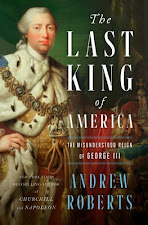
AR-SP15 Andrew Roberts - The Last King of America


Recently I spoke with Andrew Roberts about his latest book on the life of King George III.  Roberts is a bestselling author and well-known speaker and TV commentator.  He is a Visiting Fellow at the Hoover Institution at Stanford University, a Visiting Professor at the War Studies Department at King’s College, London, and the Lehrman Institute Lecturer at the New-York Historical Society.  He also sits on the boards of a number of think-tanks.  

Roberts has written more than a dozen books, including biographies of Winston Churchill and Napoleon Bonaparte.  He released his most recent book about King George III this year. The British release was under the title George III: The Life and Reign of Britain's Most Misunderstood Monarch. The US edition was released a few weeks later under the title The Last King of America: The Misunderstood Reign of George III.

I spoke with Dr. Roberts via Zoom in October 2021, shortly before the US release of his book about King George III.

Michael J Troy (MJT) Andrew Roberts, welcome to the American Revolution Podcast.

Andrew Roberts (AR) Thank you very much indeed, Mike. It's an honor to be on.

MJT  Well, it's certainly our honor as well to have you. We're here today to discuss your new book, The Last King of America, which discusses the life of King George III. Personally, I have to say, I'm very pleased to see this book released. I've been looking for a good book that, not only covers the king, but the administration of the British government during this time period. So, the book, if anything, is a big help to me. But I wanted to ask you, why did you feel compelled to write this book?

AR  Well, I've been interested in the period for some time. I've written books on Napoleon, and Napoleon and Wellington, the Battle of Waterloo and so on. Of course, the king who essentially kept Britain in the Napoleonic Wars, along with William Pitt the Younger, one very brief interlude, 14-month interlude, otherwise for nearly a quarter of a century, deserved a proper appreciation.

And it struck me very strongly that, first of all, there was a huge gap in the market. I don't mind admitting I was quite cynical about this owing to the fact that there's only been one major biography of him in 50 years, and even that one was a thematic rather than a cradle to the grave life. 

And secondly, I knew that there had been an awful lot of work that had been done in serious medical journals, which hadn't been picked up in the general academia, about how his mental illness was completely different from the one that we all assumed because of pictures like the madness of King George, and so on. 

The third thing that came up with this was the de-stigmatization of mental illness over the last 10 years, which has been a big thing here in the United Kingdom. I know it is in America as well. And so no longer does anybody blame King George III  for his mental illness. It wasn't a sort of moral failing in the way that 19th century and all too many 20th century historians made it out to be.

MJT  In some ways, we in America may look at the king as - in almost in light of a parody as the evil person from whom we broke away. And of course, he's much more than that. He was a very long-serving king, almost 60 years, took Britain through a very crucial period of history.

AR  I think so. And also, of course, it's perfectly understandable why Americans did have to make him out to be the cruel and despotic tyrant, not just because it's good political propaganda in a war, but also because your founding fathers were, and certainly saw themselves, as the inheritors of the mantle of the 1642 and the 1688 revolutions. That was a key part of their sense of self-worth, and understandably so. But the only drawback with that, is that you have to then make George III out to be a Stuart tyrant in the same way that the people who struggled in 1642 and 1688 did. But it was not the case, in my view at all, but a perfectly understandable, you know, human reaction.

MJT I'd like to start just briefly with George the man. Growing up, he was the first British king born in Britain in quite a few generations. George I and George II were both born and raised in Germany, spoke German primarily, took German wives. So George III  was in, in many ways, a new generation of British kings. Can you speak briefly to his relationship with his father and grandfather, his grandfather and great grandfather, as well as his father who never became king?

Andrew Roberts
AR  No, but his father, Frederick, Prince of Wales was also very German - was born and educated in Germany. So when George III  came to the throne in 1760, he was very proud of the fact that he was the first monarch for a very long time to be born and bred, and as he said, in his state opening of Parliament, the first one, he said, born and bred in this country, I glory in the name of Britain. That's a strong statement, and I think is one of the explanations for the initial popularity that he had in his reign, at the very beginning at least, and so it sort of matter to him. He was brought up at Clivedon house in Buckinghamshire, which was where Rule Britannia was played for the very first time at a concert for his father. 

He fell out badly with his grandfather George II, and totally understandably so, because when his father died, George II refused to bury the body of his hated son for a fortnight, until it was literally decomposing.  And poor old George III was sleeping in the room below where the putrefying corpse of his father was lying.  George II also used to slap him and beat him and abuse him physically. So it's perfectly understandable that, by the time he got into his teenage years, George III  really despised his grandfather, couldn't wait for him to die.

MJT  That seems a lot of the relationship between George I and George II was a lot the same. There is not a love lost between that father and son. And obviously between George II, and George III 's father, as father and son never got along. And then apparently grandfather and son never got along much either.

AR  And also, of course, George III, fell out with his son George IV. So this Hanovarian intergenerational hatred was a... The only people who sort of don't have it is George III and his father, Frederick, who were very close and loving. But then of course, Frederick died when George III  was only 12 years old.

MJT  Right? The cynic in me says, well, he never had to deal with George III as a teenager. 

AR  That's a very good point. 

MJT  But George had an interesting upbringing. In some ways. His mother reminded me in a little bit of ways of Princess Di, in that she wanted to keep him away from court and raise him separately from everything that was going on with the king and with the royal family. George was raised to be a bit of an introvert, to be somebody who was rather private, modest, simple in his life. Is that true?

AR  Well, it's very true. Yes, absolutely. He didn't really have friends. And unfortunately, one of the friends he did have was Lord North. So that didn't end well either, as far as Britain is concerned, anyhow. 

He was not, though, the idiot, the stupid, thick, young man and child that he's made out to be in so many biographies. You know, this is a chap who can read and write relatively early, who can write Latin, who speaks four languages, or at least understands and speaks four languages, who writes essays, very impressive, historical and constitutional essays, in his teenage years - especially once Lord Bute becomes his tutor. It's outrageous, really, the way the Whig historians, and indeed some modern American historians, still insist on him being intellectually weak. He simply wasn't.

MJT  No, your book goes into great detail about a lot of his writings and especially his interest in history, and its importance in governing the country - came out very well. When I said "simple" earlier, I certainly didn't mean simple-minded. He was a man of simple tastes, though. I read somewhere else, I think, that he ate the same meal every single evening, a simple dish of mutton and vegetables. 

AR  Well, I'm not sure that we would have allowed that every single evening, but I do get into their diet at some stage and it's a little bit more varied than that. But he probably liked the same meal every single evening. 

He dressed very soberly.  He dressed as an English country gentleman, and this of course, at a time when over in France, the Bourbons at Versailles were, were dressing themselves up like Christmas trees every day.  

He was frugal in his tastes. He didn't drink much alcohol. He took a lot of exercise. And he was financially prudent, certainly, unlike his son, George the fourth, who was the Imelda Marcos of the late 18th century. He had compulsive buying disorder and never asked the price of anything. At one point, his debts equal the amount that we were spending on the Royal Navy. In that sense, he has every right to continue this intergenerational strife in the Hanovarians.

MJT  You report that he actually went out and just talked to people in plain clothing and they didn't even realize he was king until sometime later. 

AR  That's right - usually when he handed them a Guinea. That was the that was the point, which is that he probably wasn't just the normal English country gentleman.

MJT  But he did seem to come across as a man of the people: thrifty, frugal, prudent, maybe the only Hanovarian and who never cheated on his wife.

AR  Yeah. He loved his wife. He had a fantastic relationship with his wife, who he had married only six hours after meeting. 

MJT  It was an arranged marriage.  She was a German princess.

AR  It was entirely an arranged marriage in which he fell in love with her afterwards, and they had 15 children. It was a true love match until, of course, his malady in 1804 made it impossible because he came violence made it impossible for them to share a bed and tragically, they had to separate after that.  But no, it was a true love match.

MJT  You mentioned earlier, somebody who was very important in George's upbringing, John Stuart, the Earl of Bute.  He was heavily criticized by the Whigs. Could you explain why that was?

AR  Yes, the Whigs had essentially been in power since the 1680s, since the Great Revolution. And so both George and Bute felt that after 80 years of virtually complete oligarchic power, this sort of self-perpetuating oligarchy of Whig aristocrats, their grip on political power in in Britain needed to be broken, and other people needed to have a look in, like the Tories who looked to Lord Bollingbroke as their philosophical guide, and independents, and even Scots, like Lord Bute. Even though, of course, the Jacobite rebellion only been 15 years before the king came to the throne. So he was trying to get people from much more diverse backgrounds than the people who had ruled the country for so long. And of course, needless to say, that Whigs didn't like that one bit. And so, in a sense, you can see his reign as being 60 years, or at least 50 years before he went finally mad for the last time, of struggling against the Whig oligarchy.


MJT  Maybe you could help me with this, because I've never really understood - there wasn't a strong party system in the 18th century. And the time of trying to put the Stuarts back on the throne was pretty much ended by this time. So what really was the political difference between a Whig and a Tory in the late 18th century?

AR  It's a very good question. You're right.  Really, the party system doesn't start until much later in the king's reign, because before that, you essentially have groups and factions around various individuals, usually great Whig aristocrats. 

But there is an underlying difference in the attitude towards peace and war, the Whigs are much more pacific towards the continental commitment, the Whigs were much more pro-Hanovarian than the Tories.  You know, the Tories couldn't really see why we spent a huge fortune in defending a tiny electorate, just simply because the king came from there. Or in this case, the King's great-grandfather came from there. And they looked much more to than a sort of open global Imperial Britain that was much more sort of buccaneering attitude towards the Empire and so on. 

In terms of public expenditure, the Whigs were a bit more tight with money, they were concerned about money supply, and so on. So, whereas the Tories were a bit more freebooting, when it came to public expenditure if they could see an obvious advantage. But within that overall concept, there are an awful lot of individuals that would not fit into those broad categories.

MJT  Right, as you said, there were no strict parties at this time, and people just tended to fall into groups where they found commonalities or had friendships or family relationships with other members of government. 

George, of course, became king, near the end of the Seven Years War, about the time the French and Indian War in America ended. The Seven Years War went on for a few more years after that. He was what? About twenty years old when he became king? 

AR  Twenty-Two. 

MJT  Twenty-Two? Okay, and was married shortly after he became king to, as we said, an arranged marriage to a German Princess Charlotte, who was I think, what 16 or 17 years old at the time?

AR  Yeah, yeah, very young. She was quite a feisty woman, you know. She crossed the North Sea, never having met her husband. Everybody else was seasick on the boat. She just learned English and played the harpsichord, learned how to play God Save the King, and just went straight into it. And because of her love of music, and her philanthropy and the good nature and so on, the king fell in love with that, which was not expected, frankly, and says a lot for both of them, I think,

MJT  Was it primarily the king's mother who arranged the marriage, at least on the British end of things?

AR  And Bute as well, and also George himself. They had a list of eight German princesses who of course, all had to be Protestant, and they basically got down to Charlotte of Mecklenburg-Strelitz, because the other seven - I go into what was wrong with my book, I don't think I want to spoil it -  but they managed to find seven major reasons why not to marry any of the others. So she was the bottom of the list as well. You know, nobody knew where Mecklenburg-Strelitz was. It's the size of Sussex, one of England's counties. And so, she was very much chosen, because she was a German Protestant, but then that's why the Hanovarians were on the throne in the first place.

MJT  One of the things that struck me when he was going through his list of possible brides was some of the princesses may have had some commoners in their ancestry. And I think that says something to how much breeding was considered really an important thing into what made the person and that maybe having some common blood in them was going to make them a problem.

AR  That's right, exactly. I mean, it's almost exactly the opposite of what we feel today. The fact that it's a jolly good thing for the royals to have a bit of non-royal blood in their veins. It's one of the reasons that Kate Middleton was welcomed so much as Prince William's bride - you know was that she didn't come from the same kind of background. So our views on all of this has completely changed, of course, in the last 250 years.

MJT  So we get to the end of the French and Indian war, end of the Seven Years War, and the British government is looking to raise revenue, because they've basically doubled the national debt during the war. They've incurred a lot of expenses in America, and they start turning to some ideas about taxing the Americas: the Sugar Tax, and the Stamp Tax were two of the early ones. How much of a role did the king have in those? Or was he mostly just watching this happen?

AR  He had a very little role, indeed. This was very much the government's job. The king saw his role as putting in the right person as prime minister, which he wasn't very successful at doing, frankly.  They had six of them in the first seven years of his reign, and then letting them get on with it. He did not consider it his duty to be interested in sugar taxes and stamp taxes and things like that, until of course, they became that, as in the case of the Stamp Tax, the most important political issue in Britain, as well as in America. 

But he certainly went along with the government's attitudes, the Grenville government's attitude, that the Stamp Act was morally justified because any of it raised was going to be spent in America, protecting Americans on the western side of the 13 colonies from the Native Americans. So he couldn't see the problem, really, with doing that.  He wanted, therefore, to save the money that would otherwise be spent on raising these battalions to not be spent by the British taxpayer. 

The thing that the Grenville administration was very keen on is that the Stamp Act shouldn't be too expensive. It came to about two shillings and six pencs per American per year, which spread out over the 1.9 or so million white Americans who were paying tax. It was not a hugely onerous tax, but the trouble is, it did fall on the very people who could make the loudest noise about it. Especially, there's an old story, there's an old saying that you shouldn't pick an argument with people who buy ink by the barrel. That is very much what the both the journalists...

MJT  Go after the newspaper editors and lawyers. That's never a good thing.

AR  Exactly, yeah. And the Stamp Act was directed primarily against lawyers and newspaper editors.

MJT  I get the feeling that the king kind of set the tone: that he wanted to reduce the debt, that he wanted to bring some more balance to the economy in Britain. But yeah, he left the details up to his ministers. However, when the Stamp Tax was repealed after American protest, he seemed to think that was a bad idea.

AR  He thought it was a bad idea later, but actually, at the time, he brought his own pressure to bear with the King's party to support the Rockingham Ministry in repealing the Stamp Act. At the beginning he didn't really want to, he wanted to leave it up to various members of the House of Lords like Bute, who were opposed to repeal. But when he realized he was going to lose Rockingham as prime minister, unless he did, he came over and supported the repeal of the Stamp Act. 

MJT  And we go through a few more taxes over the next few years, the Townsend Acts, and eventually we're left primarily with the Tea Act, which of course caused some problems. As you say, this was not an onerous tax. And in fact, the cost of tea actually went down considerably, as a result of removing some taxes that had been living in Britain, and the lack of a need to run all the tea through Britain before it reached the colonies, greatly decreased the overall price, even with the small tax left on it.

AR  Well, that was the problem you see, because so many Bostonian merchants, and frankly, the Venn diagram between Bostonian merchants and smugglers has a very large shaded area between the two. And of course, they didn't want to see the price of tea, essentially halved by this great glut of East India Company tea descending on the market. So very obviously, famously took it into their own hands to do something about it.

MJT  The merchants very much opposed it for self-interested reasons. But when you tie self-interest to an ideological reason, it becomes much, much, so much more. And the essential reason, of course, was this was essentially a direct tax on the colonists, or at least a tariff for purposes of fundraising, which the colonists by this time had decided was unacceptable. And so we ended up with what we call today the Boston Tea Party, the destruction of a great deal of tea in Boston, which really outraged everybody in Britain and many in the colonies as well. 

AR  Including the King

MJT  What was the reaction in London?

AR  Well, it was more shock than anything else. I mean, that the anger came later, but it was a true sense of shock that quite so much tea. I mean, it was 9,000 pounds of it - was tons of the stuff, had been thrown in the harbor. One does wonder why on earth it wasn't being protected by anyone at all, why the Sons of Liberty are able to get on those ships quite so easily and start hacking them about their hatchets. But nonetheless, there was a serious shock. 

Although some of the radical weeks tried to stick up for the Sons of Liberty, they were very, very few. And overall, it was considered to be a completely outrageous overreaction, essentially by the Bostonians. 

That's why the government made one of the key bad decisions in this whole period, which was, of course, to impose, what you call the Intolerable Acts, we call the Coercive Acts, the four acts that brought down such hard retaliation against Boston, or indeed Massachusetts in general.

The king was very badly advised at this time by the royal governance, including the one in Massachusetts, that basically says that Massachusetts would be left hanging basically by the other 12 provinces, and that they weren't going to stick by Massachusetts. And this was truly a dreadful piece of advice, frankly, because obviously, they did sit by them very powerfully.

MJT  Interestingly, George Washington expressed annoyance and anger at the Boston Tea Party as well. He did not want to be associated with these people that were destroying property. And it really was the British reaction of imposing the Coercive Acts, which closed Boston Harbor, took away many of the rights of self-government from the people of Massachusetts, and extended the influence of Quebec in the western territories, that really turned people like George Washington who may have said, I don't want to be associated with violent protesters to turn it around and saying, Well, I can't stand these actions being taken against my fellow colonists.

AR  Yes. And it's very interesting. You mentioned the western colonies, because of course, with Washington having been interested, himself, in various land deals in the Ohio Valley, which were also, back in 1763, closed down by the Proclamation.  Although again, the king wasn't primarily involved in that.  It was done by a member of his government, I can see you've got Ron Chernow's Life of Washington behind you there. He makes a good deal of this.  

As you said earlier, when ideology and financial interests come together, it becomes a very potent mix. A better, more sympathetic Prime Minister, one thinks of William Pitt the Elder, who becomes prime minister in 1766, should have been able to have dealt with this. But unfortunately, Pitt the Elder was suffering from the most terrible gout, which almost made him go mad. And he certainly sent him into a manic depression, where he essentially was a non-existent Prime Minister for two whole years. He didn't see the king for two years. He stayed in his house in North London, and basically became a hermit, which is an extraordinary thing. absolutely disastrous, of course, for the politics of Britain and America at this time.

MJT  It really seems like there were two groups of people one in the colonies, one in Britain that had a great consensus about what was happening, but the two were very different and weren't talking to each other. The Americans seem to think if we just push hard enough, like what happened with the Stamp Tax, the understanding British leadership will back down and we'll get our way. The people in Britain, I think Gage was the one who said if we act like lambs, the colonists will act like lions, whereas if we act like lions, that the colonists will act like lambs, meaning that, if we just show a little push, the colonists will immediately back down.  

AR  That's very much the king's view, you know, in fact, he quoted that lambs-lions line to the Prime Minister. So this was something that he very much went along with. By this stage, of course, it's Lord North. from 1770 onwards, it's Lord North. Despite being the most disastrous Prime Minister we have in British history, in over, I think it's 57 Prime Ministers we've had, he clearly was the one who comes bottom, you know. He's up there with Neville Chamberlain and Anthony Eden frankly. But at the time, he was considered a charming, intelligent, good-natured master of the House of Commons. He'd been prime minister, well he was Prime Minister for twelve years ultimately, which was an extraordinary achievement, considering that they'd had six Prime Ministers in seven years, as I mentioned. One of the interesting and fun bits about writing this book is discovering things like that, but Nord North wasn't just the complete slithering idiot. But it was actually in his heyday, domestically-speaking, at least, an extremely effective Prime Minister, that has been one of the interesting and fun things about researching this book.

MJT  Yeah, there did seem to be a consensus with it. It wasn't just the king or the Prime Minister pushing this agenda. There was really a consensus among all of the leadership or most of the leadership in London that what they were doing was the right thing. And they'd seen more than a decade of violent protests in the colonies. And I think there was an idea that, well you see it in some of the writings, where they're basically referring to the colonists as over-indulged children who are now throwing temper tantrums when they don't get their way. And what they really need is a spanking.

AR  You're quite right. This parents-child analogy is constantly used in the American Revolution by the Brits at least, and really stupidly so. Because America has been a colony, or some parts of at least, for 150 years. There's no sense at all of them being children. They had a longer time as a colony than as an independent state up until the year 1945. So, it's shocking that they should have been quite so, I suppose, complacent as to think of themselves as parents with recalcitrant children.

MJT  Yeah, I think to continue the analogy that the British didn't understand that their children were now 18 years old, over six feet tall, and we're not going to ever be spanked.

AR  Yes, absolutely. Right. That's a very, that's a very good line. I might - don't be surprised if I shamelessly plagiarize that without attribution. Mike.

MJT  Go for it!

/ /

MJT  Anyway, the war breaks out. The British try to show that they're going to be tough and they get basically pushed back into Boston by the New England militia and are put under siege. We're really into an all out war at this point. 

Even at this point, when the war has broken out, when there's active killing on both sides, the colonists are still looking to the king to broker a political settlement. They are referring to the army in New England as the Parliamentary Army or the Ministerial Army, harkening back to the English Civil War, when there was division between the King and Parliament, with the obviously implication being that the Continental Army was really the army of the King, which of course, the King would fight absurd. But that was the kind of the argument they were making. 

And I think they were hoping that, not necessarily the King had just not noticed what was going on for the last decade, but that it was giving Britain a fig leaf. It was giving Britain away out by allowing the King to be the peacemaker, and to provide the colonies with the rights that they had been fighting for all along and basically tell parliament, no, you can't do that

AR  I think that's fair. But it was also an attempt wasn't it? not to so disassociate themselves from the loyalists, who made up a good third or so of the American population at the time, that they realized that they needed to bring the loyalists along. And that was a good strategy to do that. And certainly didn't want to antagonize them at that stage at least. 

But what it did do was to fundamentally misunderstand the nature of the King's constitutionalism, because there was simply no way that he was going to, he evered the British Constitution and the idea that he was going to use his powers, which were very much in abeyance, really. I mean, no king, or queen had overruled and vetoed an Act of Parliament since 1708, Queen Anne.  So no, he very much was not about to use his vestigial powers to help the Americans and overall his own government can't be because he was this constitutionalist and partly because he agreed with the government.

MJT  Right I think what the king saw his role as doing was supporting Parliament. He wasn't going to make the mistake of Charles the First, and pick a huge fight with Parliament. So yeah, right. He was a constitutionalist. He was backing the power of Parliament. Whereas the colonists did not see the Parliament as the ruler of the British Empire. They saw the British Parliament as ruling Britain and colonial legislatures as ruling the colonies, all under the authority of the king. And that was a very different view in the way government fundamentally worked that the two did not agree on.

AR  That's right. And of course, you had had well over a century, as we were saying, the American legislatures of different forms, obviously, not with any kind of democratic mandate that we'd understand today. But they were consultative bodies.  They had a royal governor that did have veto powers, but tended not to want to use them. 

And this is one of the things that I very much argue in this book is that it was not an oppressive tyranny. You didn't have troops on the streets, except for Boston, from 1768 onwards. You didn't have American editors being arrested, and newspapers being closed, and that kind of thing. Didn't you certainly didn't have any of the kind of apparatus of tyranny, large bureaucracies and so on, that you see all across the continent at the time, the continent of Europe, let alone the violent aggression that's shown in Prussia and Austria and certainly Russia, and by the French, in in Corsica, and the Spanish in New Orleans, where their first action really was to be as violent as possible. Yes, there's the Boston Massacre in 1770. But to a large extent, that's a riot that goes wrong. Nobody in Britain wanted to kill any Bostonians, whereas Catherine the Great killed 50,000 Russians at the time of the Pugachev uprising. So you do have a King who's very conscious of the common law, of the British constitution, and all the things that go with it.

MJT  Yeah, I don't think there's any way you can argue that the government was oppressive. In fact, colonists were actually paying less taxes than people in England were.

AR  Much Less. I think it was Richard Brookhiser, who has just written a very good book, saying that America in the 1760s and early 1770s was amongst the freest societies in the world. I think that's right.

MJT  I think what the protesters were getting at was not that they were living under an oppressive government, but that they were slowly seeing the beginnings of changes that would make the oppressive government more oppressive a generation or two later, that they were losing their powers of self government, that they were losing. Using a lot of the things, the right of taxation, with those precedents being said, even though they were very small at the moment, they can see how those would grow very large, and they could become the next Bengal or Ireland or something like that. And that's where they didn't want to go.

AR  Well, the Queen has allowed us now to look at 100,000 pages of George III's papers, correspondence, all sorts of things, abdication letter, and all that kind of thing. And there isn't a single page, in that that implies at all, that there were any plans to try to extend parliamentary or royal powers in the 1760s or indeed the 1770s. 

They were reacting to the sense that the Americans, quite rightly of course, were ready for self-government. By then, you know, you didn't have any French threat. After the Treaty of Paris, any closer than Haiti, you had two and a half million population, you had a burgeoning economy. You have more bookshops in Philadelphia than in any other city of the empire, apart from London. You were ready for statehood. 

And so this push towards independence and sovereignty was a perfectly understandable response. And what I like to say about this book, in particular, is that it's a very pro-American Book, really, because although yes, it does say that George was not a tyrant. Actually, if you look in history, again, and again, you see people who escaped oppressive regimes and therefore become self-governing: the Israelites with the Egyptians, the Dutch with the Spanish, the Italians with the Austrians.  You name it, there's any number of examples of it: the Greeks with the Turks. But actually what the Americans did was truly exceptional, which was to become independent and sovereign in rebellion against the country that was not oppressing it. It's truly exceptional, in my view.

MJT  Yeah, I guess that's true. There wasn't immediate oppression, the Americans were seeing changes taking place that they thought would lead to oppression. From the British perspective, they were saying, well, these were powers we've always had, and you're just reacting to them differently now that you're powerful enough.

AR  And the Quebec Act, of course, which you refer to earlier, the idea that that was some kind of template set up to try to impose a tougher royal rule on America is frankly not true. It was in order to try and reconcile the defeated French in Canada to British rule. Yes, there were sort of issues over the borders and so on. But the fact that the King allowed the Roman Catholic French to pursue their own civil, and especially religious, liberties was not intended in any way to infringe on American ones it was just to try and calm the French which he did absolutely superbly, because we don't get any actual French uprising against British rule in Canada at all for the next 200 plus years.

MJT  Right, and again, that's I think, a different viewpoint.  The British saw this as being generous in offering the freedoms to the French. The American saw it as we just fought a huge French and Indian war over our right to get to those western lands and the British simply turn around and give it to the French Quebequois. So they were seeing this kind of a betrayal of what they had just fought for.

AR  Yes, some of the low church. Protestants in the colonies definitely also saw it as the beginning of the sort of papalization of America. King George was portrayed by Paul Revere wearing a papal hat and this kind of thing, which absolutely...  I mean, the man, it was the absolute personification of Anglicanism. He was the supreme governor of the church of England for God's sake,

MJT  I think they use papal imagery as a metaphor for oppression. But yeah. So the king does come out very squarely and publicly in favor of Parliament's positions in his 1775 speech to the opening of Parliament, which pretty much kills any chance of any sort of political compromise. 

AR  Yeah. 

MJT  Actually, John Adams points out that probably that speech was the single most important factor in getting public opinion in favor of American independence.

AR  That's right. And certainly George Washington felt the same way as well, that King George had done something extraordinary and outrageous, but when you read that speech, it just is absolutely part and parcel of his constitutional beliefs that he'd had ever since he was writing essays as Prince of Wales for Lord Bute in the 1750s. No, it's not a departure, as far as he was concerned, or Britain was concerned at all.

MJT  For the king, there was a violent military rebellion going on, and we suppress military rebellions. That was his perspective.  The American saw it as well, the king certainly not going to be our savior at this point. We're the ones doing the violent rebelling.

AR  And it's also, I think, worthwhile to remember that nowhere in the world was a secessionist movement just allowed to go ahead and peacefully split off, until Norway and Sweden in 1905. I hardly need to tell an American what secessionist movements wind up doing to a country. But that was as true in 1775, as it was in 1861.

MJT  Right. No government wants to give away power or land. 

AR  You'd be insane to start to do that. And no great empire has been given back, really, until the British in India in 1947. 

MJT  You go into a lot of talk in your book about the Declaration of Independence and the complaints that the colonists now raised against the King specifically. And you point out correctly, I think that the King individually wasn't responsible for many of these - that many of these have been practices that had been practiced by his grandfather and great grandfather.  Many of them had been decisions made along the way. And then a lot of them were actions that were taken by his government once the fighting war had broken out.

AR  That's my hope. Of the 28 charges. I only think that the ones that, charge number 17, about taxation and number 22, about Parliament's having the right of veto over American legislation are justified. However, those two charges in and of themselves do justify the American Revolution. The first third of the Declaration of Independence makes you proud to be a human being. It's the most beautiful language. It's sublime and Shakespearean. And it goes to the very heart of what liberty is all about. The next two thirds of it with its 28 charges, including some that are truly outrageous. He's accused of facilitating people being taken overseas to be tried and so on. Not a single person was taken overseas to be tried. I mean you know.

MJT  They threatened to do it, but they never actually did it.

AR  Yeah. And also, they have the right to do it, since Henry VIII's time. And as you say, you know, lots of this is ex post facto rationalization, explaining why you're revolting against somebody who has only done these things, because you've already revolted.

MJT  Your point seems to be that we were no longer willing to be governed by Britain and Britain was acting in many of the normal processes of government to control a population.

AR  Yeah, and wartime propaganda is extremely important. You've got to do it. And you think of some of the wartime propaganda that we came up with in the Second World War. It's an absolutely essential part of keeping your side together and bringing people over to you. And of course, as a result, it's entered, you know, holy writ in America almost, but I don't think that one needs necessarily to take it literally any longer, especially with regards to what it says about George III, the ad hominem attacks on on George III

MJT  One of the criticisms of King George that you try to address in your book, and counter, is that he was responsible for the loss of the war.

AR  Yes, when you've got such terrible generals as Howe, who veers off ignores the Germain plan, veers off to capture Philadelphia, or Burgoyne, who comes far too far down south and gets himself captured at Saratoga, or Cornwallis who comes up from Charleston, and then attaches himself into a undefensible peninsula at Yorktown. And there are various other admirals who cannot defeat the French, which is the sole job of the Royal Navy admiral.  You have a prime minister also, some of the ministers, you have a prime minister like Lord North, who just hates everything to do with military matters.  You've got Lord Sandwich who hates Lord Germain, the navy that think it should be a land war, and the army that think it should be a naval war. You've got to transport a third of a ton, per man, across 3000 miles. And you've also got a government back at home that doesn't want to put up taxes and won't enormously increase the armed forces necessary. And then after Saratoga, you have the French come in in February 1778. And then the next year the Spanish, next year the Dutch. The idea that this world war can be won, I think, is fanciful, and none of those things were king's fault. In fact, the poor old king - he concentrates on protecting Britain from invasion, a very real prospect of invasion in 1779.

MJT  An outbreak of smallpox in the French fleet was about the only thing that saved Britain from invasion. 

AR  Literally the luckiest thing that happens to us in pretty much the whole of the 18th century apart from possibly the French putting their guns on the wrong side at the Battle of the Nile. That was up there too. But other than that, we thought a lot of things largely were responsible for, that poor old George III has been personally held responsible for the defeat in this war, which I don't think any serious military historian believes any longer. And so I think it's fine to say in a biography of him that this needs updating, really.

MJT I mean, I think a lot of the British strategy that was made in London made sense, especially the attempt to bring a really large army into New York and shock and awe the colonists back in, made sense. But you had General Howe, who refused to deal any sort of deathblow to the Continental Army.

AR  Yeah, yeah. Incredible, landing at Kips Bay there, after a perfectly good victory at Long Island. I mean, obviously, Washington was very fortunate with the fog getting over, but on three occasions, a really fast maneuver could have trapped Washington in the coffin-like Manhattan. And he didn't,

MJT  Henry Clinton had been screaming till he was blue in the face to do that, and Howe just ignored him.

AR  Yeah, well, actually, Clinton also wanted to stick to the Gemain plan, where you have Burgoyne coming down from Canada, and Howe going up the Hudson and meeting at Albany - splitting off the New England colonies from the rest of the colonies. And it's, you know, it's a workable plan. It's a problem, because you need to have three armies. And you also need coordination between them, which obviously, is very difficult over essentially enemy territory. 

But you also probably needed a viceroy of some kind in New York, because to change any strategy took 65 days - if you're lucky with a wind behind you, assuming that government in London was agreed on the change of strategy. So really was a very difficult war to win. 

I just two days ago, debated at the National Army Museum here in London with David Petraeus. And David was saying that the war was winnable by the British. And I was pretty much arguing that it wasn't. It was the opposite way that you'd imagine that an American and a Britain would debate it.  We did go through some of the terrible logistical problems that Britain had over that campaign.

MJT  America really had the home field advantage. And that's I think, what won the war for them, the ability to transport across the Atlantic, and also just the size of the playing field was so big that the army could not control enough territory,

AR  Well especially, exactly, especially if you adopt, as you did say, rightly, the Fabian strategy of Not Giving back unless you are on to a winner. And obviously, that didn't mean that the Americans won more of the set piece battles than than the British. They didn't.  But they only fought when they wanted to. And George Washington, you know, was an absolute giant, he really was when it came to a man who could instill a sense of leadership. There's just nothing like him. And you've got other individual generals like Nathanael Greene, and I dare say, Benedict Arnold very, extremely good battlefield commanders, Clinton, who was good as a strategist, but other than that, I think you out-generaled us.

MJT  Yeah, I think there are a lot of good British generals. But for me, the war was almost lost for Britain before it was won, because the Americans had done such a good job of, for lack of a better word, winning the hearts and minds of the locals, suppressing any Tory views, and encouraging enough people to support their position. The whole British position really depended on raising a loyalist army in America of colonists. And they were never able to do that because the Americans had done such a good job, before the war even began,

AR  Certainly by the time of the Battle of King's Mountain, so and then with the loyalists. We were expecting when Howe. and Burgoyne. and the others went out originally to Boston, they were expecting a really significant contribution from the loyalists.  And maybe the strategy of withdrawing everybody in all of the provinces back to Boston and leaving royal governors like Dunmore completely unprotected was a bad one. Because, if you had stayed in-place and tried to fight everywhere, and maybe the Loyalists would have been able to produce more help. But you're right there, of course, absolutely right. The war was lost pretty much as soon as the first shot was fired at Lexington.

MJT  A lot of the British leaders, I think, got bad advice. I mean, they were told in New England, as we talked before, if you behave like lions, they'll behave like lambs, that they could come in show some force and when New England when that didn't work, they're pretty much told the same thing in the middle colonies that if you go down there, there's a lot more Tories you'll be able to take the middle colonies and isolate New England. That didn't work either. Then, after 1778, they were told, well, the southern colonies, at least, you can raise a local loyalist army and of course... I think if they had gone into, say the south very early in the war, that might have been the case, but they were always, it seemed like, a few steps too late in implementing the proper strategy.

AR  Yeah, no, I very much see that. And also when Cornwallis does go north, from Charleston, he has insurgencies behind him. That's not the sort of fight and hold strategy that we know that can win insurgency campaigns,

MJT  Because they couldn't raise a loyalist army. I think one British Admiral put it it was like a ship going through the sea, it can pretty much go anywhere it wants. But once it's behind the wake closes in, and it's as if it was never there.

AR  That's very good analogy. Exactly. So of course, he's going to get stuck at Yorktown. Although it's his own stupid fault for getting onto a peninsula. And you don't have control of the sea. De Grasse, you know, is on his way towards you. 

MJT  Yeah, he was certainly hoping that the British Navy would come bail him out. 

AR  That is its job. 

MJT  It was a confluence of events that didn't work out well. So, the war ends and the king is really one of the last people to give in. I think he saw his position as being - he had to be stalwart and always calling for continued fighting and not giving up, never surrendering. Even when everybody else in the ministry had pretty much given up, the King was still saying no, we should keep going forward.

AR  Yes, that's right, he and Lord Sackville, by then Lord George Germain. But then after that, of course, you do have that marvelous moment in June 1785, when John Adams comes as ambassador to London. The King says, and I've got the quote here, “I will be very frank with you. I was the last to consent to the separation, that the separation having been made, and having become inevitable, I've always said, and I say now that I will be the first to meet the friendship of the United States as an independent power.” Then, of course, 15 years later, you describe George Washington as the greatest character of the age. And he buys biographies of George Washington and things like that for his library. So, he recognizes that it was the biggest disaster for Britain since the loss of the Anjou lands in the 15th century. But equally, he is ready to try and make the best of it.

MJT  I think that was good. He didn't hold a grudge.

AR  Yeah, he's very unfairly treated. Because when writers say that he did hold a grudge and talks about, you know, a few bloody noses and things like that. He only actually said that when he was certifiably insane, after he'd gone mad in 1789.  You can't hold the ramblings and the ravings of a person who's got bipolar disorder, and is a manic depressive against him at the time of his worst bout of it.  When he was sane, he never evinced those kinds of views.

MJT  The end of the world was a very difficult time for the king. I mean, not only did the war go badly, but he lost two children in the space of about two years, right at the end of the war to smallpox inoculations. He ended up getting a series of ministers that he really didn't like or trust. I think that caused a lot of stress and problems for him. Do you think that in some way contributed to his mental illness problems?

AR  No, I don't think so. No, they don't seem to have been connected to politics. For example, He was under much more pressure in 1782 and 1783. And then you had that huge issue with the East India Act and dismissing the Fox-North coalition and bringing in William Pitt the Younger. If stress was going to bring on his mental illness, then that was the time but actually, he's totally fine for another five years. And then when things are relatively plain sailing, he suddenly has another severe bout of what's called the king's malady, which in this book, I hope you'll agree I completely prove was not porphyria, the disease he's always credited with, but was in fact, manic depression.

MJT  Right. I think you make a very good case for that in the book, and I urge people to read it. We've covered most of the revolution, which is what we in the American Revolution Podcast care about. But of course, the King also led Britain through most of the Napoleonic Wars, and relied very heavily on Pitt the Younger for that.

AR  He did. And he, of course, learned from the American Revolution, a great deal. Don't trust the loyalists is one of the things so they'd never put terribly much hope in the French royalists causing any trouble for the French revolutionary and subsequently in Napoleonic forces. They tended to try to get... they certainly got the recruitment issue under control, which it certainly wasn't at all in the time of the American Revolution. They were willing to put up taxes. They, in fact, invented income tax in order to fight the French wars. They completely changed the system whereby about buying your Commissions. 

That was a very important thing that we learned from the American Revolution, and the other one was just staying in it. When the Russians fought against France for 53 months and the Prussians for 55. And the Austrians for 108 months. We the British fought the French for 242 months, as much as the rest of them put together. That was largely down to the King and Pitt opposing these various peace operations and sticking to it. 

He didn't recognize Nelson and Wellington terribly well early on. But once they won a few victories, you know, he was all in favor of them getting peerages and so on. But unfortunately, the poor man was completely deranged by the time of the Battle of Waterloo. So he never knew that Waterloo had been won and the Napoleonic wars that ended

MJT  The end of King George's reign is a sad one. 

AR  It's pathos-ridden, isn't it? Poor man, he'd gone blind and deaf, and senile and of course, he was mad as well. So he just stayed in his apartment in Windsor Castle playing the harpsichord, which he couldn't even hear. His family gave up visiting him. They never saw him. No, it's a very sad final chapter, really.

MJT  His son actually was regent of Britain for the last ten years of George's life, as I understand it. 

AR  That's right, yeah. And carried on spending and in his monumental way that he had.  When he died, he was the most unpopular monarch that Britain had ever had. And the Times actually said, No man will cry at the news that the king is dead.

MJT  So yes, as I said, very interesting book, covers a lot of interesting topics related to the American Revolution, not only the king, but how his ministry was operating, what they were thinking, what leaders of Parliament were thinking at the time. I absolutely loved it. And I heartily recommend it to anyone who's interested in understanding the British side of the American Revolution.

AR  Well, Mike, thank you very much indeed. And yes, there is an argument know thine enemy has always been a good, good Maxim for warfare, isn't it?

MJT  Now that you've completed this book, are you working on any new projects?

AR  I am, yes. I'm writing a biography of Lord Northcliffe, who was the press owner who owned 40% of the British press at the time of the outbreak of the Great War. It's a much more British than American book for obvious reasons. But nonetheless, he was a tremendously powerful figure.  He made and broke governments and was a highly controversial figure. As you can imagine. 

The family has very generously given me complete access to the archives that have not been used for a biography for 50 years. So there's all sorts of interesting stuff in there and I'm having a great time.

MJT  Well, that sounds like an interesting project. We look forward to it. Andrew Roberts, I thank you so much for joining us on the American Revolution podcast. I appreciate your time.

AR  Thank you very much indeed Mike. I've much enjoyed it.

* * * 

The Last King of America: The Misunderstood Reign of George III, 2021
Buy at Bookshop.

More about Andrew Roberts: https://www.andrew-roberts.net


 Contact me via email at mtroy.history@gmail.com

 Follow the podcast on Twitter @AmRevPodcast

 Join the Facebook group, American Revolution   Podcast: https://www.facebook.com/groups/132651894048271

 Join American Revolution Podcast on Quora 


American Revolution Podcast Merch!

T-shirts, hoodies, mugs, pillows, totes, notebooks, wall art, and more.  Get your favorite American Revolution logo today.  Help support this podcast.  http://tee.pub/lic/AmRevPodcast


American Revolution Podcast is distributed 100% free of charge. If you can chip in to help defray my costs, I'd appreciate whatever you can give.  Make a one time donation through my PayPal account. You may also donate via Venmo (@Michael-Troy-20), Zelle, or popmoney (send to mtroy1@yahoo.com)


Click here to see my Patreon Page
You can support the American Revolution Podcast as a Patreon subscriber.  This is an option making monthly pledges.  Patreon support will give you access to Podcast extras and help make the podcast a sustainable project.

An alternative to Patreon is SubscribeStar.  For anyone who has problems with Patreon, you can get the same benefits by subscribing at SubscribeStar.

Help Support this podcast on "BuyMeACoffee.com"


Visit the American Revolution Podcast Bookshop.  Support local bookstores and this podcast!


Signup for the AmRev Podcast Mail List

* indicates required