Showing posts with label American Revolution in Virginia. Show all posts

Sunday, November 19, 2023

ARP289 Green Spring


We left off last week with the British army in Virginia under General Charles Cornwallis.  After linking up with the army under William Phillips and Benedict Arnold, Cornwallis had an army of about 7000 men under his command.  

Anthony Wayne

He began a series of raids across Virginia, including the raid on Governor Thomas Jefferson’s home at Monticello. Then, near the end of June, Cornwallis received orders from General Henry Clinton to withdraw back to the coast, to send half his army back to New York, and to cease all offensive operations in Virginia.

With the appearance that the British army was on the verge of taking control of Virginia, this may sound like a bizarre change of plans.  Certainly to General Cornwallis, it was frustrating and confusing.  So we need to take a step back and look at this from the perspective of General Clinton in New York.

Clinton War Plans

General Clinton had taken command of the British forces in America following General Howe’s recall in 1778. This coincided with France’s entry into the war, resulting in London recalling much of the army in America to other parts of the empire.  British Secretary of State, George Germain, ordered Clinton to evacuate Philadelphia and to consolidate the army at New York.  This was done to free up the army and navy for actions elsewhere in the world.  

Clinton spent the next few years trying to get more soldiers to go back on the offensive, but with little luck.  He mostly focused on the South, taking Savannah, Georgia and Charleston, South Carolina.  After the British capture of Charleston in the spring of 1780, Clinton returned to New York, leaving General Cornwallis in charge of the south.  Clinton told Cornwallis that his primary mission was to secure South Carolina and Georgia, leaving open the possibility of moving the war into North Carolina only once he had secured those southern colonies.
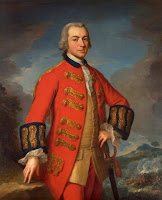
Gen. Henry Clinton

Clinton expected Cornwallis to focus on the pacification of South Carolina.  This would ensure British control of South Carolina, Georgia, and East Florida.  A strong British presence in South Carolina would encourage loyalists to turn out and support the king, ending the war there.  Then, and only then, did Cornwallis have the option to move north into North Carolina.

Of course, Cornwallis moved into North Carolina while South Carolina was still very much in play.  By taking British attention away from South Carolina, Cornwallis had allowed the local patriot militia to continue their contest there, and prevent many loyalists from turning out.  Loyalists were reluctant to join with the British army if they were not certain the British army was there to stay.  The knew that once the British army left, they and their property was subject to the wrath of the patriots.

So by leaving South Carolina for North Carolina and eventually Virginia, Cornwallis had undermined Clinton’s plans to secure South Carolina for Britain.  Cornwallis had not bothered to keep his commander in New York apprised of his actions.  Clinton did not receive any reports from Cornwallis for months in 1781.  Instead, Cornwallis was sending reports directly to Germain in London.

Clinton had considered Cornwallis a backstabber, ever since the time in 1776 that Cornwallis reported to then-General Howe some things that Clinton had said about Howe in a fit of pique.  With Cornwallis communicating directly with Germain, he was once again undermining Clinton.

Clinton certainly had an interest in Virginia.  He had first deployed General Alexander Leslie there in 1780, then General Arnold, and then General Phillips.  But Clinton had never planned to secure Virginia under British rule.  The point of these deployments was to disrupt Virginia from sending soldiers and supplies to support the war effort in the Carolinas.  These efforts were supposed to relieve the pressure on Cornwallis as he focused on the destruction of Nathanael Greene’s Continentals and the local militia.  

When General Phillips had some success in Virginia, he and Clinton discussed the idea of defeating the small army under Lafayette, then moving into Maryland, and possibly launching some new raids on Philadelphia.  Much of this, however, was simply to distract the enemy so that Cornwallis could continue his work to pacify the Carolinas.

After learning that Cornwallis had abandoned the Carolinas and moved into Virginia, none of this made much sense.  What was the point of raids in Maryland and Pennsylvania to distract the enemy in the south, if the British were no longer fighting in the South?

At this point, Clinton seemed not to know what to do next.  For a time, he considered going forward with the raids into Maryland and Pennsylvania with Cornwallis.  But Cornwallis opposed that and wanted to focus on Virginia.  Some of the news coming out of the south indicated that things there were not as chaotic as feared.  Lord Rawdon’s victory at Hobkirk Hill gave the British leadership hope that the south could remain secure even in Cornwallis’ absence.  

Clinton was also concerned about his own position in New York.  He still had a French Army at Newport Rhode Island under General Rochambeau, along with the main Continental Army under General Washington, in Northern New Jersey.  If Clinton sent too much of his army to assist Cornwallis, he risked being attacked and losing New York, especially if the navy did not provide backing.  In July, 1781, Admiral Mariot Arbuthnot had resigned his command and returned to Britain.  The new commander, Admiral Thomas Graves, did not get along particularly well with General Clinton.  Further, Clinton had intelligence that a new French fleet under Admiral DeGrasse was sailing for America, destination unknown.  Clinton feared that it could be part of an effort to capture New York.

The potential threat to New York is what caused Clinton to recall about half of Cornwallis’ army in Virginia.  Clinton believed Cornwallis would still have enough men to deal with the small Continental army in Virginia under Lafayette, and would give the British in New York more reinforcements if the French and Americans attacked there.  Clinton’s spies had reported to him that Washington and Rochambeau had met and conferred on just such a plan a few weeks earlier.

In mid-June, Clinton wrote out orders for Cornwallis to take a more defensive posture in Virginia, and to send half of his army to New York.  Cornwallis received these letters a few weeks later, near the end of June.

Anthony Wayne to Virginia

Meanwhile the Continentals had been caught off guard by how weak Virginia’s defenses really were.  General Washington had initially deployed Lafayette to Virginia to take on Benedict Arnold’s small army.  The enemy army grew to over 7000 with the arrival of armies under General Phillips and Cornwallis.  Lafayette knew he would have no chance in a battle and withdrew his men  north and west to avoid a confrontation.

Anthony Wayne

Washington provided some additional support by sending General Anthony Wayne with about 800 soldiers for the Pennsylvania line to join Lafayette in Virginia.  Wayne had been fighting under Washington for several years, and had a reputation as an aggressive warrior who would go after the enemy.

Wayne commanded the Pennsylvania line. These were the same soldiers who had mutinied in January.  Although a political compromise had brought the men back into service without punishment, Wayne knew he might still have problems.

The Pennsylvania soldiers grumbled about having to bail out Virginia when it was well known that Virginia had never come close to meeting its enlistment obligations for the Continental Army and didn’t seem to want to turn out to defend itself.  Pennsylvanians, who had seen years of war, considered it appropriate that the Virginians dig themselves out of the current British attack.

More significantly, the soldiers had not been paid for months.  Despite promises made after the January mutiny the men remained without basics.  This led to a refusal to march to Virginia until their demands were met.  The Army stopped at York, Pennsylvania and would not move south.

Wayne was in no mood to compromise again with the Pennsylvania line.  He took pretty decisive action. He determined twelve of the leaders of the current delay.  He held immediate court martials of all twelve men.  Seven of the men were shot by firing squad. One was not killed in the volley and was ordered bayoneted to death.  General Wayne literally had to put a pistol to the executioner’s head before he would finish the job of bayonetting this man to death.  Wayne ordered the remaining five ringleaders hanged. All of them were buried and Wayne ordered the army to continue its march to Virginia.

This got the army on the move again, but the men marched slowly, only eight or nine miles per day.  Wayne also had to keep his men under guard, lest they try to desert, and he even confiscate all ammunition from his soldiers, lest they fire on their own officers.

Wayne’s army crossed into Virginia in early June, and linked up with Lafayette about a week later.  By that time, the British raid on Charlottesville was over, and Cornwallis was slowly withdrawing his forces back towards Williamsburg.

Cobbling Together an Army

Even after Lafayette and Wayne came together, the combined Continental Army consisted of less than 2000 soldiers.  Lafayette was also taking heavy criticism from the Virginia legislature for failing to engage with the British before Wayne’s arrival, allowing them to take Richmond and raid Charlottesville, among other places throughout the state.

Nevermind that the British under Cornwallis had an army of between 7000 and 8000 soldiers and that the Virginia militia had refused to turn out in numbers that were anything close to challenge the invaders.

That finally began to change. When the legislature met in June, they chose militia General Thomas Nelson to serve as  the new governor.  They gave Nelson near dictatorial powers.  They also passed laws that allowed for the confiscation of property for men opposing the turnout of the militia, and the death penalty for deserters.  They also guaranteed militia the same pay as Continental soldiers, and reduced militia terms from three months to two months.  These moves finally encouraged many locals to turn out for militia duty.

Also, the 450 Virginia Continentals under General Von Steuben also returned.  Their commander remained in North Carolina, on a sick bed. Steuben had been following his orders to link up with General Greene in South Carolina, before receiving counter-orders to return to Virginia. Steuben sent his army back to Virginia, while he personally remained in North Carolina to recuperate.

The result was that Lafayette was able to gather a combined army that was much larger.  Estimates differ on the actual size.  I’ve seen estimates ranging from 4000 to 5500 men.  It was still smaller than the enemy army under Cornwallis, but respectable enough to put up a fight.  Lafayette gave Wayne command of the advance force of the army to dog the rear of the British withdrawal.

While it was clear that Cornwallis was already pulling back at a leisurely pace, Lafayette at least wanted to make it appear that the Continentals were forcing the withdrawal.  

Battle of Green Spring

By the end of June, Cornwallis had reached Williamsburg and had received Clinton’s requests to send 3000 soldiers back to New York.  The British leadership was still debating whether to use Portsmouth or Yorktown as its base of operations. Because Yorktown did not have defenses yet, and because Cornwallis was about to lose half of his army to a deployment in New York, he chose to move to Portsmouth.

Lafayette's Map of Green Spring
This move would require shuttling his army from the north side of the James River to the south bank for the final march to Portsmouth.  The danger for the British was being caught by an enemy attack while in the middle of transporting the army across the James.  That was exactly what Lafayette hoped to do.

General Wayne marched his advance force of about 900 Continentals toward the British rearguard.  Lafayette personally joined Wayne’s advance force to scout out the enemy, even though the main Continental Army and militia were still miles back from the advance force.

Cornwallis had begun moving his army across the James River, using the Jamestown Ferry, just southwest of Williamsburg.  On the morning of July 6, Wayne marched his advance force toward the Ferry, hoping to attack the British rearguard before the entire army could cross the river.

The American advance encountered British pickets early that afternoon at the Green Spring Plantation, about five miles west of Williamsburg and about two miles north of the Jamestown Ferry.  

Wayne deployed his men, consisting of about 500 men of the Pennsylvania line, about 200 riflemen, and a few light artillery pieces to attack the British rearguard.  He held a couple of hundred men in reserve, with the main army still several hours’ march behind them. Meanwhile Lafayette rode down to the James River to get a better view of the battle.  

Wayne’s advance pushed back the British pickets and pushed forward to harass the enemy rear.  Meanwhile, Lafayette got into position to observe the enemy.  He saw lines of redcoats in the swamps near where Wayne was approaching.  He realized immediately it’s-a-trap!  Cornwallis had only sent his baggage across the river.  He still had his entire army of over 7000 men hidden in position to take on Wayne’s advance force of about 700.

Lafayette, however, was too far away from Wayne to give him any warning.  Around 5PM, Wayne’s line seized an abandoned British cannon on the road. That was the signal for the British attack.  British artillery opened up on Wayne’s line with canister and grapeshot, followed by a bayonet charge by infantry.

Wayne feared that a withdrawal would turn into a route much like the Paoli Massacre, where his men would be run down and slaughtered.  Rather than retreat, Wayne ordered his own artillery to fire, then ordered his own men to charge into the superior British lines.  This act of bravado caught the British by surprise, and halted the British advance.  General Cornwallis then personally led a new British charge into the American lines, finally forcing the American withdrawal.  

By this time Lafayette had caught up to Wayne’s forces, only to have his horse shot out from under him.  The Americans withdrew, losing two of their field cannons.  British reports indicate the loss of 5 officers and 70 men, while Lafayette reported losing about 140.

The following morning, Cornwallis began really ferrying his army across the river.  Banastre Tarleton scouted the enemy camp about six miles away, and recommended an attack.  But Cornwallis had already been to this party.  He knew that the Americans would likely just withdraw further upriver and avoid a battle.  Cornwallis had already sent his baggage to Portsmouth, and had no desire to start chasing the Continentals back across Virginia.

American Withdrawal

Cornwallis was correct that Lafayette was in no mood for another battle.  He withdrew most of his army back to Richmond.  Wayne’s forces established themselves at Westover.

Lafayette was critical of Wayne’s charge into a superior enemy.  Other generals, inducing General Muhlenberg who had been with the main army in Virginia also called Wayne’s charge impetuous.  The public, however, seemed enthralled by the bravado.  The New Jersey Gazette referred to him as “Mad Anthony” for his action.

Lafayette also received praise from Virginians for forcing the British back to the coast.  He had to release most of his militia to return home, thus shrinking his available army back to under 2000 Continentals and only a handful of militia.

Cornwallis unleashed Tarleton for a few raids in August, but no more major offensives came from the British side.  Meanwhile, Lafayette began writing to Washington about the lack of men, food, and equipment, and his desire to rejoin Washington in New Jersey.

Washington, however, ordered Lafayette to remain in Virginia, and keep the British bottled up if possible, until a larger force could come to Virginia and deal with them.

New Plans

On July 8, with most of his army across the river and on their way to Portsmouth, Cornwallis received new orders from General Clinton.  Clinton called off his early request to take 3000 soldiers back to New York, and instead suggested that Cornwallis use them to raid Philadelphia.  They would join up with another force sent by Clinton from New York.  

When Cornwallis arrived in Portsmouth a few days later, he received several more letters from Clinton, including one that Clinton had written in May disapproving of Cornwallis’ decision to leave the Carolinas and go to Virginia.

With the flurry of letters from Clinton, each of which seemed to describe a contradictory strategy, Cornwallis was unsure what to do. Part of the problem was that Secretary Germain had written to Clinton, telling him not to hamstring Cornwallis in Virginia.  Germain thought Clinton was behaving too timidly and saw Cornwallis as an active general who was actually accomplishing things.

Cornwallis had opposed a suggested raid on Philadelphia in May, and still opposed it now.  But since those were the most recent orders that he had received, he began making plans to put part of his army on transports, to move up the Chesapeake Bay, presumably landing near where General Howe had landed at Head of Elk years earlier on his advance on Philadelphia.  On July 20, the first transport, carrying Colonel Simcoe’s Queen’s Rangers had boarded a transport.  Then, another letter arrived from Clinton calling off the entire plan to raid Philadelphia.  The following day, Cornwallis received another letter from Clinton telling him to secure a Chesapeake port for the British Navy.  He told Cornwallis to use his discretion on whether he should keep his entire army for that purpose, or send half of them back to New York.  In some ways, this seemed like a trap.  If Cornwallis kept his entire army, and the Americans attacked New York, Clinton could blame Cornwallis for failing to send the requested reinforcements.

Cornwallis opted to keep his entire army, and chose to build his naval port at Yorktown rather than Portsmouth. The location was more defensible, and would give his army more opportunities to forage for food in the area around Williamsburg.  Having his entire army would give him the workforce necessary to build the necessary defenses.  

Cornwallis spent a hot August destroying and evacuating the British base at Portsmouth and digging new defenses at Yorktown.

Next Week, we head up to New York to take a closer look at Washington’s plans to attack the British in Manhattan.

- - -

Next Episode 290 Grand Reconnaissance

Previous Episode 288 Raid on Monticello

 Contact me via email at mtroy.history@gmail.com

 Follow the podcast on Twitter @AmRevPodcast

 Join the Facebook group, American Revolution Podcast 

 Join American Revolution Podcast on Quora 
 
Discuss the AmRev Podcast on Reddit

American Revolution Podcast Merch!

T-shirts, hoodies, mugs, pillows, totes, notebooks, wall art, and more.  Get your favorite American Revolution logo today.  Help support this podcast.  http://tee.pub/lic/AmRevPodcast

American Revolution Podcast is distributed 100% free of charge. If you can chip in to help defray my costs, I'd appreciate whatever you can give.  Make a one time donation through my PayPal account. You may also donate via Venmo (@Michael-Troy-20) or Zelle (send to mtroy1@yahoo.com)


Click here to see my Patreon Page
You can support the American Revolution Podcast as a Patreon subscriber.  This is an option making monthly pledges.  Patreon support will give you access to Podcast extras and help make the podcast a sustainable project.

An alternative to Patreon is SubscribeStar.  For anyone who has problems with Patreon, you can get the same benefits by subscribing at SubscribeStar.

Help Support this podcast on "BuyMeACoffee.com"


Visit the American Revolution Podcast Bookshop.  Support local bookstores and this podcast!


Signup for the AmRev Podcast Mail List

* indicates required

Further Reading

Websites

Saberton, Ian “The Aborted Virginia Campaign and its Aftermath, May to August 1781” Journal of the American Revolution, Nov. 23, 2020. https://allthingsliberty.com/2020/11/the-aborted-virginia-campaign-and-its-aftermath-may-to-august-1781

Robison, Conor “The Battle of Green Spring: A Footnote on the Road to Yorktown” Journal of the American Revolution, November 10, 2022. https://allthingsliberty.com/2022/11/the-battle-of-green-spring-a-footnote-on-the-road-to-yorktown

Hatch, Charles E. Jr. “The ‘Affair Near James Island’ (or, ‘The Battle of Green Spring’)”
The Virginia Magazine of History and Biography, July 1945 (volume 53), pp. 172–96. https://leefamilyarchive.org/reference/essays/hatch/index.html

Conrad, Bryan. “Lafayette and Cornwallis in Virginia, 1781.” The William and Mary Quarterly, vol. 14, no. 2, 1934, pp. 100–04. JSTOR, https://doi.org/10.2307/1915672

Urwin, Gregory J. W. “When Freedom Wore a Red Coat: How Cornwallis’ 1781 Campaign Threatened the Revolution in Virginia.” Army History, no. 68, 2008, pp. 6–23. JSTOR, http://www.jstor.org/stable/26298725


Free eBooks
(from archive.org unless noted)

Clinton, Henry The Narrative of Lieutenant-General Sir Henry Clinton, K.B. relative to his conduct during part of his command of the King's troops in North America, 1783. 

Eckenrode, H.J. The Revolution in Virginia, Boston: Houghton Mifflin Co. 1916. 

Harrell, Isaac Samuel Loyalism in Virginia; chapters in the economic history of the Revolution, New York, AMS Press, 1965. 

Johnston, Henry P. The Yorktown Campaign and the surrender of Cornwallis, 1781, New York: Harper & Brothers, 1881. 

Kapp Friedrich The Life of Frederick William Von Steuben, New York: Mason Bros. 1859. 

Tarleton, Banastre A History of the Campaigns of 1780 and 1781, in the Southern Provinces of North America, London: T. Cadell 1787. 

Books Worth Buying
(links to Amazon.com unless otherwise noted)*

Cecere, Michael The Invasion of Virginia, 1781, Westholme Publishing, 2017. 


Gottschalk, Louis R. Lafayette and the Close of the American Revolution, Univ. of Chicago, 1942 

Kranish, Michael Flight from Monticello: Thomas Jefferson at War, Oxford Univ. Press, 2010. 

Nelson, Paul D. Anthony Wayne, Soldier of the Early Republic, Indiana Univ. Press, 1985 (borrow on Archive.org). 

Palmer, John M. General von Steuben, Yale Univ. Press, 1937 (borrow on archive.org).

Ward, Harry M. Richmond during the Revolution, 1775-83, Charlottesville: Univ. Press of Virginia, 

Wickwire, Franklin B. Cornwallis, The American Adventure, Houghton Mifflin, 1970

* As an Amazon Associate I earn from qualifying purchases.


Sunday, October 10, 2021

ARP221 Collier-Mathew Raids


Following the entry of France into the war in 1778, British policy in America shifted dramatically.  London essentially put the war against New England and the mid-Atlantic states on hold.  They redeployed much of their army to the West Indies, where valuable islands were up for grabs, and also hoped to reclaim a few southern colonies where they expected to find a fair number of loyalists ready to support them.

Virginia, however, was not part of this southern strategy.  It was a heavily populated state, and officials did not see a large loyalist uprising happening there.  As a result, Virginia had pretty much avoided being the scene of many battles in the war, up until this time.  In 1779, that was not going to change.  The British were still having trouble securing Georgia, and just making some tentative attempts at South Carolina, as I discussed last week.  Launching a massive land invasion into Virginia was not part of anyone’s plan.

The Chesapeake

The other part of Britain’s plan was to harass the coasts.  The British Navy still dominated the seas, especially once the French fleet under Admiral d’Estaing sailed for the West Indies.  The navy could attack coastal targets at will, with very little danger of retaliation.

With this in mind, British planners in New York organized a spring raid in May 1779.  Since Virginia patriots had chased off Colonial Governor Lord Dunmore in early 1776, Virginia had seen relatively little conflict.  The British had sailed up the Chesapeake in 1777 in their attempt to reach Philadelphia, but they did not really stop in Virginia.  The fleet sailed well up into Maryland then the army marched north to Philadelphia.

The lower Chesapeake Bay was mostly free of British harassment during most of these early years of the war.  The only water entry into the bay was a relatively narrow area off the coast of Norfolk.  The relative peace in the area allowed farmers to grow crops for the Continental Army, and produce tobacco for sale abroad.  The British now hoped to execute a search and destroy mission with a fleet of ships, they would capture or destroy anything of value that they could find in the Chesapeake Bay area.

George Collier

Commodore George Collier assembled the fleet that would be used.  Collier by this time was the ranking naval official in America.  You may recall that Admiral Richard Howe left America rather abruptly, leaving the rather incompetent James Gambier in Command.  Admiral John Byron had been second in command and should have taken command, but he sailed off for the West Indies where his fleet prevented the French from retaking St. Lucia.  Admiral Gambier remained in New York but did little.  In April 1779, he received his recall orders and departed New York for England.  That left Captain Collier in command as the senior naval officer in America.

George Collier
Collier was born a commoner in 1738.  Since the navy offered better opportunities than the army for ambitious men without wealthy and powerful families, Collier entered the navy at age thirteen.  He served in the East Indies and by age sixteen had been promoted to lieutenant.  After a decade of service, the officer in his mid-twenties took command of his own ship, a captured French frigate, during the French and Indian War.  Collier had a good reputation as an effective officer, moving from one command to another.  In 1774 he received secret orders that required him to sail to the North African coast.  We still don’t know what that mission was, but afterward the King knighted him in early 1775.  

By December of that year, Sir George took command of the 44 gun Rainbow.  In 1776, he participated in a convoy commanded by Commodore William Hotham to transport Hessian soldiers to New York as part of General Howe’s efforts to capture that city.  

Over the next two years, Collier operated out of Nova Scotia raiding American vessels.  Shortly after his arrival in Nova Scotia in late 1776, he relieved the Siege of Fort Cumberland, thus ensuring continued British control of the region (see Episode 119).  Collier carried out his duties with great energy and enthusiasm. In 1777, he captured or destroyed 76 enemy vessels, including the 32-gun Hancock, one of New England’s most well-armed privateers.

Following Admiral Gambier’s recall, Collier took command of the North American squadron. He sailed to New York to coordinate with army's commander, General Henry Clinton.

Edward Mathew

In planning the attack, Collier worked with Major General Edward Mathew.  General Mathew was a decade older than Collier.  Born in Antigua in 1729, Mathew was the son of a British officer stationed in the West Indies.  

At the age of 16 or 17, he managed to acquire a commission as an ensign in the Coldstream Guards, a particularly prestigious regiment whose primary duty is the personal protection of the King.  Given this duty, there isn’t any record of Mathew engaging in combat during the War of Austrian Succession, or the Seven Years War.  During that time, he did manage to marry the daughter of a Duke.  He also rose to the rank of colonel by 1775 and served as a personal aide de camp to King George III.

As the war in America became front and center, Mathew took command of a 1000 man brigade drawn from the Coldstream Guards.  He received a commission as a brigadier general and sailed for America in 1776 to assist with Howe’s invasion of New York.  His brigade served with distinction at the Battle of Long Island and Kips Bay.  Mathew personally led troops during the British assault on Fort Washington.  

The following year, Mathew would accompany General Howe on the Philadelphia Campaign, Matthew led his brigade with distinction at Brandywine and Germantown, and the following year at Monmouth.  Mathew’s brigade then returned to New York with the rest of the army.  While there, Mathew received word from London of his promotion to major general. In early 1778, General Clinton assigned Mathew to work with Commodore Collier in organizing a raid on the Chesapeake Bay area.

Portsmouth Raid

Collier and Mathew assembled a force  which included six men-of-war, Collier’s flagship, Raisonable, along with the Rainbow, Solebay, Otter, Diligent, and Harlem.  The fleet also included the Sloop Cornwallis and 28 smaller troop transports carrying nearly 2000 regulars, Hessians, and loyalist volunteers.  At the last minute, the Solebay left the fleet to be redeployed to a convoy bringing food to the British garrison at Savannah.

The fleet left New York on May 5, 1779, headed for the Chesapeake.  Favorable winds allowed the fleet to reach Virginia in less than three days, arriving at the Capes of Virginia on May 8.  Supplementing the force were several loyalist privateers that volunteered to join the fleet.

Upon arrival, a thunderstorm forced the fleet to hunker down for a day.  The ships emerged undamaged.  Collier ordered the Otter, along with several transport ships carrying light infantry, to sail up into the Chesapeake and engage the enemy. 

The Americans had a fleet of smaller ships, a shipyard, and a few small forts in the area, but nothing capable of challenging a fleet of this size.  The smaller American ships retreated up the James River where the shallower water would not allow the British warships to pursue.  Collier transferred to the smaller Rainbow in an attempt to move upriver, but could not move even the smaller ship far enough up river to engage with the fleeing Americans.  Collier then transferred to a smaller ship to reconnoiter the area and survey the enemy forts.

The American fort, later known as Fort Nelson, guarded the shipyard at Portsmouth, Virginia.  It was relatively small, but with solid defensive walls and cannons.  Collier and Mathew agreed to take the fort through a joint operation.  The Rainbow would fire at the fort from the river while the army attacked it from the land.  

The defending garrison of about 100 men, commanded by Major Thomas Mattews, saw the soldiers deploy and opted to abandon the fort rather than put up a fight.  The Americans fled, leaving behind their cannons and ammunition.  The British took the fort without any fight.  Later in the day, they occupied the town of Portsmouth, less than a mile from the fort.

Norfolk and Suffolk

On the opposite shore sat Norfolk and Virginia’s largest shipyard.  Again, the American defenders fled without a fight at the sight of the large British warships.  Collier occupied the shipyard.  To avoid capture, the Americans burned a complete 28-gun ship ready for launch.  They also destroyed two large French merchant ships loaded with tobacco and other supplies. 

Lower Chesapeake Bay
Despite that destruction the British were astonished at the quantity of naval stores that the Americans had abandoned.  They found eight more warships under construction containing between 14 and 36 guns, which they destroyed.  There were also multiple merchant vessels and smaller boats, totaling 137, which the British destroyed, along with tobacco, tar, and other supplies stored in warehouses.

Next, the fleet moved on to Suffolk, where the British again occupied the town without a fight, finding nine thousand barrels of salted pork, which had been designated to ship north to the Continental Army.  They also seized eight thousand barrels of pitch, tar, and turpentine, along with other stores.  Again, the British raiders burned everything, along with another seven vessels that could not escape.  About this time, the Otter returned from its raid into the northern Chesapeake, having found equal success in capturing or destroying large amounts of stores.

Although the fleet was under orders not to burn private homes, apparently some of the privateers had gotten carried away and burned a few homes believed to be owned by patriots.  In response, Collier sent a captured ship laden with salt to provide compensation to the victims who had lost their homes.  Collier also reported that he received a note of thanks along with a gift of six lambs in thanks for his act of kindness.

One item of “property” that the British were not reluctant to seize was slaves.  Collier reported taking aboard 256 men, 135 women and 127 children collected from area plantations.  Later, patriot leaders would claim the British took three times that number and sold the slaves in the West Indies.  The British commander denied this and said he was giving asylum to oppressed people who wished to leave.  There is some evidence that the British raiders went to great efforts to collect whole families and to reunite family members who had been separated to different plantations.  It seems clear that the slaves left quite voluntarily and did everything they could to assist the British effort.

At one point, the Americans sent a delegation under a flag of truce. They had a note signed by Governor Patrick Henry seeking the return of four slaves taken from a local landowner.  The British commander concluded the men must have been sent as spies to have used a flag of truce over such a trivial matter.  He informed the delegation that he would respect their flag of truce and allow them to return, but that they should never try to abuse the practice of a flag of truce again.

The Virginians never put up any sort of resistance. The British continued with their destruction unhampered by any attacks.  Collier and Mathews concluded that if they remained, they might perhaps convince much of the local populace to swear allegiance to the king and to bring the area under royal control once again.

Having completed what destruction they could, there was some debate about whether they should continue to occupy Portsmouth in order to deny use of the ports to the enemy.  The British could still carry off many shiploads of valuable stores and prevent the enemy from shipping supplies to the Continental Army.  They sent a messenger ship to New York to ask General Clinton.  Before they could receive a response, though, they opted to leave. The British set fire to the remainder of stores that they could not carry.  Collier estimated that they had destroyed at least one million pounds sterling worth of supplies in their raid.

By May 24, the fleet weighed anchor and began its voyage back to New York.  For the British, the raid was considered an unqualified success.  They destroyed tons of enemy supplies and did not lose a single man.

Virginia’s New Governor

As the British returned to New York, Virginia was left to clean up the mess that they had left behind.  Although there was a great deal of damage, the raid had lasted less than three weeks.  Given the hardships of war, Virginia’s damage was not even close to what some other states had experienced.

Patrick Henry
The British Chesapeake raids also happened to coincide with the time that Virginia was getting ready to select a new governor. For the first three years of the war, Patrick Henry had served as governor.  Henry is probably best known for his fiery speeches before the war.  As a radical member of the House of Burgesses, he allegedly responded to charges that his speeches amounted to treason against the King by proclaiming “give me liberty, or give me death.”  Henry had led the effort to seize the colony’s arsenal just after the battle of Lexington and in leading the effort to expel colonial Governor Lord Dunmore from the colony.

Henry had served in the First Continental Congress in 1774 and returned to the Second Continental Congress in 1775.  He then returned to Virginia where he played a leading role at the Virginia Convention that established independence and created a new government.  Henry worked on the Committee that created the new state Constitution, which the convention adopted unanimously on June 29, 1776 less than a week before the Continental Congress' Declaration of Independence.

The new Constitution called for a governor, chosen by both houses of the legislature, who could be elected to three consecutive one-year terms.  The Convention had chosen Henry, who took office on July 5, becoming the independent state’s first governor.  He moved into the colonial governor’s mansion in Williamsburg and led Virginia through the first years of the war.  

Henry’s terms of office were focused on prosecution of the war, and were not without controversy.  During his first term, leaders seriously debated making him dictator in order to further the war effort.  This proposal was eventually defeated.  Governor Henry also sided with Washington and played a role in exposing the Conway Cabal. Henry had developed another connection to Washington when he married Dorthea Dandridge in 1777, a cousin of Martha Dandridge Custis Washington. In response to the 1779 raid, Henry had attempted to call up a militia army, but they were too slow to respond.  The British departed before the militia could assemble.  

Thomas Jefferson
The legislature had subsequently reelected Henry two more times so that by June 1779, he was term-limited.  Virginia had to select a new leader. Given the British attack, some legislators thought it would be appropriate to keep Henry in office to continue the state’s defense despite the constitutional term limits.  Henry cut short that discussion by sending a letter to the legislature making clear his intent to retire at the end of his term. Henry would return to the Virginia Assembly.  He received an offer to return to the Continental Congress, but he declined that invitation.

On June 1, 1779 the Virginia Assembly elected a new governor.  The vote was contentious but a majority backed Thomas Jefferson, who assumed office in July.  It was a close vote.  Nearly half of the assembly wanted General Thomas Nelson.  The state militia officer had served in the Continental Congress where he assisted in drafting the Articles of Confederation.  He had also played a key role in Virginia’s Constitutional Convention and had been serving on the Council of State.  The vote had to go to a second round after Lieutenant Governor John Page took enough votes in the first round to prevent any candidate from receiving a majority.

Jefferson had largely stepped back from politics before his election.  After completing the Declaration of Independence, Jefferson started asking to be replaced at the Continental Congress.  The only reason he stayed for several months longer was that the rest of the Virginia Delegation had already gone home. He had to make sure the state had some representation. Congress wanted him to go to France to serve as a commissioner, but he declined.

By fall 1776, Jefferson had returned home and had taken a seat in the Virginia House of Delegates.  There, he left war issues to others and focused on legislative reforms: estate law, property rights, court reforms, and things like that.  Some of it was controversial, especially some of the reforms which removed protections that helped elite planters keep their estates when they fell on hard times.  He drafted the Virginia Bill of Religious freedom, but it would take nearly a decade before that would become law.  

Jefferson had spent most of 1777 and 1778 focusing on his home life, having a child, and rebuilding his home at Monticello.  British prisoners from Saratoga had been settled around his home in Charlottesville.  The Jeffersons spent considerable time with some of the enemy officers, particularly General Baron von Riedesel and his wife.

Jefferson was well-regarded in the assembly, which is why they elected him governor.  But he did not seem particularly interested in the new job.  Although he nominally held a rank as a militia colonel, Jefferson was not a military man.  The recent raid on the Chesapeake might have led many to consider a leader with more military experience.

While Jefferson attended to his duties as governor, he seemed to view it as more of a burden that kept him away from home.  He was forced to focus on issues of war that did not seem to suit his interests and experience.  Even so, Jefferson would be elected to a second term a year later.

Next week: we look in on the Continental Congress again, where inflation threatens to collapse the economy and harm the war effort.

- - -

Next  Episode 222 Congress 1779: Mo' Money, Mo' Problems


 Contact me via email at mtroy.history@gmail.com

 Follow the podcast on Twitter @AmRevPodcast

 Join the Facebook group, American Revolution   Podcast: https://www.facebook.com/groups/132651894048271

 Join American Revolution Podcast on Quora 


American Revolution Podcast Merch!

T-shirts, hoodies, mugs, pillows, totes, notebooks, wall art, and more.  Get your favorite American Revolution logo today.  Help support this podcast.  http://tee.pub/lic/AmRevPodcast


American Revolution Podcast is distributed 100% free of charge. If you can chip in to help defray my costs, I'd appreciate whatever you can give.  Make a one time donation through my PayPal account. You may also donate via Venmo (@Michael-Troy-20), Zelle, or popmoney (send to mtroy1@yahoo.com)


Click here to see my Patreon Page
You can support the American Revolution Podcast as a Patreon subscriber.  This is an option making monthly pledges.  Patreon support will give you access to Podcast extras and help make the podcast a sustainable project.

An alternative to Patreon is SubscribeStar.  For anyone who has problems with Patreon, you can get the same benefits by subscribing at SubscribeStar.

Help Support this podcast on "BuyMeACoffee.com"


Visit the American Revolution Podcast Bookshop.  Support local bookstores and this podcast!


Signup for the AmRev Podcast Mail List

* indicates required

Further Reading

Websites

Clinton, Henry. “Expedition to Portsmouth, Virginia, 1779.” The William and Mary Quarterly, vol. 12, no. 3, 1932, pp. 181–186. JSTOR, www.jstor.org/stable/1919178

Sir George Collier http://www.biographi.ca/en/bio/collier_george_4E.html

Sir George Collier https://morethannelson.com/officer/sir-george-collier

“Patrick Henry in Council to John Jay, 11 May 1779,” Founders Online, National Archives, https://founders.archives.gov/documents/Madison/01-01-02-0095

The Burning of Portsmouth: http://www.blackloyalist.info/event/display/147

Jefferson, Thomas as Governor of Virginia https://encyclopediavirginia.org/entries/jefferson-thomas-as-governor-of-virginia

Free eBooks
(from archive.org unless noted)

Gilbert, Chinard Thomas Jefferson The Apostle Of Americanism, Boston: Little Brown and Company, 1944. 

Town, Ithiel (ed) A detail of some particular services performed in America, during the years 1776, 1777, 1778, and 1779, New York: [self-published], 1835.

Tyler, Moses Coit Patrick Henry, Boston: Houghton, Mifflin and Co. 1915. 

Books Worth Buying
(links to Amazon.com unless otherwise noted)*

Meacham, Jon Thomas Jefferson: The Art of Power, Random House, 2012. 

Russell, David Lee The American Revolution in the Southern Colonies, McFarland & Co. 2000. 

Unger, Harlow Giles Lion of Liberty: Patrick Henry and the Call to a New Nation, Da Capo Press, 2010. 

* As an Amazon Associate I earn from qualifying purchases.