Sunday, November 13, 2022

ARP259 Camden


Last time, we left our story at the end of July 1780, with General Horatio Gates having taken command of the southern army in North Carolina, and almost immediately beginning to march south toward the British outpost at Camden in South Carolina.

Cornwallis Moves to Camden

Gates had taken a particularly dangerous route to Camden, through an area that was full of Tories and short on supplies.  He did so in hopes of reaching the outpost at Camden, just over the South Carolina border, as quickly as possible.

De Kalb at Camden
British General Cornwallis had established a series of outposts throughout South Carolina in order to pacify the population and to raise loyalist militia.  Cornwallis had remained in Charleston, hoping to reestablish civilian rule as a way of winning back the hearts and minds of the people of South Carolina by returning things to normal as soon as possible.  He established a loyalist newspaper in Charleston, and called on the Royal Governor to step up and lead.  Governor Josiah Martin joined Cornwallis in Charleston, but was of little help.  After writing a proclamation for Cornwallis, Governor Martin wrote the general a letter saying that he was not a particularly competent leader:

“Your lordship knows, however, that provincial governors have not been always chosen in our country for the fitness and competence of their talents, and therefore will not be surprised to find me as ignorant as many of my brethren in office, or more so.”

Cornwallis was a military officer, and had little experience as a civilian leader.  He was growing frustrated with the pressures of trying to run a colony.  So when he got word that General Gates was leading a new Continental Army toward Camden, Cornwallis was more than happy to leave the capital and march out into the field again at the head of a column of British combat veterans.

On August 9, Cornwallis received notice in Charleston that General Gates was at the head of a new Continental Army of 5000 soldiers, plus militia, and that they were marching toward the outpost at Camden.  By the following day, Cornwallis had assembled his army and was on the march.  Three days later, his force entered Camden, completing a more than 100 mile march.

Gov. Josiah Martin

Even after Cornwallis' army arrived in Camden, British forces totaled only about 2200 men, less than half the number that the enemy supposedly had.  Only a little over one-third of Cornwallis’ men were British regulars.  About 15% of his force was local loyalist militia that was not considered terribly reliable.  About half the force under his command were provincial regiments.  But these were not militia.  They were battle-hardened loyalists who had fought in many battles and skirmishes.  They included Banastre Tarleton’s brigade, and others from the north who had fought in earlier campaigns.

Given the reportedly large force of the enemy, Cornwallis considered retreating with the entire force back to Charleston.  He rejected that option pretty quickly though.  As he noted in letters to Lord Germain, a retreat would have required him to abandon a large amount of stores, and probably about 800 sick and invalid soldiers who were convalescing at Camden.  Further, if the British simply retreated back to Charleston, and gave the rebels control of all the outposts in South Carolina, they would never be able to convince the population to accept British rule.  If the British did not succeed in battle, they still had a good line of retreat back to Charleston.  Considering all this, Cornwallis opted to stay and fight.

Over the next couple of days, Cornwallis attempted to gain intelligence about the enemy force.  He sent a local Tory to the American camp, pretending to be a local patriot who was originally from Maryland.  The spy even managed to get a meeting with General Gates, at which he offered to spy for the Americans. This, of course, was a ruse.  The spy collected as much information as he could about the patriot forces, then returned to Cornwallis under the pretext of going to spy for the Americans and told Cornwallis everything he had learned.  

Cornwallis also sent out Tarleton’s cavalry to engage in reconnaissance.  Tarleton captured several American sentries, whom he and his men interrogated in their usual rough fashion.  The intelligence confirmed that the Americans probably had close to 5000 soldiers, plus another 1500 or so Virginia militia that were expected to join the enemy very soon.

Despite being heavily outnumbered, Cornwallis determined that he would engage the enemy.  On the night of August 15, he began a night march to the north of Camden, hoping to surprise the Conitnentals.

The Southern Army

Meanwhile, General Gates made plans of his own to attack the British.  Cornwallis’ estimate of American troop strength was a little high.  But what Cornwallis didn’t know, or at least what he did not write in his reports, was that the condition of the American Army was pretty miserable.  Gates had set out on his march into South Carolina with about 2000 soldiers.  During the march he merged with General Caswell's Carolina militia, doubling the total size of the army.

Gates, however, did not keep his whole army together.  He sent off Colonel Francis Marion’s South Carolina militia, along with a third of his field artillery, to assist in Sumter with the capture of some British supply wagons.  

William Washington

More perplexing, Gates left behind the cavalry under Colonel William Washington before he even began his march.  Without the cavalry, the army had no one who could scout and gather intelligence.  Perhaps Gates believed that Colonel Washington would retain loyalty to his distant kinsman General George Washington, and therefore wanted to prevent any potential political rivals from playing any role in the success of the battle.  

This was similar to Gates’ attempts to sideline Arnold during the Saratoga campaign.  But Colonel Washington was no Arnold. He did not ignore Gates and ride out anyway.  He followed orders and remained behind in North Carolina.  Gates’ mounted troops on the campaign would be limited to 60 dragoons led by Colonel Charles Armand, a French officer who had joined the Continental Army.

Since he had caught up with the army in late July, Gates had never done a proper review of his army.  He just relied on estimates from subordinates.  He thought he had an army of close to seven thousand men under his command.  On the eve of battle, Continental Colonel Otho Williams performed his own count of the men available for battle.  

Williams was a Continental officer in command of the Maryland line.  He had joined the war back in 1776 as a lieutenant at the siege of Boston.  Within a few weeks as the regiment grew and was incorporated into the Continental Army, Williams quickly rose to the rank of major.  By the end of the year, Congress promoted him to colonel.  However, Williams did not receive news of the promotion until after he had been taken prisoner at Fort Washington in New York. He spent more than a year as a prisoner of war, until he could be exchanged in 1778, after Saratoga.

Otho Williams
After his return to the army, Williams built up the 6th Maryland Regiment into an effective fighting force.  He deployed south under General de Kalb in the spring of 1780, before Gates took command of the army.

So Williams was an experienced officer.  His report that the army had just over 3000 men, did not seem to phase Gates.  The general still believed that he was facing only the Camden Garrison under Lord Rawdon, which had only around 1000 men.  Gates’ response to learning he had only 3000 men was that it would be enough for his purposes.

Another issue was that the men were still in terrible condition.  They had marched more than 100 miles on starvation rations and without enough water.  The men were starving and exhausted.  To give them some energy, they received a meal that consisted of improperly cooked bread, fresh beef, and molasses mixed into a mush.  The result was that most of the army got a terrible case of the runs.  Men had to drop out of ranks throughout the night march before the battle to deal with terrible cases of diarrhea. 

Even so, Gates planned to go ahead with the march south toward Camden.  He issued orders on August 15 that the army would march at 10:00 PM, the same time General Cornwallis was marching north from Camden in search of the enemy.

Contact with the Enemy

At about 2:00 AM, Tarleton’s battalion, which was leading the British column, ran into Armand’s dragoons, at the lead of the American column.  The surprised and outnumbered American horseman began to retreat.  The British pursued, but halted after running into Virginia infantry that had formed a defensive line.

Lord Rawdon

Both armies were now aware of the presence of the other.  They backed off and waited until dawn for further action.  Both sides had taken a few prisoners, from which they hoped to gain intelligence about the enemy.  The Americans learned from British prisoners that Cornwallis had 3000 regulars ready to attack only a few hundred yards in front of them.  While this was an overstatement of their numbers, it was the first time the Americans learned that they were facing an army under General Cornwallis, not just a small garrison at Camden under Lord Rawdon.

When Williams reported this news to General Gates, he said “The general’s astonishment could not be concealed.”  Gates realized he was no longer leading a surprise raid against a British outpost.  He was facing General Cornwallis himself, along with the army he brought from Charleston.  Gates called a council of war, informed them that they were facing a much larger army than expected, and asked his officers “Gentlemen, What is best to be done?”

There was a long silence.  General de Kalb had commented before the council to some of his fellow officers that retreat was the best option, but he said nothing at the council.  General Edward Stevens of the Virginia militia finally said “Gentlemen, is it too late now to do anything but fight?”  Without further discussion, the council disbanded and the officers returned to their regiments to prepare for battle.

Battle Lines

Gates deployed his army for battle.  On the right, he placed his best soldiers, the Continental regiments under General de Kalb.  These were the Maryland and Delaware lines that de Kalb had brought south months ago. De Kalb had originally led about 1400 Continentals, but by the night of the battle, disease and desertions had depleted his ranks, and Gates kept the First Maryland Regiment under General Smallwood in reserve, so that there were only about 900 continentals on the front line.

Battle lines at Camden
To the left of the Continentals, in the center of the American lines, were the 1800 or so North Carolina militia under General Richard Caswell.  As I mentioned before Caswell was a capable politician but terribly inexperienced as a field officer.  Making up the far left of the line were about 700 Virginia militia under the command of General Edward Stevens.  Although Stevens had personally been present at Brandywine and Germantown, the militia under his command had almost no battle experience. These were recruits collected in Virginia in response to the desperate calls following the capture of the southern army under Lincoln.  The men had been given muskets with bayonets, but had no training on using the bayonet in battle.

General Gates himself set up command well behind the reserves.  As he had at other battles, Gates remained too far from the front lines to see what was happening, and would rely on messengers to inform him of events as they unfolded.

On the British side, Lord Rawdon lined up his loyalist militia on the British left, which would face the American right, the Continentals under de Kalb.  In the center, four British artillery pieces threatened to blunt any direct attack.  On the British right, facing the militia, Cornwallis deployed the bulk of his army, including most of his regulars and experienced provincials, under the immediate command of Lieutenant Colonel James Webster, a very capable officer who was serving as a general in America.

Swamps covered both sides of the field, preventing either army from attempting any flanking maneuver.  The only way forward was a frontal assault.

British Attack

At dawn, the British marched forward, flags flying and fife and drum corps announcing their approach.  The American Colonel Otho Williams rode back to inform General Gates.  The American commander gave no orders in reply, but seemed content to await the British attack from the defensive lines hastily set up overnight.  Williams, however, suggested an American attack by the Virginia militia before the British could form their lines.  Gates, approved saying “Let it be done.”  Gates then also ordered the American right under de Kalb to advance forward as well.

Rawdon Attacks American Right
From the British front lines, General Cornwallis saw the Americans begin to advance, and ordered Colonel Webster to lead the regulars into an assault against them.  The intended confrontation turned into a route almost immediately.  The Virginia militia saw the regulars advancing toward them and simply turned and fled the field at a dead run before they even came into contact with the enemy.  Most of the soldiers threw away their muskets so that they could run faster.

As soon as the fleeing Virginians caused the American left flank to evaporate, most of the North Carolina militia who made up the center of the line also turned and ran for their lives.  The frightened militia ran past the Continentals who were being held in reserve, and just kept going. Most of the field officers joined the panicked escape. The Commander of the Virginians, General Stevens, later wrote in a letter to Governor Jefferson about the retreat of the Virginia line: “picture it as bad as you possibly can and it will not be as bad as it really is.”

On the American right, however, a very different battle was unfolding.  General de Kalb’s Continentals repulsed two enemy assaults, then ordered his own counter-attack with bayonets against the enemy lines.  The British retreat was only stemmed by General Cornwallis’ personal arrival, where his calm leadership rallied the troops.

Meanwhile, British Colonel Webster opted not to send his men after the fleeing American militia.  Instead, he pivoted his men to the left and struck the remaining Americans who had stayed in the field.  His forces first met with the one North Carolina militia regiment that had been deployed next to the Continentals and which had remained in the field.  The British regulars plowed into them.  This regiment held their ground and fell in brutal hand-to-hand combat with the enemy.

General de Kalb, by this time, had already suffered a battle wound, but continued to press his men forward.  He was unaware that the militia had fled the field on the other side of the American line and that he was facing the entire British army with less than a thousand men.  He sent word to bring in the Maryland reserves.  The Maryland line’s General Smallwood had already fled.  But his other officers remained and led the Maryland line into the battle.  This slowed the attack of Webster’s regulars.

De Kalb stands at Camden
But by this time 2000 British soldiers were fighting only about 600 Americans who remained on the field.  General de Kalb had his horst shot out from under him, suffered a bayonet wound and a saber blow to the head during an hour of fighting.  Yet he continued to rally his men and try to push forward, still not aware that the rest of the army had abandoned him.

De Kalb finally collapsed on the field as his wounds had weakened him.  His Continentals rallied around him to protect their injured commander from being killed.  Finally, British cavalry under Colonel Tarleton charged through the last of the American defenders, sending the few survivors fleeing into the swamps.  A few dozen men formed a rearguard at the edge of the swamp, buying their comrades a few minutes more to escape.

Cornwallis came across de Kalb in the field, and stopped his men from stripping the badly wounded general of his uniform.  Cornwallis told de Kalb “I am sorry, sir, to see you, not sorry that you are vanquished, but sorry to see you so badly wounded.”  De Kalb was unable to respond.  Cornwallis provided de Kalb taken back to Camden where he received medical care.  As far as we know, the general never regained consciousness and died a few days later.

Retreat

With the Americans defeated, the British then turned toward chasing down those in retreat.  The American supply wagons saw the British coming.  Many of the teamsters simply cut the lines from their wagons, jumped on the horses and rode away.  The small number of American cavalry, then plundered the supply wagons themselves for anything they could carry, then fled with the rest. Female camp followers and their children were left behind with the baggage, which all fell to the tender mercies of Tarleton and his British attackers.

Tarleton at Camden
Precise casualty numbers are difficult thanks to the chaos after the battle, but estimates range from 700-1000 American casualties, about 250 killed and the rest wounded and taken prisoner.  Almost all of the casualties fell on the Continentals and the few militia who remained in the field. The British suffered about 70 killed, 250 wounded, and 18 reported missing.

Throughout the battle, no one received any orders from General Gates after his statement to permit the American advance just before the battle began.  It’s not clear exactly when after that he decided to flee, but it was some time while the battle was still raging.  Gates had been given one of the fastest race horses in America, and he made the most of it.

As he fled that day, Gates came across a company of militia horsemen under the command of William Davie, advancing toward the battle.  Gates did not slow down, but shouted to them that they should also run away or be attacked by British dragoons.  Before Davie could respond, Gates was already galloping northward and too far away to hear them.  A short time later, Davie came across militia general Isaac Huger who asked him how far he should go in following Gates’ last orders.  Davie responded, “just as far as you please, for you will never see him again.”

By the end of the day, Gates was 60 miles from the battlefield in Charlotte.  Three days later, he was 180 miles away in Hillsborough, where he stopped long enough to write a report for Congress, explaining how he had attempted to rally the militia, but gave up after the Continental line fell.  Clearly contrary to all other witness statements, Gates had no idea what happened on the battlefield.  Gates did not remain in Hillsborough for long.  He kept pushing his horse northward into Virginia, abandoning whatever remained of the southern army to fend for itself.

The American loss at Camden left the Americans with the loss of a second southern army, the British firmly in control of South Carolina, and also ended the career of General Gates.

Next time, American militia forces in the south attempt to keep the war alive without support from the Continentals. 

- - -

Next Episode 260 Fishing Creek & Musgrove Mill 


 Contact me via email at mtroy.history@gmail.com

 Follow the podcast on Twitter @AmRevPodcast

 Join the Facebook group, American Revolution   Podcast: https://www.facebook.com/groups/132651894048271

 Join American Revolution Podcast on Quora 


American Revolution Podcast Merch!

T-shirts, hoodies, mugs, pillows, totes, notebooks, wall art, and more.  Get your favorite American Revolution logo today.  Help support this podcast.  http://tee.pub/lic/AmRevPodcast


American Revolution Podcast is distributed 100% free of charge. If you can chip in to help defray my costs, I'd appreciate whatever you can give.  Make a one time donation through my PayPal account. You may also donate via Venmo (@Michael-Troy-20), Zelle, or popmoney (send to mtroy1@yahoo.com)


Click here to see my Patreon Page
You can support the American Revolution Podcast as a Patreon subscriber.  This is an option making monthly pledges.  Patreon support will give you access to Podcast extras and help make the podcast a sustainable project.

An alternative to Patreon is SubscribeStar.  For anyone who has problems with Patreon, you can get the same benefits by subscribing at SubscribeStar.

Help Support this podcast on "BuyMeACoffee.com"


Visit the American Revolution Podcast Bookshop.  Support local bookstores and this podcast!


Signup for the AmRev Podcast Mail List

* indicates required

Further Reading

Websites

The Battle of Camden: https://www.carolana.com/SC/Revolution/revolution_battle_of_camden.html

Camden: https://www.battlefields.org/learn/revolutionary-war/battles/camden

Battle of Camden: https://revolutionarywar.us/year-1780/battle-of-camden

Lynch, Wayne “Winner or Runner? Gates at Camden” Journal of the American Revolution, April 8, 2014: https://allthingsliberty.com/2014/04/winner-or-runner-gates-at-camden

Lynch, Wayne “Unluck or Inept? Gates at Camden” Journal of the American Revolution, May 1, 2014: https://allthingsliberty.com/2014/05/unlucky-or-inept-gates-at-camden

Piecuch “Repercussions of the Battle of Camden” Journal of the American Revolution, May 20, 2013: https://allthingsliberty.com/2013/05/repercussions-of-the-battle-of-camden

Free eBooks
(from archive.org unless noted)

McCrady, Edward The History of South Carolina in the Revolution, 1780-1783, New York: The Macmillan Co. 1902.

Moultrie, William, Memoirs of the American Revolution: so far as it related to the states of North and South Carolina, and Georgia, New York: D. Longworth, 1802. 

Ramsay, David The History of the Revolution of South-Carolina, from a British province to an independent state, Vol. 2, Trenton: Isaac Collins, 1785.

Stevens, John A. “Gates at Camden”  Magazine of American History Vol. V, No. 4, October 1880. 

Tarleton, Banastre A History of the Campaigns of 1780 and 1781, in the Southern Provinces of North America, London: T. Cadell 1787. 

Weigley, Russell Frank The Partisan War: The South Carolina Campaign of 1780-1782, Columbia: Univ of South Carolina Press, 1970 (borrow only). 

Books Worth Buying
(links to Amazon.com unless otherwise noted)*

Buchanan, John The Road to Guilford Courthouse: The American Revolution in the Carolinas, Wiley, 1999. 

Edgar, Walter B. Partisans and Redcoats: The southern conflict that turned the tide of the American Revolution, New York: Morrow, 2001 (borrow on archive.org).

Ferling, John Winning Independence: The Decisive Years of the Revolutionary War, 1778-1781, Bloomsbury Publishing, 2021. 

Lumpkin, Henry From Savannah to Yorktown: the American Revolution in the South, Univ of SC Press, 1981 (borrow on archive.org). 

Piecuch, Jim The Battle of Camden: A Documentary History, History Press Library, 2006. 

Russell, David Lee. The American Revolution in the Southern Colonies. McFarland & Company, 2000 (borrow on archive.org).

Smith, David Camden 1780: The Annihilation of Gates’ Grand Army, Osprey Publishing, 2016. 

Swisher, James K., The Revolutionary War in the Southern Back Country, Pelican Publishing, 2008 (borrow on archive.org). 

Wickwire, Franklin B. Cornwallis and the War of Independence, Houghton Mifflin, 1971 (borrow on archive.org). 


* As an Amazon Associate I earn from qualifying purchases.


Sunday, October 30, 2022

ARP258 Gates Takes Command

In the spring of 1780 the revolution in the south seemed to be unraveling.  The British capture of Savannah in late 1778 with a relatively small force, and made manifest the vulnerability of the southern colonies.  Both sides had largely ignored the southern theater, deploying few soldiers and a “b” team of commanding officers.  Southern politicians typically refused to cooperate with the Continental commanders.  

Horatio Gates

Generals Lachlan McIntosh and Robert Howe, both southerners themselves, had been transferred north because of their inability to work well with the southern governors and other civilian leaders.  Washington had eventually sent General Benjamin Lincoln of Massachusetts, to command the southern army, in hopes of creating a credible army to secure the region and retake Georgia.  Instead the British captured Lincoln and his entire army at Charleston, South Carolina, after a short siege led by British General Henry Clinton.  Following that, both sides predicted that North Carolina and perhaps even Virginia might soon fall under British control.

Baron De Kalb

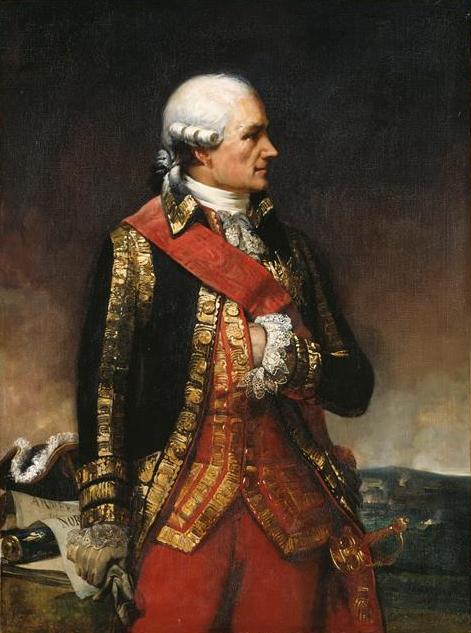
With the fall of Charleston and the surrender of Lincoln’s army, the highest ranking officer in the south was Major General Johan De Kalb, the German-born officer who had served a lifetime in the French Army, before coming to America with the Marquis de Lafayette.

Up until this time, De Kalb’s vast military experience in Europe had not really been put to the test in America.  He did not receive his commission until after the Philadelphia Campaign had ended in late 1777.  He was in Philadelphia during the Battle of Monmouth.  Although he suffered through the winter encampments at Valley Forge and Morristown, serving as a division commander, he had not had any opportunity to prove himself as a battlefield commander.

In April of 1780, De Kalb was still commanding a division near Morristown when Washington directed him to take a division of soldiers from Delaware and Maryland south to support General Lincoln at Charleston.  De Kalb was still in Philadelphia, trying to prepare for his march to the south by the time Charleston fell.  He finally left Philadelphia on May 13, the day after Charleston had fallen, but before word of Lincoln’s surrender had reached Philadelphia.  It was nearly a month later, by which time De Kalb had made it as far as Richmond when he learned that the British had occupied Charleston.

Johann de Kalb

De Kalb had hoped that his force of about 1000 Continental soldiers would be supplemented by thousands of Maryland and Virginia militia once word of Charleston’s fall motivated the states to turn out in force.  Like most Continental generals, De Kalb would be frustrated by the failure of state leaders to provide him with the men or supplies to mount any credible defense against the British army that was by this time subduing South Carolina and clearly aiming at moving into North Carolina.  Virginia governor Thomas Jefferson provided the army with almost no supplies, and only a few hundred militia.

On June 20, de Kalb’s Continentals crossed from Virginia into North Carolina.  The army reached Hillsboro two days later and remained in camp there until the end of the month.  The promises of supplies and militia reinforcements never materialized.  De Kalb had to put the army on reduced rations.  North Carolina officials seemed focused on feeding the militia that had been called out. The militia leaders did not bother to link up with the Continentals and no one was providing food to de Kalb’s men.  Decades of experience in Europe had convinced General De Kalb that supply lines were critical to any army’s success.  He was hesitant to move anywhere without knowing how he would feed and supply his men.  In July, de Kalb tentatively began to move south from Hillsborough.  He met with a few militia leaders, including Francis Marion, who had brought his militia from South Carolina.  

De Kalb was trying to link up with the North Carolina militia under General Richard Caswell.  North Carolina had called up an army of several thousand militia.  Caswell was a political leader who had been Governor of North Carolina until April.  Despite his minimal military experience, he received an appointment from the state as major general.

Despite the impending crisis of a British invasion from the south, Caswell made no effort to link up with, or even communicate with the Continental Army in his state.  Following what seems to have become an inexplicable pattern among southern leaders, Caswell simply ignored the Continental army there to assist in the defense of his state.  He collected supplies to feed his militia army but showed no interest in providing any of his supplies with the Continentals who were on starvation rations or doing anything about attacking the growing British and loyalist threat building just across the border in South Carolina.

A frustrated de Kalb continued to write letters to Washington and officials in Philadelphia that he was receiving no support and had no supplies for his army.  This was de Kalb’s first independent command and he indicated he could not succeed with the limited resources at his disposal.

Horatio Gates

The Continental Congress seemed to agree with de Kalb that he was not up to the job.  Although experienced, this foreign general had become the southern commander only by the accident that General Benjamin Lincoln had been taken prisoner at Charleston before de Kalb could join up with him.

Before de Kalb had even entered North Carolina, Congress acted to appoint a new southern commander.  General Washington strongly recommended that Congress give the command of the new southern army to General Nathanael Greene. By this time, Greene had become Washington’s top general.  He was the man that Washington recommended to replace himself as the commander-in-chief should he ever die or be captured.  

On receiving Washington’s recommendation, Congress voted on June 13 to commission Major General Horatio Gates to take command of the southern army.  Although most of Congress had come to respect Washington’s military leadership, many delegates still believed that they knew better than he did.  Besides, Greene had insulted Congress a few months earlier in his letter resigning as Quartermaster General.  Many in Congress had wanted to dismiss him from the army entirely.  They certainly were not about to give this guy an important independent command.

When the time came for Congress to pick a new commander for the south, General Gates had positioned himself where he was always most effective, in Philadelphia lobbying on behalf of himself.  I know I’ve talked about Gates extensively in the past, but perhaps this is a good time for a refresher.

Gates had been a British officer in the regular army for decades before the war.  His family did not have wealth or position, but was pretty well connected with those who did.  He had managed to scrape together enough money to buy a commission as a lieutenant in 1745, in time to fight at the battle of Culloden, crushing the Scottish rebellion there.  When the war of Austrian Succession ended, Gates found his regiment dissolved.  

General Gates, 1780
He decided to head to America, serving as aide to Colonel Edward Cornwallis, the uncle of future General Charles Cornwallis.  In Halifax, Gates assisted with the removal of the French Acadians and the Mi'kmaq Indians.  He returned to London to lobby for a promotion and ended up purchasing a captaincy on credit.  In 1755, Gates joined up with a great number of other future leaders, including George Washington, Charles Lee, and Daniel Morgan on General Edward Braddock’s assault on Fort Duquesne in what would become western Pennsylvania.  Gates was wounded in the ensuing massacre that killed Braddock.

Later in the French and Indian War, Gates served as an aide to General John Stanwix at Fort Pitt.  Later, he participated in the British assault on the island of Martinique under General Robert Monkton, and was given the honor of reporting the British victory to London.  By tradition, messengers of good news were granted a promotion as thanks.  Officers often chose messengers like Gates, who were deserving of promotion but could not afford to buy a higher commission.  As expected, Gates received a promotion to major.

But with the end of the Seven Years War, Gates found his military career stalled once again.  He returned to New York to work as a political aide for Robert Monckton, who had been appointed Royal Governor of New York.  After Monckton returned to England, Gates also returned and sold his commission.  With the money from that commission, Gates moved his family to Virginia on the recommendation of an old war buddy named George Washington.  

He purchased a large plantation in what is today West Virginia, and by his mid-40’s was ready to settle into the quiet life of a plantation owner.  He served as a lieutenant colonel in the local militia, but probably figured his military days were behind him.  Gates was not an active voice in the colonial protests of the early 1770’s but when the war began in 1775, he immediately offered his services to his old friend George Washington before Washington left for the Continental Congress.  

When Washington was appointed commander in chief of the new Continental Army, he requested that Gates be given a commision as brigadier general and made Gates the first Adjutant General of the Continental Army.

While Gates did have battlefield experience, his main experience had been serving as a staff aide to other officers and an expert in the necessary administrative duties that every army requires.  He had gained an expertise in seeking promotion through relationships with politically powerful men, and trying to be in the right place at the right time.

Gates was one of the first brigadier generals to be promoted to major general in early 1776, based primarily on his administrative skills in organizing the Continental Army. But Gates knew that he needed a field command to establish himself as a leader.  He spent a great deal of time in Philadelphia, trying to develop friendly relationships with the delegates to the Continental Congress.  He succeeded in establishing a powerful fan base among many of the New England delegates.

Gates convinced Congress to appoint him to command the Army in Canada early in the war, replacing John Sullivan. But by the time Gates actually made it to Canada, the army had been pushed back into New York.  That started Gates’ feud with General Philip Schuyler, one of the few generals who was more senior to Gates. Schuyler had command of the army in New York.  Now that Gates’ Canadian army was in New York, he fell under Schuyler’s command.

Gates and Shuyler tried to work together for more than a year.  When Gates got frustrated, he would leave his command and personally return to Philadelphia to lobby Congress to replace Schuyler as the commander of the Northern Army.  At the end of 1776, Washington begged Gates to cross the Delaware with him and attack Trenton.  Gates refused, assuming that Washington’s attack would not succeed.  Instead, Gates rode to Baltimore to be ready to lobby Congress for command of the Continental Army once Washington had failed.  Of course, Washington’s victory upset those plans, and Gates moved back to Plan A: getting Congress to dump Schuyler and give Gates command of the Northern Army.

When news of Schuyler’s loss of Fort Ticonderoga in 1777, Gates was still in Philadelphia, ready to lobby Congress for his proposed change.  This time, his lobbying worked. Gates took over command of the Northern Army just before the battles that culminated in the surrender of General Burgoyne’s army at Saratoga.  I’ve argued that Gates was primarily the beneficiary of all the work that Schuyler and others had done to make that victory possible.  I’ve also argued in earlier episodes that the victory was due primarily to the efforts of General Benedict Arnold, who had to defy Gates’ orders in order to defeat the British.

Gates, ever the politician, had ended what had been a pretty good relationship with Arnold, because Arnold took on several of General Schuyler’s aides after Schuyler lost his command.  Gates saw that as a disloyal act that made Arnold a competitor for power.  Therefore, Gates did not want to give Arnold any position that might increase his stature and reputation.  After Saratoga, Gates went out of his way to ignore Arnold’s contributions to the victory.

Congress gave Gates full credit for the victory at Saratoga.  Many in Congress began discussing the possibility of Gates replacing Washington as military commander.  Gates’ victory at Saratoga was contrasted with Washington’s series of losses that had led to the British occupation of Philadelphia.  Although Washington remained military commander, Congress appointed Gates as Chairman of the Board of War, which could essentially give orders to Washington and tell him how to use his army.  Many in Congress thought this might end up convincing Washington to resign. Washington, however, fought back politically and shrewdly, eventually allowing events to show Congress that Gates really wasn’t that impressive.

Following this tussle with Washington, Gates’ star seemed to fall.  He remained head of the Board of War, but the Board essentially lost its authority.  Gates also continued in command of the Northern Department, but with the surrender of Burgoyne’s army, there was not much action in that region.  The main threat came from small raids by loyalists and Indians.  Washington had offered Gates command of the campaign to stamp out those raids, but Gates demurred, allowing General Sullivan to lead the campaign instead.  Washington then assigned Gates to command of the Eastern Department, New England, in 1779.  Again there was nothing really happening militarily in that region by this time, so Gates ended up just going home to his plantation in Virginia.

When the British threatened Charleston in early 1780, Gates headed back to Philadelphia to provide military advice, and once again lobby for a new command.  Congress obliged and appointed Gates the new commander of the Southern Army.  For Gates, this was a wonderful opportunity.  He once again had an independent command in an important theater.  A great victory would give him the opportunity to show up Washington once again, and prove that he was the greatest military leader in the Continental Army.

Gates attempted to convince Colonel Daniel Morgan to join him on this campaign. But Morgan had resigned his commission about a year earlier.  Despite being such a critical leader in so many battles, Morgan never played the political game to get ahead.  Congress had continually failed to promote Morgan to general.  Years in the field had left the aging colonel with so many aches and pains, that he decided to hang it up and retire.  When Gates tried to bring him out of retirement, he was having none of it.

Gates Takes Command

Gates was well aware of the challenges to victory in the south.  He knew about the lack of money, supplies and men, the lack of cooperation of the state governments, and the success the British had had in recruiting more loyalist regiments in the south.

Richard Caswell
Although Congress had granted command to Gates in mid-June, nobody bothered to inform General de Kalb, who was still making his way toward the South Carolina border.  When he finally received notice in the form of a letter from Gates on July 16, de Kalb actually seemed relieved that he would no longer be in command.  De Kalb was not confident of his situation, and was loath to try anything without having the proper resources available to him.  While he was more than happy to serve under General Gates, he did not want the responsibility of command under the conditions that he faced. De Kalb was probably further relieved by Gates’ reassuring letters that he had been in close contact with Congress and Governor Jefferson of Virginia and that they would provide the support that the army needed.  

Gates finally caught up with the army on July 25. The forces under his command were not promising.  With the arrival of the Virginia militia, Gates had less than 2000 soldiers.  Various units and individuals fleeing British-controlled Georgia and South Carolina had traveled north to join up with the army.  Still missing were the North Carolina militia under General Caswell.

Gates’ army was spread out, to make use of resources throughout the region, but were on starvation rations and had no sufficient ammunition or supplies for a military campaign.  The army also had only about 50 cavalrymen, which were often critical to southern campaigns outside of larger towns.

None of this seemed to phase General Gates.  After a peremptory review of his new army, Gates ordered his officers to prepare the men to march immediately into South Carolina.  Gates specifically wanted to hit the British outpost at Camden.  De Kalb and many local officers recommended marching to the west, through Salisbury and Charlotte.  The land in that area had much stronger patriot sentiment and had much more food and water available for an army on the march.  

Gates disagreed, and instead chose a more direct march toward Camden, one that would go through the heart of Tory strongholds, and where there would be very few resources for the army.  He told his officers not to worry about the lack of food, that wagons with food and rum would catch up with the army soon.  This was a lie, and Gates knew it, but used it to reassure his officers that his plan would work.

Even on the direct route, the march would take at least a couple of weeks. Over the objections of just about everyone, Gates began marching south, with an army still on half-rations through a region described by some as a desert, toward the British outpost at Camden.  

Next Time: The battle of Camden.

- - -

Next Episode 259 The Battle of Camden 


 Contact me via email at mtroy.history@gmail.com

 Follow the podcast on Twitter @AmRevPodcast

 Join the Facebook group, American Revolution   Podcast: https://www.facebook.com/groups/132651894048271

 Join American Revolution Podcast on Quora 


American Revolution Podcast Merch!

T-shirts, hoodies, mugs, pillows, totes, notebooks, wall art, and more.  Get your favorite American Revolution logo today.  Help support this podcast.  http://tee.pub/lic/AmRevPodcast


American Revolution Podcast is distributed 100% free of charge. If you can chip in to help defray my costs, I'd appreciate whatever you can give.  Make a one time donation through my PayPal account. You may also donate via Venmo (@Michael-Troy-20), Zelle, or popmoney (send to mtroy1@yahoo.com)


Click here to see my Patreon Page
You can support the American Revolution Podcast as a Patreon subscriber.  This is an option making monthly pledges.  Patreon support will give you access to Podcast extras and help make the podcast a sustainable project.

An alternative to Patreon is SubscribeStar.  For anyone who has problems with Patreon, you can get the same benefits by subscribing at SubscribeStar.

Help Support this podcast on "BuyMeACoffee.com"


Visit the American Revolution Podcast Bookshop.  Support local bookstores and this podcast!


Signup for the AmRev Podcast Mail List

* indicates required

Further Reading

Websites

Johann De Kalb: https://www.battlefields.org/learn/biographies/johann-de-kalb

Horatio Gates: https://www.mountvernon.org/library/digitalhistory/digital-encyclopedia/article/horatio-gates

The Battle of Camden: https://www.carolana.com/SC/Revolution/revolution_battle_of_camden.html

Camden: https://www.battlefields.org/learn/revolutionary-war/battles/camden

Battle of Camden: https://revolutionarywar.us/year-1780/battle-of-camden

Waters, Andrew “The Mysterious March of Horatio Gates” Journal of the American Revolution, September 24, 2020 https://allthingsliberty.com/2020/09/the-mysterious-march-of-horatio-gates

Free eBooks
(from archive.org unless noted)

McCrady, Edward The History of South Carolina in the Revolution, 1780-1783, New York: The Macmillan Co. 1902.

Moultrie, William, Memoirs of the American Revolution: so far as it related to the states of North and South Carolina, and Georgia, New York: D. Longworth, 1802. 

Ramsay, David The History of the Revolution of South-Carolina, from a British province to an independent state, Vol. 2, Trenton: Isaac Collins, 1785.

Stevens, John A. “Gates at Camden”  Magazine of American History Vol. V, No. 4, October 1880. 

Tarleton, Banastre A History of the Campaigns of 1780 and 1781, in the Southern Provinces of North America, London: T. Cadell 1787. 

Weigley, Russell Frank The Partisan War: The South Carolina Campaign of 1780-1782, Columbia: Univ of South Carolina Press, 1970 (borrow only). 

Books Worth Buying
(links to Amazon.com unless otherwise noted)*

Buchanan, John The Road to Guilford Courthouse: The American Revolution in the Carolinas, Wiley, 1999. 

Edgar, Walter B. Partisans and Redcoats: The southern conflict that turned the tide of the American Revolution, New York: Morrow, 2001 (borrow on archive.org).

Ferling, John Winning Independence: The Decisive Years of the Revolutionary War, 1778-1781, Bloomsbury Publishing, 2021. 

Lumpkin, Henry From Savannah to Yorktown: the American Revolution in the South, Univ of SC Press, 1981 (borrow on archive.org). 

Piecuch, Jim The Battle of Camden: A Documentary History, History Press Library, 2006. 

Russell, David Lee. The American Revolution in the Southern Colonies. McFarland & Company, 2000 (borrow on archive.org).

Smith, David Camden 1780: The Annihilation of Gates’ Grand Army, Osprey Publishing, 2016. 

Wickwire, Franklin B. Cornwallis and the War of Independence, Houghton Mifflin, 1971 (borrow on archive.org). 


* As an Amazon Associate I earn from qualifying purchases.


Sunday, October 16, 2022

ARP257 French Army in America


Back in Episode 246 we discussed Lafayette’s return to America from France.  Lafayette arrived in Boston in late April 1780 and made it down to General Washington’s Headquarters in Morristown New Jersey by early May.  The young general from France was pleased to announce that a French Army would soon arrive to support the Continentals in a final push to defeat Britain.

Washington, of course, was elated with the news, but also concerned since his army had fallen to only a few thousand men.  The southern army had been captured at Charleston and the states seemed in no hurry to send new soldiers.  Further, the army did not have the food or supplies to take care of the few soldiers that they did have. 

Washington spent the next few months desperately trying to build up his army for a major campaign with French cooperation during the summer of 1780. But the men and resources simply were not there.  The news of the arrival of the French Army spurred him to do whatever he could to prepare, but there was not much he could do.

Comte de Rochambeau

Leading the French army was Jean-Baptiste Donatien de Vimeur, better known as the comte de Rochambeau.  Lafayette had requested command of the army, but the Continental major general had left France as a captain in the French Army.  The King of France was not going to turn over an entire army to a kid still in his twenties, no matter how impressive an impact he had made in America.

General Rochambeau was an older, experienced officer.  Like most officers of the era, Rochambeau came from aristocracy.  He was the third son of the Marquis de Rochambeau, who came from a prominent military family that could trace its ancestry back to officers who had led in the crusades.  His mother came from an important naval family.  Although his father had some physical handicap that had prevented military service, he nevertheless served the King and was honored as a Knight of the Holy Sepulchre, among his titles.

comte de Rochambeau
Both of Rochambeau’s older brothers died in childhood.  So, from a young age, he was destined to carry his family’s title.  Born in 1725, he attended Catholic boarding schools where he received educational and military training beginning at age five.  At 15, he received his first commission as a cornet of horse and began service in the Army of the Rhine during the War of Austrian Succession.  The young teenager learned the rigors of combat at an early age and managed to thrive and impress his superiors.  He was wounded in battle several times, and suffered the same deprivations that the rest of his men faced during the war.  

By 1747, the 22 year old found himself a colonel leading a regiment.  A couple of years later, the 25 year old Colonel Rochambeau accepted his mother’s arrangement for his marriage into another wealthy family. 

By the outbreak of the Seven Years War, Rochambeau had risen to brigadier general.  He distinguished himself at the battle of Minorca, and was wounded in battle in the German states during the war.  By the end of that war, Rochambeau found himself serving as inspector-general of infantry and mixing with the top ministers at the court of Versailles.

Since France had entered its latest war with Britain, much of Rochambeau’s time was spent planning for the invasion of England in 1779.  After that plan fell apart due to problems and delays by their Spanish allies and an unfortunate smallpox outbreak in the invasion fleet, Rochambeau was looking for something else to do.  In 1780 Rochambeau was a 55 year old military commander with nearly 40 years of military experience.  According to his writings, he was contemplating retirement.  The thought of another major military campaign far from home did not seem to be something that he particularly wanted.

Unlike many other officers, we don’t really know Rochambeau’s personal views on the American fight for liberty, or other political issues of the day.  He did not speak English, and knew rather little about America.  Rochambeau was a professional soldier, who followed orders and fought whatever battles his superiors thought appropriate.  The King’s decision to appoint him the head of an expeditionary force to America would be his first independent command.

French Expeditionary Force

The King's commission directed Rochambeau to command his army separately from the Continental Army. The French army in America would not serve as auxiliaries.  His orders directed him to work closely with General Washington and to coordinate military actions that would assist the success of the American cause.  At the same time he was to use his own military judgment in the use of his army.  Initially, the king had granted Rochambeau a force of only 4000 soldiers.  After some negotiation, the King increased the number to 7500, out of the 32,000 men who had been assembled for the aborted invasion of Britain.

French Regulars
Lafayette had advised Rochambeau to bring all the supplies that they would need while in the field in America.  He noted that the Americans had almost nothing and that the French could not really rely on local supplies while in the field.

By March of 1780, Rochambeau was ready to embark on his transatlantic voyage.  Unfortunately, the French Navy was not ready.  All the troop transport ships had been used to ship another army to the West Indies.  After a few weeks of scrambling, the ministry managed to find enough ships to cram about 5500 soldiers aboard.  They had to leave behind another nearly 2500 men who would have to join them on a second voyage later.  They also had to give up the transport of any horses.

The fleet set off for America at the beginning of May.  The winds and weather forced the fleet to take a longer route, so that they were still at sea after two months.  Along the way, the fleet encountered ships that brought the news that the Continental Army had fallen at Charleston and the entire southern army had been taken prisoner.  The Americans had lost almost as many soldiers in South Carolina as Rochambeau was bringing to America.  The French also learned that General Clinton had returned to New York and was preparing a greeting of his own when the French fleet arrived.  

While the officers knew of their destination, the French soldiers were not informed until about seven weeks into the voyage.  The men cheered when they heard the news.  In part this may have been because of the French feeling toward American liberty.  A fair amount of the celebration may have been because they were not headed to the West Indies, where tropical diseases were known to decimate European regiments.

Newport

On July 11, 1780, the French fleet arrived in Newport, Rhode Island.  The British did not contest the landing.  They had abandoned Newport in late 1779 in order to consolidate forces in New York ahead of the Charleston offensive.

The people of Newport at first greeted the French fleet a bit tentatively.  No one was really sure what an occupying army would bring, even if it was allied with the US.  Even Continental soldiers and militia were known for taking what they needed from the locals out of necessity.  Although the French were now allies, the people of New England had been fighting them as long-time enemies only twenty years prior.  Only two years before, in 1778, the French had abandoned the attempt to recapture Newport from the British.  This had threatened to create a deep hostility between the two armies, which Washington and Lafayette had to work overtime to patch up.

The locals also had little to offer their French guests.  The town population had been less than 10,000 before the war, and the years of British occupation had caused it to fall to less than 5000, hardly enough to support 5500 French soldiers and thousands more sailors.  The British had largely destroyed Newport on their way out in 1779, and the town had few resources to rebuild.  Many buildings were still burned-out shells. 

Many of Rochambeau’s soldiers were sick with scurvy from a difficult 70 day journey to America aboard overpacked cramped vessels.  Rochambeau received reports that 2300 of the French soldiers and sailors required hospital rest following the voyage.

French Map of Newport 1780
Rochambeau proved that he was not just a career military officer.  He also knew how to act as a politician.  He began meeting with local leaders and ensuring them that the French Army would not abandon them again, that they were ready to pay in specie (gold and silver) for whatever they needed, and that they would remain good guests while stationed in the city. The men set about repairing buildings for use.  They brought much-welcomed hard money to pay locals for what they needed.

Within days, local support began to show.  The Town Council called for a night of illumination of candles in all the houses to celebrate the arrival of their allies.  With local support, the French army of 5500 men settled in and around Newport.  General Rochambeau, however, still had to worry about a British attack.  The main British army at New York was only 150 miles away.  A short sail up the coast could have the enemy upon them in days.  Newport’s defenses were a mess and a large portion of the French army was in hospital following the difficult sea voyage.

Rochambeau began writing letters to Versailles noting the difficulties he encountered.  The American economy was in freefall, with the Continental dollar virtually worthless.  The Continental Army appeared to consist of only a few thousand men who were starving and in rags.  General Washington seemed unable to draw in new recruits, and part of the American army needed to move south in order to replace the army that had been captured at Charleston.

British forces were in control of Georgia and South Carolina, and seemed on the brink of taking North Carolina.  George Washington had not yet traveled to meet with Rochambeau.  Many historians have argued that this delay was because Washington was embarrassed that he had no army to fight alongside the French.  At this same time, Washington was writing letters to officials in Virginia saying that they need to be aware of the “totally deranged situation of our affairs—of our distresses—of the utter impracticability of availing ourselves of this generous aid [that is, the French support], unless the States would rouse from the Torpor that had siezed them.”

The New England militia turned out in force to supplement the French forces, commanded by General William Heath.  But Rochambeau saw them as an army of beggars. The militia needed guns, tents, clothing, provisions, etc. Everyone was looking to the French army to serve as quartermaster for all the Americans.

Rochambeau’s letters to French officials back home essentially said that they need to send more soldiers, ships, arms, and money to win this fight, and that the Americans could be counted on for almost no military support.  But those were longer term issues.  Right in front of him, was the danger of a British attack before the French were prepared to defend themselves.

Bull’s Ferry

To take some of the pressure off his new French allies, Washington was eager to engage in some activity to distract the British.  He did not have the resources for a full scale attack, but did order General Anthony Wayne to launch a raid on Bull’s Ferry in New Jersey

Wayne took two regiments of Continentals from the Pennsylvania Line, along with the 10th Regiment, as well as a company of dragoons and four pieces of field artillery.  Their goal was to capture a blockhouse at Bull’s Ferry, on the New Jersey coast, just across the Hudson River from New York City.  A small unit of 70 loyalists held the heavily-defended spot, which kept open a river passage into New Jersey from Manhattan.  The guard also protected an area to the south where the British grazed cattle and horses.  While Wayne’s force attacked the blockhouse, he sent Major Light Horse Harry Lee’s cavalry to round up the cattle and horses.

Bulls Ferry
Wayne’s force attacked the outpost on the morning of July 21.  The battle began with the Continentals using their artillery against defenders who had no canons to return fire.  The defenders did put up a defense with muskets.  After about an hour of no real progress. Wayne’s frustrated attackers wanted to storm the defenses.  Wayne and the officers saw that the defenders had built up considerable defenses, creating a tangle of abatis that would take considerable time to break through.  

Eventually, the soldiers charged despite efforts by the officers to hold them back.  As the officers feared, the attackers got caught up in the abatis and were forced to withdraw after taking heavy casualties.  With that, the Continentals gave up the fight and withdrew.  The 70 loyalist defenders suffered 5 dead and 16 wounded.  The Americans suffered 15 dead and 49 wounded.  British reports estimate the attacking force at over 2000 soldiers.  The American records don’t give a number, but if it really was just the two or three regiments, and the artillery, it was probably more like 700 to 900 attackers.  Even so, that should have been more than enough to overwhelm 70 defenders.  The Continentals did return with a herd of captured cattle, but failed to capture the block house.

That’s probably why the Americans wanted to forget about the failed attack.  Instead, we remember it because British Major John AndrĂ© wrote a poem called “The Cow Chace” making fun of the failed American attack, despite the lopsided numbers.

British Threat

Back in New York City, British General Clinton largely ignored the raid.  He was focused on launching an attack on the new French garrison at Newport.  Two days after the French landed at Newport, Admiral Samuel Graves arrived in New York with six more British ships of the line.  Combined with Admiral Marriot Arbuthnot’s existing fleet, the British had enough firepower to overwhelm the French naval fleet, which consisted of seven ships of the line and a few smaller ships.

Graves had hoped to intercept the French fleet at sea.  He had left port at Plymouth around the same time as the French fleet under Admiral Arsac de Ternay had left Brest.  But a storm had slowed up the fleet, and then Graves had gotten distracted trying to capture prizes along the way.  By contrast, French Admiral Ternay had passed up the opportunity to capture any British prizes that he had encountered, instead focusing on getting his troop transports to America.

In truth, the British probably could have taken Newport in the days or weeks following the French landing. The French had no time to construct defenses, and half their men were sick following the long voyage.

Adm. Samuel Graves

British General Clinton wanted to attack quickly, but Admiral Arbuthnot opposed it.  First, the fleet that had arrived under Admiral Graves was also sick from the long journey and either needed time to recuperate, or had to have much of its crew replaced with locals in New York.  This led to a delay of more than a week before the British fleet could leave for Newport.  

By the time the British fleet reached sight of Newport on July 22, the French fleet had had time to anchor into a defensive position in the harbor, where its cannons were supplemented by artillery batteries on land. Admirals Arbuthot and Graves discussed the matter, and decided they would not attack until Clinton had brought up his army to supplement that naval attack with a combined land assault.  Clinton had been ready to move, but the navy had not supplied him with the necessary troop transports to cross Long Island Sound into New England.

It would be another five days until General Clinton had his ships and was getting ready to embark an army of 6000 men at Throg’s Neck on July 27.  As Clinton prepared to load his army aboard the transports, he received word that the Continentals were massing an army of 15,000, presumably to attack Manhattan from the north.  It was the perfect time to attack, with the bulk of the British Navy up at Newport and with more than half the army prepared to join them. Clinton had to call off the troop transports and redeploy his soldiers to defend against the possible American attack.  

Of course, Washington had nowhere near 15,000 men at this time. Clinton’s intelligence about the American attack was a ruse.  The Culper Ring in New York had gotten word to Washington that Clinton was preparing to move on Newport.  

Washington made a pretense of massing a large force and moving it across the Hudson and into a position where it could attack the British in northern Manhattan.  He made sure word got back to Clinton of this new threat, while greatly exaggerating his numbers.  Members of the Culper ring helped to spread disinformation to British agents who informed Clinton of the imminent attack.  

By doing so, the Continentals bought more valuable time for the French at Newport to dig in, reinforce their defenses, and convalesce their soldiers and sailors.  Washington had also ordered General Heath to bring 5000 New England militia to Newport to support the French Army.  This militia army appeared quickly and was ready to assist within days. By the time the British were ready to attack, the French were ready to defend, meaning the British saw a pretty fair risk that they could be defeated.  

In letters back to London, Clinton blamed the failure to attack on the fact that Admiral Graves had arrived too late, that Admiral Arbuthnot had failed to get intelligence of the arrival of the French fleet, and that the navy had failed to provide timely access to the troop transports.

By mid-August, Rochambeau felt confident enough to send home the New England militia.  Although they had turned out quickly, the Americans did not have food or tents for a sustained presence.  Rochambeau decided these men would best serve the cause by returning home to bring in their harvests.

Instead of a decisive conflict, the British in New York had hunkered down into a defensive posture.  The French in Newport also began to settle in for what appeared to be a long term encampment.  As of the end of August, two months after the French arrived, Washington remained in New Jersey, with what little army he had, still not finding the time to meet his new ally in the war.  

Next time: we head south, as General Horatio Gates is tasked with building a new army in the south to confront General Cornwallis.

- - -

Next Episode 258 Gates Takes Command 


 Contact me via email at mtroy.history@gmail.com

 Follow the podcast on Twitter @AmRevPodcast

 Join the Facebook group, American Revolution   Podcast: https://www.facebook.com/groups/132651894048271

 Join American Revolution Podcast on Quora 


American Revolution Podcast Merch!

T-shirts, hoodies, mugs, pillows, totes, notebooks, wall art, and more.  Get your favorite American Revolution logo today.  Help support this podcast.  http://tee.pub/lic/AmRevPodcast


American Revolution Podcast is distributed 100% free of charge. If you can chip in to help defray my costs, I'd appreciate whatever you can give.  Make a one time donation through my PayPal account. You may also donate via Venmo (@Michael-Troy-20), Zelle, or popmoney (send to mtroy1@yahoo.com)


Click here to see my Patreon Page
You can support the American Revolution Podcast as a Patreon subscriber.  This is an option making monthly pledges.  Patreon support will give you access to Podcast extras and help make the podcast a sustainable project.

An alternative to Patreon is SubscribeStar.  For anyone who has problems with Patreon, you can get the same benefits by subscribing at SubscribeStar.

Help Support this podcast on "BuyMeACoffee.com"


Visit the American Revolution Podcast Bookshop.  Support local bookstores and this podcast!


Signup for the AmRev Podcast Mail List

* indicates required

Further Reading

Websites

JONES, T. COLE. “‘Displaying the Ensigns of Harmony’: The French Army in Newport, Rhode Island, 1780-1781.” The New England Quarterly, vol. 85, no. 3, 2012, pp. 430–67. JSTOR, http://www.jstor.org/stable/23251387

WHITRIDGE, ARNOLD. “TWO ARISTOCRATS IN ROCHAMBEAU’S ARMY.” The Virginia Quarterly Review, vol. 40, no. 1, 1964, pp. 114–28. JSTOR, http://www.jstor.org/stable/26444997

French Encampment in Newport: https://w3r-us.org/french-encampment-newport-11-july-1-november-1780

Why Newport Scorned the French in 1780: http://smallstatebighistory.com/why-newport-scorned-the-french-in-1780

Comte de Rochambeau: https://www.battlefields.org/learn/biographies/rochambeau

Charles Henri d’Ternay http://www.biographi.ca/en/bio/arsac_de_ternay_charles_henri_louis_d_4E.html

“From George Washington to Joseph Jones, 22 July 1780,” Founders Online, National Archives, https://founders.archives.gov/documents/Washington/03-27-02-0211

Wayne Loses Battle of Bull’s Ferry: https://www.revolutionary-war-and-beyond.com/general-wayne-loses-battle-of-bulls-ferry.html

Piecuch, Jim "Antony Wayne's Repulse at Bull's Ferry, July 21, 1780" Journal of the American Revolution, Oct. 4, 2022. https://allthingsliberty.com/2022/10/anthony-waynes-repulse-at-bulls-ferry-july-21-1780

Andre, John The Cow Chace https://www.americanrevolution.org/war_songs/warsongs78.php

McBurney, Christian “The Culper Spy Ring Was Not the First to Warn the French at Newport” Journal of the American Revolution, Dec. 9, 2014. https://allthingsliberty.com/2014/12/the-culper-spy-ring-was-not-the-first-to-warn-the-french-at-newport

Free eBooks
(from archive.org unless noted)

Balch, Thomas The French in America During the War of Independence of the United States 1777-1783, Philadelphia: Porter & Coates, 1891. 

Lomask, Milton Rochambeau and Our French Allies, New York, P.J. Kenedy, 1965 (borrow only) 

Rice, Howard C. (ed) The American Campaigns of Rochambeau's Army, 1780, 1781, 1782, 1783, Princeton University Press, 1972 (borrow only) 

Winfield, Charles “The Affair at Block House Point, 1780The Magazine of American History, Vol 5, pp. 161-186 (Google Books) 

Wright, M. W. E. “What France Did for America: Memoirs of Rochambeau” The North American Review

Books Worth Buying
(links to Amazon.com unless otherwise noted)*

Ferreiro, Larrie D. Brothers At Arms: American Independence and the Men of France and Spain Who Saved It, Alfred A. Knopf, 2016  (borrow on Archive.org

Kennett, Lee The French Forces in America, 1780-1783, Praeger, 1977. 

Vail, Jini Jones Rochambeau: Washington’s Ideal Lieutenant, Word Association Publishers, 2020 

Weelen, Jean E. Rochambeau, Father and Son, H. Holt and Company, 1936 (reprint 2016).  (borrow on Archive.org

Whitridge, Arnold Rochambeau: America’s Neglected Founding Father, Macmillan, 1965. (borrow on Archive.org

* As an Amazon Associate I earn from qualifying purchases.