Sunday, March 10, 2024

ARP302 Cloud's Creek Massacre


Last week, we covered some of the violence between patriot and loyalist militias in North Carolina as the last British soldiers evacuated that state.  This week, we turn to South Carolina.

Leslie Commands Charleston

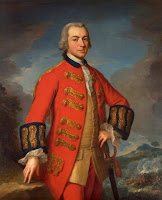
Around the time of Yorktown, General Clinton sent General Alexander Leslie to take command of the British army at Charleston.  The 50 year old general came from an old Scottish family. He was named after his ancestor who had fought as a leading officer in the English Civil War.  

Gen. Alexander Leslie
General Leslie had served in America for 14 years, and was already serving in Boston when the war began. Like many, he was sick of the war by 1781, and made multiple requests to General Clinton to return home to Britain.  Leslie had served in the Carolinas under General Cornwallis.  Clinton had ordered him to go to Virginia in 1780. But after only a few weeks there, Cornwallis sent orders for him to bring his force down to Charleston.  This was shortly after Cornwallis has lost his loyalist militia at King’s Mountain and he desperately needed reinforcements.

After Guilford Courthouse, Leslie returned to New York for health reasons.  Leslie remained in New York during the Yorktown Campaign but with the loss of Cornwallis’ army at Yorktown, the southern theater needed a new commander.  Clinton sent Leslie to Charleston, where he arrived on November 8, 1781. 

Leslie’s orders were to protect as many British outposts as possible. But by this time, there was little to protect other than the forces right around Charleston and Savannah.  Leslie almost immediately ordered the evacuation of Wilmington, which we covered last week.  He planned no offensive operations, instead worrying about defending and feeding his army, and the many thousands of loyalist refugees in and around Charleston.

Bloody Bill Cunningham

The tactical decision by the British at Charleston to remain hunkered down did not reduce the violence or brutality that continued to take place between loyalist and patriot militia groups throughout the Carolinas.  Loyalists found themselves increasingly vulnerable and fought back whenever they could.

One of the most prominent loyalists in the field in the fall of 1781 was William “Bloody Bill” Cunningham, who stood out for his brutality in an already brutal war between South Carolinians.  Cunningham grew up near Ninety-Six in western South Carolina.  It was a loyalist community. Many of his cousins were key loyalist organizers when the war broke out.  His cousin Robert Cunningham refused to sign an early truce with the patriots in South Carolina in 1776, and continued to fight until caught and imprisoned.

Despite his loyalist family and community, William joined a patriot militia when the war began.  He fought well in the Cherokee campaign.  His company also battled against loyalists, which included fighting his own cousin, Patrick. 

Different sources give different reasons for his decision to abandon the patriot cause and join the loyalists.  According to one source, William committed some infraction, went before a court martial and was whipped for his offense.  After this, he deserted his company and fled to the loyalist stronghold in East Florida.  According to another source, Cunningham was denied a promised promotion when his militia was reactivated in June, 1776.  Cunningham, at first refused to turn out for duty. When he did, had a bad attitude and tried to resign.  For this, he was arrested and whipped, then discharged.  He then fled to Savannah, Georgia.

Whatever the exact details, there was obviously some personal conflict and problem that caused Cunningham to change sides.  These appeared to be for non-ideological purposes.

Cunningham remained gone for two years.  During this time, a group of patriots led by Captain William Ritchie kicked his father out of the family home due to loyalist sympathies.  The patriots also murdered his invalid brother.  Cunningham knew Ritchie.  The two had served together in the patriot militia. In 1778, Cunningham returned from his exile.  He rode up to Ritchie’s house, confronted him in front of his family, then shot and killed him.  After that, Cunningham disappeared again for another two years.

In 1780, when the British took Charleston, Cunningham joined his cousin’s loyalist regiment and fought at the battle of King’s Mountain.  Like many loyalists there, he was taken prisoner, but managed to escape while being marched to prison.  He returned to active duty and received a commission as captain in the loyalist militia.

In October of 1781, Cunningham received a promotion to major and was continuing the stuggle in a loyalist militia army under the command of his cousin General Robert Cunningham.  

Bloody Scout

Word of the British loss at Yorktown had caused the British forces in South Carolina to withdraw mostly back to Charleston.  But for the local loyalists were were ready to fight to the death, the conflict became even more desperate.

On November 6, a loyalist militia fighting alongside Chickamauga Indians raided western settlements near modern day Spartanburg.  Captain William Bates commanded the loyalists.  War Chief Dragging Canoe led the Chickamauga.  I’ve mentioned Dragging Canoe in earlier episodes.  He had a particularly brutal reputation in the frontier battles in what is today Tennessee.

Locals fled to Fort Gowan, which offered some protection.  But as the fort’s defenders ran out of ammunition, they surrendered on the condition that the loyalists protect them from the Indians.  Captain Bates agreed.  As soon as the fort surrendered and opened its gates, Bates ordered his forces to kill everyone.  Almost all the civilians were murdered.  A few were taken as prisoners to be taken to Indian camps, where they would be tortured and then burned at the stake.  One of the few survivors was a woman who was scalped and left for dead at the fort, but managed to survive.  Sadly, the Fort Gowan massacre was not an isolated incident.

A day after the Fort Gowan Massacre, about 80 miles south near Cloud’s Creek, a group of loyalists Headed by Captain Neely Cargill captured three patriots at the home of a local militia captain.  The loyalists simply marched their prisoners to a nearby swamp and executed them.  In response, two patriots militias under Captain Solomon Pope and Captain James Butler tracked down Cargill’s loyalists and executed all of them.

Just over a week later, Captain Butler and Captain Sterling Turner encountered a loyalist foraging party under Colonel Hezekiah William who were trying to steal some cattle. Neither group could get the upper hand, but eventually agreed that the loyalists could leave if they returned the stolen cattle.  During the firefight the patriots had managed to kill a loyalist, Captain William Radcliff.

Bloody Bill Cunningham was a friend of Radcliff’s and vowed revenge.  By this time, Cunningham was riding with a large force of loyalist militia.  Accounts differ on the size, but some accounts say he had a force of about 300 men.

The day after the attack that had killed Radcliff, the patriot force of about 30  encamped near Clouds Creek, at the home of a family named Carter.  A hard rain had made the men miserable and got most of their powder wet.  The men took shelter in the Carter house.

Cunningham’s loyalist force of about 300 attacked them and surrounded the home. A brief firefight began but the patriots asked for terms.  As the two sides were discussing terms, a patriot shot and killed one of Cunningham’s loyalists.  With that fighting resumed.

Eventually, the patriots ran out of ammunition and agreed to surrender.  After disarming their prisoners, Cunningham and the loyalists put all of them to the sword.  Only two or three patriots survived.  One of them was a man named Benjamin Hughes who managed to dive into the creek and hide under some driftwood during a cattle stampede that had distracted the enemy.  The other was a man named Bledsoe. It is not clear why they didn’t kill him, it’s possible they thought Bledsoe was a loyalist sympathizer.  After they split the skull of Bledsoe’s friend as he stood next to him, Bledsoe appeared to have some sort of breakdown and, according to others, was never right in the head again.  Several of the prisoners were beheaded.  Others were tortured before being killed.

The massacre at Cloud’s Creek was only the beginning of a rampage for Cunningham, which became known as the Bloody Scout.  

The following day, Cunningham tracked down a former loyalist officer, John Trowles, who had begun collaborating with the patriots.  He executed the man in front of his wife and son.  Later that day, Cunningham visited the blacksmith shop of the man’s brother.  After allowing the man to re-shoe his horses, he then murdered the blacksmith, his son, and a slave who worked in the shop.  After burning all the buildings, Cunningham’s men rode on.  Over the next few days they loyalists tracked down more men who they deemed to be collaborators, executing them and burning their homes.  Several of the victims were in beds recovering from wounds and unable to defend themselves.

The loyalists next found a small group of patriot militia at the home of their Colonel Joseph Hayes.  The patriots defended themselves but then surrendered after Cunningham set the house on fire.  After the surrender, witnesses say that Cunningham personally murdered every prisoner.

A few weeks later, on December 7, a smaller group from Cunningham’s force under Captain John Crawford attacked General Andrew Pickens’ blockhouse and captured a convoy of patriot wagons.  Some of the patriot guards were able to flee, but the loyalists burned the wagons and took several prisoners.  Among them was John Pickens, the brother of General Andrew Pickens.  The loyalists rode their prisoners back to the Cherokee nation, where they tortured and murdered the prisoners.  Pickens, as the brother of a patriot general was singled out for a particularly brutal torture.

The day following his brothers’ capture, General Pickens took personal command of the militia army that was tasked with tracking down Cunningham’s marauders.  They came across a camp of twenty loyalists who were all slaughtered.  Cunningham had spread out his force so that the attack on the first camp alerted the others to flee.

Cunningham personally fled into the swamps and escaped. Eventually Cunningham was able to make his way back to Charleston.  According to some accounts, Cunningham had executed a total of 79 men during his rampage.

Greene Returns to the Field

While provincial and loyalist militia battled it out, Continentals General Nathanael Greene was focused on Charleston.  Following the Battle of Eutaw Springs in September, the army returned to the high hills of Santee.  Greene was focused on putting together an army to confront the British at Charleston.  

That was going to prove difficult  The main Continental force was focused on Yorktown at the time.  All men and resources that might have been used on South Carolina were being redirected to Virginia. On top of that, the small army that Greene did have was struck hard with malaria, putting the vast majority of his men out of commission.

Washington sent Greene more Continental reinforcements under the command of General Arthur St. Clair.  The reinforcements were supposed to include a few regiments of regulars from Virginia.  However, even after Yorktown, Virginia state officials were still afraid of another attack.  They refused to allow the Virginia Continentals to leave the state, and even recalled many of the Virginians who were with Greene at the time.  As a result, Greene ended up without many more men than he had before St. Clair arrived.

Greene did get some more assistance locally.  Before Eutaw Springs, he had called on the Overmountain men to return to the fight.  Although they did not march in time to particpate at Eutaw Springs, they finally did arrive in late October 1781.  John Sevier brought several companies of riflemen to Greene’s Camp as did Isaac Shelby.   Greene sent these men to fight support Francis Marion’s militia efforts around Charleston.

Fairlawn

The British still maintained a series of outposts within a 35 mile radius of Charleston.  These outposts were critical toward the collection of forage, and still protected a great number of loyalist families, many of whom had settled there after being forced to leave their homes that were under patriot control.

Colonel Marion spent the late fall trying to harass these outposts and look for weaknesses.  They were also trying to track down and kill Bloody Bill Cunningham and his men during this time.  In mid-November, about 400 militia, made up mostly of the men that Shelby and Sevier had recently brought.  This brigade targeted the Fairlawn Plantation, part of the British force near Monck’s Corner. 

The plantation house itself was a large brick building that had been converted into a fort.  It was surrounded by abatis and other defenses.  Although the fort contained only about 50 British regulars, Maham determined that a direct assault on the house without artillery would be too costly.  

Instead, they destroyed the plantation’s outbuildings as the small loyalist garrison inside the main house watched.  When the militia attacked the plantation on the morning of November 17, they were primarily concerned with capturing loyalist horsemen that were acting as scouts and foraging patrols for the British, as well as seeking the recapture of escaped slaves that had fled into the British lines.

The patriots did not find the cavalry or slaves they were seeking.  They did find that one of the outbuildings, known as the Colleton House, was being used as a British hospital.  Many of the wounded there were recovering from wounds incurred at the battle of Eutaw Springs.  When the patriot cavalry arrived, the medical staff put up no resistance and surrendered immediately.  

Maham’s men took prisoners of about 300 wounded patients and medical staff.  About half of the patients were well enough to ride and were taken as prisoners.  The medical staff, along with the other half of prisoners who could not ride, were paroled and allowed to remain onsite.  The patients who were paroled and remained were removed from the house so that the patriots could burn it. The militia also captured about 300 muskets on the site.

The British, under General Alexander Stewart, got word of the raid, and set out after Maham’s patriots that same day. But the militia rode all the way back to Greene’s camp, about fifty miles away, riding all night to arrive the following morning.

The British protested to General Greene about burning a hospital and leaving the seriously wounded outside, where many died.  After an inquiry, Greene seemed to concede that burning the hospital, which Maham believed necessary to destroy all the British supplies held there, was probably not appropriate. Greene, however, also pushed back at British criticism, given the terrible treatment of American prisoners in British hands in Charleston.

Following the raid, General Leslie in Charleston ordered the garrison to abandon the post at Fairlawn, and pulled back many of the other British outposts closer to Charleston, where the main British force could support them within a few hours if needed.

Dorchester

Following the pullback, one of the most distant outposts remaining was at Dorchester, about 19 miles from Charleston.  The main British army that had fought at Eutaw Springs under Colonel Alexander Stewart was camped there.  Stewart was still away recovering from his wounds, so the command fell to Major John Doyle.  The British camp had about 850 regulars and provincial soldiers.

General Greene moved the main Continental Army out of the High Hills of Santee in November, looking for an opportunity to attack the British.  The bulk of the Continental Army set up camp at the Round O Plantation, about  35 miles west of Charleston.  A pretty large portion of his army was sick with malaria. They were also still guarding several hundred prisoners from Eutaw Springs.

Greene left the bulk of the army there and rode out with a reconnaissance party of about 200 cavalry and 200 infantry toward the British position at Dorchester.  

Greene advanced on the British position at Dorchester.  On December 1, an American advance force under Colonel Wade Hampton ran into an enemy reconnaissance party of about 50 cavalry from Dorchester.  A brief fight took place with about ten killed and twenty wounded.  The British horsemen retreated back to Dorchester to alert the main army there.

Although the British outnumbered the Americans by more than 2-1, Greene continued to advance on the fort with his 400 men.  The British commander, Major Doyle identified Greene among the officers leading the column toward him.  Doyle believed that Greene’s presence meant that the whole Continental Army was coming up behind him.

Based on that, Doyle ordered the destruction of the fort’s stores and dumped many of their guns in a nearby river.  Doyle knew the enemy needed supplies and wanted to make sure they did not get his.  After dark the British abandoned the fort and marched to within five miles of Charleston.

The following morning, Greene’s army entered the abandoned fort and recovered two artillery pieces.  The enemy was gone and most of the supplies were destroyed.

Colonel Stewart learned of the withdrawal of his forces from Dorchester.  He was well enough, at this point, to ride out and take command again. Stewart planned to advance and take on the Continentals.  

Before he could, though, Greene withdrew.  Greene’s men were without blankets, and he was down to less than four rounds of ammunition per man.  Until he could get more supplies, he could not engage in a major clash with the enemy.

Greene deployed Colonel Hampton’s dragoons to keep open the lines of communication with Colonel Marion’s militia army.  He also deployed Light Horse Harry Lee’s cavalry to prevent any British reconnaissance parties from discovering just how small a force Greene really had with him.  Even after Greene withdrew to the Round O Plantation to link up with his main army, he had only about 800 men ready for action, and still had no ammunition.

Fortunately for the patriots, Lee’s efforts were effective.  A few weeks later, General Leslie wrote to Lord Germain in London, about the frustration over the quality of his cavalry, and that he could get no good intelligence about the enemy.

Leslie also wrote “It is with much sorrow that I am obliged to inform your Lordship of the almost total revolt of this Province, since our misfortune in Virginia many persons in whom we placed confidence have abandoned us.”  In short, the British commander seemed to believe that British influence in South Carolina was coming to an end.

Next week, the fight for South Carolina continues with a series of skirmishes around Charleston.  Also, General Thomas Sumter and Colonel John Laurens also return to the fight.

- - -

Next Episode 303 John's Island

Previous Episode 301 Evacuation of Wilmington

 Contact me via email at mtroy.history@gmail.com

 Follow the podcast on Twitter @AmRevPodcast

 Join the Facebook group, American Revolution Podcast 

 Join American Revolution Podcast on Quora 
 
Discuss the AmRev Podcast on Reddit

American Revolution Podcast Merch!

T-shirts, hoodies, mugs, pillows, totes, notebooks, wall art, and more.  Get your favorite American Revolution logo today.  Help support this podcast.  http://tee.pub/lic/AmRevPodcast

American Revolution Podcast is distributed 100% free of charge. If you can chip in to help defray my costs, I'd appreciate whatever you can give.  Make a one time donation through my PayPal account. You may also donate via Venmo (@Michael-Troy-20) or Zelle (send to mtroy1@yahoo.com)


Click here to see my Patreon Page
You can support the American Revolution Podcast as a Patreon subscriber.  This is an option making monthly pledges.  Patreon support will give you access to Podcast extras and help make the podcast a sustainable project.

An alternative to Patreon is SubscribeStar.  For anyone who has problems with Patreon, you can get the same benefits by subscribing at SubscribeStar.

Help Support this podcast on "BuyMeACoffee.com"


Visit the American Revolution Podcast Bookshop.  Support local bookstores and this podcast!


Signup for the AmRev Podcast Mail List

* indicates required

Further Reading

Websites

William “Bloody Bill” Cunningham https://www.carolana.com/SC/Revolution/loyalist_leaders_sc_william_cunningham.html

Waters, Andrew “William ‘Bloody Bill’ Cunningham and the Bloody Scout” Journal of the American Revolution, July 8, 2021: https://allthingsliberty.com/2021/07/william-blood-bill-cunningham-and-the-bloody-scout

Incident at Fair Lawn Plantation: https://www.southern-campaigns.org/wp-content/uploads/2021/09/Fair-Lawn-Raid-v.1.5.pdf

Free eBooks
(from archive.org unless noted)

Biographical Sketch of the Career of Major Wm. CunninghamThe Southern and Western Literary Messenger and Review, 1846-09: Vol 12, Sept. 1846. 

Biographical Sketch of the Career of Major Wm. Cunningham, continued” The Southern and Western Literary Messenger and Review, 1846-10, Vol. 12, Oct. 1846: 

Barnwell, Robert Woodward Loyalism in South Carolina, 1765-1785, Ph.D. Thesis, Duke University, 1941. 

Crow, Jeffrey (ed) The Southern Experience in the American Revolution, Univ. of NC Press, 1978.

Landrum, John Colonial and Revolutionary History of Upper South Carolina, Greenville, SC: Shannon & Co. 1897 

McCrady, Edward The History of South Carolina in the Revolution, 1780-1783, New York: The Macmillan Co. 1902.  

Ramsay, David The History of the Revolution of South-Carolina, from a British province to an independent state, 1749-1815, Vol. 2, Trenton: Isaac Collins, 1785. 

Simms, William G. The Life of Francis Marion, New York, Derby, 1854. 


Books Worth Buying
(links to Amazon.com unless otherwise noted)*

Buchanan, John The Road to Charleston, Univ. of Va Press, 2019. 

Ferling, John Winning Independence: The Decisive Years of the Revolutionary War, 1778-1781, Bloomsbury Publishing, 2021. 

O’Kelley, Patrick Nothing But Blood and Slaughter: The Revolutionary War in the Carolinas, Vol 3, 1781, Booklocker, 2005. 

Pancake, John S. This Destructive war: The British Campaign in the Carolinas, 1780-1782, Univ. of Alabama Press, 1985 (borrow on archive.org).

Weigley, Russell Frank The Partisan War: The South Carolina Campaign of 1780-1782, Columbia: Univ of South Carolina Press, 1970 (borrow on archive.org). 

* As an Amazon Associate I earn from qualifying purchases.


Sunday, March 3, 2024

301 Evacuation of Wilmington


Last week, General Cornwallis surrendered his army at Yorktown, marking the last major campaign of the American Revolution.  At the time, however, no one knew that this would be the final campaign. The main British army remained in New York.  Another army held Charleston, South Carolina.  British soldiers continued to hold other coastal towns.

Steps After Yorktown

The day after the surrender, George Washington sent Admiral de Grasse a message proposing that the combined forces move south to Charleston and take out the British garrison there.  Washington believed they could take Charleston in two months and that this would destroy the last hope of a British comeback.

The French admiral had already overstayed his time in North America.  It was already late October, 1781, and he had planned to return to the West Indies by this time.  That was his primary military mission.  In order to ensure there was no last ditch effort by a British fleet to retake Yorktown and rescue Cornwallis’ army, de Grasse remained off the coast of Virginia for about two weeks.  He proposed assistance by sailing Lafayette’s division down to Wilmington, North Carolina, to take out the loyalist stronghold there.  But in the end rejected doing even that.

When de Grasse told Washington that he was returning to the West Indies without engaging in any more actions in North America, Washington requested that he at least consider returning in the spring for another campaign. The admiral would not make any commitments, replaying that his poor health prevented him from making any plans for the following year.

With the departure of the French fleet in early November and the removal of the British prisoners inland, Washington’s army left Yorktown. Rochambeau’s French Army would remain in Williamsburg over the winter.  Washington deployed a few Continental regiments south to join up with Nathanael Greene in South Carolina.  The bulk of the Continental Army marched north, back to the area around New York City to continue challenging the British presence there.

On his way back, Washington, along with his wife Martha, stopped at the home of his brother-in-law to visit his stepson Jack Custis, who was recovering from camp fever that had afflicted so many on the Yorktown campaign.  Custis died while his parents were visiting.  Washington took a grieving Martha back to Mount Vernon, where they mourned the death of her only remaining child.  The rest of the Continental Army marched north without their commander.  After a week, the Washingtons left Mount Vernon for Philadelphia to confer with Congress.  After that, he moved to his new headquarters in Newburgh, New York.

Major James Craig

As I mentioned, Washington had hoped to deploy General Lafayette to take the British outpost at Wilmington, North Carolina, with the assistance of the French fleet.

Major James Craig
The actual British presence in Wilmington consisted of a single regiment, the 82nd of foot under Major James Craig.  The commander came from a Scottish family and had been an officer since his commission as an ensign in the army in 1763 at age 15.  In 1774, Lieutenant Craig transferred to America.  A year later, he was wounded in the assault at Bunker Hill.  After his recovery, he transferred with his regiment to Quebec, taking part in the invasion of New York.  He was wounded twice during that campaign before surrendering with the rest of the army at Saratoga.  The son of a judge, Captain Craig also served as judge advocate under Burgoyne and helped negotiate the surrender terms.

His notable leadership led General Burgoyne to recommend his promotion to major and given command of the 82nd regiment.  Craig spent some time recovering from battlefield injuries. His regiment spent a couple of years in Canada, where he primarily presided over court martials. before being brought to the Carolinas following the British occupation of Charleston in 1780.

Shortly after his arrival in Charleston in January, 1781, General Cornwallis ordered Major Craig to occupy Wilmington.  The town served as a British supply base, collecting food from the surrounding region to ship to the British garrison at Charleston.

At Wilmington, Craig actively built up defenses for his regiment.  He sent patrols into the surrounding region, seizing supplies and arresting suspected patriot leaders, as well as confiscating their property.   After Cornwallis fought at Guilford Courthouse, his army took shelter at Wilmington for several weeks, before marching north to Virginia.  The British leadership saw Craig as an active and capable officer. The patriots came to despise him as a cruel and brutal opponent.

Loyalist David Fanning

Many loyalists joined Craig at Wilmington, strengthening the British position. Among these was the loyalist David Fanning. Orphaned at a young age, Fanning grew up in Virginia, before moving to western South Carolina a few years before the war began.  He enlisted in a loyalist regiment when the war began and initially served as sergeant.  He fought in several early skirmishes between loyalist and patriot militia in the state, and was captured several times.  During much of the early war years, when southern loyalists were trying to lay low, Fanning was either commanding loyalist militia in the field, or in hiding from patriot militia, or a prisoner.

In 1779, he accepted a pardon from Governor Rutledge and returned home.  Less than a year later, the British captured Charleston.  Fanning once again took command of a loyalist militia and set about attacking patriot strongholds.  Following the patriot victory at King Mountain in late 1780, Fanning had to leave South Carolina.  He lived quietly in North Carolina until General Cornwallis moved into the state.  Once again, Fanning recruited loyalist militia and fought against the patriots.

When the British Army retreated to Wilmington after Guilford Courthouse, Fanning maintained an inland base at Cox Mill, near Charlotte.  Major Craig granted him a commission in July, 1781 as colonel of loyalist militia.  On that authority, Fanning collected a force of 22 loyalist companies from the surrounding region.  Rather than keep his force together, he typically rode with a few dozen men who could strike hard and move quickly.  His men attacked the homes of patriots, captured and destroyed enemy supplies and skirmished with the patriot militia.

One of his first missions after gaining his commission in July was to attack a patriot court martial that was trying several loyalists who were likely to be executed.  Fanning rescued the prisoners, and took 56 prisoners of his own, including court officials and patriot militia officers.  Over the course of the summer and early fall, he fought dozens of skirmishes with the patriot militia, as the patriots were increasingly taking control of North Carolina. 

Hillsborough

By September, 1781, Fanning found his loyalist militia had grown to nearly 1000 men.  Despite the fact that the British army had largely abandoned North Carolina, the loyalists had faith in Fanning’s ability to fight and lead.  He was joined by several other loyalist militias, increasing his army to well over a thousand.

After conferring with Major Craig in Wilmington, Fanning took the bulk of his militia army on a new mission.  In June, the patriots had elected a new Governor of North Carolina, Thomas Burke. Governor Burke had set up in Hillsborough.  Burke was focused on establishing patriot rule in the state and wiping out loyalist militias like those under Fanning.  

Colonel Fanning set out in September to capture the new governor.  Because many of his new volunteers did not have arms, Fanning took the 600 or so who were armed and marched on Hillsborough.  After a night march, his loyalists arrived at Hillsborough early in the morning on September 12.  He divided his men into three divisions and surrounded the town.  

Fanning’s men surrounded the Governor's mansion, where the Governor and his aides were mounting an armed defense.  Fanning called for a parley and assured the governor that if he surrendered, his life and those of his aides would be spared.  The governor surrendered and was taken prisoner.  There was a small contingent of Continentals in the town who set up a defense inside a barricaded church.  These were newly enlisted Continentals without much training or experience.  They also eventually surrendered after a brief firefight.

Fanning also released thirty loyalist prisoners being held in the Hillsborough jail.  These men had been condemned to death and expected to be hanging from a gallows later that day.

By 9:00 AM, Fanning’s loyalists had secured the town, taking over 200 prisoners, including the governor, the city council as well as the Continental soldiers and militia.  In the fight to capture the town they had killed 15 and wounded another 20.  The loyalists suffered only one man wounded.

After securing the town, the loyalist militia looted some homes and got drunk on a great deal of liquor that they discovered in town.  Colonel Fanning had to restore order in his army and was able to leave town by about 2:00 PM.  Fanning feared that patriot militia in the area would engage in a counter attack.  He marched his army back toward Cox Mill, although some of the loyalist militia who were too drunk to keep up with the column as it withdrew were captured by patriot militia who pursued the column.

Lindley’s Mill

Fanning was correct that the patriots would come after him.  North Carolina Militia General John Butler got word of the loyalist attack on Hillsborough and the capture of the governor. He assembled a patriot militia that hoped to catch Fanning’s column as it withdrew and to free the governor and other top officials.

Butler was an experienced leader who had fought in several battles, including Camden and Guilford Courthouse.  He remained in North Carolina with his militia when the Continentals under Nathanael Greene moved into South Carolina.

On September 13, the day after the raid on Hillsborough, Butler’s patriot militia set up an ambush at a ford across Cane Creek, near Lindley’s Mill.  When the head of Fanning’s loyalists began to cross the ford, Butler’s patriots fired a volley into the enemy.  

Hearing the gunfire, Colonel Fanning secured his prisoners to the rear and galloped forward to take command of the fight.  As his men engaged the patriots, he sent another contingent around behind the enemy to strike them from the rear.

Even after getting attacked on two sides, the patriot militia under Butler maintained their fire. Fanning was shot in the arm and had to turn over command to Colonel Archibald McDugald. The battle continued for several hours before the patriots finally withdrew.  

The battle was exceptionally bloody.  With just over 1000 men engaged, casualty rates totaled over 250.  There are no good records of the casualties, and most of these men were militia in civilian clothing, so it is not clear how many men were lost on each side.

Livingston’s Creek

Colonel McDugald continued to lead the loyalists.  The column moved more slowly since they were carrying a large number of wounded, and many of the horsemen had lost their horses in the battle and were traveling on foot.  The following morning the patriots attacked the column again, but this was a much smaller group of less than two dozen men, who were quickly dispersed.

On September 23, about ten days after the skirmish at Lindley’s Mill, a group of patriot militia struck the column again - still attempting to free Governor Burke and the other prisoners taken at Hillsborough. The loyalists fell back into defensive lines near Hammond’s Creek Bridge.  The bulk of the loyalists fought a delaying action while Colonel McDugald marched the prisoners toward Wilmington.  

As the loyalists reached Livingston’s Creek, they encountered another column of infantry marching toward them from the other direction.  It turned out that Major Craig had received word of Burke’s capture and personally marched out with a detachment of regulars to provide support.  A group of fifty patriot horsemen attacked the group, but withdrew in the face of Craig’s regulars.  The British pursued the horsemen for a few miles before running into a defensive position on the road, controlled by 200 patriots from the militia army under John Butler  Although the British were outnumbered, they charged the defenses, and forced the militia to run away.  With that, Craig was able to get his column and his prisoners back to Wilmington.

Bear Swamp

A few weeks later, Fanning’s loyalists captured a patriot named James Harding.  After being brought back to Fanning’s camp as a prisoner, Harding convinced the loyalist colonel that he was a loyalist himself and had been looking for an opportunity to escape from the patriots.

After several days in camp Harding informed Fanning of a company of militia camped nearby on Deep River.  Harding offered to meet with the militia and lead them into a loyalist ambush.  After doing so, Harding returned and rode with Fanning’s loyalists to the ambush site.  

As it turned out, Harding was still a patriot. He had informed the militia commander that he would lead the loyalists into a patriot ambush.  At the site, Harding gave a signal and dashed toward the patriots hidden in the woods.  The patriots fired a volley, killing and wounding several loyalist horsemen.  Fanning and the bulk of his column escaped.

Wilmington

Loyalists had hoped that Governor Burke’s capture would break the patriot spirit and inspire popular opinion to believe that the loyalists could control North Carolina.  In fact, the incident had the opposite impact as more patriot militia turned out to fight.

In addition to General John Butler, another military leader had recently returned to the state.  General Griffith Rutherford had been a militia officer in North Carolina for over twenty years and also served in the colonial legislature.  He fought the regulator movement before the war, and was an experienced Indian fighter against the Cherokee. He was a firm patriot who began war against the loyalists in the Snow Campaign of 1775.  Rutherford had led his militia in the battles taking place in South Carolina and Georgia.  In 1780, he called out his militia army to fight under Horatio Gates at Camden. 

Although many soldiers fled the field and Camden, Rutherford did not.  He fought until the enemy shot him in the leg.  Another soldier slashed his head with a saber.  Rutherford survived his wounds, but was taken prisoner.  He spent time in a Charleston prison before being moved to St. Augustine in East Florida.  

In June, 1781, Rutherford was exchanged.  The British delivered him to Philadelphia.  He returned to North Carolina to find that the loyalists had stripped everything of value from his plantation.  Shortly thereafter, he began planning a campaign to recapture Wilmington.  

Following the battle of Lindley’s Mill, Rutherford called out the militia for a campaign to recapture Wilmington.  Within two weeks, he had a militia army of 1100 men under his command.  His forces joined with the smaller militia army under General Butler, giving a combined army of about 1400 by early October.

The army overran a loyalist outpost at Rockfish Creek on October 15.  The loyalists, who numbered between 300 and 600, fell back.  They made a stand nearby on a hill that covered the road out of Raft Swamp.  The loyalists disassembled the bridge so that the enemy could not approach quickly.  

A division of patriot dragoons under the command of Major Joseph Graham rode up to the bridge.  Although the bridge was disable, they found they could easily ford the swampy land and charged the loyalist lines.  The surprised loyalists fired one volley, then broke and ran. The patriot horsemen ran them down, cutting the fleeing loyalists to pieces with sabers.  A few dozen loyalists paused for a delaying action that allowed many others to escape. The patriots killed most of these defenders before they also fled into the nearby swamp, where the patriots would not follow.  This was the last significant opposition before all the loyalists withdrew into Wilmington.

That same day, Colonel Fanning felt sufficiently recovered from his wound at Lindley’s mill to gather about 170 mounted loyalists near Brush Creek.  The patriots had been trying to hunt down Fanning, who had been in hiding since his injury.  

Fanning received word that a division of 600 militia were marching on his position.  Some of his loyalists fled, fearing they would be overrun.  Fanning formed the rest into two defensive lines and prepared to receive the enemy.  It’s not clear how many enemy engaged in this fight, but it resulted in a firefight of about an hour, during which the loyalists lost three killed and three wounded. The patriots had one killed and several wounded before pulling back.  

At that point, Fanning expected the enemy would regroup and return in greater numbers.  His men dispersed and made their way up into the Uwharrie Mountains.

The militia concentrated at Brown Marsh, about 50 miles from Wilmington, to prepare for an assault on the town.  Acting Governor Alexander Martin, who replaced Thomas Burke, addressed the army and encouraged them to expel the remaining British and loyalist forces from the state.  On October 23, Rutherford deployed the bulk of his mounted militia, about 300 men, to the southwest side of Cape Fear while the larger army of militia marched on foot to assault Wilmington from the north.

In Wilmington, Major Craig had his regiment of regulars, along with a loyalist army that was ready to fight the oncoming army.  He was confident, not only that he could defend the city, but was prepared to mount an offensive against the patriot militia if he could just get more supplies from Charleston.  Instead, word arrived from Alexander Leslie, the new British commander at Charleston that General Cornwallis had surrendered at Yorktown and that Craig should evacuate his army in Wilmington by ship and sail to Charleston.

Craig was not happy about the orders.  He had sufficient ships for his soldiers, but would have to leave behind a great many loyalists and civilians who would suffer the wrath of the patriots.  The final evacuation took several weeks.  Craig spiked the cannons that he could not take with him and burned tons of supplies to deny them to the enemy. On November 17, Light Horse Harry Lee arrived to inform the militia of the British surrender at Yorktown.  By this time the militia army under Rutherford was camped only four miles from Wilmington. 

As the American militia entered Wilmington on the morning of November 18, They were able to skirmish with the last company of regulars as they were boarding transport ships.  The British finally boarded the last transports, which carried them out of the city, down toward Cape Fear and the Atlantic as patriot militia advanced into the city in time to watch the ships sail away.

The evacuation of Wilmington ended the British presence in North Carolina.  

Next week, we will take a look at the continuing war in South Carolina.

- - -

Next Episode 302 Cloud's Creek Massacre 

Previous Episode 300 Surrender at Yorktown

 Contact me via email at mtroy.history@gmail.com

 Follow the podcast on Twitter @AmRevPodcast

 Join the Facebook group, American Revolution Podcast 

 Join American Revolution Podcast on Quora 
 
Discuss the AmRev Podcast on Reddit

American Revolution Podcast Merch!

T-shirts, hoodies, mugs, pillows, totes, notebooks, wall art, and more.  Get your favorite American Revolution logo today.  Help support this podcast.  http://tee.pub/lic/AmRevPodcast

American Revolution Podcast is distributed 100% free of charge. If you can chip in to help defray my costs, I'd appreciate whatever you can give.  Make a one time donation through my PayPal account. You may also donate via Venmo (@Michael-Troy-20) or Zelle (send to mtroy1@yahoo.com)


Click here to see my Patreon Page
You can support the American Revolution Podcast as a Patreon subscriber.  This is an option making monthly pledges.  Patreon support will give you access to Podcast extras and help make the podcast a sustainable project.

An alternative to Patreon is SubscribeStar.  For anyone who has problems with Patreon, you can get the same benefits by subscribing at SubscribeStar.

Help Support this podcast on "BuyMeACoffee.com"


Visit the American Revolution Podcast Bookshop.  Support local bookstores and this podcast!


Signup for the AmRev Podcast Mail List

* indicates required

Further Reading

Websites

Rosenbert, Chaim M. “James Henry Craig: The Pocket Hercules” Journal of the American Revolution, Oct. 20, 2017: https://allthingsliberty.com/2017/10/james-henry-craig-pocket-hercules

James Craig: https://amrevnc.com/biographies/james-craig

James Henry Craig: http://www.biographi.ca/en/bio/craig_james_henry_5E.html

Parker, Herschel “Absolving David Fanning - From Dreck to Rumph” Journal of the American Revolution,  Nov. 24, 2015: https://allthingsliberty.com/2015/11/absolving-david-fanning-from-dreck-to-rumph

David Fanning: https://www.ncpedia.org/biography/fanning-david

David Fanning: http://www.biographi.ca/en/bio/fanning_david_6E.html

Thomas Burke: https://northcarolinahistory.org/encyclopedia/thomas-burke-1744-1783

Thomas Burke: https://www.ncpedia.org/biography/burke-thomas

John Butler: https://www.ncpedia.org/biography/butler-john

Griffith Rutherford: https://www.ncpedia.org/biography/rutherford-griffith

Battle of Little Raft Swamp: https://www.carolana.com/NC/Revolution/revolution_little_raft_swamp.html

Engagement at Raft Swamp: https://www.ncpedia.org/raft-swamp-engagement

Battle of Hillsborough https://www.carolana.com/NC/Revolution/revolution_battle_of_hillsborough.html

Griffith Rutherford: https://www.ncpedia.org/biography/rutherford-griffith

Battle of Lindley’s Mill: https://www.carolana.com/NC/Revolution/revolution_battle_of_lindleys_mill.html

Battle of Lindley’s Mill: https://www.ncpedia.org/lindleys-mill-battle

Battle of Lindley’s Mill: https://www.lindleymills.com/about-lindley-mills/history/battle-of-lindley-s-mill.html

Battle of Seven Creeks: https://www.carolana.com/NC/Revolution/revolution_seven_creeks.html

Battles of 1781: https://revolutionarywar.us/year-1781

Wilmington Campaign of 1781: https://www.ncpedia.org/wilmington-campaign-1781

Free eBooks
(from archive.org unless noted)

Caruthers, E. W. A Brief History of Col. David Fanning, Weldon, N.C. : Harrell's Printing House, 1888. 

Connor, R. D. W. Revolutionary leaders of North Carolina, Greensboro, N.C. State College, 1916. 

Crow, Jeffrey (ed) The Southern Experience in the American Revolution, Univ. of NC Press, 1978.

Fanning, David The Narrative of Colonel David Fanning, Richmond: Private Distribution, 1861. 

Books Worth Buying
(links to Amazon.com unless otherwise noted)*

Ferling, John Winning Independence: The Decisive Years of the Revolutionary War, 1778-1781, Bloomsbury Publishing, 2021. 

O’Kelley, Patrick Nothing But Blood and Slaughter: The Revolutionary War in the Carolinas, Vol 3, 1781, Booklocker, 2005. 

Pancake, John S. This Destructive war: The British Campaign in the Carolinas, 1780-1782, Univ. of Alabama Press, 1985 (borrow on archive.org).

Philbrick, In the Hurricane’s Eye: The Genius of George Washington and the Victory at Yorktown, Penguin Books, 2019. 

* As an Amazon Associate I earn from qualifying purchases.

Sunday, February 25, 2024

ARP300 Surrender at Yorktown


Last week, we covered the tightening noose around the British army at Yorktown, Virginia in October of 1781.  The army there under General Cornwallis was getting increasingly desperate, and awaiting a relief force that General Clinton had promised to send from New York.

British Relief Fleet

I suppose “promise” is a strong term.  Clinton promised to do what he could, but sending a relief fleet was still dependent on the arrival of more British Navy ships along with the new Commander of North America, Admiral Robert Digby.

British Surrender at Yorktown
In early September, Admiral Graves, after combining his fleet with Admiral Hood, had sailed with the British fleet to the Chesapeake to take on the French fleet under Admiral de Grasse.  On September 13, before Clinton had received word of that naval battle, he held a council of war to consider what to do next. James Robertson, the Royal Governor of New York, and also a general, recommended loading up another relief fleet to bring men to Yorktown.  Clinton rejected that proposal.  There were not enough ships left to bring supplies.  Adding more soldiers to Yorktown without supplies to feed them might make the situation worse.  The council also discussed the idea of an offensive against Philadelphia, in order get the enemy forces to give up on Virginia and march north again to protect Pennsylvania.  In the end, the council did nothing, but kept waiting for the arrival of Admiral Digby.

The following day, Clinton received notice that the British fleet had been defeated at the Battle of the Capes and that the French controlled the waters around Yorktown.  Clinton’s response was that Cornwallis had assured him that the army had sufficient supplies to hold out until the end of October, giving them time to work on a plan to relieve them without rushing into anything immediately.

He called another council of war to discuss the new information.  The council interviewed several officers who had recently been with Cornwallis in Virginia.  Those officers agreed that the army could hold out for at least three weeks against an army of 20,000 once the siege started.  And at this point the start of the siege was still several weeks away.  So, once again, the council voted to do nothing and wait for Admiral Digby’s arrival.

A few days later, on September 17, Clinton received more detailed information from Admiral Graves, detailing the naval defeat and confirming that the British could not get to Yorktown by sea, and that the fleet was returning to New York for repairs.

Gen. Henry Clinton

Clinton held a third council of war and decided that a relief fleet needed to arrive in Virginia by the end of October, which was still nearly six weeks away.  Rushing back to Virginia without a force of sufficient size would only make things worse.  Two days later, the remainder of the British fleet under Graves limped into New York Harbor.  It would probably take months to repair some of the ships and restore them to a condition where they could return to battle.

Graves had first sailed for Virginia with 19 ships of the line, thinking he would face a French fleet of about 14 ships.  Instead, he faced off against 28 ships of the line.  A few days after Graves returned, Clinton received a note from Cornwallis informing him that French Admiral de Barras had joined Graves. The French had a total of 36 ships of the line in Virginia.  There was no way the British could overpower that fleet anytime soon.  Even if the British could repair the ships quickly and Admiral Digby arrived with his expected three additional ships of the line, that fleet would be nowhere near the size of the enemy fleet in Virginia.

On September 23, the council of war met again, resulting in General Clinton’s letter to Cornwallis, tentatively hoping to send a relief fleet from New York on October 5.  Clinton, however, still had concerns. Given the size of the French Navy, it was not clear that the British relief fleet could even find a place to land a reinforcement army safely nearby, and that they could link up with Cornwallis in Yorktown.  Such an effort might only make the loss even greater.

The following day, September 24, Admiral Digby finally arrived in New York.  Digby confirmed that he did not have any large number of ships arriving anytime soon.  He had brought Prince William, the third son of King George III.  William was serving as a midshipman and was the only member of the royal family ever to visit America up until this point.  While the prince did much for morale, he could not offer much hope of military relief for Yorktown.

By this time General Clinton seemed more preoccupied over being blamed for a loss rather than coming up with a way to extricate Cornwallis and his army.  At yet another council of war, he suggested that Cornwallis might try to escape.  All the other officers at the council thought this was unrealistic.  Clinton also brought up the idea of a diversionary attack against Philadelphia again, which the council also rejected.

Adm. Robert Digby
Admiral Digby offered the ships that he had brought with him to supplement Admiral Graves’ relief fleet. But Digby declined to take command of the fleet himself.  After a couple more ships of the line arrived in New York from Jamaica on October 11, the British fleet was up to 25.  Digby clearly did not want to take command of what he saw as a losing fight.

The plan seemed like a longshot.  The French navy was keeping its distance from Yorktown.  The British hoped to slip into Yorktown and offload an army while the remainder of the navy kept the French fleet away.  This seemed like a longshot, and relied on the enemy making several mistakes. But it was the best they had.  In trying to pull off this action, it was quite possible that the British fleet might be captured or destroyed, leading to a far greater loss than the loss of just Cornwallis’ army.

The British repeatedly pushed back the launch of the relief fleet.  Initially, Clinton had hoped that they could depart on October 5th.  That then pushed back to the 8th, then the 12th, and again to October 17th.  On that date, the relief fleet finally sailed out of the harbor, but then had to wait until the 19th for favorable winds to sail south.

Escape to Gloucester

Clinton still relied on Cornwallis’ assessment that his army could hold out until the end of October.  That assessment proved overly-optimistic.  As we covered last week, the allied forces captured the final British redoubts on October 14 and were bearing down on the main British army inside Yorktown. 

British positions at
Yorktown & Gloucester
We left Cornwallis last week on October 16, trying desperately, and without success, to spike some of the growing number of enemy cannons arrayed against him.  Cornwallis continued to receive notices promising help from New York, but that were frustratingly vague on when or how much help would arrive. That night, Cornwallis determined that his army just needed to make its own escape.  Cornwallis probably would have had a much better chance of succeeding several weeks earlier.  But doing so would have meant abandoning his loyalist allies and possibly getting caught by the enemy on the march. Given Clinton’s promises of reinforcements, Cornwallis had opted to sit tight.  But now, with the enemy on the verge of overrunning his lines and no British fleet in sight, Cornwallis was out of options.

The French fleet still kept its distance, giving the British the ability to cross the York River where they still held an outpost at Gloucester Point.  Overnight, Cornwallis would leave a small portion of his army to keep up fire against the enemy while the bulk of his army crossed the river in small boats to Gloucester.  They would have to abandon most of their cannons and supplies in the crossing.  Once in Gloucester, they could defeat the small French army of about 800 and fight their way north through Virginia, Maryland, Pennsylvania, and New Jersey to make it back to New York.

You might think that this sounds like a pretty crazy maneuver with no hope of success, and you would be right.  The odds of marching his army over 400 miles through enemy territory with almost no support verged on the impossible.  But Cornwallis saw that as his best hope at this point.

Lord Cornwallis

The British had sixteen large row boats to cross the York River.  It was a dark and cloudy night, which helped shield the British actions from the enemy.  At around 10:00 PM, the first ships began ferrying soldiers from Yorktown to Gloucester Point.

As the night wore on, those storm clouds turned into an actual storm.  Thunder and lightning accompanied a downpour of rain.  Winds blew the water into waves.  Several of the ships capsized, drowning many of the occupants.  The rain also increased the river currents so that several ships were forced downstream into the bay.  By two in the morning, Cornwallis called off the effort, with most of his army still in Yorktown.  The storm subsided in the morning after sunrise, but by then it was too late to do anything.

Cornwallis called his own council of war.  The officers agreed that their fortifications were collapsing.  Enemy fire and disease had decimated their ranks, and those who could fight were too exhausted to fight well.

The Surrender

At 10:00 in the morning on October 17, a British officer marched out of the British lines waving a white handkerchief.  A drummer boy accompanied him, beating out a call for parlay.  The allied guns ceased fire and the officer informed the allies that Cornwallis wanted to discuss surrender.

Gen. Charles O'Hara
General Washington feared that Cornwallis might draw out the negotiations in the hopes that a British relief fleet might still arrive.  Washington demanded that Cornwallis offer terms within two hours.  When the British failed to appear within two hours, the allied cannons resumed fire.  Almost immediately, Cornwallis’ second in command, General Charles O’Hara, appeared on the British lines holding their terms.  Washington reviewed the terms.  Although he found some points that he would dispute, the terms seemed to be part of a good faith to surrender. Washington agreed to maintain the cease fire until the following morning.

The following morning, October 18, four officers: one American, one French, and two British, met in a nearby house owned by a merchant named Augustine Moore, to work out the details of surrender.  The team completed 14 Articles of Capitulation.  The British prisoners would be marched to Winchester, Virginia and Frederick Maryland.  There would be one British officer for every 50 soldiers. 

Other officers would be released on parole and permitted to return to New York or Britain on condition that they would no longer fight until exchanged. The French Navy would carry the officer to New York under a flag of truce.  Sick and wounded prisoners would be provided with care in hospitals.  

The British agreed to turn  over their artillery, arms, supplies and public stores without destroying them.  This included British ships and boats still in the water around Yorktown. At 2:00 pm the following day, the British army would march out of their lines with shouldered armed and color’s cased.  An honored foe would be permitted to fly their colors as they marched out.  But because the British denied this honor to the Continentals who surrendered at Charleston, the Continentals now denied that honor to the British.

French drawing from 1781 of the surrender

Officers were permitted to retain their side-arms.  All officers and soldiers could retain their private property.  Property that had been looted from Americans would be returned.  Loyalists captured with the British army would not be punished by the army, but the Americans insisted that the articles stipulated that they still might be accountable under civil law, meaning that loyalists could be tried, convicted, and executed.

Cornwallis accepted the terms, only requesting that the British Frigate Bonetta, nearby be permitted to carry his dispatches back to New York following the surrender, informing General Clinton of the defeat.  Although not stated, the frigate would also carry a number of loyalists and deserters back to New York. 

The two sides haggled over the terms well into the night.  Washington informed the negotiators that their time was up.  Cornwallis would agree to the articles by the following morning so that the surrender could take place at 2:00 PM as planned.

At noon the following day, October 19th, the French and American Armies assembled in two lines extending more than a mile.  Generals Washington and Rochambeau prepared to take possession of the army under General Cornwallis.

The British second in command, General Charles O’Hara led the British army out from their defenses.  According to some accounts the British band played a tune called The World Turned Upside Down. Some witnesses noted that the British averted their eyes to the French and tried to ignore the Americans.  General Lafayette orders his musicians to play Yankee Doodle. 

Gen. Lincoln Receives Sword from Gen. O'Hara
When General O’Hara reached Washington and Rochambeau, he sent Cornwallis’ apologies and told them the general was not well enough to participate in the surrender ceremony.  General O’Hara then tried to surrender his sword to Rochambeau.  The French general refused it, and pointed the general to Washington.  Because O’Hara was the British army’s second in command, Washington also refused to accept the sword, instead having General Benjamin Lincoln (his own second in command) accept it.  This also was a direct reversal of what had happened a little over a year earlier, when General Lincoln had had to surrender is own sword at Charleston.

While the French soldiers were in dress uniforms, the Americans were in rags, many of them barefoot.  All, however, were on best behavior.  By contrast, many of the British soldiers were clearly upset at their loss.  A great many were thought to be drunk.  When it came time to ground their arms, any of the British soldiers threw them on the ground, hoping to break them. The Hessians didn’t really seem to take the loss personally, and seemed perfectly at ease.

Following the ceremony, the British and Hessians returned to their quarters in Yorktown to await being marched inland over the following days.  

The British surrendered a little over 7000 soldiers.  The army had lost close to 500 killed and wounded in the siege.  Hundreds more were dead or dying from disease.  Smallpox, malaria, and other diseases had swept through the British camp.  The British also turned over thousands of muskets, more than 100 cannons, several ships and boats, and a great deal of other equipment.  The Americans lost a reported 88 killed and 301 wounded, although many more would die from wounds or disease in the coming weeks.  Among those who died of disease was Washington’s stepson, Jack Custis.  The 26 year old volunteer died from camp fever about two weeks after the surrender.

Aftermath

That night, Washington held a dinner for officers from the American, French and British armies. Only one British officer was not invited, Banastre Tarleton had generated too much bad blood to the American officers to put aside their feelings.  There's also very good evidence that Colonel Tarleton, who had killed American prisoners after battles in the past, was very much concerned for his own life and well being and did his best to keep a low profile and out of sight of the victorious Americans.

comte de Rochambeau

The dinner itself resulted in an odd dynamic. The French officers seemed to have much more in common with the British officers. Those two groups seemed to get along much better than either did with the Americans.  The Hessian officer Johann Ewald noted there was a great deal of enmity between the French and American officers.  General Cornwallis failed to attend the dinner, but did feel well enough to visit with French General de Viomenil that evening.

Despite efforts to encourage Admiral de Grasse to engage elsewhere, especially Charleston, the Admiral demurred and returned to the West Indies.  The British prisoners were marched inland.

On October 19, the same day as the surrender, General Clinton personally took command of a relief army aboard the British fleet that sailed out of New York.  The fleet reached the Chesapeake on the 24th.  They had not yet received word of the surrender, but soon realized what had happened and turned around to go back to New York.

On November 4, General Cornwallis, under the terms of his parole, boarded a ship for New York to meet with General Clinton and provide details of the loss of his army.

Following the victory, no one was sure what would happen next.  The war would continue for another two years as both sides tried to figure it out.

Just after the surrender, Washington wrote to General Greene saying “My greatest fear is that Congress viewing this stroke in too important a point of light, may think our work too nearly closed, and will fall into a state of languor and relaxation; to prevent this error, I shall employ every means in my power.”

On his return from Yorktown in November, Washington spent a week at Mount Vernon to mourn the death of his stepson with his wife Martha.  He travelled to Philadelphia where he spent about four months meeting with Congress and top officials, trying to decide next steps for the war. He then returned to his camp outside of New York to continue the standoff with General Clinton.  By spring, he would settle into a home in Newburgh.

The French army under Rochambeau remained in Virginia. The general was undecided whether he could offer more assistance to Washington in New York, or march to South Carolina to assist General Greene.  In the end, his army spent the winter in Williamsburg, before receiving notice the following summer that his army was being recalled. Rochambeau returned to France, while his army was shipped to the West Indies to assist with the war effort there.

Next week, we deal with more consequences of the surrender at Yorktown, as the war in North Carolina comes to an end with the evacuation of Wilmington.

- - -

Next Episode 301 Evacuation of Wilmington 

Previous Episode 299 Siege of Yorktown

 Contact me via email at mtroy.history@gmail.com

 Follow the podcast on Twitter @AmRevPodcast

 Join the Facebook group, American Revolution Podcast 

 Join American Revolution Podcast on Quora 
 
Discuss the AmRev Podcast on Reddit

American Revolution Podcast Merch!

T-shirts, hoodies, mugs, pillows, totes, notebooks, wall art, and more.  Get your favorite American Revolution logo today.  Help support this podcast.  http://tee.pub/lic/AmRevPodcast

American Revolution Podcast is distributed 100% free of charge. If you can chip in to help defray my costs, I'd appreciate whatever you can give.  Make a one time donation through my PayPal account. You may also donate via Venmo (@Michael-Troy-20) or Zelle (send to mtroy1@yahoo.com)


Click here to see my Patreon Page
You can support the American Revolution Podcast as a Patreon subscriber.  This is an option making monthly pledges.  Patreon support will give you access to Podcast extras and help make the podcast a sustainable project.

An alternative to Patreon is SubscribeStar.  For anyone who has problems with Patreon, you can get the same benefits by subscribing at SubscribeStar.

Help Support this podcast on "BuyMeACoffee.com"


Visit the American Revolution Podcast Bookshop.  Support local bookstores and this podcast!


Signup for the AmRev Podcast Mail List

* indicates required

Further Reading

Websites


Riley, Edward M. “Yorktown during the Revolution Part II. The Siege of Yorktown, 1781.” The Virginia Magazine of History and Biography, vol. 57, no. 2, 1949, pp. 176–88. JSTOR, http://www.jstor.org/stable/4245618 

MIDDLETON, RICHARD. “The Clinton–Cornwallis Controversy and Responsibility for the British Surrender at Yorktown.” History, vol. 98, no. 3 (331), 2013, pp. 370–89. JSTOR, http://www.jstor.org/stable/24429518

Hon. Robert Digby: https://morethannelson.com/officer/hon-robert-digby

Articles of Capitulation: https://www.mountvernon.org/education/primary-source-collections/primary-source-collections/article/articles-of-capitulation-yorktown

World Turned Upside Down lyrics: https://msa.maryland.gov/megafile/msa/stagsere/se1/se14/000027/html/world_upside_down/worldturned.pdf


Free eBooks
(from archive.org unless noted)

March to Victory: Washington, Rochambeau and the Yorktown Campaign of 1781,  (army.mil): https://history.army.mil/html/books/rochambeau/CMH_70-104-1.pdf

Johnston, Henry P. The Yorktown Campaign and the surrender of Cornwallis, 1781, New York: Harper & Brothers, 1881.

Stevens, Benjamin (ed) The Campaign in Virginia, 1781: An exact reprint of six rare pamphlets on the Clinton-Cornwallis Controversy, London: Stevens, 1888. 

Rice, Howard C. The American Campaigns of Rochambeau's Army, 1780, 1781, 1782, 1783, Princeton University Press, 1972 (borrow only). 

Books Worth Buying
(links to Amazon.com unless otherwise noted)*

Davis, Burke The Campaign that Won America, Eastern Acorn Press, 1970 (borrow on archive.org). 

Fleming, Thomas Beat the Last Drum;: The siege of Yorktown, 1781, St. Martin’s Press, 1963 (borrow on archive.org

Grainger, John D. The Battle of Yorktown, 1781: A Reassessment, Boydell Press, 2005 
(borrow on Archive.org

Hallahan, William H. The Day The Revolution Ended: 19 October 1781, Castle Books, 2009

Ketchum, Richard M. Victory at Yorktown: The Campaign That Won the Revolution, Henry Holt and Co. 2004. 

Lumpkin, Henry From Savannah to Yorktown: the American Revolution in the South, Univ of SC Press, 1981 (borrow on archive.org). 

Philbrick, In the Hurricane’s Eye: The Genius of George Washington and the Victory at Yorktown, Penguin Books, 2019. 

Ward, Christopher The War of the Revolution, Macmillan Company, 1952. 

Wickwire, Franklin B. Cornwallis and the War of Independence, Houghton Mifflin, 1971 (borrow on archive.org).  

* As an Amazon Associate I earn from qualifying purchases.